Increase vocabulary Worksheets for Ages 6-8
3 filtered results
-
From - To
Boost your child's vocabulary with our engaging Increase Vocabulary Worksheets designed for ages 6-8! Tailored to enhance language skills, these worksheets provide a variety of fun activities that promote word recognition, meaning, and usage. Children will enjoy colorful illustrations and interactive exercises that boost their confidence and interest in learning. From matching words to their definitions to filling in the blanks in engaging sentences, our worksheets ensure a comprehensive vocabulary-building experience. Ideal for both classroom use and home learning, our resources support early literacy development and help young learners express themselves more effectively. Explore our printables and watch your child's vocabulary flourish!
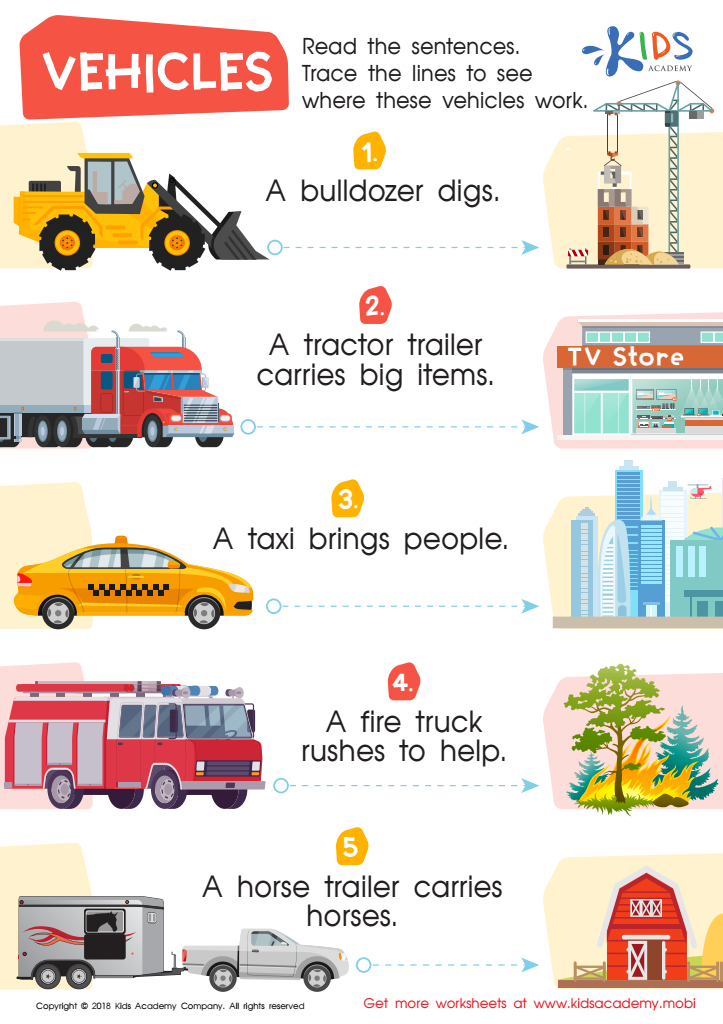
Vehicles Worksheet
 Assign to My Students





.jpg)

Expanding vocabulary for children aged 6 to 8 is crucial for their overall development and success in both academics and everyday life. At this stage, children are rapidly absorbing new language, making it an ideal time to introduce a rich array of words. A robust vocabulary enhances reading comprehension, which is foundational for all subjects in school. When children understand more words, they can better decode texts, infer meaning, and engage with materials, leading to improved academic performance.
Additionally, a varied vocabulary fosters better communication skills. As children express their thoughts and emotions more effectively, they experience greater confidence in social interactions, helping develop essential skills like teamwork and conflict resolution. Understanding and using diverse words also nurtures critical thinking, as children learn to articulate their ideas and thoughts clearly.
Parents and teachers play a pivotal role in this growth. They can introduce new vocabulary through engaging activities like reading aloud, storytelling, and conversation. Encouraging curiosity about words and their meanings promotes a lifelong love of learning. Ultimately, cultivating a strong vocabulary today empowers children to become effective communicators and critical thinkers tomorrow, paving the way for success in school and beyond.








