
Number tracing Worksheets for Ages 6-8
4 filtered results
Difficulty Level
Grade
Age
-
From - To
Subject
Activity
Standards
Discover our engaging number tracing worksheets designed specifically for children aged 6-8! Perfect for reinforcing essential math skills, these worksheets help young learners practice number formation with fun and interactive activities. Each worksheet features clear, appealing layouts, guiding kids to trace numbers from 0 to 20 while enhancing their writing and fine motor skills. Our resources support early math education in a playful way, encouraging independence and confidence in number recognition. Ideal for homeschooling, classroom instruction, or supplemental practice, these number tracing worksheets are a valuable tool in fostering a solid numerical foundation for your child’s educational journey. Explore and download today!
Favorites
With answer key
Interactive
 Assign to My Students
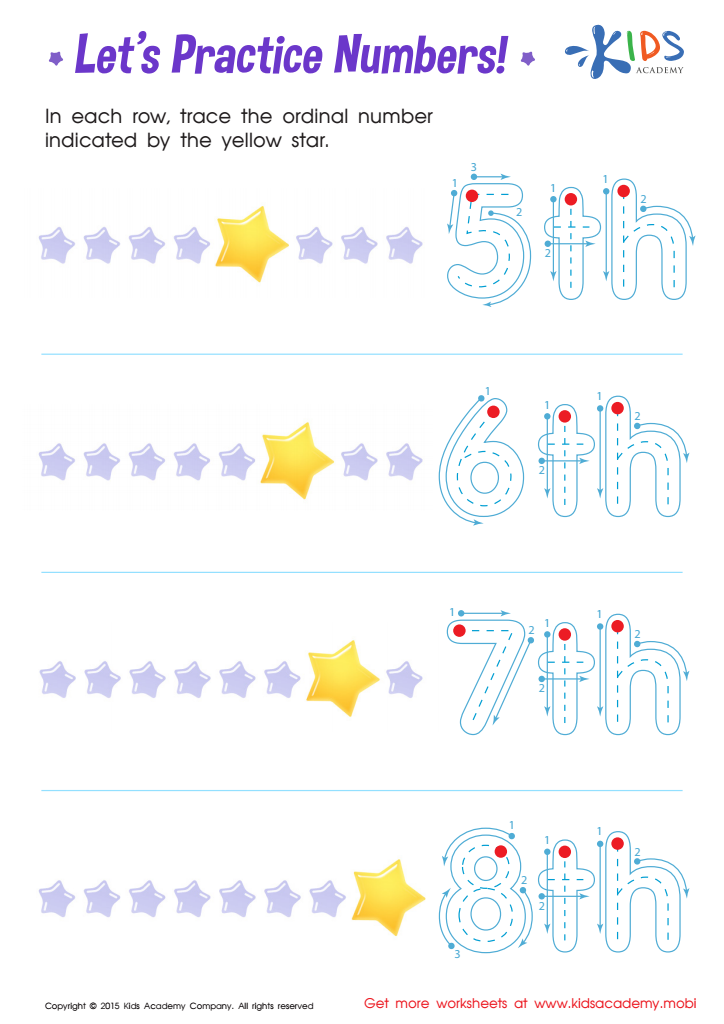
Ordinal Numbers: Let's Practice Numbers Printable
Worksheet
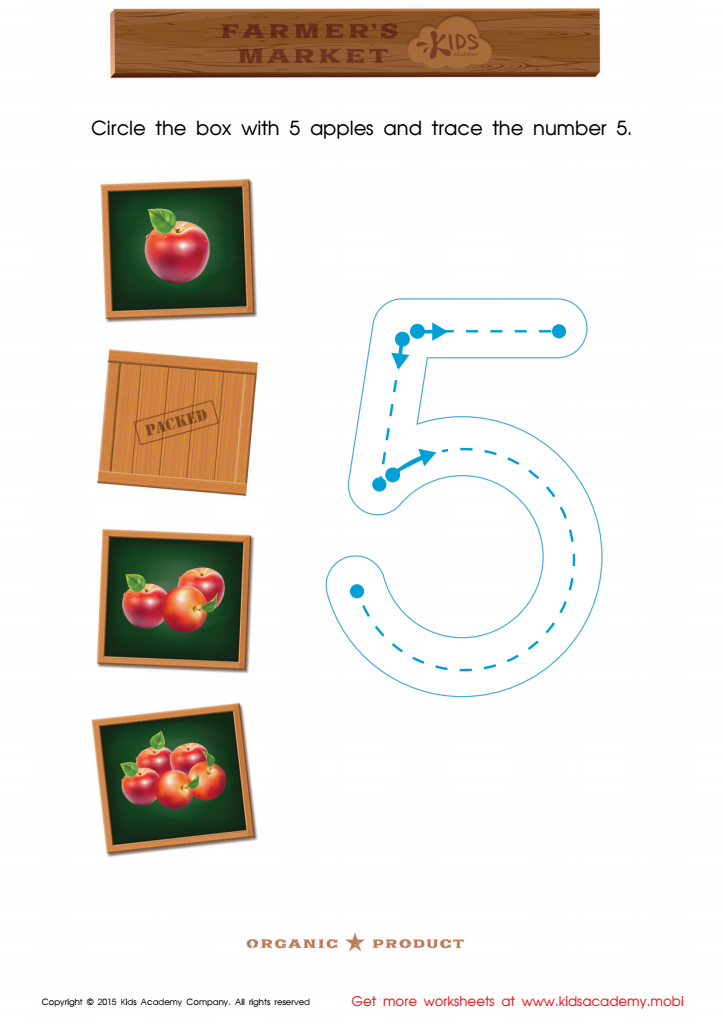
Count the Apples and Trace the Number 5 Printable
Count the juicy apples in each box, find the one with 5 and trace the number 5 following the arrows. Practice makes perfect! Print and get your little mathematician counting.
Count the Apples and Trace the Number 5 Printable
Worksheet
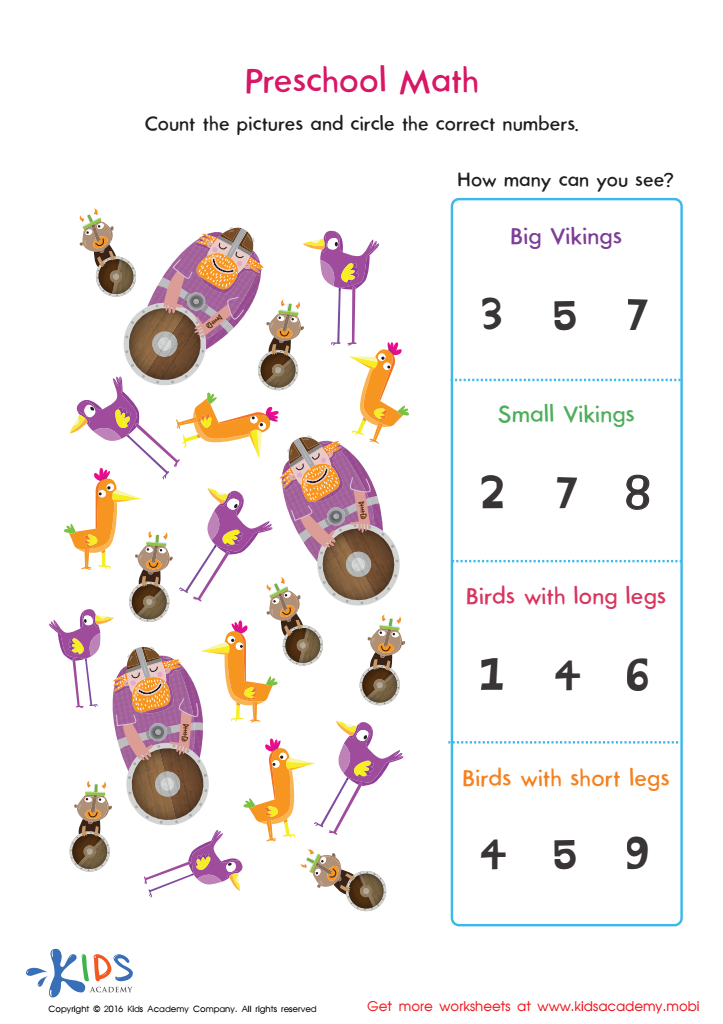
Counting Worksheet: Preschool Math
Worksheet
Join Kids Academy for Free
Who is primarily going to use this learning content?







Number tracing is an essential skill for children ages 6-8, offering a myriad of benefits that parents and teachers should prioritize. At this age, children are transitioning from foundational number recognition to a more comprehensive understanding of numerical concepts. Tracing numbers fosters proper formation and enhances fine motor skills, crucial for everyday activities, including writing, drawing, and using scissors.
Furthermore, tracing engages the child’s visual, auditory, and tactile senses, creating a multisensory learning experience that reinforces memory retention. As children trace numbers, they internalize numerical sequences and gain confidence in their ability to write, promoting a positive attitude towards mathematics. This foundational skill, combined with practicing numeral shapes, helps establish a robust groundwork for future mathematical concepts such as addition and subtraction.
Additionally, tracing offers an opportunity for parents and teachers to bond with children over learning. It encourages interactive learning sessions, making mathematics fun and engaging. By caring about number tracing, parents and teachers help cultivate a sense of accomplishment in children, paving the way for future academic success and a lifelong appreciation for numbers. Investing time in this crucial stage of development ultimately leads to improved cognitive skills and prepares children for more complex mathematical challenges as they advance in their education.








