
Phonetics understanding Worksheets for Ages 6-8
3 filtered results
Difficulty Level
Grade
Age
-
From - To
Subject
Activity
Standards
Discover our engaging Phonetics Understanding Worksheets designed specifically for children aged 6-8! These worksheets help young learners grasp the fundamental concepts of phonetics, enhancing their listening and pronunciation skills. With fun activities, children will explore letter sounds, blend sounds together, and improve their reading capabilities. Each worksheet is crafted to make learning interactive and enjoyable, fostering a strong foundation in phonics essential for literacy. Perfect for at-home practice or classroom use, our resources support a comprehensive learning experience. Empower your child’s journey toward becoming a confident reader with our Phonetics Understanding Worksheets today!
Favorites
With answer key
Interactive
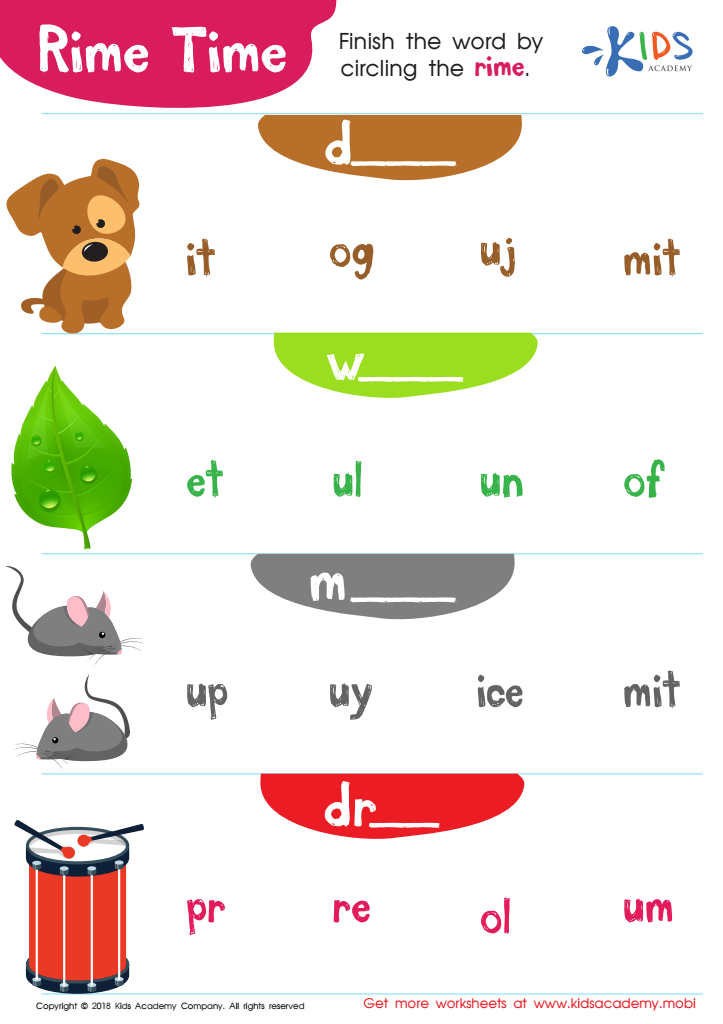
Rime Time Worksheet
This free PDF worksheet helps new and emerging readers identify rimes (the letters after initial consonants) and practice fine motor skills. Kids trace the correct rimes for each picture and increase their fluency and decoding skills with each one!
Rime Time Worksheet
Worksheet
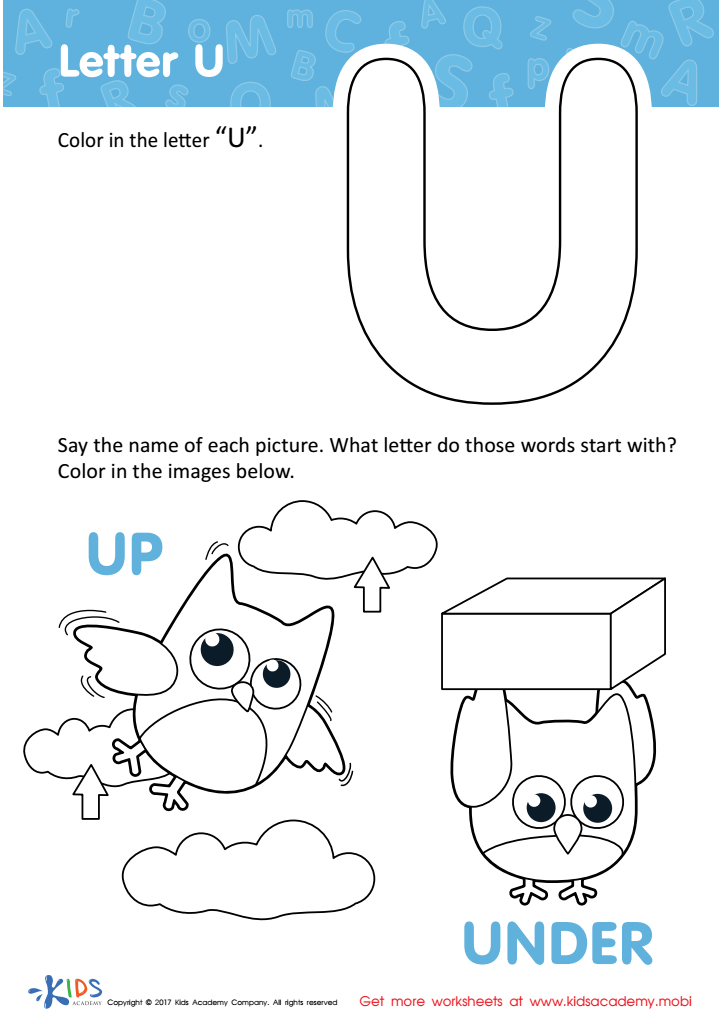
Letter U Coloring Sheet
This letter "U" coloring page helps your child learn two things at once - the letter "U" and positional words! An adorable owl character aids in understanding up and under. In a few strokes of a crayon, your child can master these concepts.
Download (PDF)
 Assign to My Students
Assign to My Students
Letter U Coloring Sheet
Worksheet
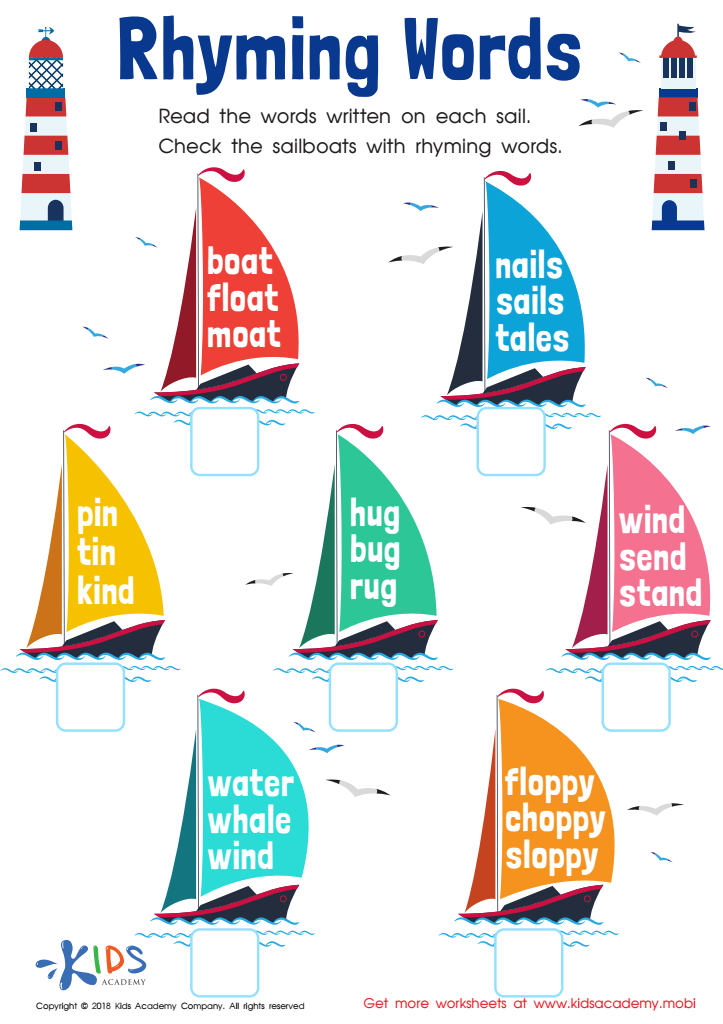
Rhyming Words Worksheet
Does your child know about rhyming words? Get them interested in poetry and explain that these words have similar sounds when pronounced. Read the words on each sailboat to your child and ask them to identify the rhyming pairs. Guide them to check the sailboats.
Rhyming Words Worksheet
Worksheet
Join Kids Academy for Free
Who is primarily going to use this learning content?








Understanding phonetics is crucial for parents and teachers of children aged 6-8, as this knowledge lays the foundation for effective reading, writing, and communication skills. Phonetics is the study of sounds in language, and it helps children recognize the relationship between letters and sounds, enabling them to decode words accurately.
At this developmental stage, children are typically emerging readers, and grasping phonetic concepts assists them in understanding word formation and pronunciation. This understanding helps them build confidence as they read aloud and engage with texts, fostering a love for literature.
Moreover, mastering phonetics contributes to improved spelling skills. As children learn sound-letter correspondence, they can apply this knowledge in their writing, leading to fewer spelling mistakes and a more comprehensive vocabulary.
Additionally, phonetics aids in language development, particularly for children who may struggle with speech or learning challenges. Early intervention through phonetic understanding can support their language acquisition and social skills, ensuring they do not fall behind their peers.
In summary, phonetic understanding equips children with essential skills for academic success, effective communication, and personal growth, making it imperative for parents and teachers to prioritize this area of literacy education.








