
Sequencing skills improvement Worksheets for Ages 6-8
3 filtered results
Difficulty Level
Grade
Age
-
From - To
Subject
Activity
Standards
Enhance your child's critical thinking and cognitive skills with our Sequencing Skills Improvement Worksheets for ages 6-8! Specifically designed to make learning engaging and fun, these worksheets help young learners understand the importance of order and organization. Through a variety of activities, children will practice following logical sequences, recognizing patterns, and completing stories. Perfect for home schooling or supplementary learning, our worksheets support educational development while keeping kids excited about mastering essential skills. Empower your child’s ability to think sequentially and develop a strong foundation for future learning with our easy-to-use, printable resources today!
Favorites
With answer key
Interactive
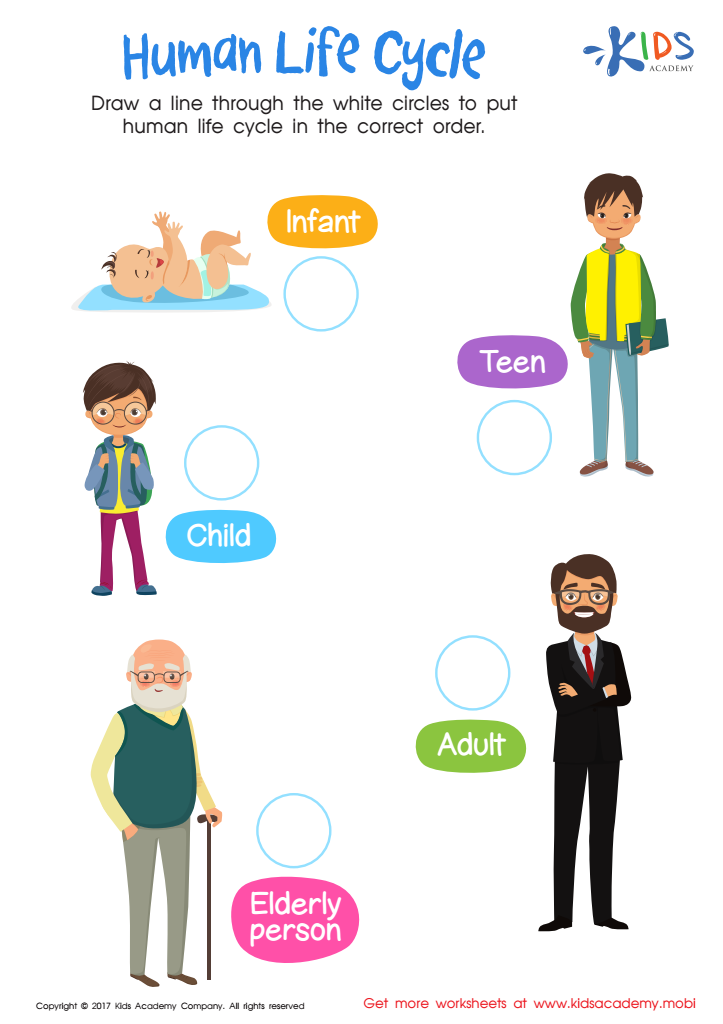
Human Life Cycle Worksheet
Kids can use this PDF to gain an understanding of their life cycle and important health concepts. It features colorful graphics to help solidify their learning.
 Assign to My Students
Human Life Cycle Worksheet
Worksheet
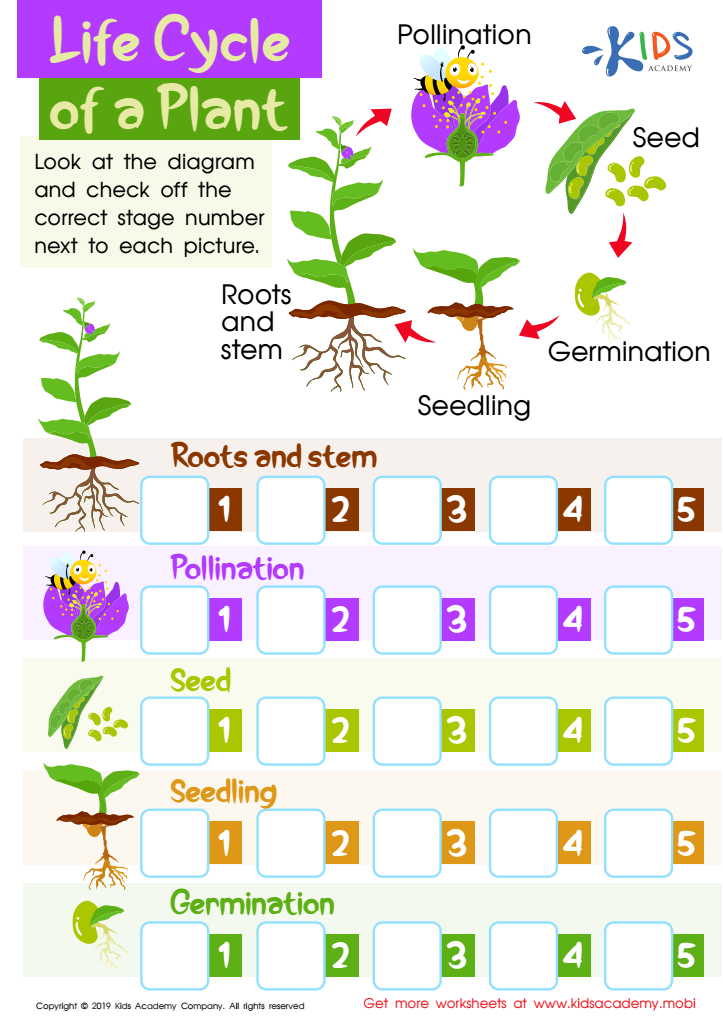
Life Cycle of a Plant Worksheet
This fun PDF worksheet lets young scientists explore the life cycle of plants. It features pictures to describe each stage: pollination, seed, germination, seedling, rooting and stems. They can check off each stage in the diagram, giving them a concrete understanding.
Life Cycle of a Plant Worksheet
Worksheet
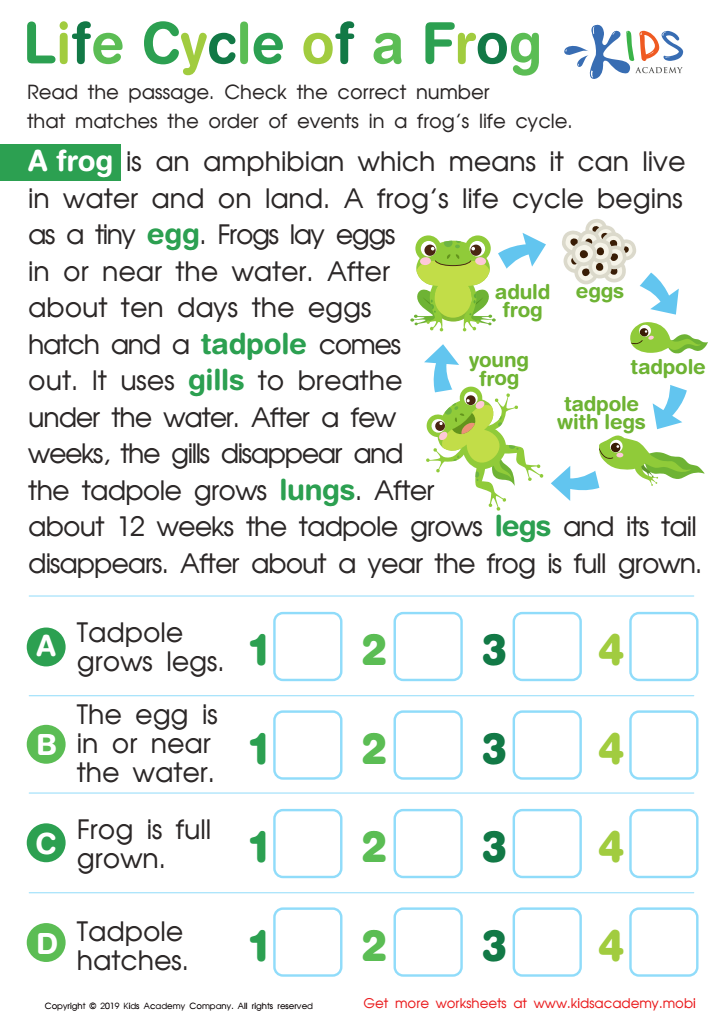
Life Cycle of a Frog Worksheet
Teach your kids to read and open their eyes to new knowledge. Frogs have fascinating life cycles. Show them the worksheet with pictures and guide them as they read the passage about it. Encourage them to check the number that matches the frog's life cycle order.
Life Cycle of a Frog Worksheet
Worksheet
Join Kids Academy for Free
Who is primarily going to use this learning content?





.jpg)


Sequencing skills are fundamental for children aged 6-8, as they play a crucial role in cognitive development and overall academic success. Parents and teachers should prioritize these skills because they enhance a child's ability to understand and convey information logically. Developing strong sequencing abilities aids in reading comprehension, allowing children to follow narratives and comprehend texts more effectively.
Furthermore, sequencing supports problem-solving and critical-thinking skills; children learn to break tasks into manageable steps, which is vital in subjects like math and science. For instance, understanding the order of operations in math requires adept sequencing skills.
Improved sequencing is also essential in everyday life; children learn to follow instructions, which helps them become more independent and responsible. As they express their thoughts more clearly, their communication skills flourish, fostering better interpersonal relationships.
Finally, engaging activities that promote sequencing—such as storytelling, sequencing games, and hands-on projects—can make learning enjoyable and interactive. For these reasons, enhancing sequencing skills is a key focus for parents and teachers, as it lays a strong foundation for future academic and life competence.








