Sound-letter correlation Worksheets for Ages 6-8
3 filtered results
-
From - To
Discover engaging sound-letter correlation worksheets designed specifically for children ages 6-8. Our printable materials help young learners enhance their phonetic awareness and reading skills by connecting sounds with corresponding letters. Each worksheet is thoughtfully crafted, featuring fun illustrations and interactive activities that make learning enjoyable. As children practice identifying sounds and matching them to letters, they develop essential literacy skills that lay the foundation for reading proficiency. Perfect for classroom use or at-home learning, our sound-letter correlation worksheets provide a comprehensive approach to early childhood education. Explore our resources today and empower your child on their reading journey!
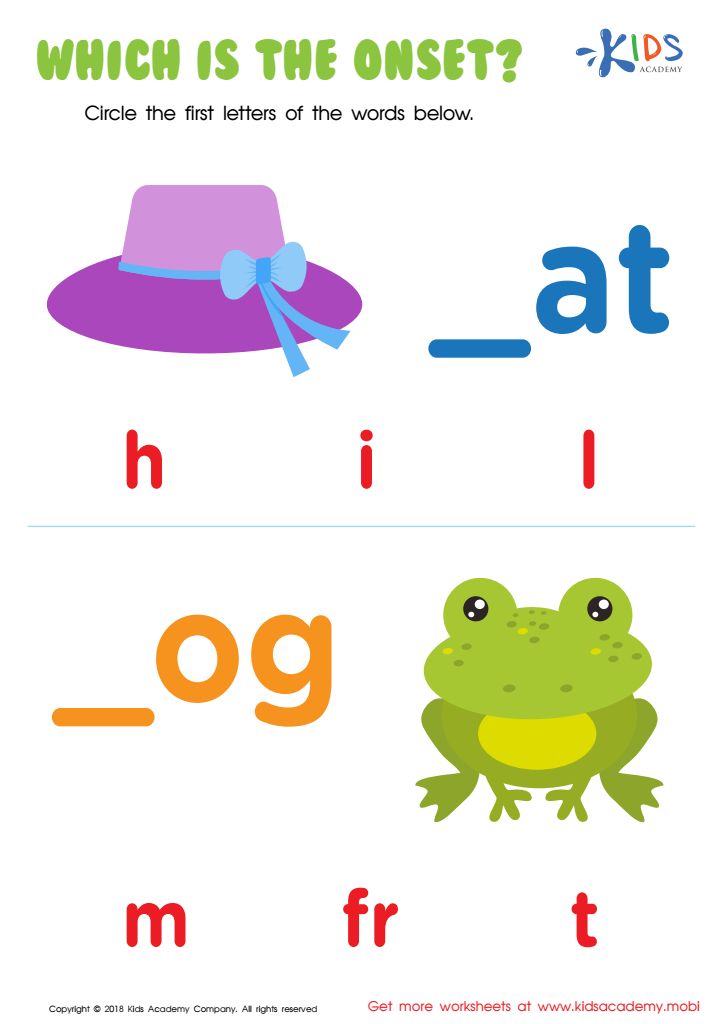
Which Is the Onset? Worksheet
 Assign to My Students
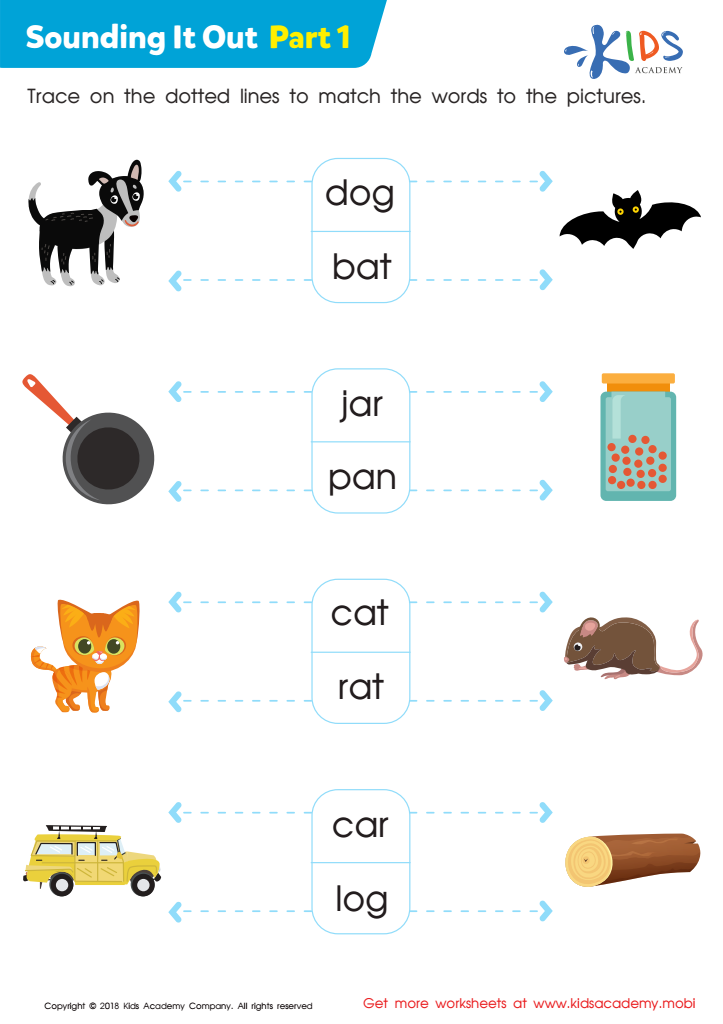
Sounding it Out: Part 1 Worksheet
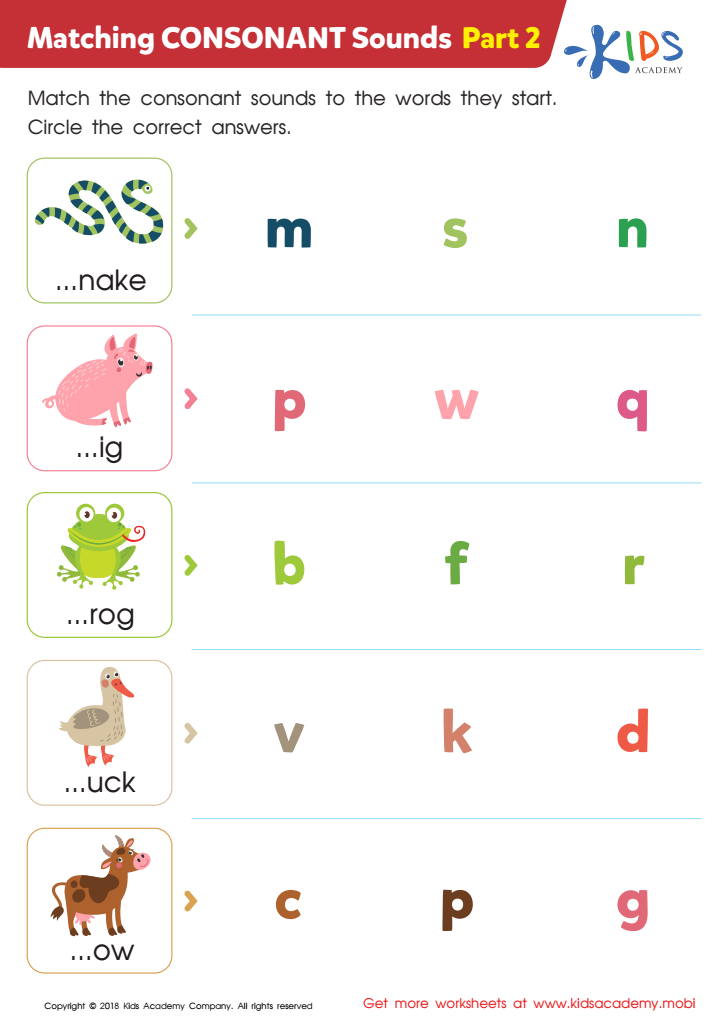
Matching Consonant Sounds: Part 2 Worksheet







Sound-letter correlation, often referred to as phonics, is essential for children aged 6-8 as it lays the foundation for reading and writing skills. Understanding this correlation helps children grasp how sounds (phonemes) correspond to letters or groups of letters (graphemes), enabling them to decode words and improve their literacy.
Parents and teachers should care about these correlations because they enhance reading fluency, comprehension, and confidence in children, which are crucial in their overall academic development. When children can sound out and recognize words, they are more likely to engage with reading materials, leading to a greater love for literature and learning.
Moreover, effective phonics instruction contributes to greater writing skills by ensuring that children understand how to spell words and use language properly. When kids connect sounds with letters, it empowers them to express their thoughts and ideas more clearly.
Furthermore, these skills play a significant role in cognitive development. As children learn to associate sounds with symbols, they develop critical thinking and problem-solving abilities, which impact not just literacy but their performance in various subjects.
In summary, sound-letter correlation is a fundamental component of literacy that significantly contributes to a child’s academic success and lifelong love for learning.








