Understanding biodiversity Worksheets for Ages 6-8
4 filtered results
-
From - To
Explore the fascinating world of biodiversity with our engaging worksheets designed specifically for children ages 6-8! These resources are tailored to make learning fun and informative, helping young learners understand the variety of life on Earth. Through colorful illustrations and interactive activities, students will discover different ecosystems, animals, and plants, and the importance of protecting our environment. Our worksheets encourage critical thinking and creativity while reinforcing essential skills in reading and comprehension. Perfect for at-home learning or classroom activities, these worksheets make understanding biodiversity accessible and enjoyable for young inquisitive minds. Dive in and help your child connect with nature today!
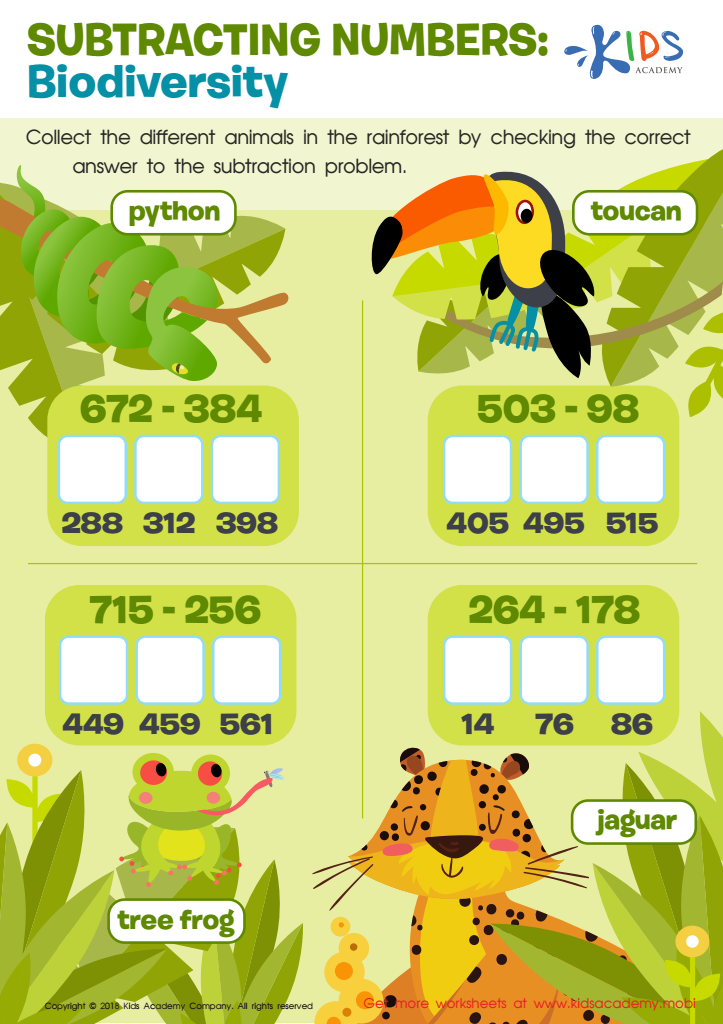
Subtracting Numbers: Biodiversity Worksheet
 Assign to My Students
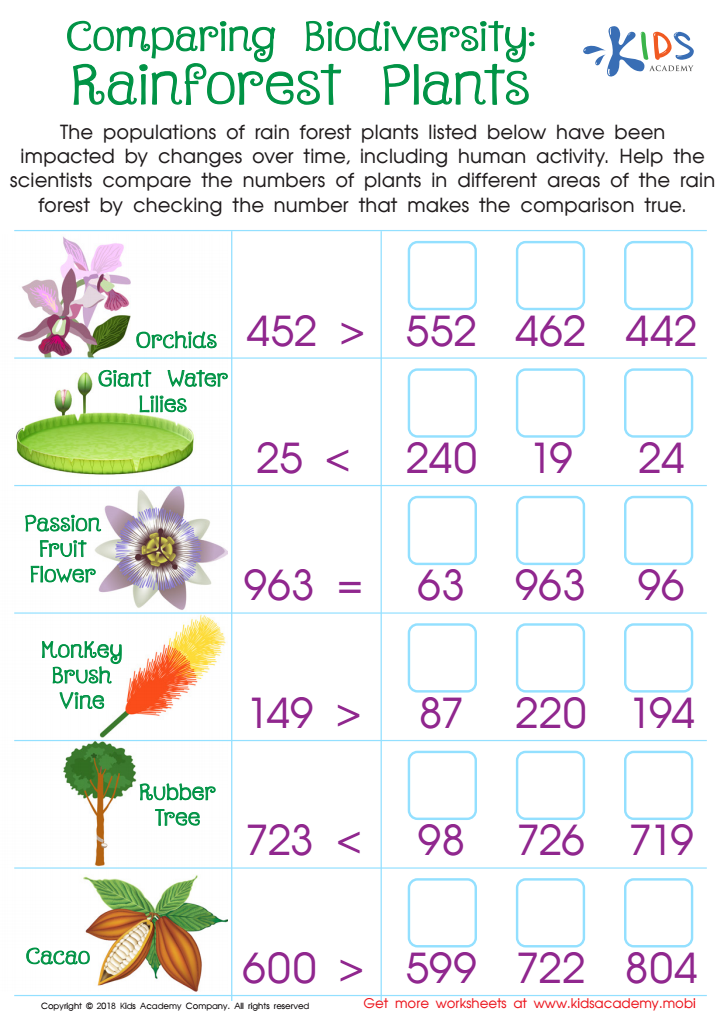
Comparing Biodiversity: Rainforest Plants Worksheet
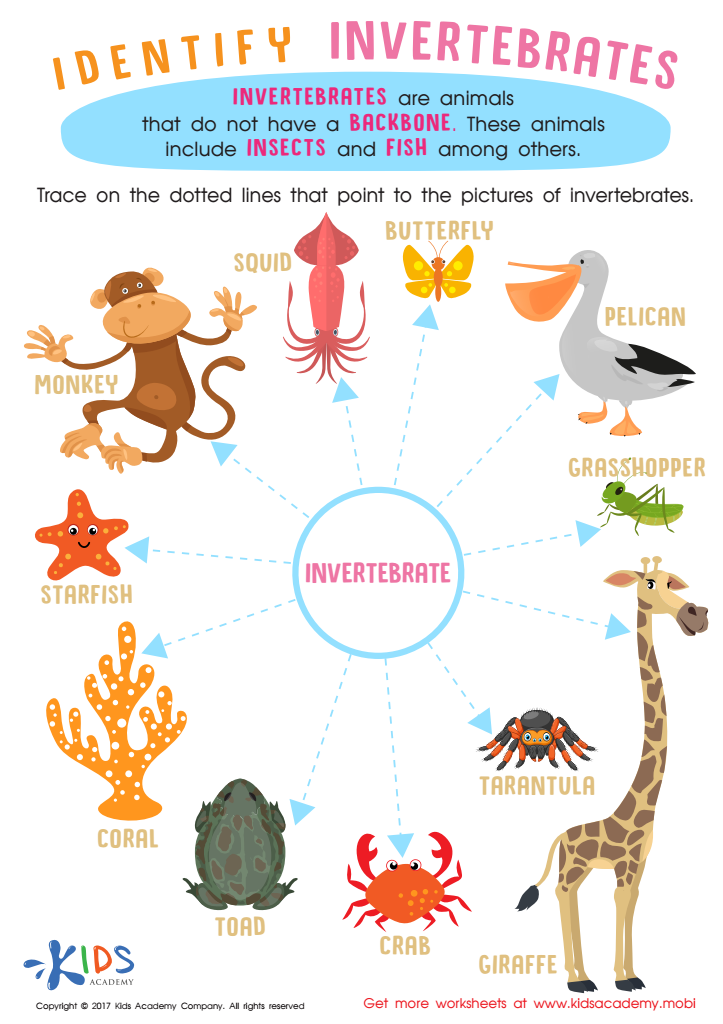
Invertebrates Worksheet for Grade 3
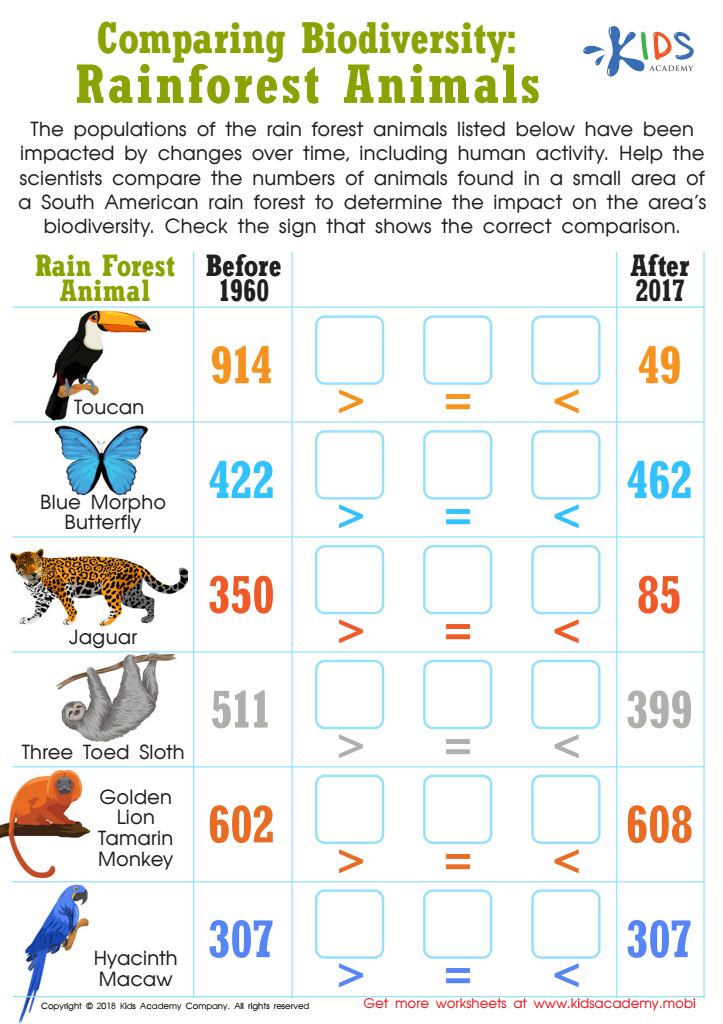
Comparing Biodiversity: Rainforest Animals Worksheet






Understanding biodiversity is crucial for children aged 6-8 as it lays the foundation for their appreciation and respect for the natural world. At this age, children are highly curious and open to learning about the variety of life around them, from plants and animals to ecosystems. Teaching them about biodiversity encourages curiosity and fosters a sense of wonder about the environment.
Parents and teachers should care about this topic because it helps children develop critical thinking skills as they learn to observe, identify, and understand the interconnectedness of living things. An awareness of biodiversity can also instill a sense of responsibility in young learners, encouraging them to care for their surroundings and understand the importance of conservation.
Moreover, biodiversity is increasingly under threat due to climate change and human activities. Educating children early about these issues cultivates a generation of environmentally conscious individuals who are better equipped to make sustainable choices in the future. This knowledge can also enhance creativity and problem-solving as children come to see the world as an interconnected system. Ultimately, fostering a love and respect for biodiversity will encourage a lifelong commitment to protecting our planet and its many wonders.








