Understanding division Worksheets for Ages 6-8
9 filtered results
-
From - To
Explore our engaging "Understanding Division Worksheets" designed specifically for children ages 6-8. These worksheets provide a solid foundation in division concepts, helping young learners grasp the basics through fun and interactive activities. Each worksheet is tailored to enhance problem-solving skills and boost confidence in math. Students will discover how to divide numbers using visual aids, practice with relatable word problems, and engage in hands-on exercises that promote critical thinking. Perfect for home or classroom use, our resources aim to make learning division enjoyable while ensuring a comprehensive understanding. Start your child’s math journey today with our quality worksheets!
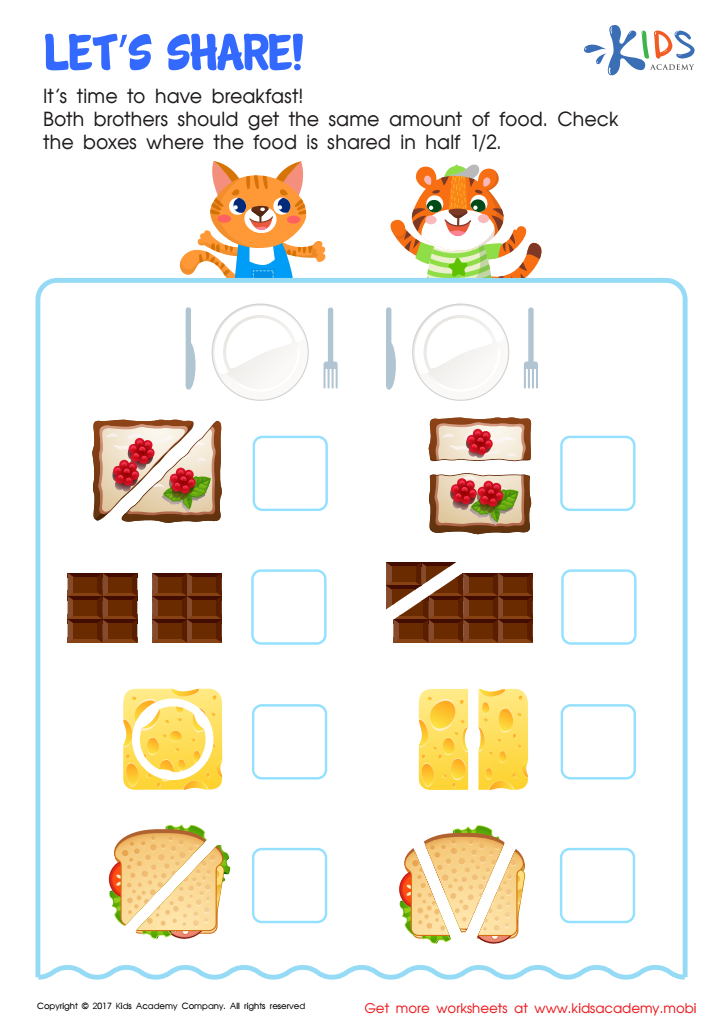
Let's Share Worksheet
 Assign to My Students
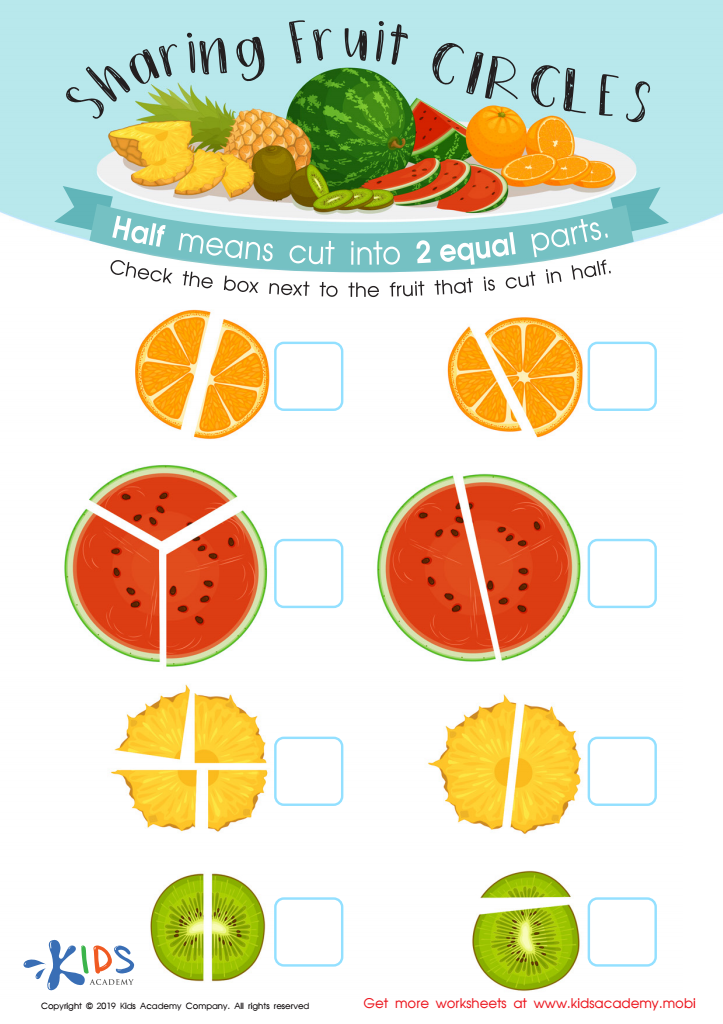
Sharing Fruit Circles Worksheet
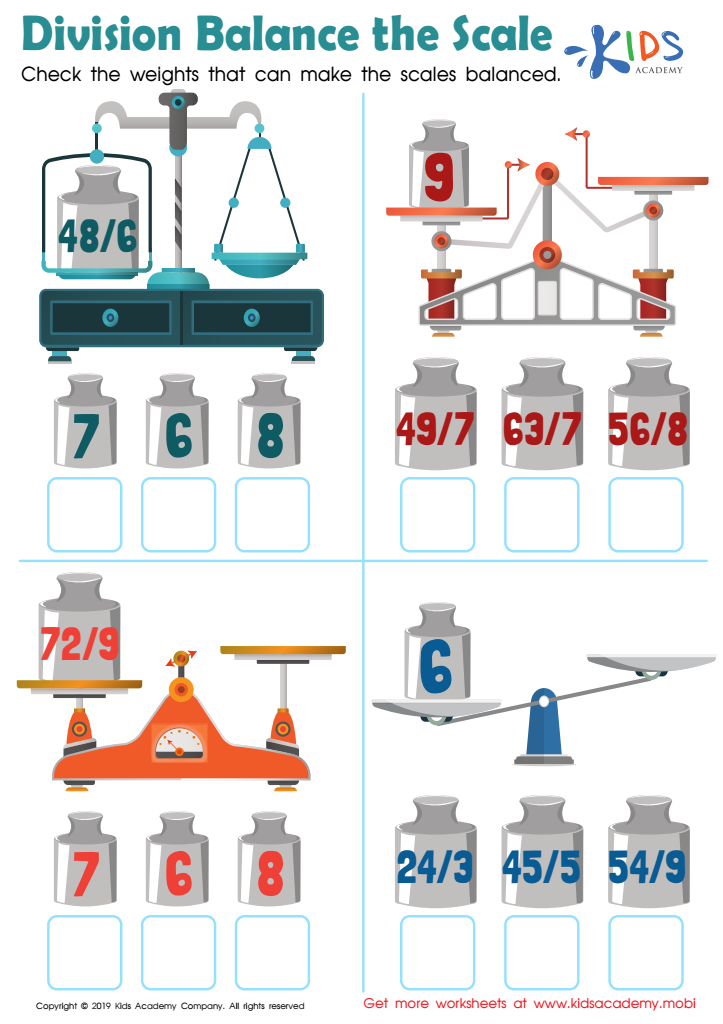
Division Balance the Scale Worksheet







Parents and teachers should prioritize helping children aged 6-8 understand division as it forms a foundational skill crucial for their overall mathematical development. At this age, children are transitioning from basic arithmetic skills, such as addition and subtraction, to more complex calculations. Division is a key operation they will encounter in daily life, whether sharing snacks among friends or organizing groups for games, fostering practical communication skills.
Understanding division also nurtures critical thinking. As children grasp the concept of dividing a whole into equal parts, they learn to approach problem-solving methodically and logically. This foundational skill sets the stage for more advanced mathematical concepts such as fractions, multiplication, and ratios.
Moreover, early mastery of division can enhance children's confidence in their math abilities. It creates positive associations with learning, makes subsequent math learning less intimidating, and fosters a growth mindset. In team settings, like classrooms, having a shared understanding of division encourages collaboration, turns learning into a collective endeavor, and builds community.
In conclusion, supporting children in understanding division equips them with essential skills for academic success, enhances their problem-solving capabilities, and builds their confidence in interacting with mathematics. Thus, parents and teachers play a vital role in laying this significant groundwork.








