Understanding economics Worksheets for Ages 6-8
3 filtered results
-
From - To
Introduce young learners to the world of economics with our engaging worksheets designed for ages 6-8. Kids Academy brings a fun and interactive approach to understanding basic economic concepts such as needs versus wants, spending, and saving. Our printable activities help children grasp financial literacy early, igniting curiosity about money management through puzzles, coloring sheets, and simple real-life scenarios. Each worksheet is tailored to align with early educational standards, providing a solid foundation while keeping learning enjoyable. Foster essential life skills as your child discovers the fundamentals of economics in an accessible and captivating way with Kids Academy’s resources.
 Assign to My Students
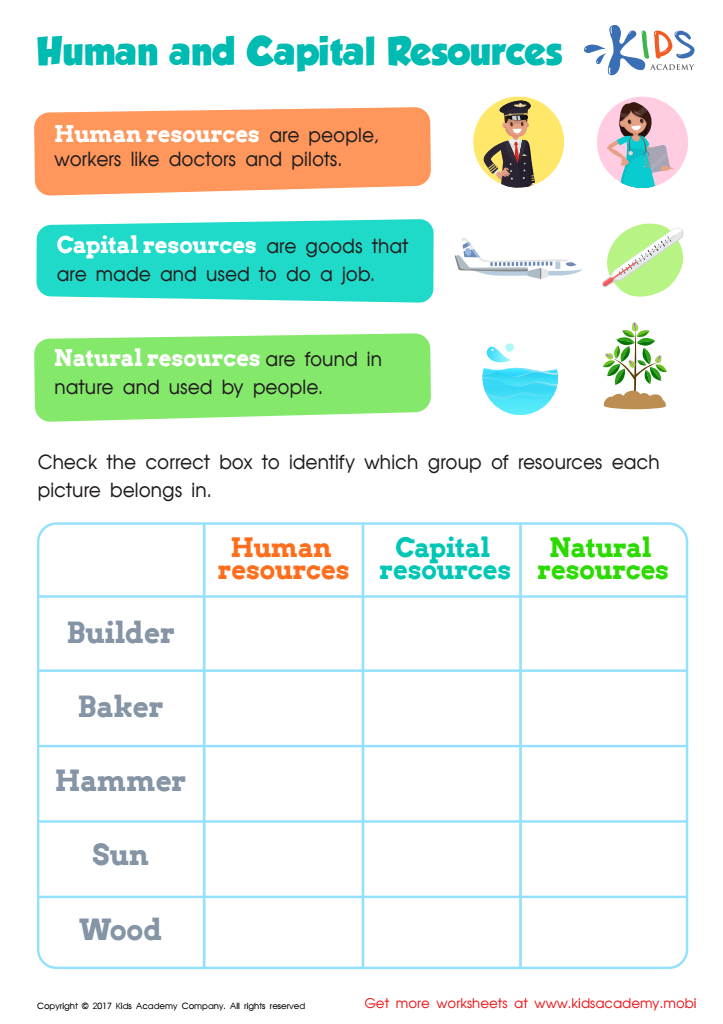
Human and Capital Resources Worksheet
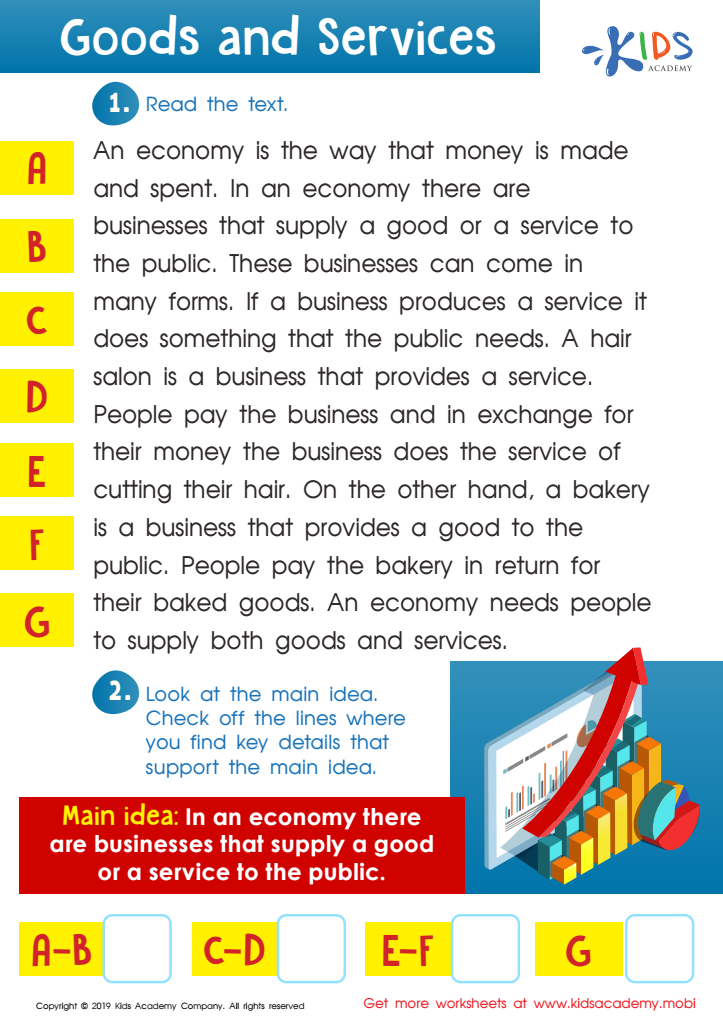
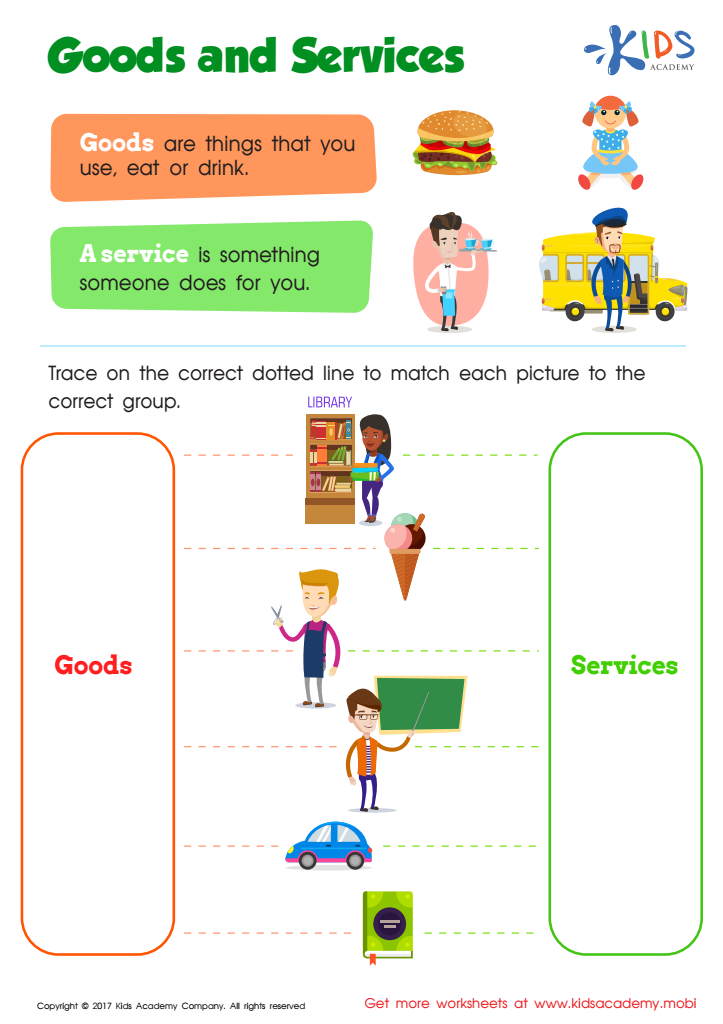
Goods and Services Worksheet






Understanding basic economics at ages 6-8 helps build a strong foundation for future financial literacy, a vital life skill. Introducing young children to concepts like saving, spending, needs vs. wants, and the value of money shapes their ability to make informed decisions later. Early exposure to these ideas fosters responsible attitudes toward money, encouraging thoughtful habits and preventing future financial difficulties.
When parents or teachers incorporate economics into everyday activities, they promote engagement and practical understanding. Simple tasks, like managing an allowance or deciding between toys, can turn into lessons about budgeting and opportunity costs. This lays groundwork for more complex economic principles, enhancing critical thinking and problem-solving skills in young minds.
Moreover, understanding economics can help children appreciate the work adults do to earn money and Value of monetary resources, fostering gratitude and responsibility. Collaborative activities such as class projects emphasizing resource allocation or needs and wants discussions can also benefit social skills and teamwork.
By caring about their children's understanding of economics, parents and teachers prepare them for a future where they can navigate the complexities of the financial world, make wise financial choices, and contribute positively to the economy. Early economic education is an investment in a child's competent, secure, and prosperous future.








