Understanding graphs Worksheets for Ages 6-8
6 filtered results
-
From - To
Explore our engaging "Understanding Graphs Worksheets" designed for children aged 6-8. These resources aim to introduce young learners to the fundamentals of graph literacy through fun and interactive activities. With colorful visuals and relatable scenarios, kids will discover how to read and interpret various types of graphs, including bar graphs, line graphs, and pictographs. Our worksheets not only enhance critical thinking and analytical skills but also encourage data exploration in everyday contexts. Perfect for classroom use or home learning, these worksheets pave the way for a solid foundation in mathematics and data representation, nurturing future STEM enthusiasts.
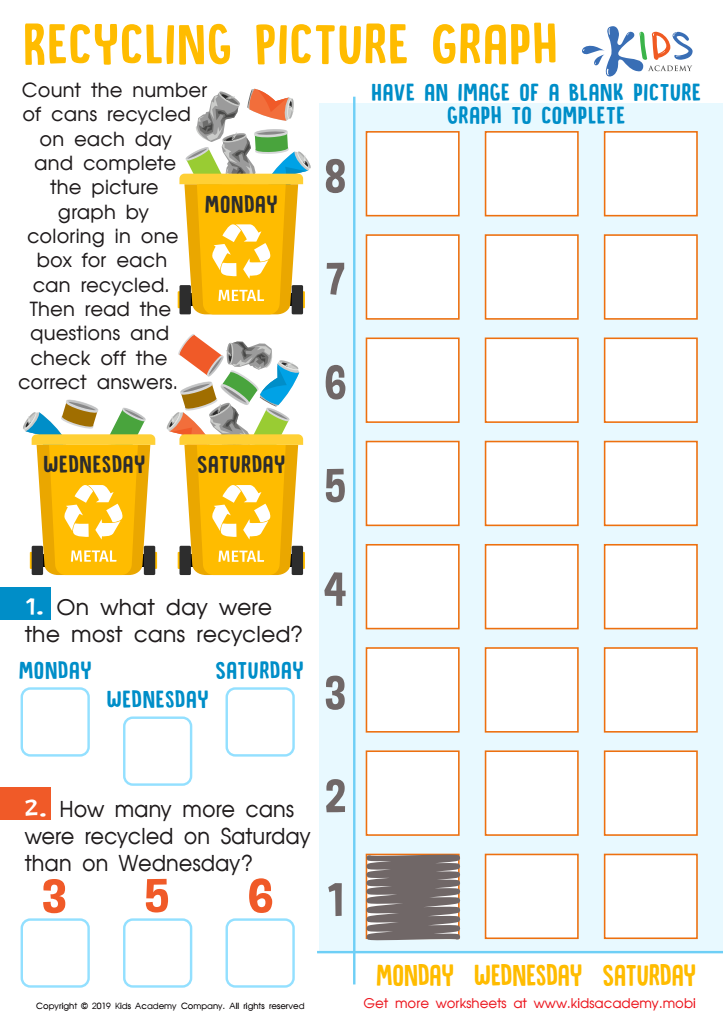
Recycling Picture Graph Worksheet
 Assign to My Students
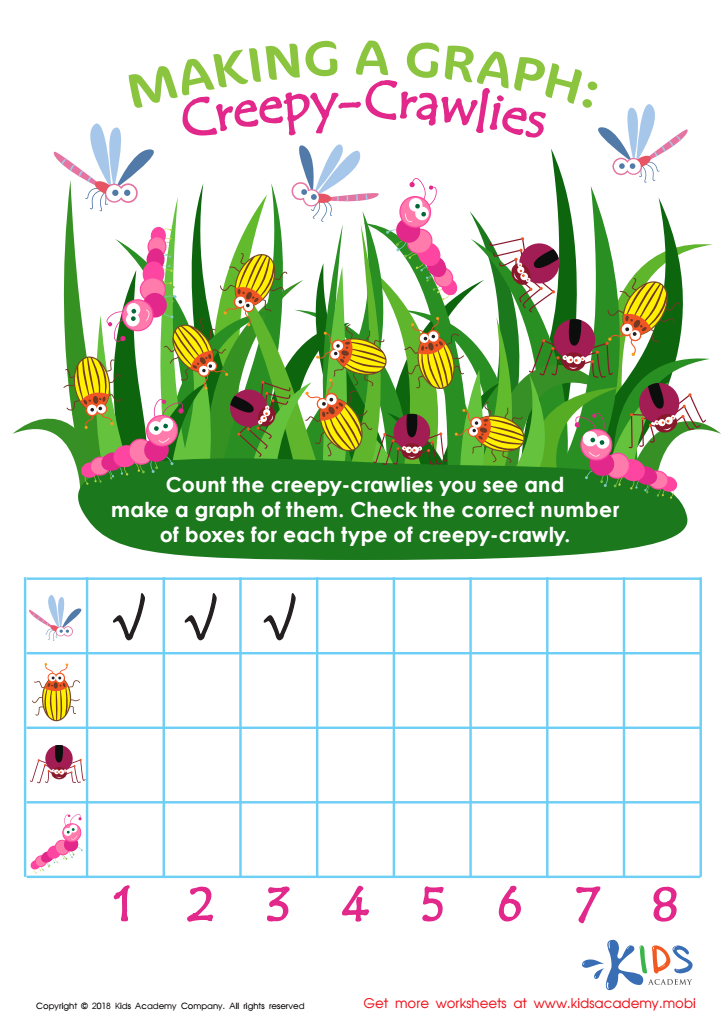
Making a Graph: Creepy Crawlies Worksheet
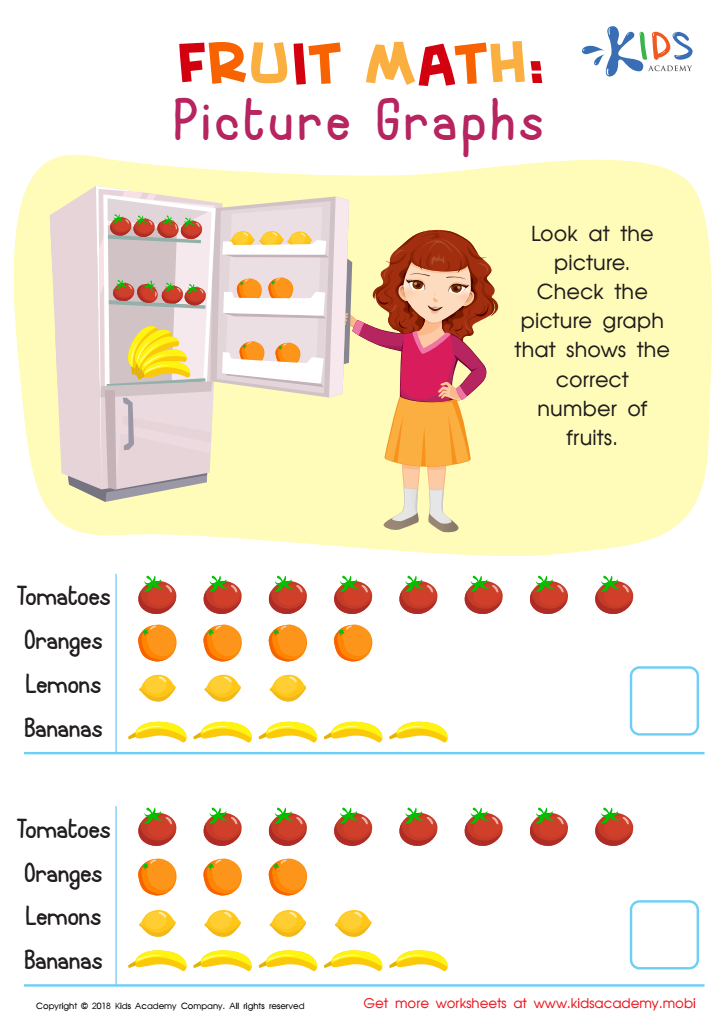
Fruit Math: Picture Graphs Worksheet
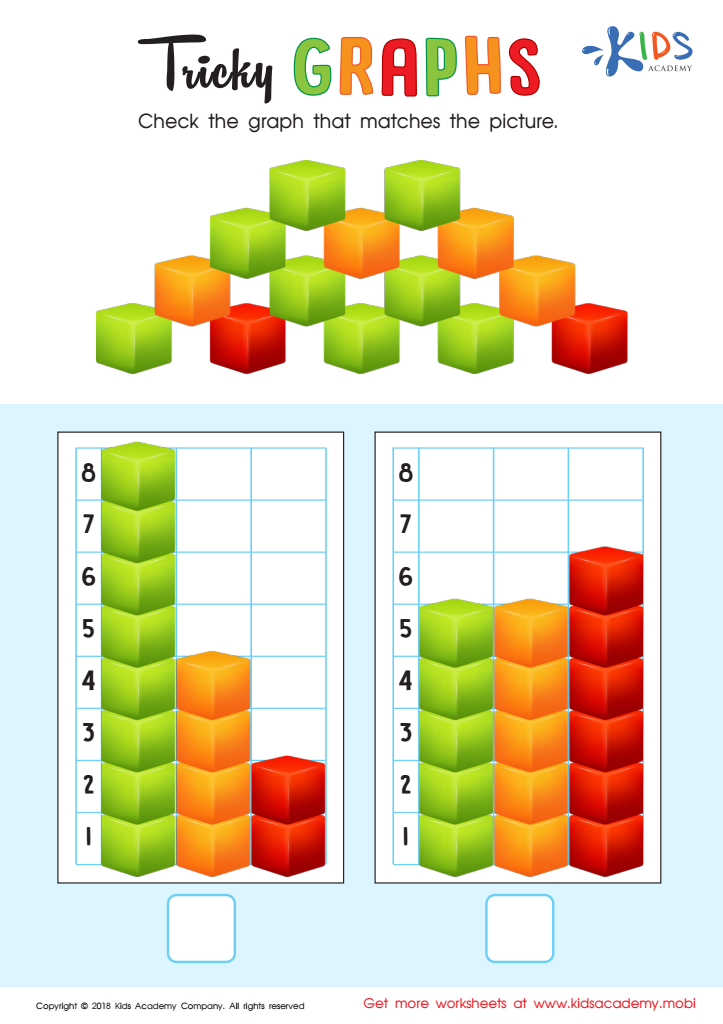
Tricky Graphs Worksheet
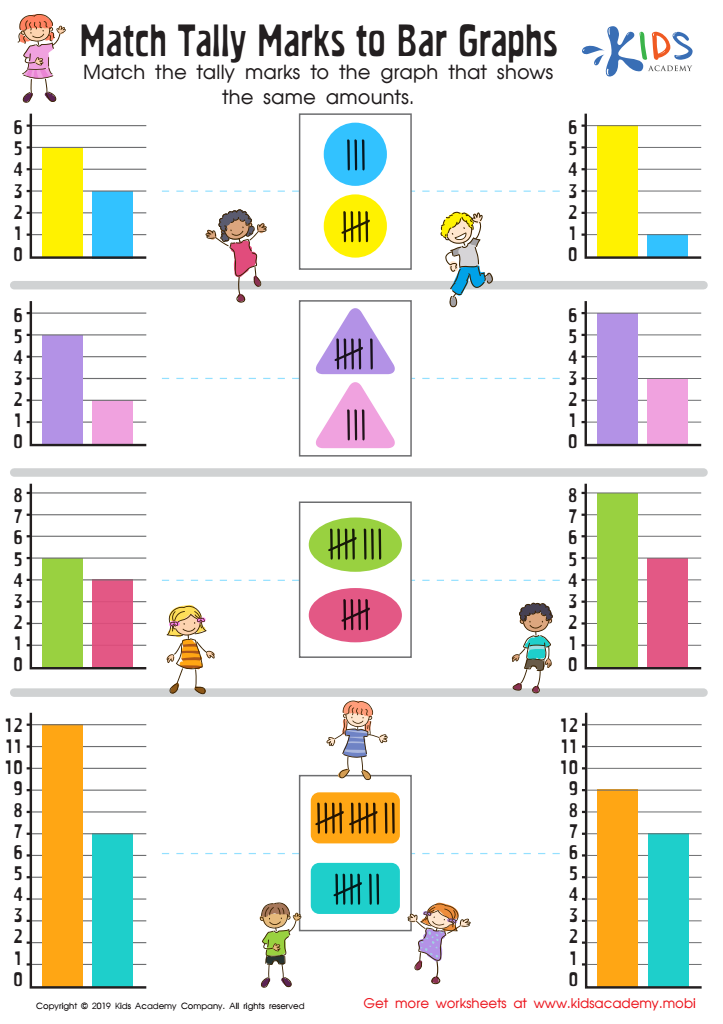
Match Tally Marks to Bar Graphs Worksheet

Aircraft Carrier Picture Graphs Worksheet






Understanding graphs is a crucial skill for children aged 6-8 that benefits their educational and everyday experiences. During these early years, children are naturally curious and begin to develop critical thinking and problem-solving abilities. Graphs provide a visual representation of data, making complex information more accessible and understandable.
Teaching children how to read and interpret graphs fosters essential skills such as data analysis, comparison, and logical reasoning. These skills align with key concepts in mathematics and science, laying a solid foundation for more advanced studies later on. Furthermore, learning to understand graphs enhances children's ability to analyze real-world situations. For example, they can track weather patterns, compare the number of different fruit types, or visualize their progress in reading or math—and this encourages a love for learning and inquiry.
Additionally, developing graph literacy at an early age prepares children for a future where data-driven decision-making is increasingly important. The ability to interpret graphs cultivates a sense of inquiry, encouraging them to ask questions and express their findings clearly. For parents and teachers, promoting graph comprehension is essential in nurturing versatile learners who are adept at processing information and making informed choices.








