Understanding light sources Worksheets for Ages 6-8
6 filtered results
-
From - To
Explore our engaging "Understanding Light Sources" worksheets designed specifically for children ages 6-8! These fun and interactive resources aim to introduce young learners to the concept of light, different types of light sources, and their importance in everyday life. Activities include identifying natural versus artificial light, sorting light sources, and creative drawing prompts to stimulate curiosity and creativity. Perfect for teachers and parents seeking to enhance science education at home or in the classroom, these worksheets provide a hands-on learning experience that aligns with educational standards. Help your child discover the amazing world of light in a playful and meaningful way!
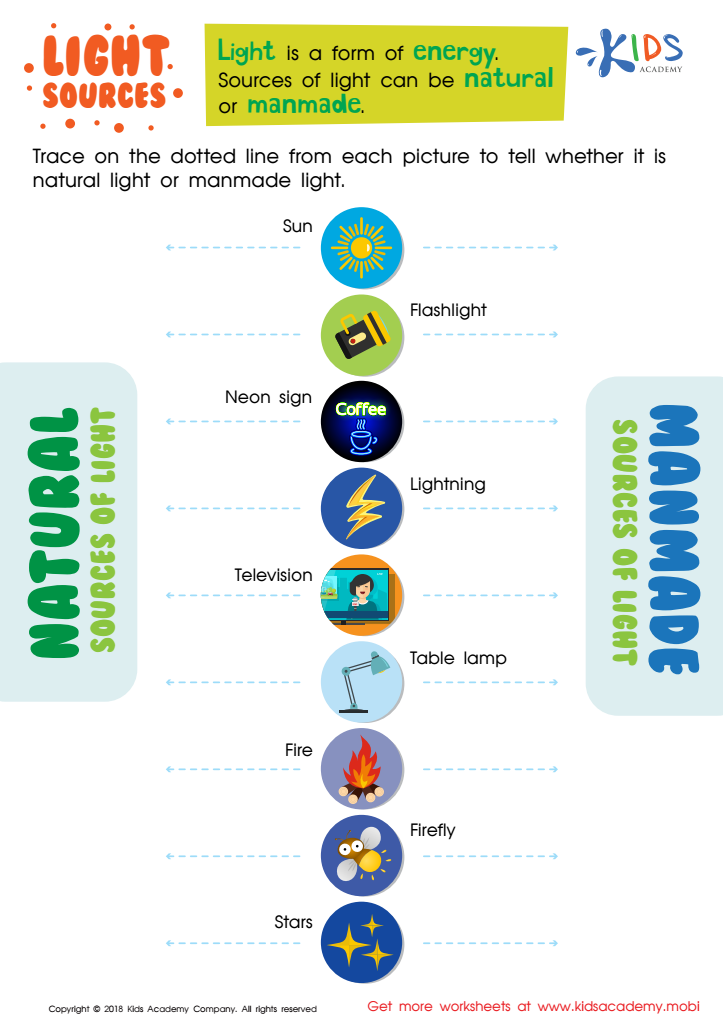
Natural and Manmade Light Sources Worksheet
 Assign to My Students
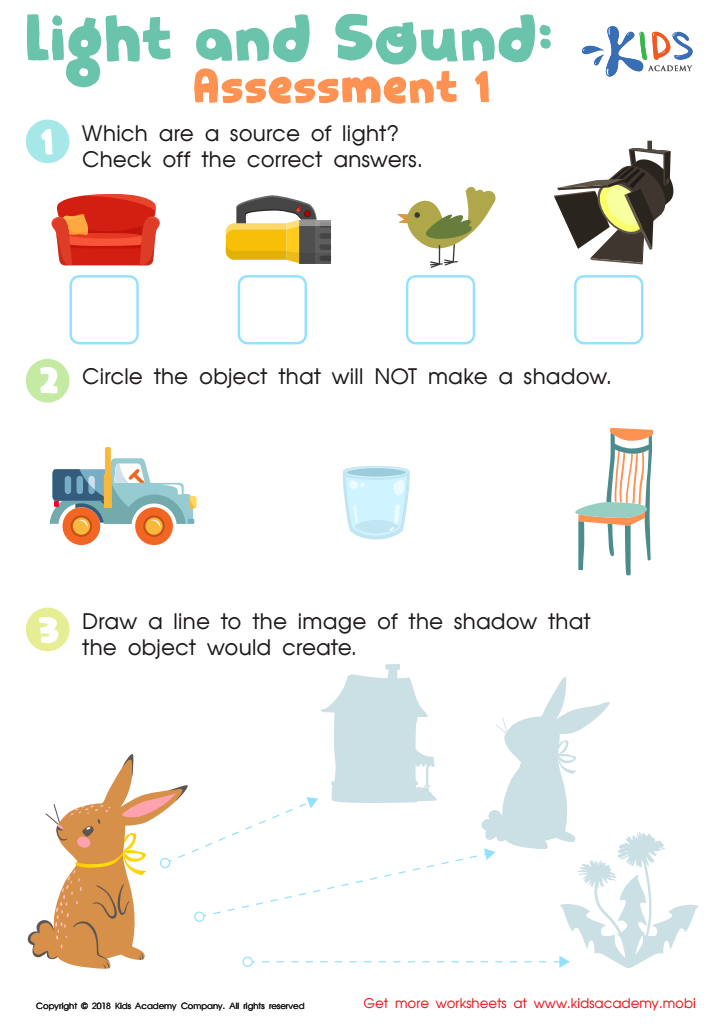
Light and Sound: Assessment 1 Worksheet
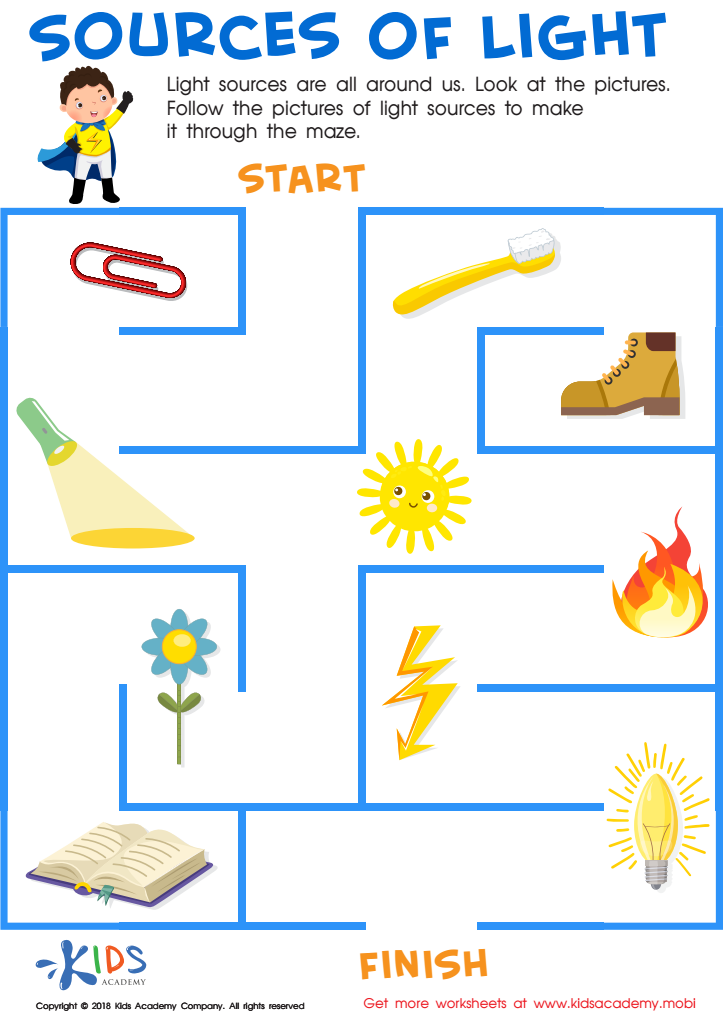
Sources of Light Worksheet
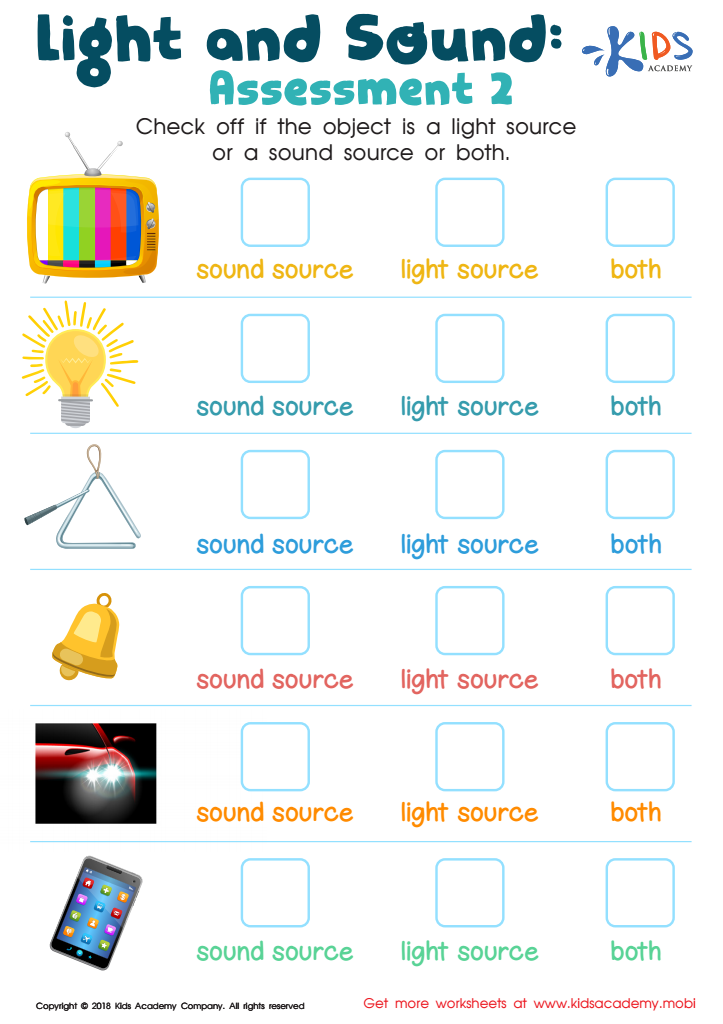
Light and Sound: Assessment 2 Worksheet
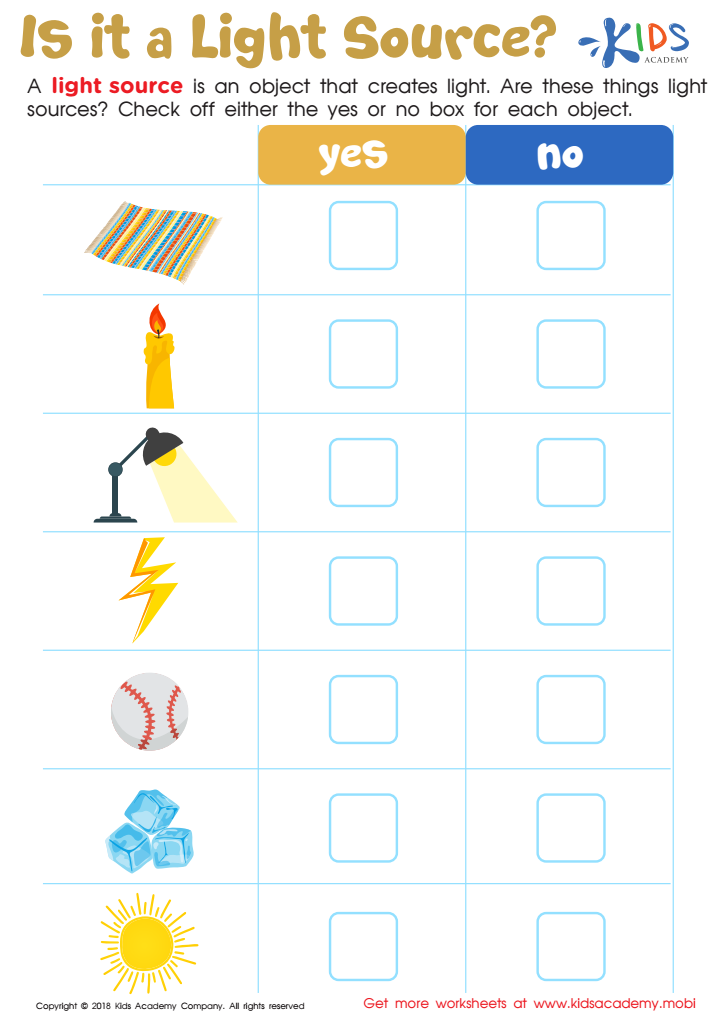
Is It a Light Source? Worksheet
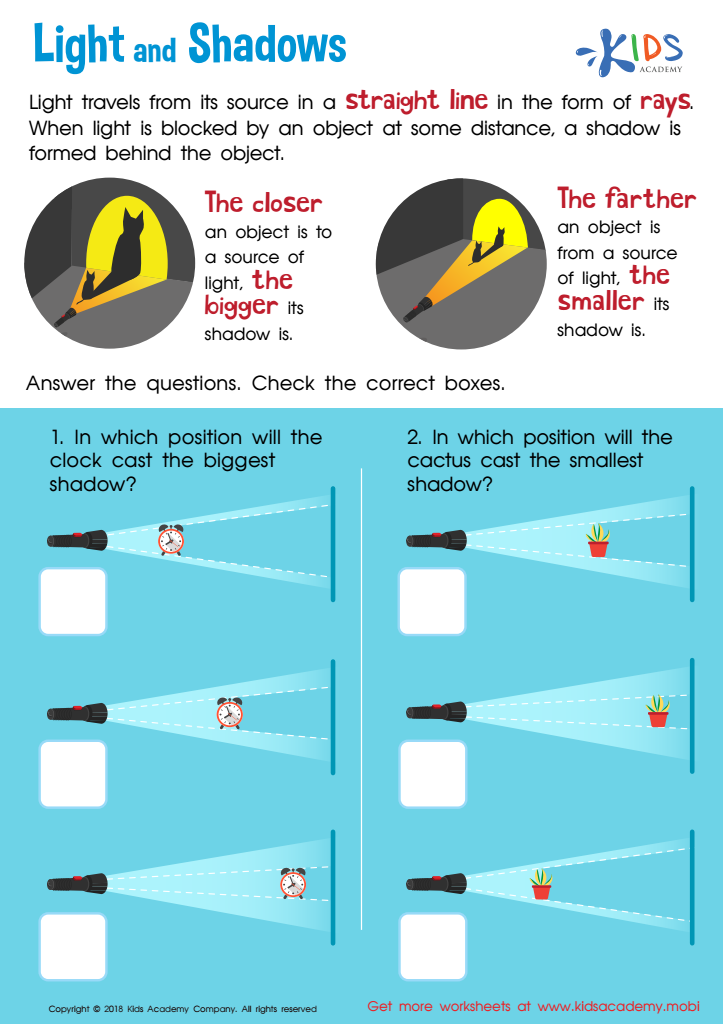
Light and Shadow Worksheet for Grade 3








Understanding light sources is essential for children aged 6-8 as it forms the foundation for many scientific concepts. During these formative years, kids are naturally curious about the world, and exploring light sources allows them to engage with their environment and spark their interest in science.
Parents and teachers should care because this knowledge promotes critical thinking, problem-solving skills, and creativity. By learning about different light sources—such as the sun, lamps, and flashlights—children begin to understand energy, shadows, and reflections. This understanding fosters an early appreciation for concepts like sustainability and environmental responsibility as they discover the importance of natural light compared to artificial sources.
Moreover, interactions with light can enhance sensory exploration, aiding in cognitive development. Learning about light sources can be easily integrated into fun activities, such as experiments, art projects, and storytelling, making education more enjoyable. It introduces vocabulary and encourages questions, stimulating discussions that build communication skills.
Ultimately, providing children with a well-rounded understanding of light not only prepares them for future scientific learning but also enhances their awareness of the world around them. This foundational knowledge creates inquisitive learners who are more equipped to navigate and understand their environments.








