Understanding magnetism Worksheets for Ages 6-8
4 filtered results
-
From - To
Welcome to our "Understanding Magnetism Worksheets" page for children ages 6-8! Designed to spark curiosity and enhance learning, these engaging worksheets introduce young learners to the fascinating world of magnetism through fun activities. Kids will explore key concepts such as magnetic fields, attraction and repulsion, and the various materials that are magnetically responsive. Each worksheet is crafted to promote critical thinking and hands-on exploration, making scientific principles accessible and enjoyable. Perfect for classrooms or at-home learning, our magnetism worksheets provide a fantastic foundation for understanding this essential physics topic. Dive in and let the learning adventures begin!
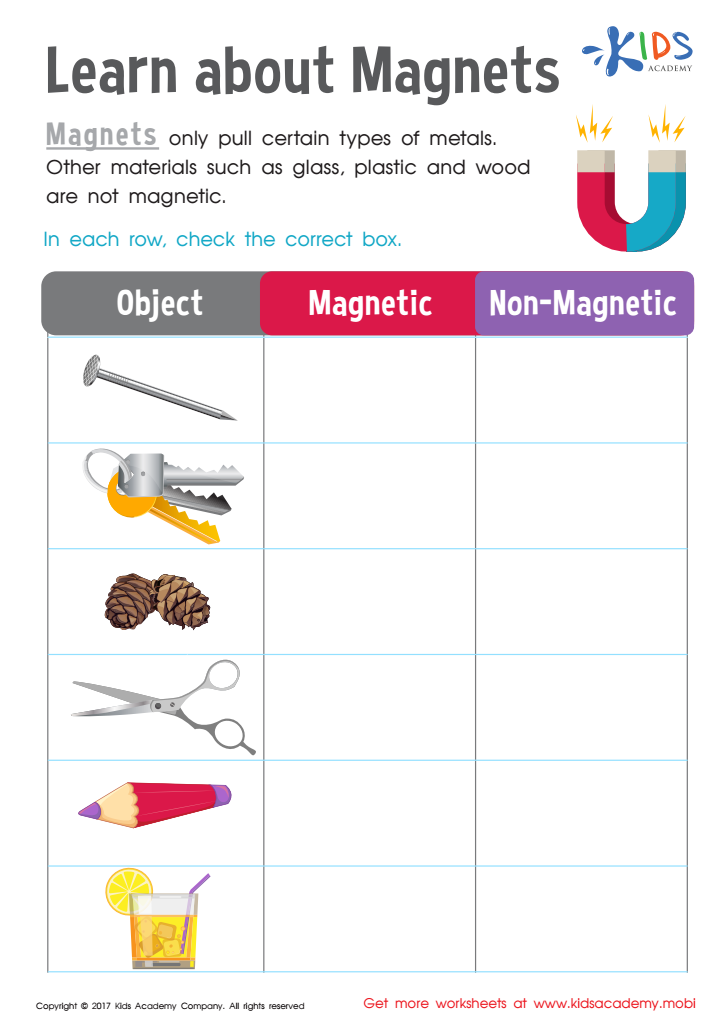
Magnetic Or Not Worksheet
 Assign to My Students
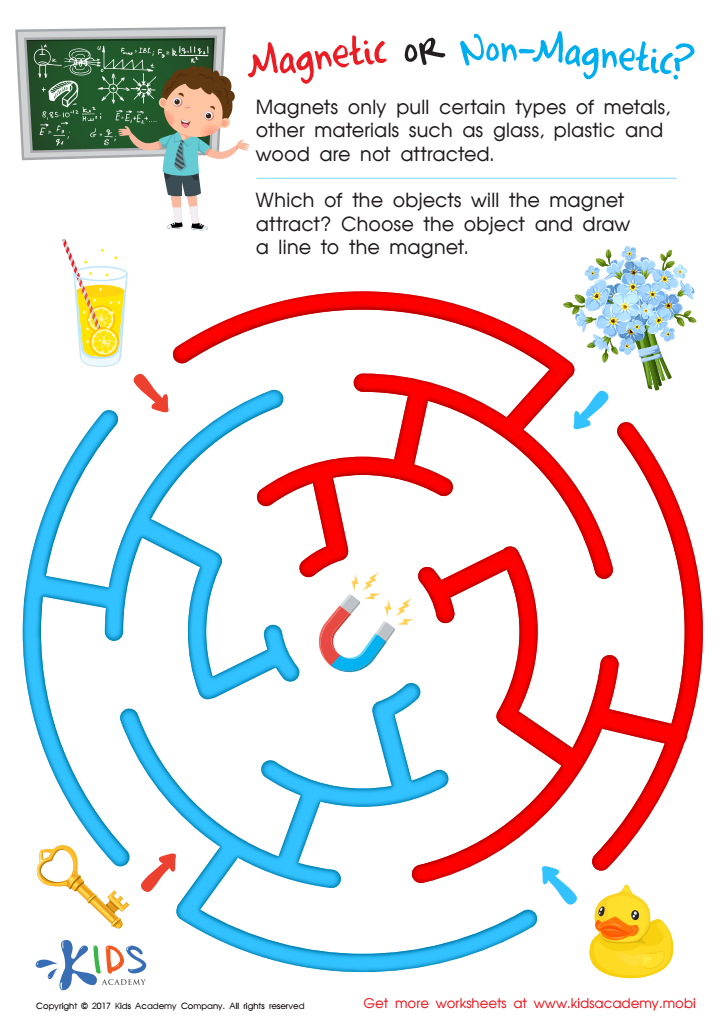
Magnetic or Non–Magnetic Worksheet
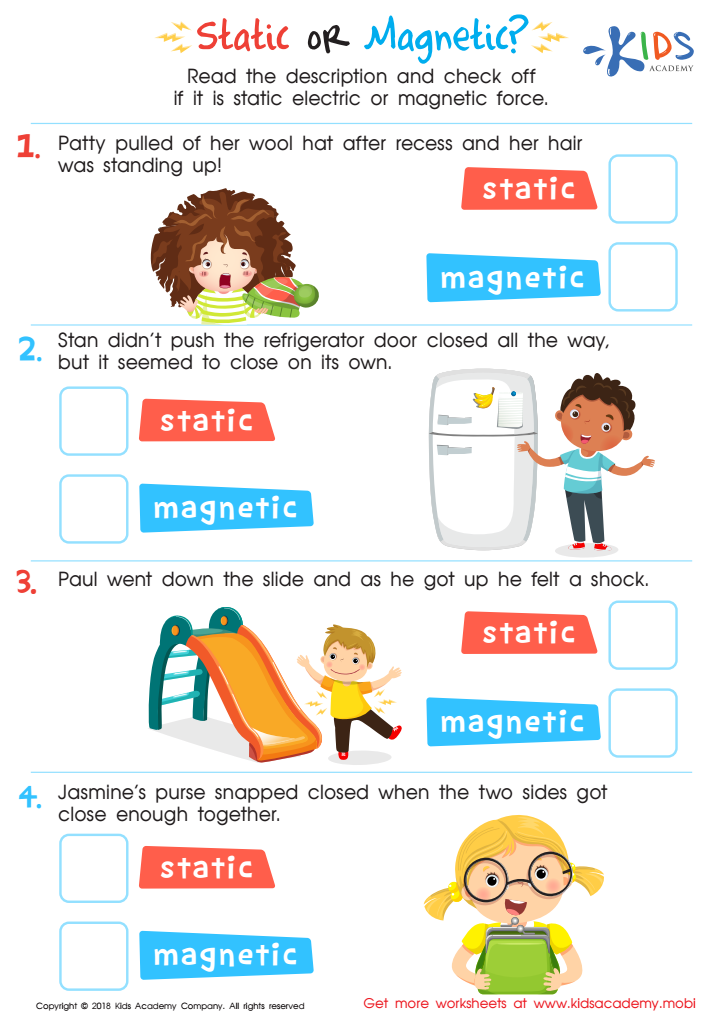
Static or Magnetic Printable Worksheet
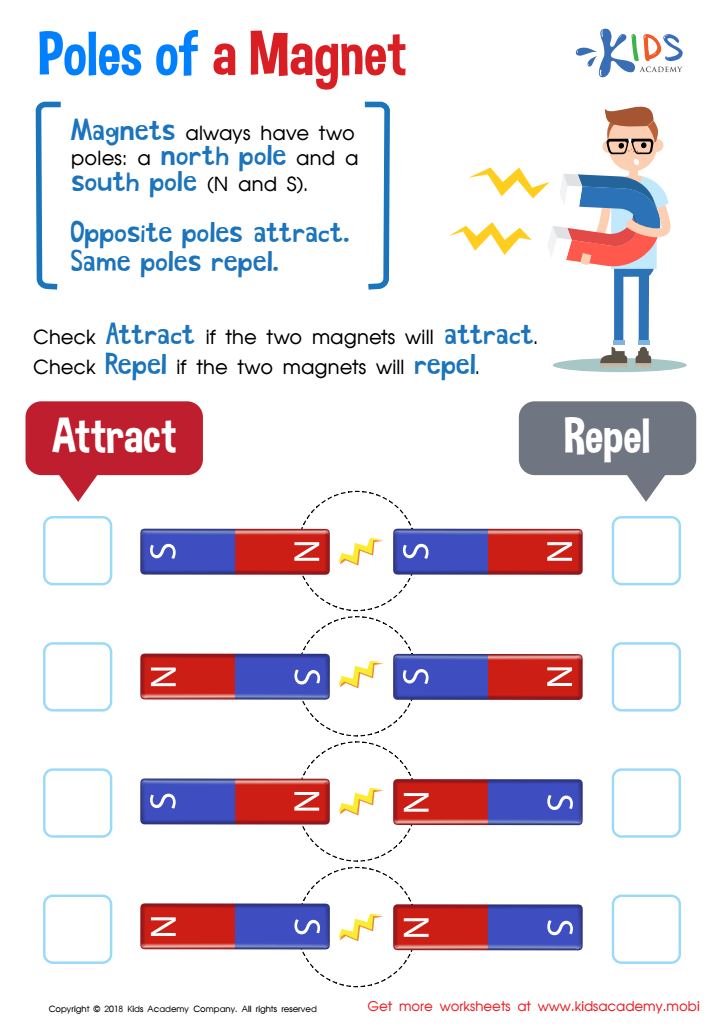
Magnet Poles Attract or Repel Worksheet







Understanding magnetism is essential for children ages 6-8 as it lays the groundwork for their scientific literacy and critical thinking skills. At this age, children are naturally curious about the world around them. Teaching them about magnetism sparks their interest in science, encouraging exploration and experimentation. It fosters a hands-on approach to learning, as children can engage in simple experiments to see magnetic properties firsthand, making learning interactive and fun.
Moreover, grasping the concept of magnetism helps children develop problem-solving skills. They learn to ask questions, make predictions, and test their ideas, all of which are important competencies in any educational journey. Understanding this fundamental physical phenomenon also connects to various subjects, including physics, engineering, and everyday life scenarios, such as how compasses work or how refrigerator magnets stick.
Additionally, introducing magnetism at an early age promotes cognitive development. It enhances critical thinking, spatial awareness, and encourages scientific inquiry, laying a foundation for more complex concepts later on. It also empowers children with the knowledge to understand technological advancements and innovations in their future, making it an integral part of their education for curiosity, comprehension, and future learning.








