Understanding ordinal numbers Worksheets for Ages 6-8
3 filtered results
-
From - To
Explore our engaging “Understanding Ordinal Numbers Worksheets” designed for children aged 6-8! These fun and interactive printables help young learners grasp the concept of ordinal numbers through various exercises. From identifying positions in a line-up to solving engaging puzzles, our worksheets make learning ordinal numbers enjoyable. Each activity encourages skill development in sequencing and math in a playful manner. Perfect for classroom or home use, these resources provide essential practice that reinforces foundational math skills. Enhance your child’s learning experience today with these carefully crafted worksheets that support their educational journey while keeping learning exciting!
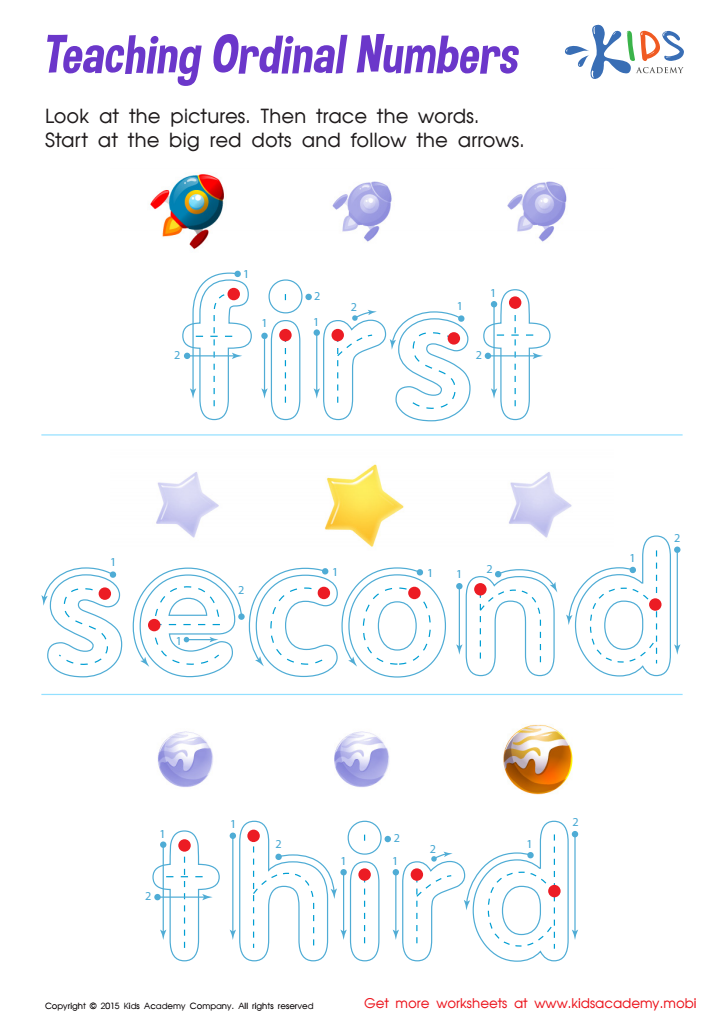
Ordinal Numbers: Teaching Ordinal Numbers Printable
 Assign to My Students
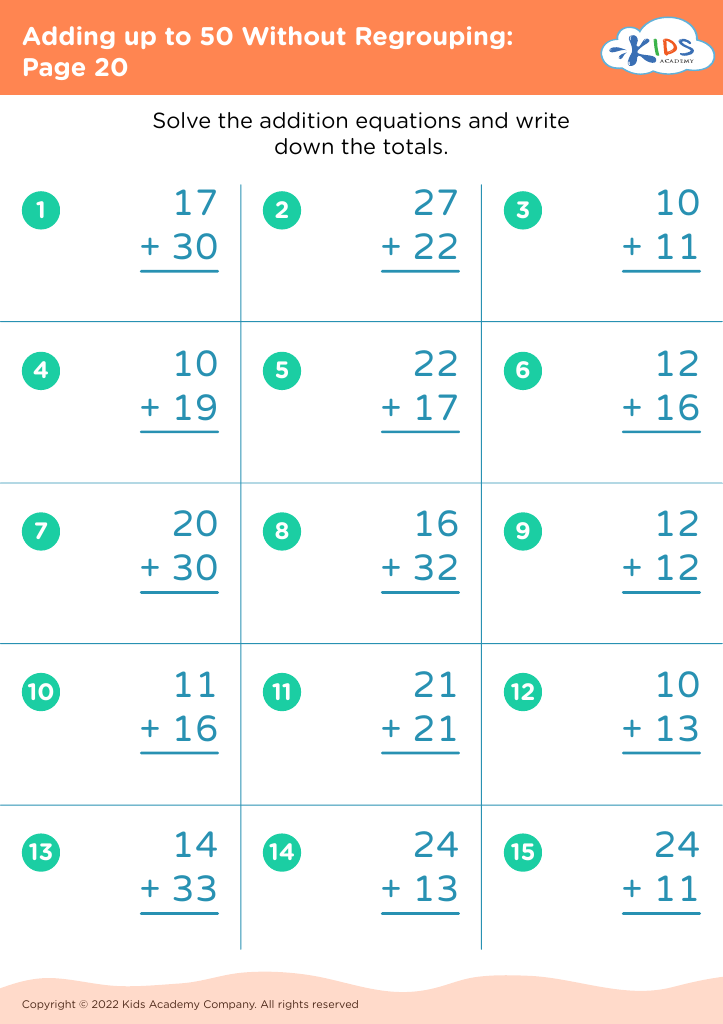
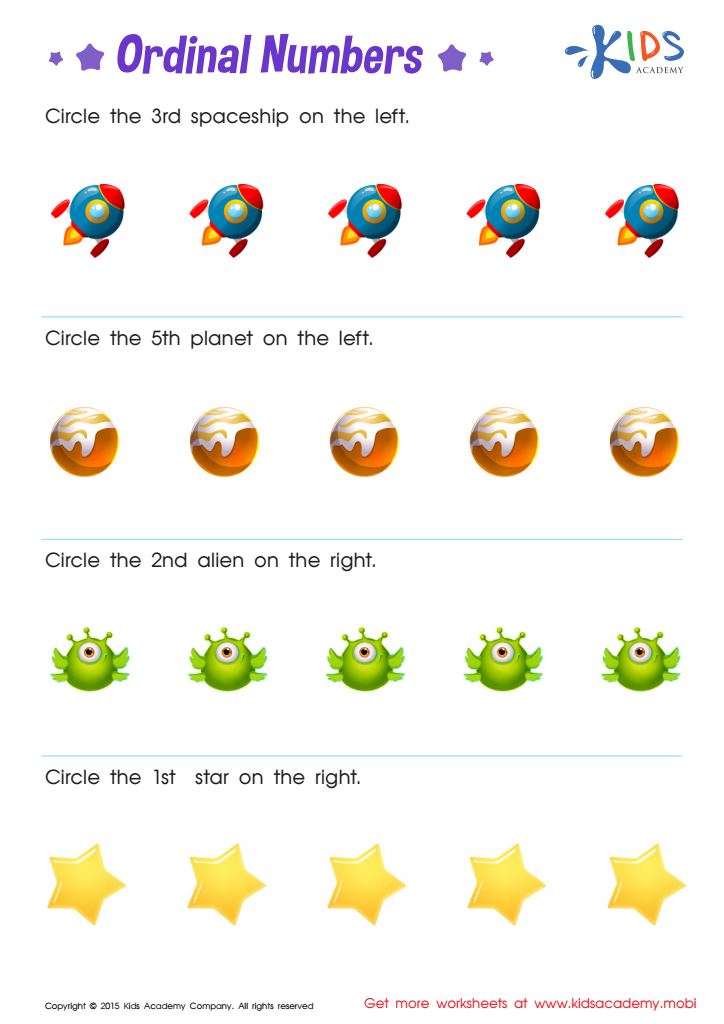
Ordinal Numbers: Space Ordinals Worksheet








Understanding ordinal numbers is crucial for children aged 6 to 8 as it lays a foundation for essential mathematical concepts and everyday life skills. Ordinal numbers, which represent position or rank (such as first, second, and third), help children grasp key ideas about sequences and order. This understanding is fundamental in various contexts—whether in academics, sports, or social interactions.
For parents and teachers, fostering an understanding of ordinal numbers enhances children's cognitive development. It introduces them to comparisons and helps build critical thinking skills necessary for more complex mathematics in the future. Additionally, ordinal numbers are essential in following directions, whether in games or activities, enabling children to navigate their environment safely and effectively.
Moreover, knowing how to identify and utilize ordinal numbers encourages organization and planning. It teaches children how to express processes and sequence events in storytelling and daily routines. Understanding ordinal numbers can also boost children's confidence, as they learn to articulate their position in a line or score in games.
In summary, a solid grasp of ordinal numbers supports children's mathematical growth, enhances their understanding of the world around them, and prepares them for more advanced concepts in both math and daily life. Parents and teachers should prioritize this skill in their teaching strategies.








