Enhance counting skills Adding up to 100 Worksheets for Ages 6-8
6 filtered results
-
From - To
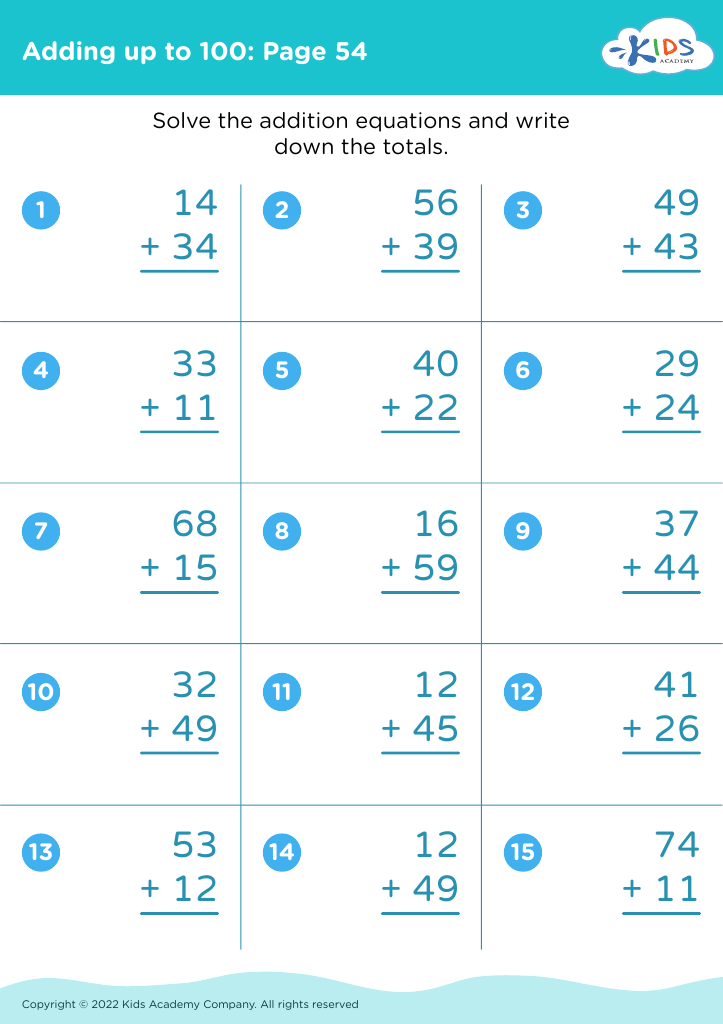
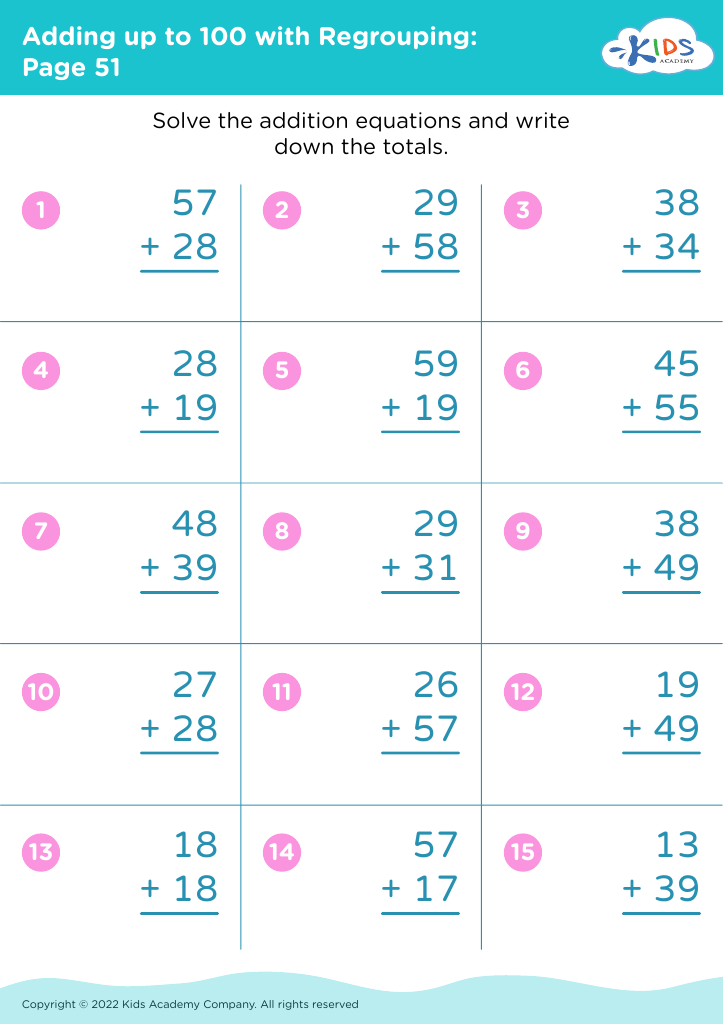
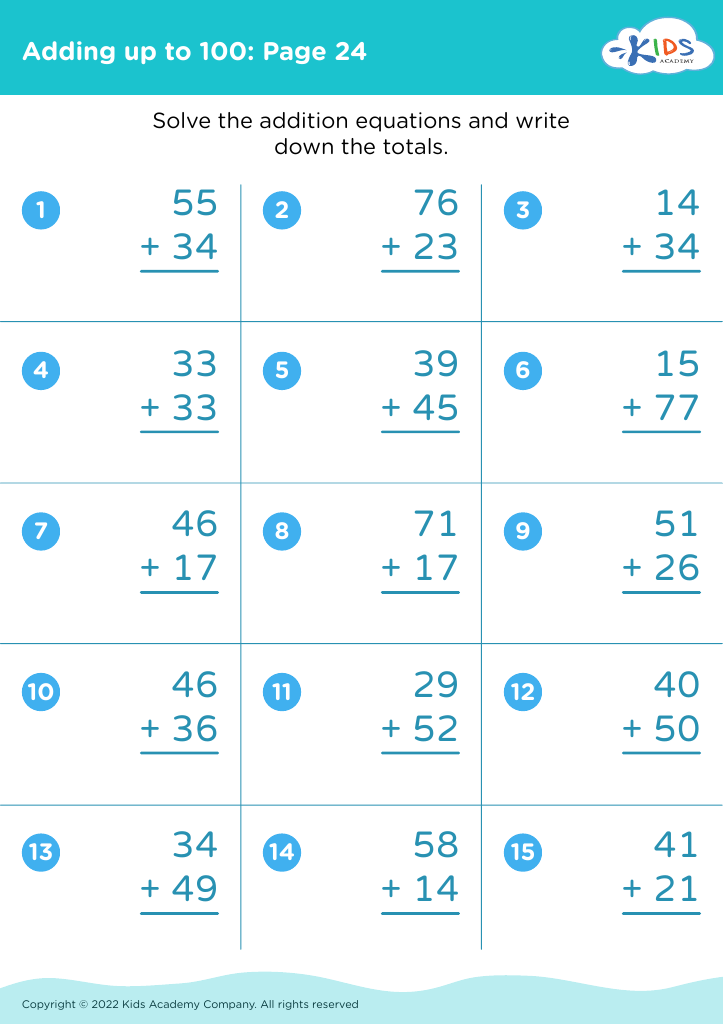
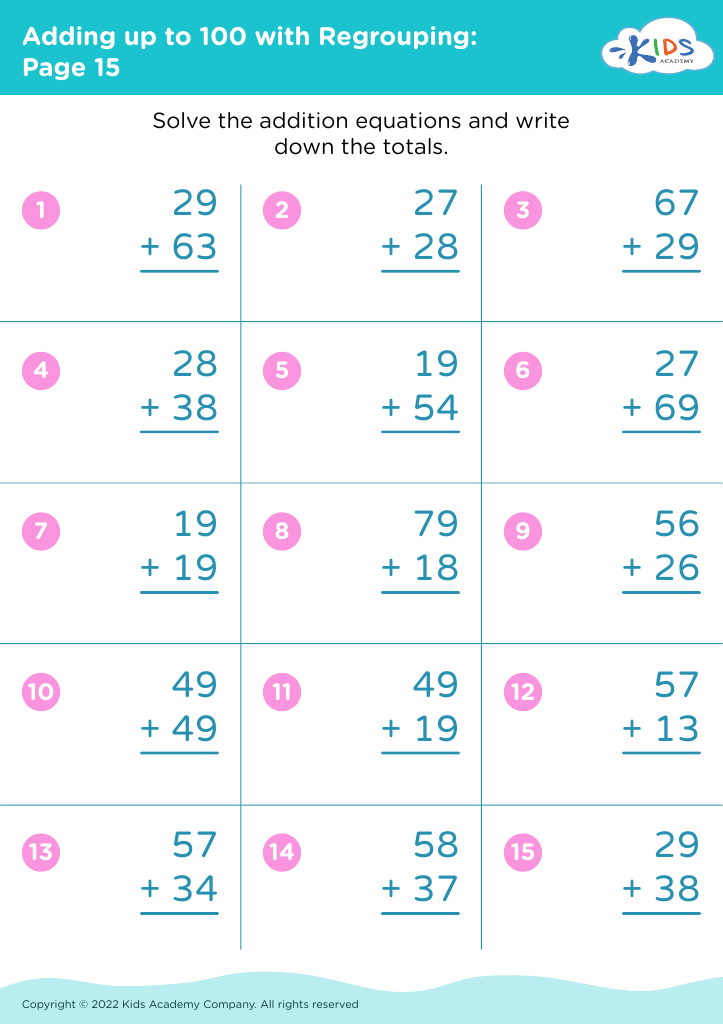
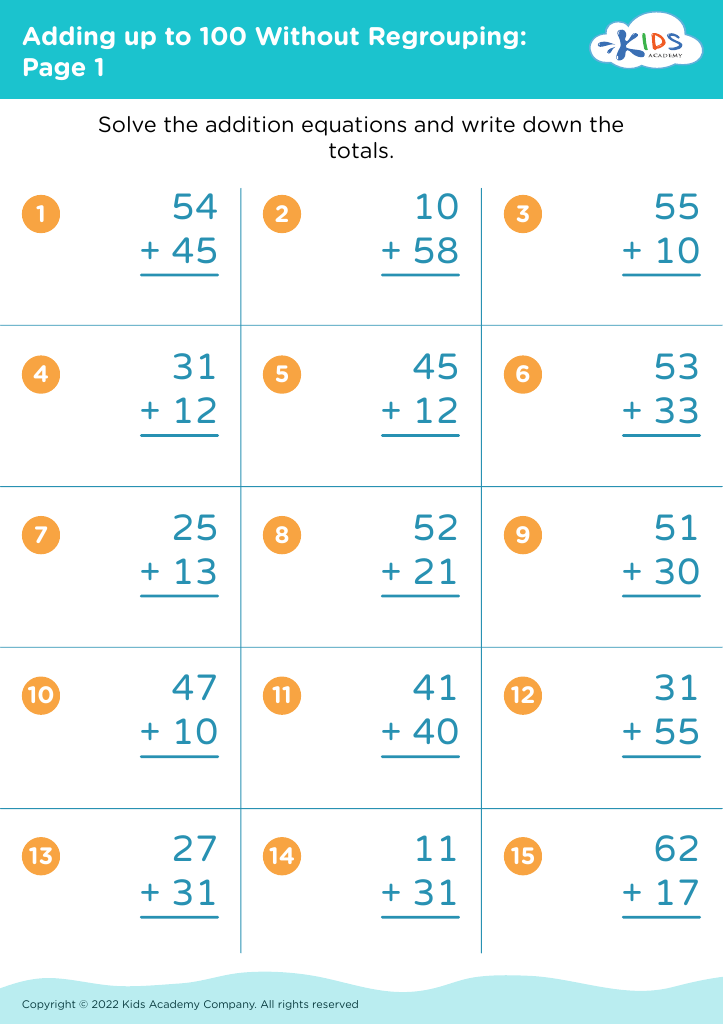
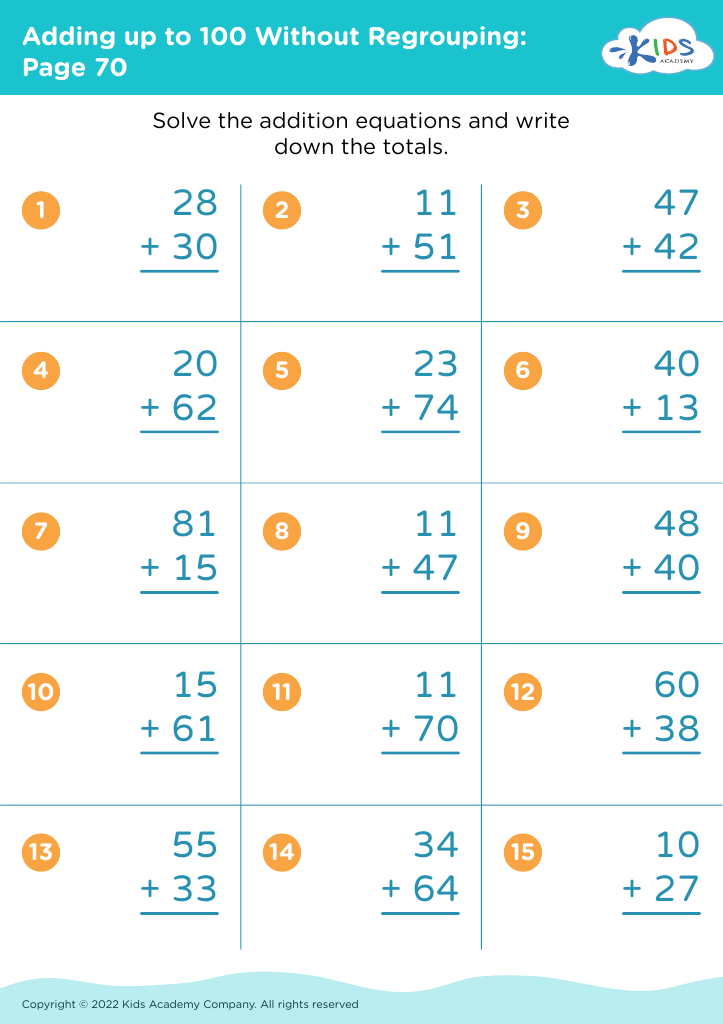
Boost your child's math prowess with our "Enhance Counting Skills: Adding up to 100 Worksheets" designed for ages 6-8! Our fun and engaging worksheets help young learners develop vital addition skills while building confidence in their counting abilities. Tailored to complement school curricula, these resources focus on adding numbers up to 100 through various exercises, from simple equations to word problems. Perfect for at-home practice or classroom use, our worksheets cater to different learning styles, ensuring every child thrives. Set your child on the path to math success with our expertly crafted worksheets that make learning both enjoyable and rewarding!





%20(1).jpg)

Enhancing counting skills and the ability to add up to 100 for children ages 6-8 is crucial for a solid mathematical foundation. At this age, children transition from simple counting to understanding more complex arithmetic operations, which are essential skills for their academic success and everyday life.
First, strong counting skills form the basis for more advanced mathematical concepts. Being able to comfortably count up to 100 and perform addition within this range helps children grasp patterns, sequencing, and number relationships. This foundational knowledge is important for learning multiplication, division, and problem-solving in later grades.
Second, mathematical proficiency is linked to cognitive development. Counting and adding engage children in logical thinking, reasoning, and processing information, skills that are transferable across various subjects such as science and reading.
Third, confidence in math at an early age fosters a positive attitude towards the subject. When children master basic skills like counting and simple addition, they are more likely to feel confident and motivated to engage with more complex problems in the future.
Lastly, practical life applications of counting and addition are everywhere, from handling money to measuring ingredients for cooking. Early proficiency ensures that children are better equipped to handle everyday tasks that require mathematical thinking.
Therefore, parents and teachers should prioritize enhancing these skills to support both academic and personal development.








