Identify shapes Adding up to 100 Worksheets for Ages 6-8
4 filtered results
-
From - To
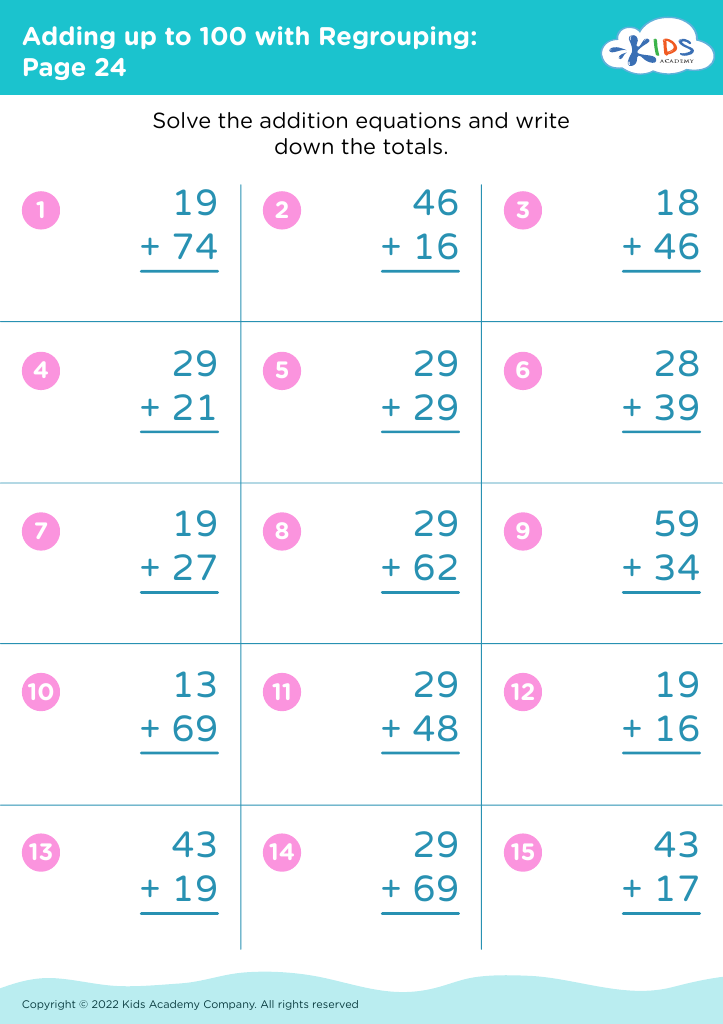
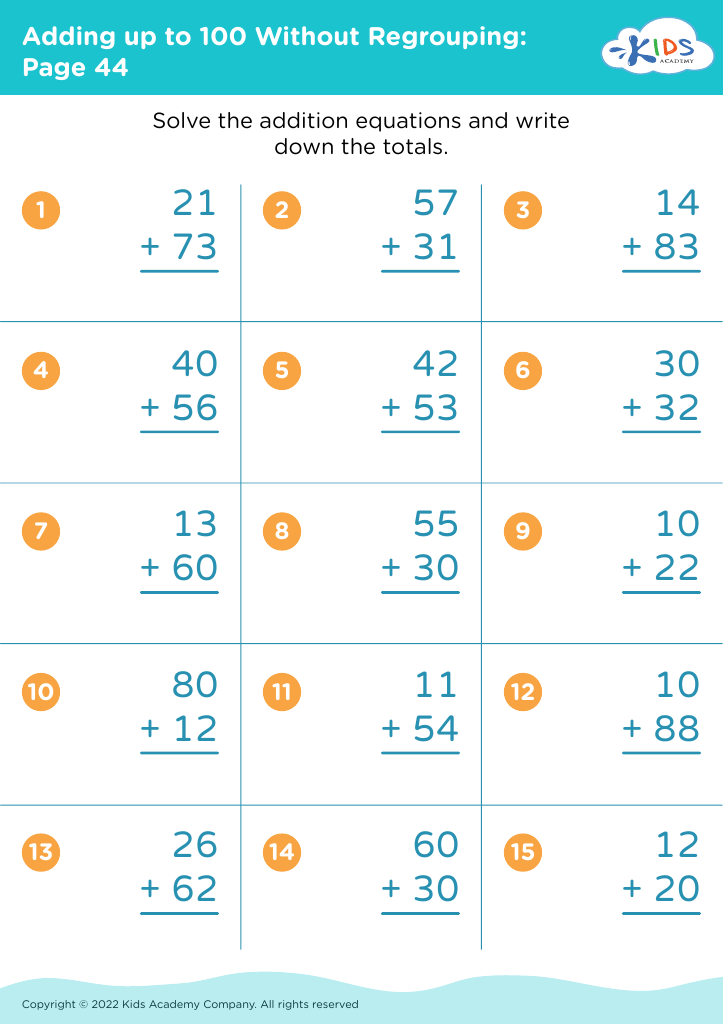
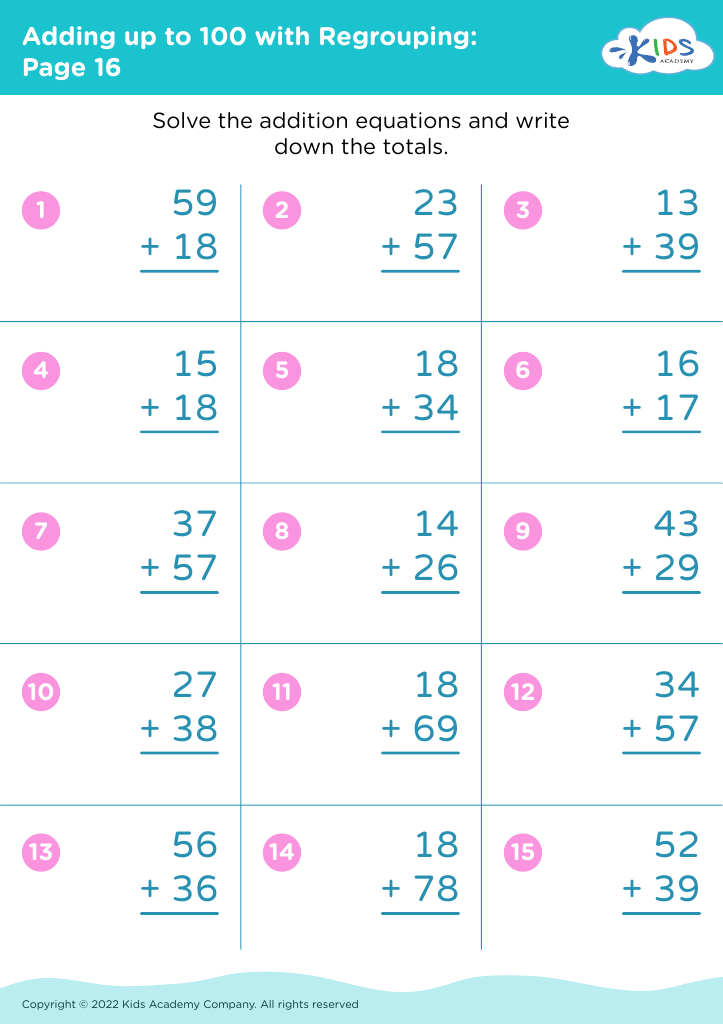
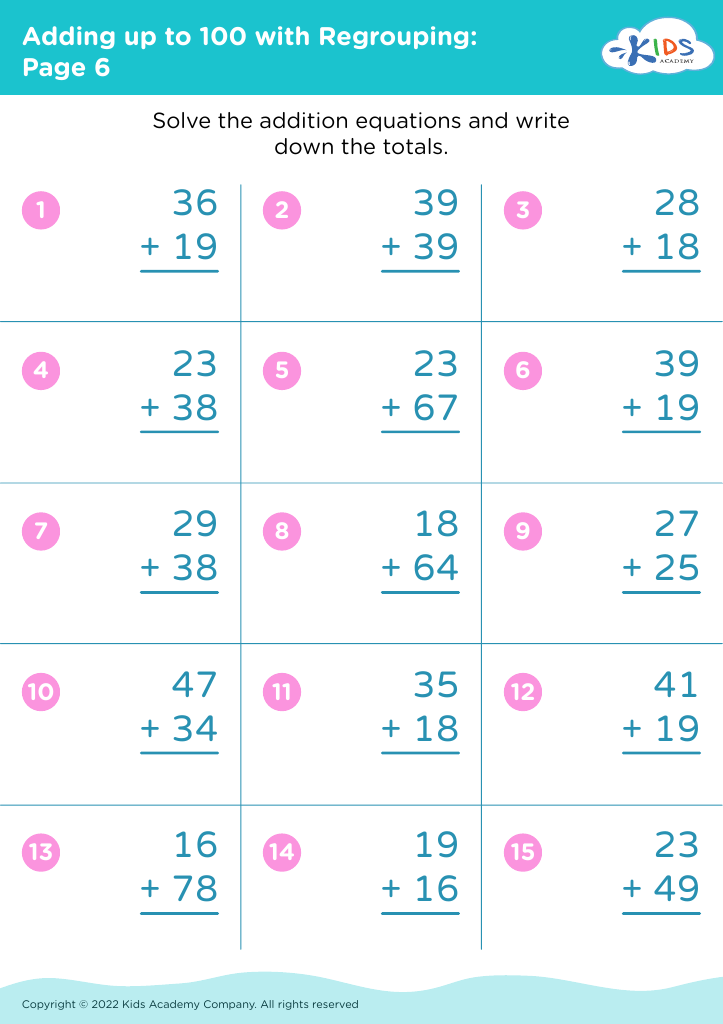
Explore our engaging "Identify Shapes Adding Up to 100 Worksheets" designed specifically for children ages 6-8! These worksheets combine shape identification with addition skills, making learning both fun and effective. Children will practice recognizing shapes while solving math problems that total up to 100. Perfect for reinforcing key concepts in geometry and addition, our worksheets help boost critical thinking and problem-solving abilities. Interactive and colorful, these resources cater to various learning styles, ensuring that every child is excited to participate. Download now and watch your young learner thrive in math while enjoying the world of shapes!





%20(1).jpg)

Teaching children to identify shapes and understand the concept of addition up to 100 is crucial for their cognitive and mathematical development. For ages 6-8, this skill set lays the foundation for critical thinking and problem-solving abilities. Recognizing shapes—like circles, squares, and triangles—helps children understand spatial relationships and develop their visual perception skills. These competencies are not only important in geometry but also in everyday life, like understanding maps and patterns.
When combined with adding up to 100, students enhance their numerical literacy, which is vital for more complex mathematical concepts. Learning to add up to 100 encourages children to think strategically and develop mental math skills, empowering them to tackle larger numbers as they progress. This knowledge also intersects with money management, time calculations, and basic data interpretation.
Engaging lessons that incorporate shapes and addition make learning interactive and enjoyable, fostering a love for mathematics. As parents and teachers, aiding children in mastering these skills promotes confidence, instills perseverance, and prepares them for future academic challenges. Ultimately, investing time in teaching these concepts at this age benefits not just their immediate understanding but significantly influences their overall educational trajectory.








