Recognize patterns Adding up to 100 Worksheets for Ages 6-8
4 filtered results
-
From - To
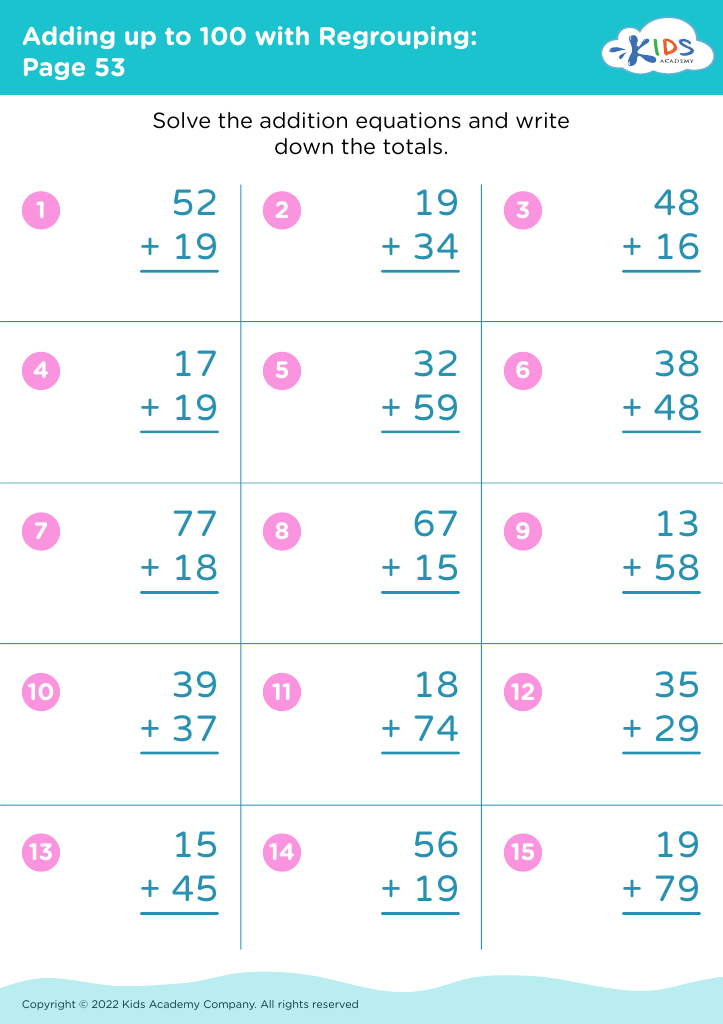
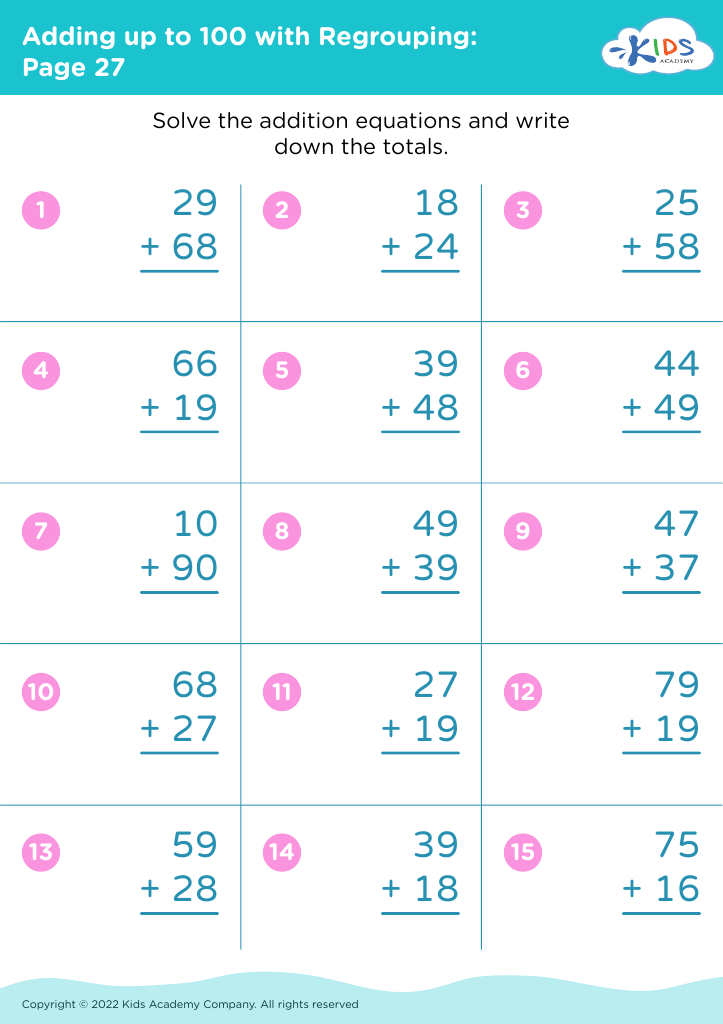
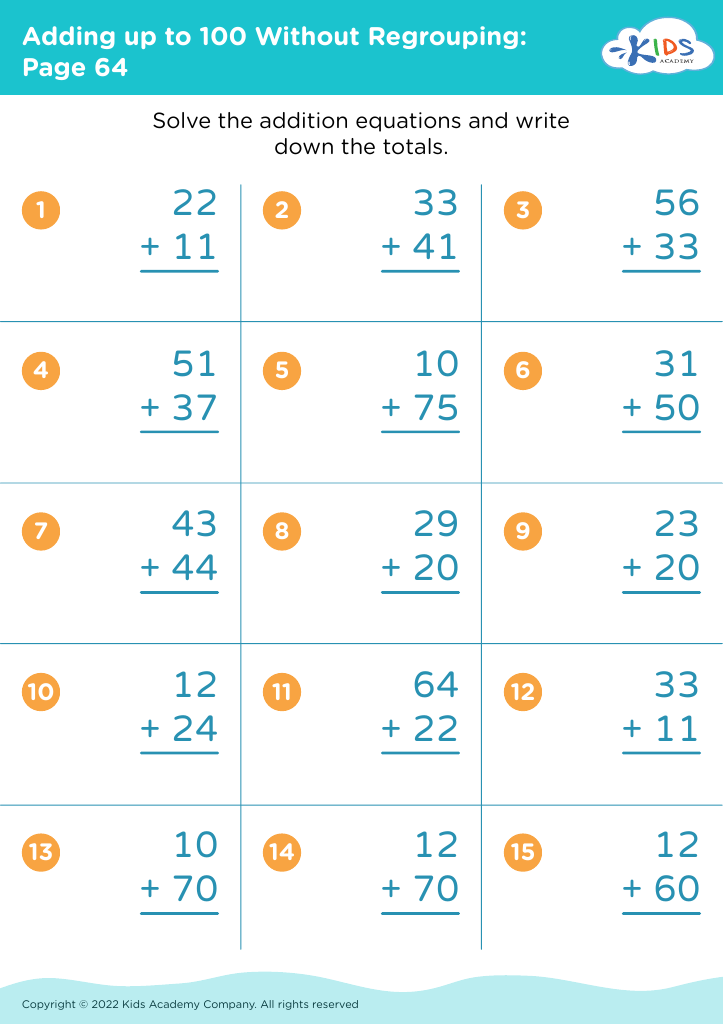
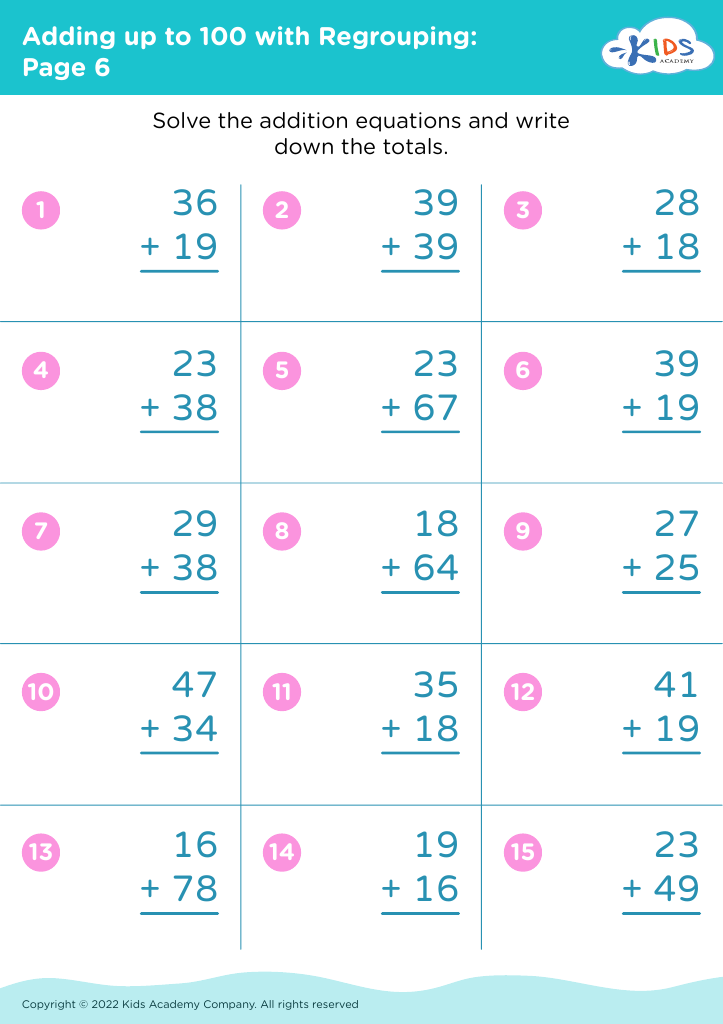
Introducing our "Recognize Patterns Adding up to 100 Worksheets" designed specifically for ages 6-8! These engaging worksheets help young learners explore number patterns and reinforce addition skills as they discover how numbers come together to reach 100. With colorful visuals and interactive exercises, children will enjoy practicing their math skills while honing their ability to recognize patterns—crucial for building a strong mathematical foundation. Each worksheet promotes critical thinking and problem-solving, making math fun and exciting. Perfect for classroom use or at-home learning, these resources are a fantastic way to empower kids on their journey to mastering addition. Start exploring patterns today!




%20(1).jpg)


Recognizing patterns, particularly in the context of adding up to 100, is crucial for children aged 6-8 as it lays the foundation for their mathematical understanding and critical thinking skills. This age group is at a pivotal stage in their cognitive development where they begin to understand numerical relationships and how numbers work together.
By recognizing patterns in numbers, children can efficiently solve addition problems and delve into more complex mathematics in the future. For instance, understanding that 50 + 50 equals 100 helps them see connections and apply that knowledge to other equations. This also fosters early skills in estimation, as they can create mental shortcuts based on identified patterns.
Moreover, when parents and teachers emphasize the recognition of patterns, it enhances a child's confidence in math. Children who feel successful are more likely to engage in mathematical activities with enthusiasm, ethically switching from rote memorization to a deeper conceptual understanding. Engaging with patterns not only sharpens a child’s math skills but invites creativity, problem-solving, and logical reasoning, all essential skills in today’s increasingly complex world. Thus, supporting children in recognizing these patterns is vital for their mathematical journey and overall cognitive development.








