Simplifying Fractions Adding up to 100 Worksheets for Ages 6-8
3 filtered results
-
From - To
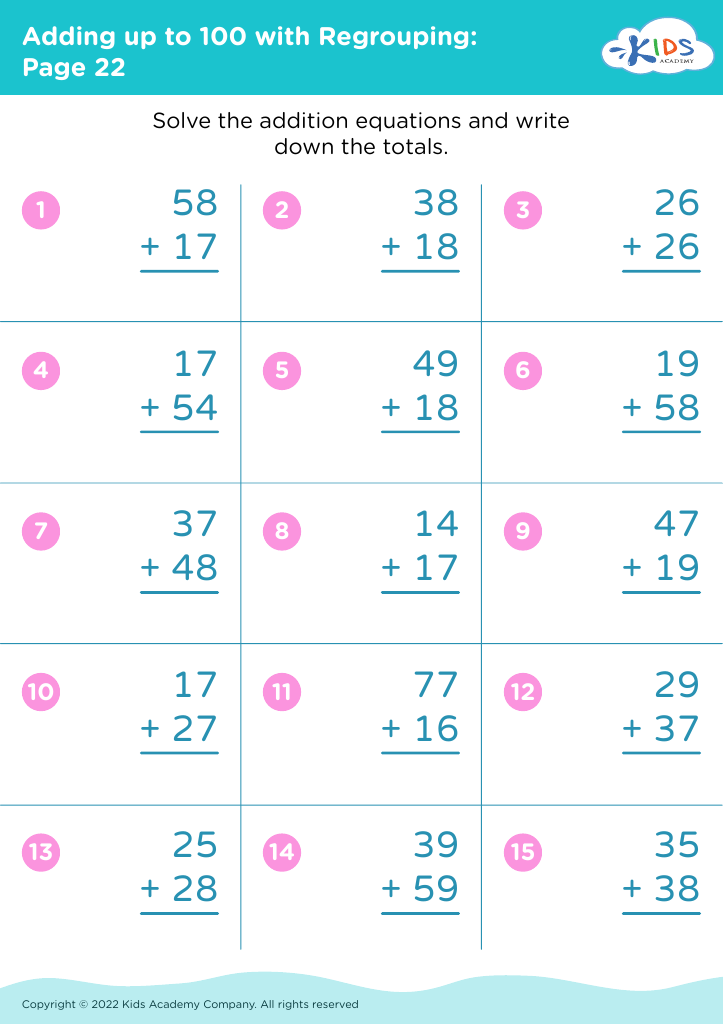
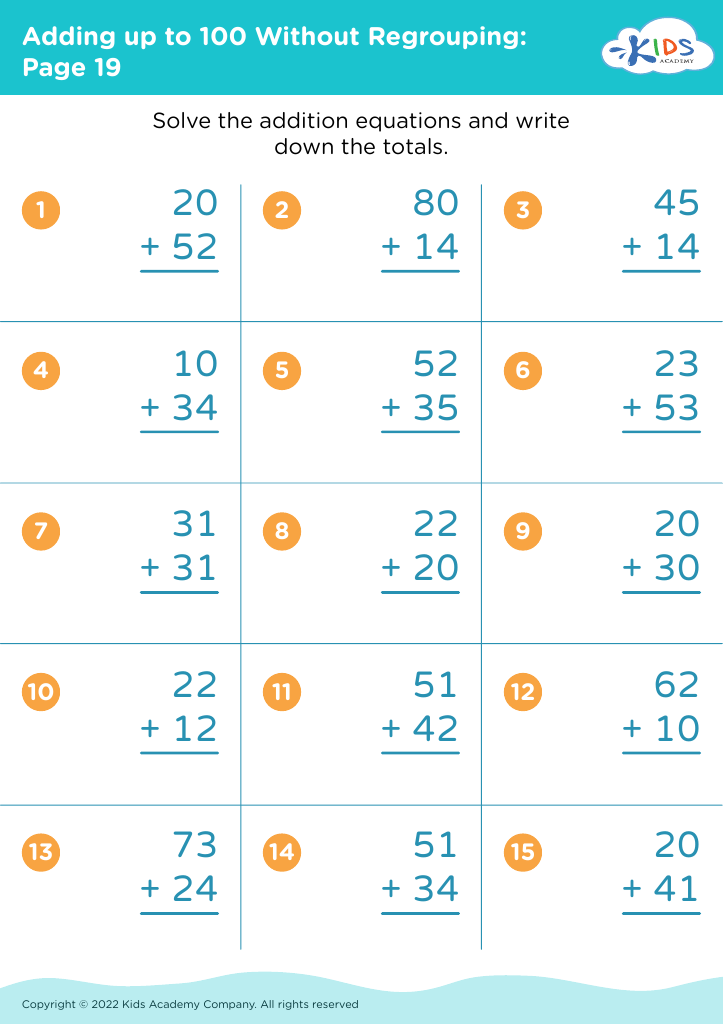
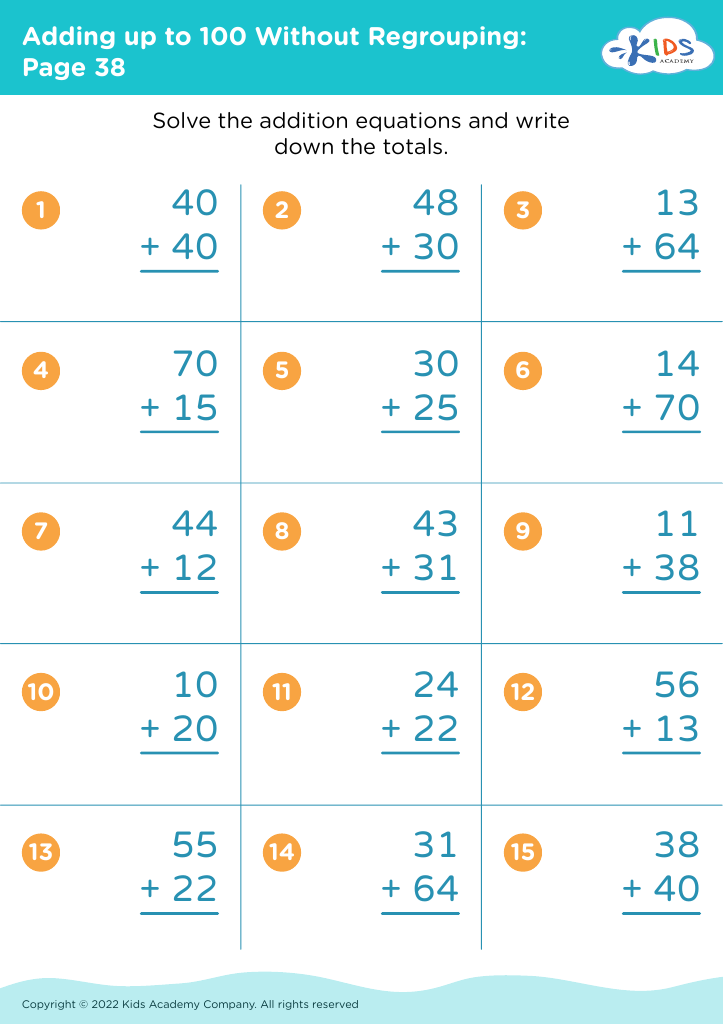
Welcome to our "Simplifying Fractions Adding Up to 100 Worksheets" tailored for children ages 6-8! These interactive worksheets are designed to engage young learners while helping them master the concept of simplifying fractions. With a variety of exercises, children will practice reducing fractions to their simplest form, enhancing their math skills and confidence. Each worksheet encourages critical thinking and problem-solving, making learning both fun and effective. Perfect for classroom use or at-home practice, our resources make math accessible and enjoyable. Start your child's journey to fraction fluency today and unlock a world of mathematical possibilities!






%20(1).jpg)
Simplifying fractions that add up to 100 is an essential skill for children aged 6-8, which can greatly benefit their mathematical foundation and critical thinking skills. First, mastering this concept aids in developing number sense, allowing children to recognize relationships between numbers and understand the proportions involved in fractions. This understanding is crucial as it lays the groundwork for more complex math topics in later years.
Furthermore, when children learn to simplify fractions, they enhance their problem-solving skills and increase their ability to work with various mathematical concepts. It encourages logical reasoning and helps them relate mathematical concepts to real-world situations, such as sharing food or measuring ingredients.
Moreover, teaching this skill fosters confidence in their abilities. When students feel successful in simplified steps, they are more likely to engage with more challenging math tasks ahead. For parents and teachers, promoting this knowledge at a young age equips children with essential tools to navigate their academic journey. Engaging in activities that involve simplifying fractions adds value to their learning experience and helps establish a strong mathematical foundation that will serve them well throughout their education.








