Basic arithmetic skills Addition and Subtraction Word Problems Worksheets for Ages 6-8
3 filtered results
-
From - To
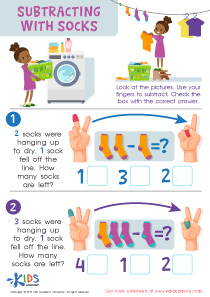
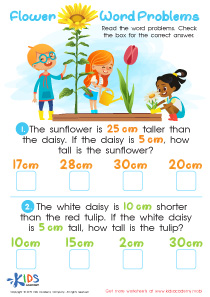
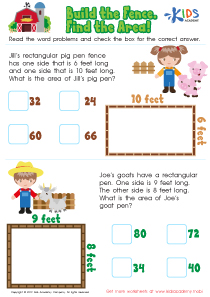
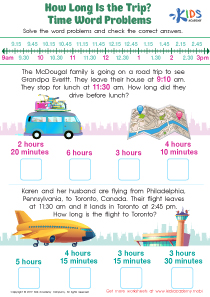
Enhance your child's basic arithmetic skills with our engaging addition and subtraction word problems worksheets designed specifically for ages 6-8. These worksheets provide a fun and interactive way for young learners to practice their math skills in real-world contexts. Each problem encourages critical thinking as students work through various scenarios, strengthening their understanding of addition and subtraction concepts. With colorful illustrations and age-appropriate language, your child will enjoy tackling these challenges while improving their problem-solving abilities. Equip your little ones with the confidence they need in math and watch them excel! Download your worksheets today and support their learning journey!
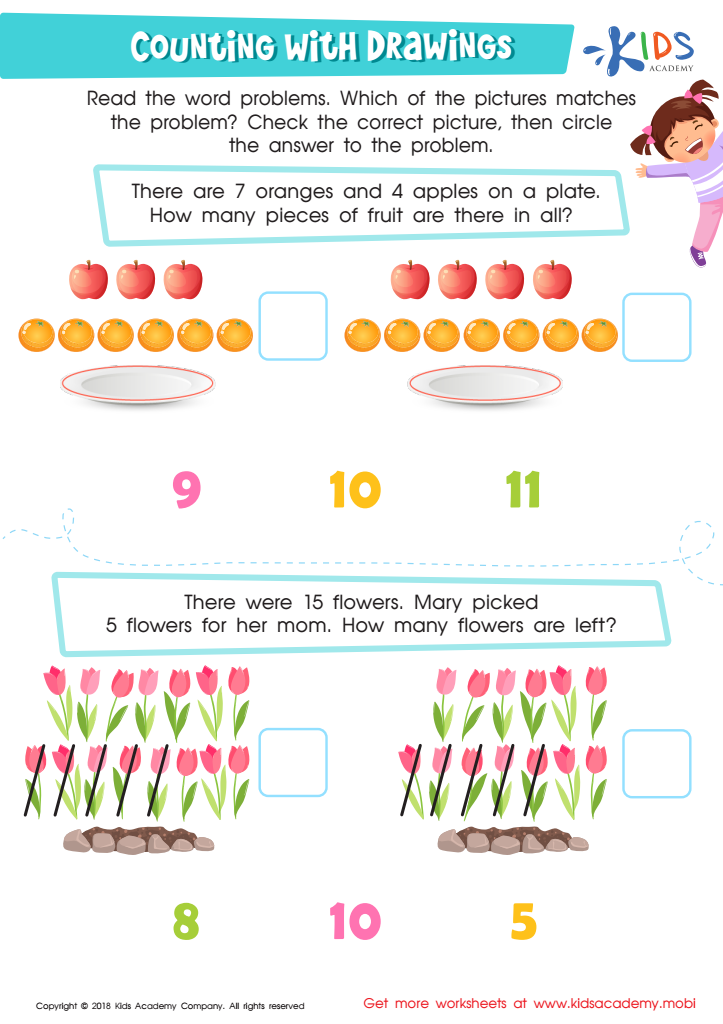
Counting with Drawings: Fruits & Chocolates Worksheet
 Assign to My Students
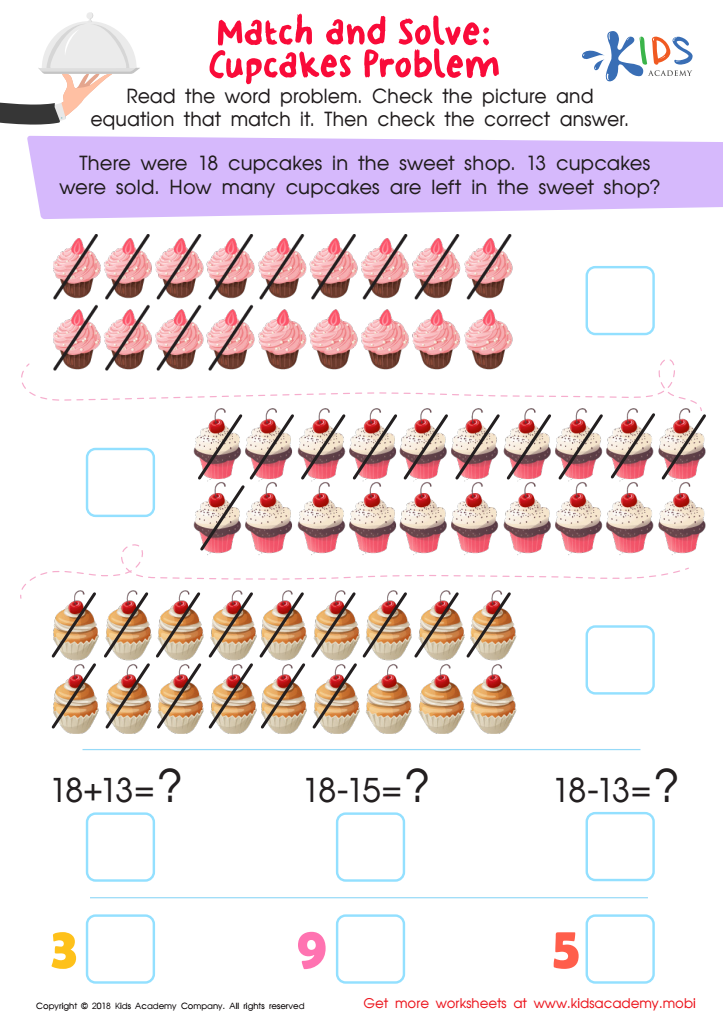
Match and Solve: Cupcakes Problem Worksheet
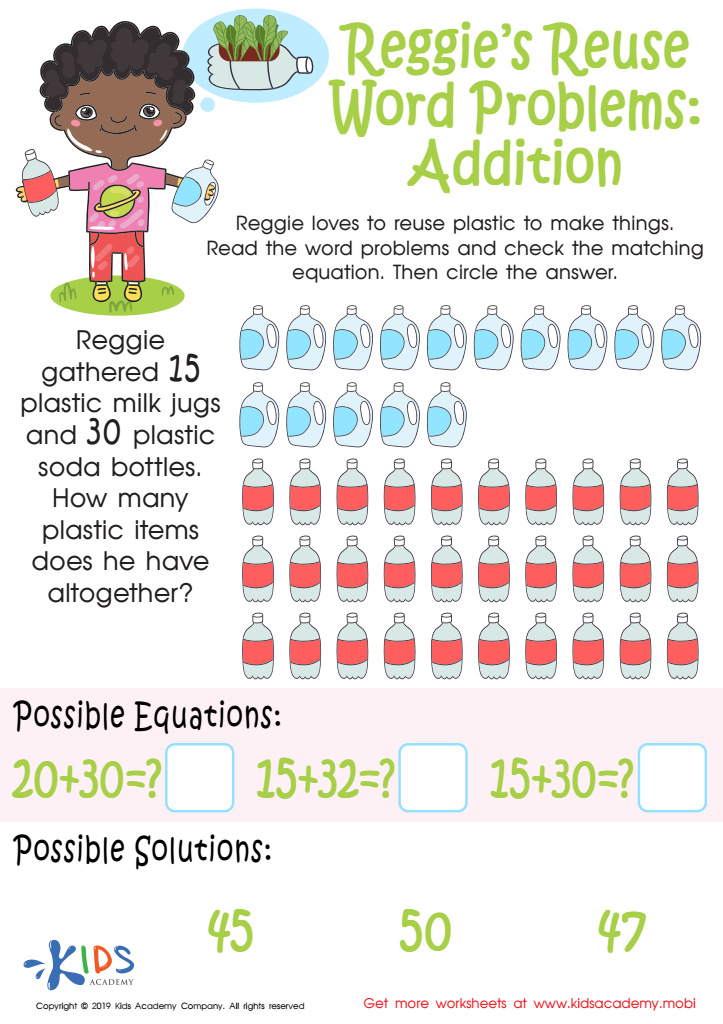
Reggie's Reuse Word Problems: Addition Worksheet








Parents and teachers should prioritize basic arithmetic skills, particularly addition and subtraction word problems, for children aged 6-8, as these skills form the foundation for future mathematical learning and problem-solving abilities. Mastering these concepts promotes critical thinking, as children learn to analyze and interpret everyday situations that require mathematical reasoning.
Furthermore, word problems help students apply their knowledge in real-life contexts, fostering a practical understanding of math. This enhances their ability to communicate mathematical ideas clearly and boosts their confidence in handling everyday challenges. As children at this age are naturally curious and eager to learn, engaging them with exciting and relatable word problems can make mathematics enjoyable, reinforcing persistence and a positive attitude toward math.
Additionally, proficiency in these skills supports achievement across various academic subjects, as many disciplines incorporate math. Establishing a strong arithmetic foundation also helps to identify and address any learning gaps early, providing timely support to set children on a successful educational path. In summary, emphasis on addition and subtraction word problems is crucial for developing effective problem-solving skills, instilling confidence, and preparing children for a future where quantitative reasoning is essential.