Hand-eye Coordination Addition and Subtraction Word Problems Worksheets for Ages 6-8
3 filtered results
-
From - To
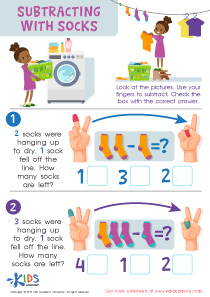
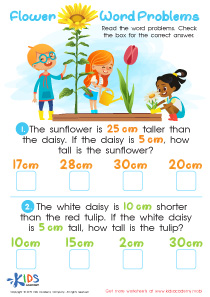
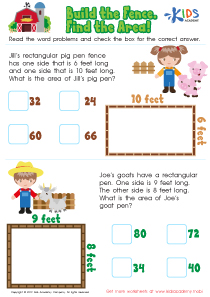
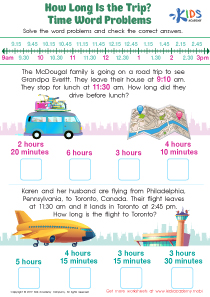
Enhance your child's math skills with our engaging Hand-eye Coordination Addition and Subtraction Word Problems Worksheets, designed specifically for children aged 6-8. These worksheets combine innovative word problems with fun, hands-on activities to boost your child's hand-eye coordination while practicing essential math concepts. Improve understanding of addition and subtraction through real-life scenarios, fostering critical thinking and problem-solving abilities. With vibrant illustrations and age-appropriate challenges, children will stay motivated and engaged. Our resources support cognitive development and reinforce fine motor skills, making math learning an enjoyable experience. Explore our collection and help your child master math in a playful, interactive way!
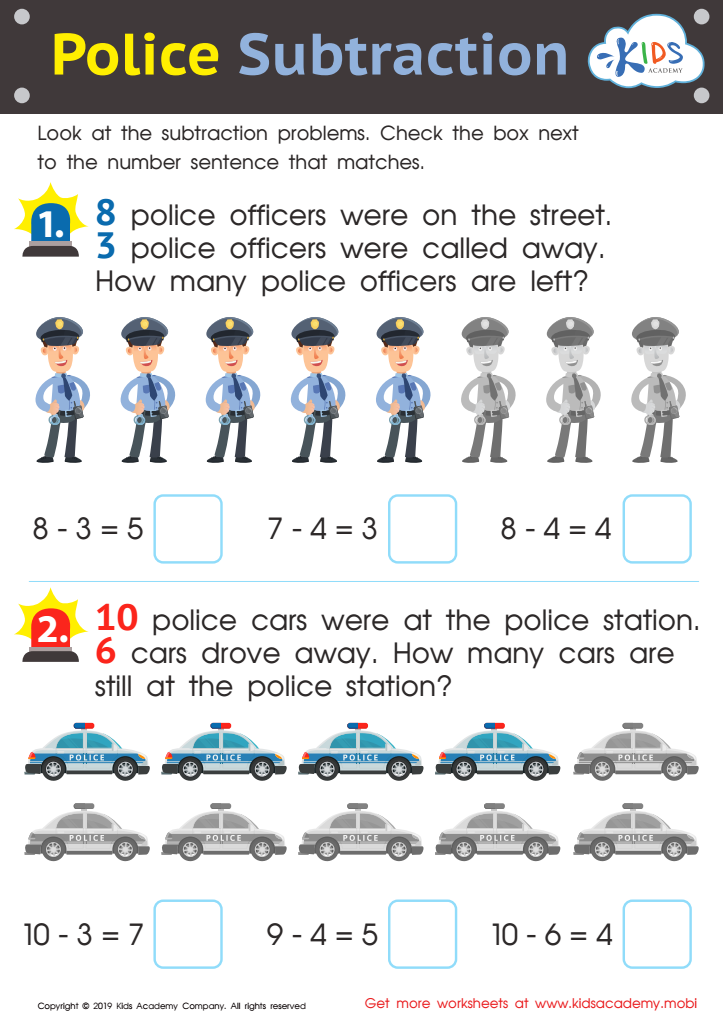
Police Subtraction Worksheet
 Assign to My Students
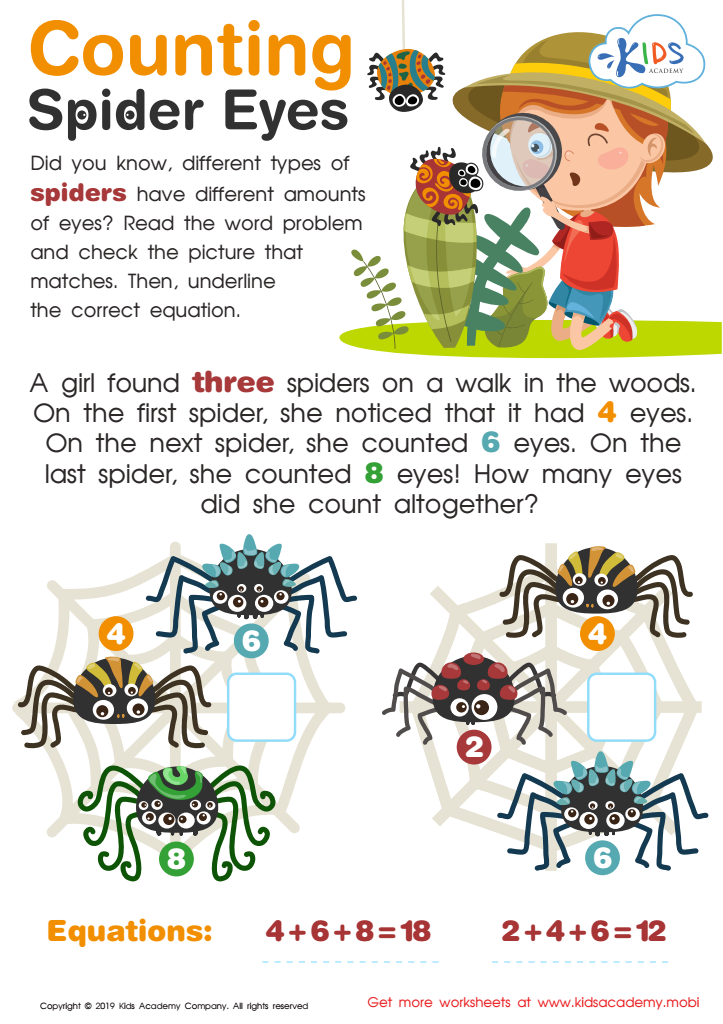
Counting Spider Eyes Worksheet
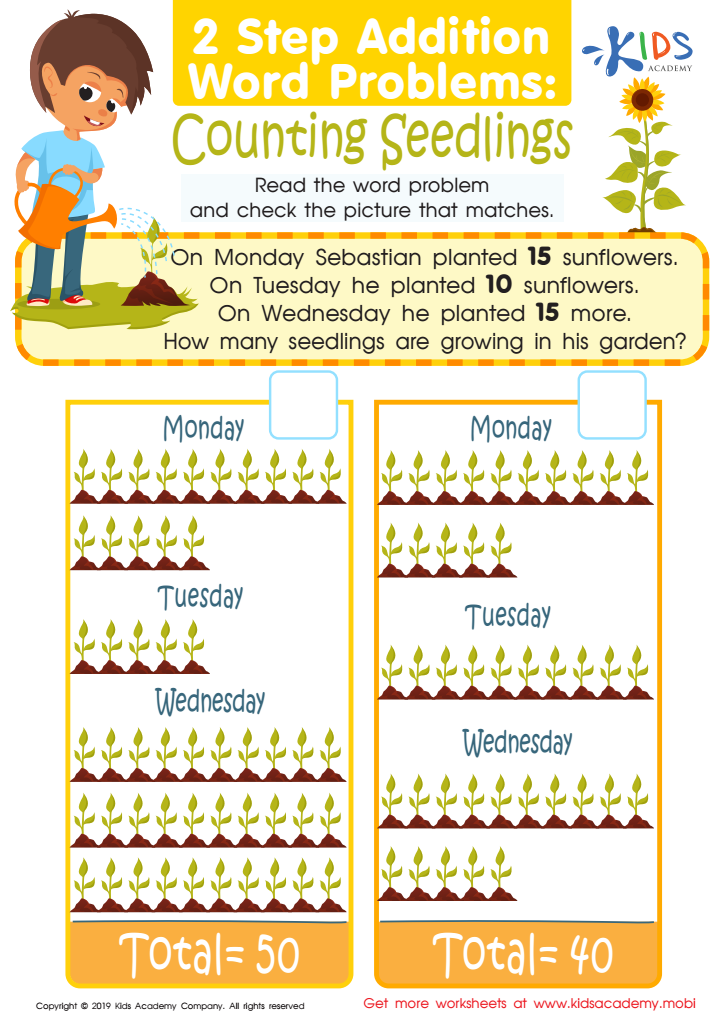
Counting Seedlings Worksheet








Parents and teachers should prioritize hand-eye coordination addition and subtraction word problems for children aged 6-8 as these activities promote essential cognitive and physical skills simultaneously. At this developmental stage, children are not only learning basic math operations but also improving their fine motor skills and coordination, crucial for various learning experiences.
Hand-eye coordination activities related to math problems involve manipulating objects or using tools to physically solve problems, thus reinforcing the understanding of numbers and mathematical concepts through active engagement. This multisensory approach enhances comprehension, as children can visualize and physically interact with problems, making abstract concepts more tangible.
Moreover, solving word problems nurtures critical thinking and problem-solving abilities, encouraging children to analyze situations and deduce solutions. Such skills are foundational for later academic success, nurturing a child's confidence and independence in learning.
Incorporating these activities into learning routines also fosters a collaborative environment where children can work alongside peers or family members, strengthening social skills. By emphasizing integrated learning—combining motor skills with cognitive tasks—parents and teachers contribute to the holistic development of young children, establishing a strong basis for future mathematics proficiency and overall education.