Problem-Solving Skills Addition and Subtraction Word Problems Worksheets for Ages 6-8 - Page 2
33 filtered results
-
From - To
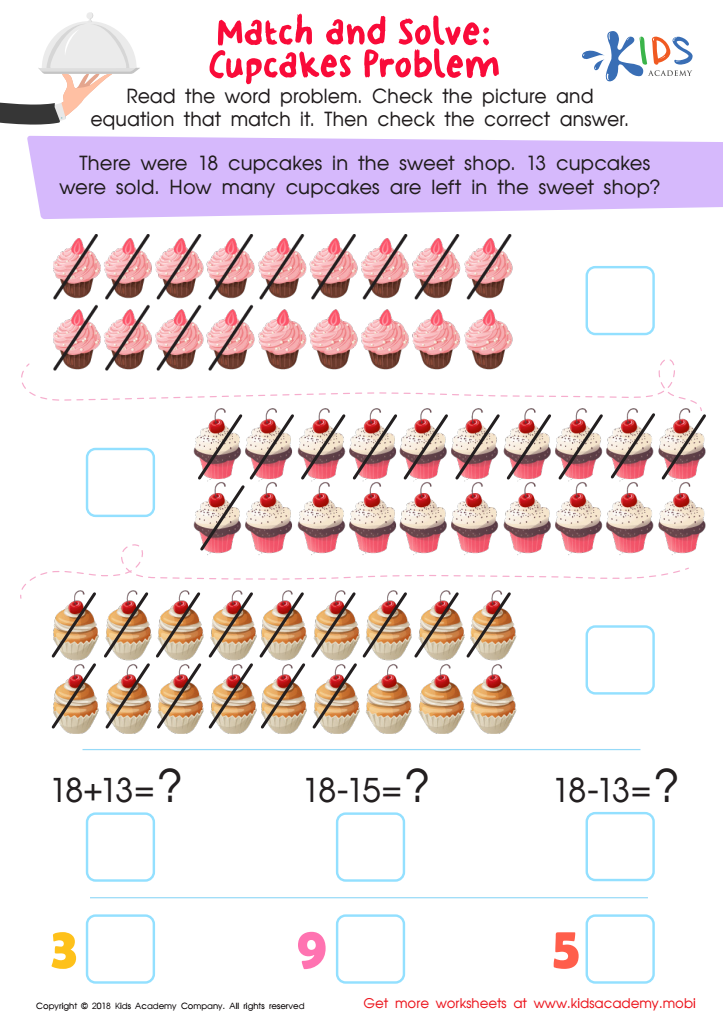
Match and Solve: Cupcakes Problem Worksheet
 Assign to My Students
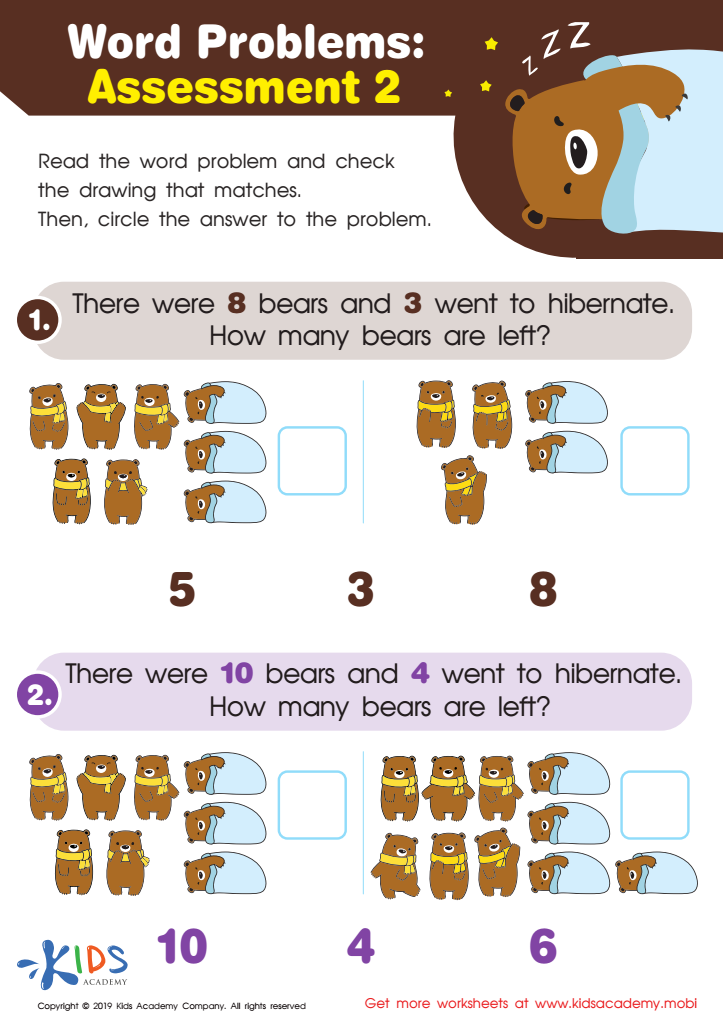
Word Problems: Assessment 2 Worksheet
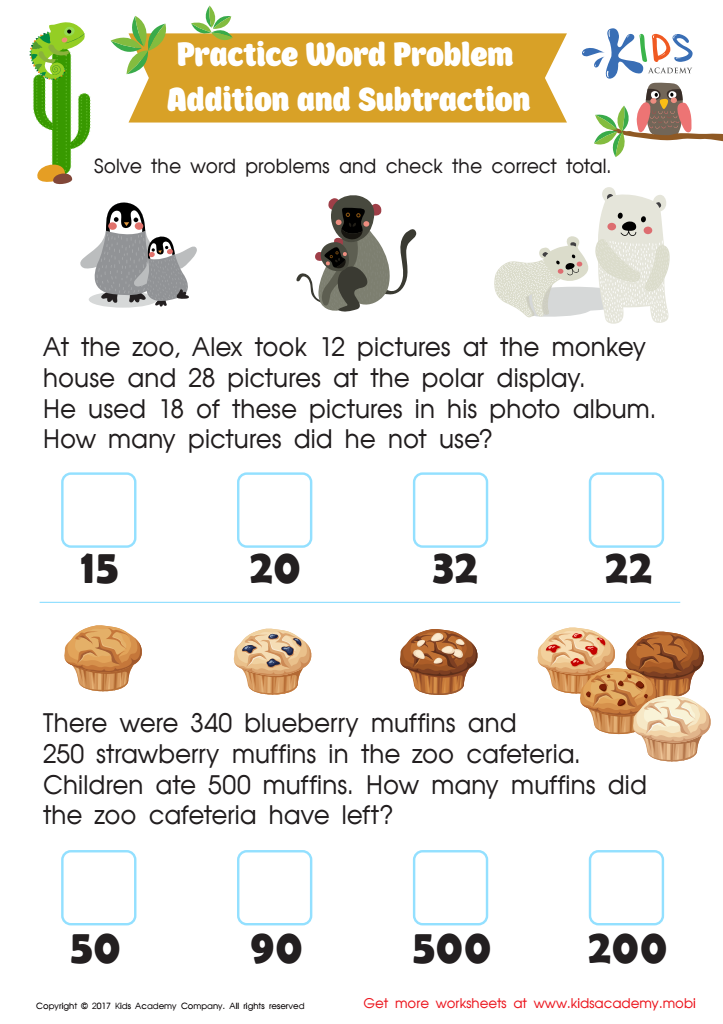
Addition and Subtraction: Word Problems Worksheet
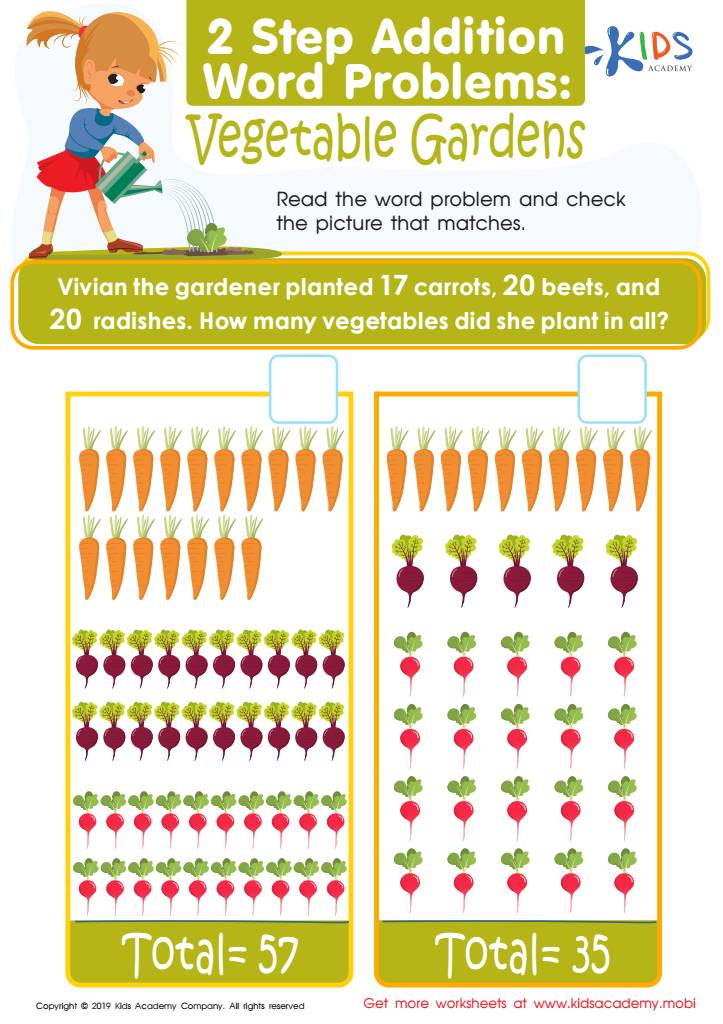
Vegetable Gardens Worksheet
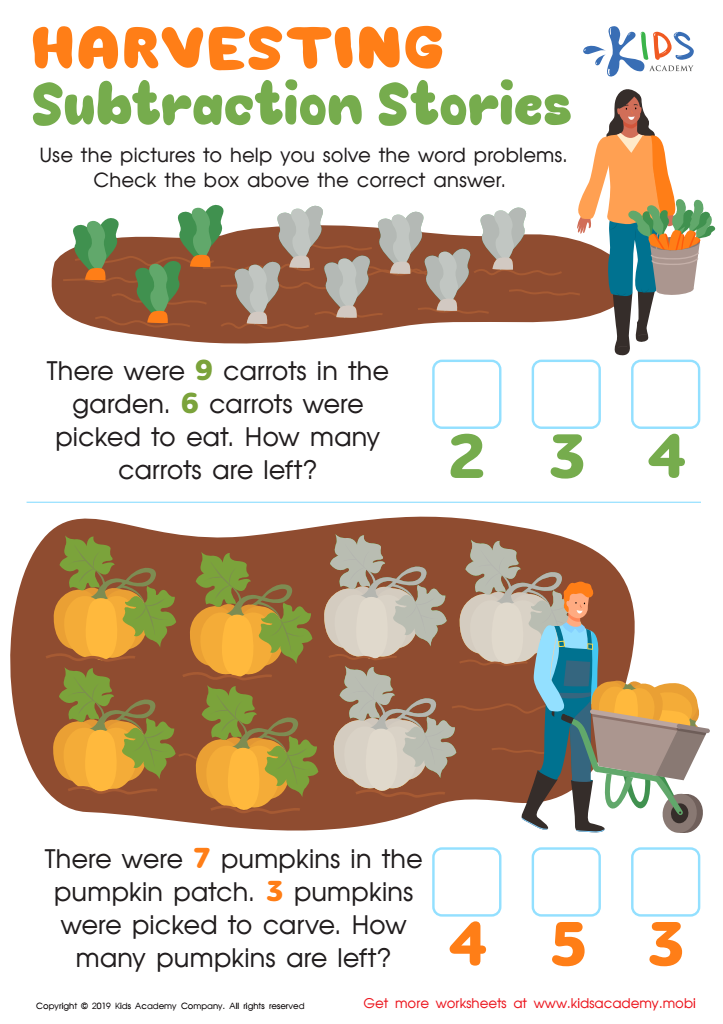
Harvesting Subtraction Stories Worksheet
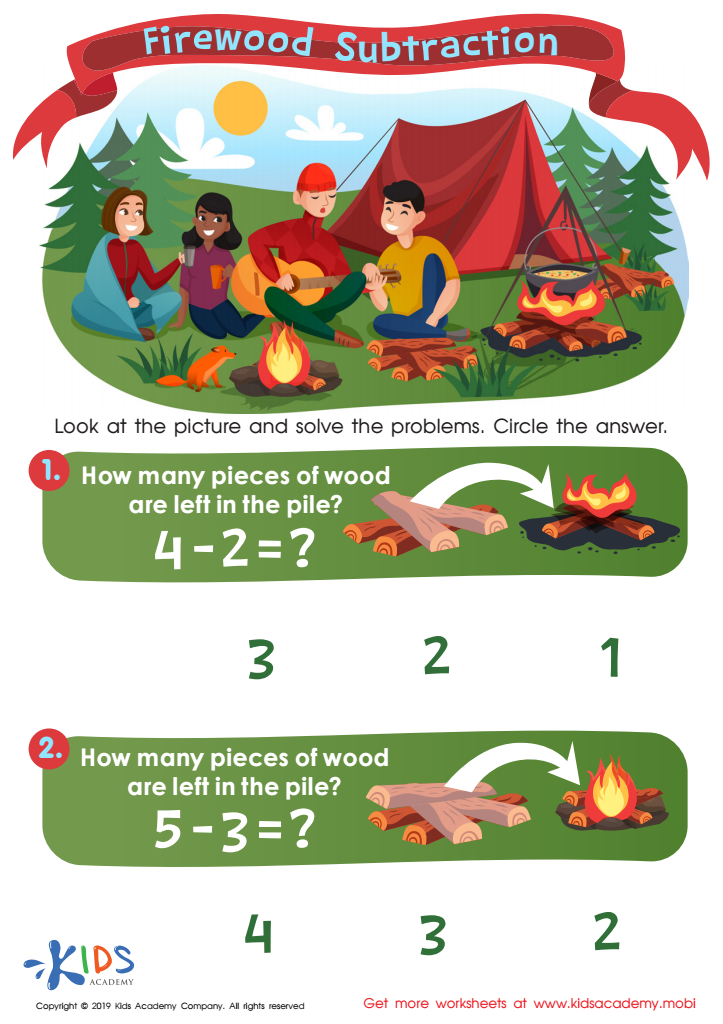
Firewood Subtraction Worksheet
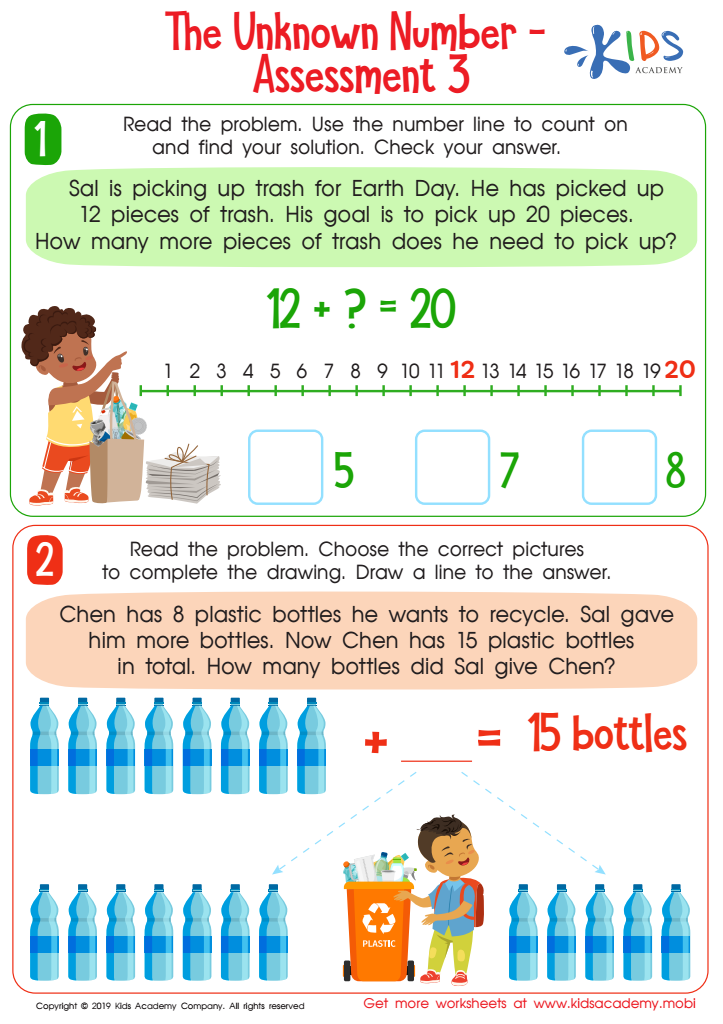
The Unknown Number - Assessment 3 Worksheet
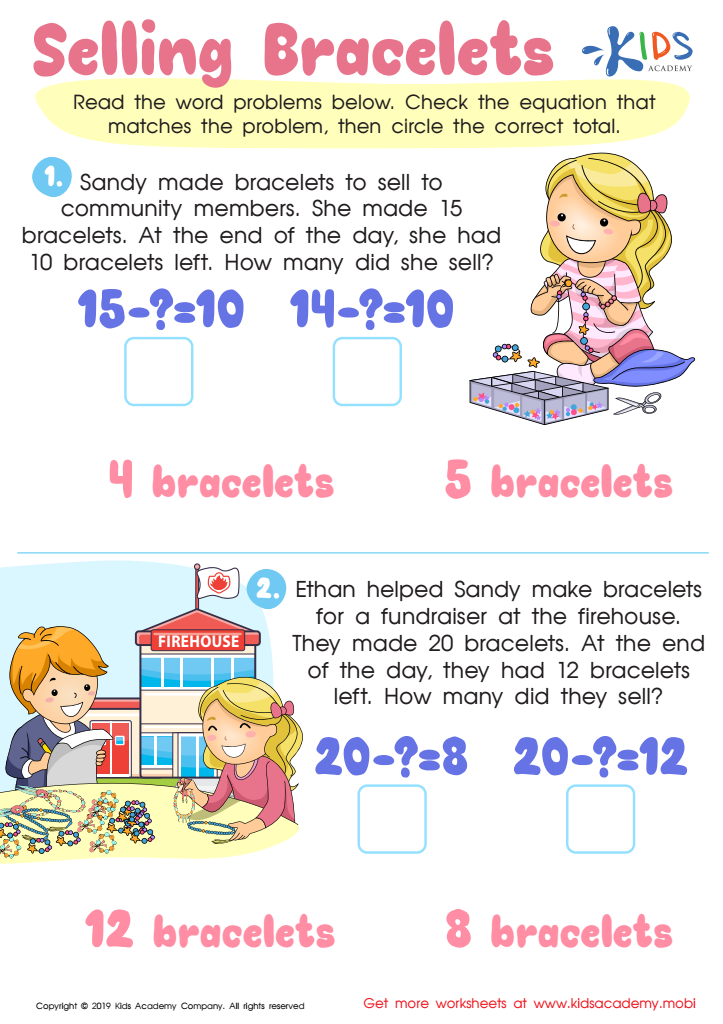
Selling the Bracelets Worksheet
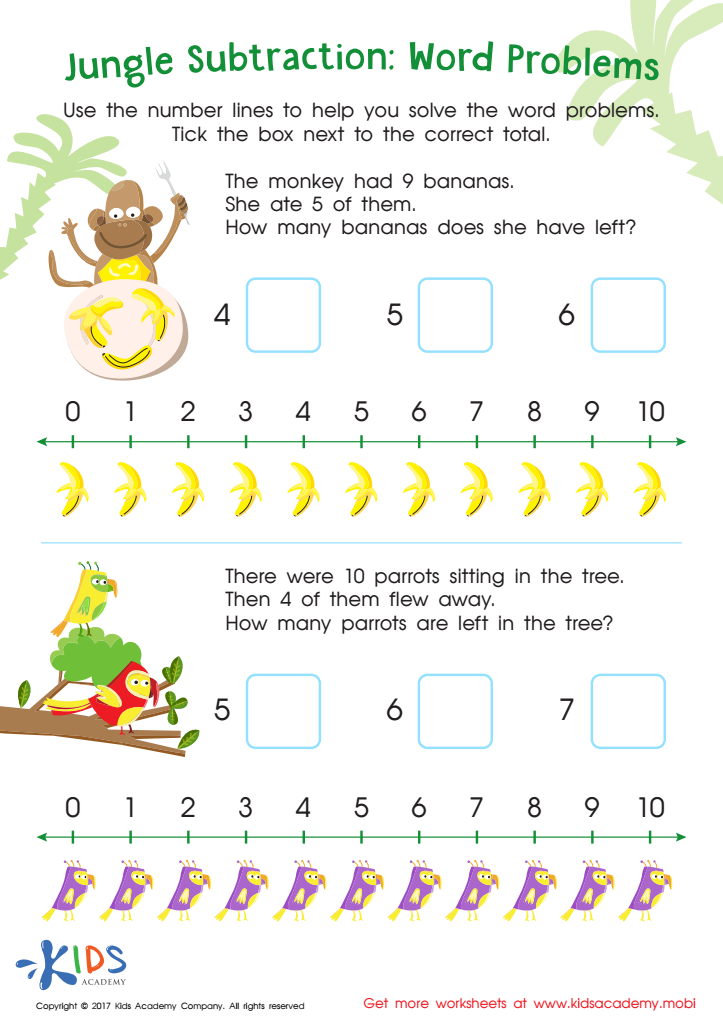
Jungle Subtraction Word Problems Substraction Worksheet








Parents and teachers should prioritize the development of problem-solving skills, particularly through addition and subtraction word problems, for children aged 6-8. These formative years are critical for laying the foundation of mathematical understanding and cognitive development. Engaging children with word problems helps them connect mathematical concepts to real-life scenarios, fostering practical applications of their arithmetic skills. It encourages critical thinking and enhances their ability to analyze, plan, and execute solutions methodically.
Moreover, word problems promote comprehension skills, as children must understand the context and details of the problem before solving it. This blend of literacy and numeracy nurtures a more holistic learning approach, bolstering both reading comprehension and mathematical reasoning. Successfully solving these problems also boosts children's confidence, making them more open to tackling complex tasks.
In addition, consistent practice with word problems enhances children's persistence and resilience. As they encounter various problem types, they learn to adapt and develop diverse strategies, an important life skill extending beyond academics. Therefore, integrating addition and subtraction word problems into early education helps build robust problem-solving abilities essential for future academic success and everyday decision-making.