Subtraction practice Addition and Subtraction Word Problems Worksheets for Ages 6-8
19 filtered results
-
From - To
Welcome to our Subtraction Practice section, tailored for children aged 6-8! Our engaging worksheets focus on subtraction through fun and relatable word problems, helping young learners build their math skills. Each activity is designed to enhance students’ problem-solving abilities and boost their confidence in subtraction. With carefully crafted scenarios that align with their everyday experiences, learners will enjoy just the right amount of challenge. Parents and educators can easily access and print these resources to support learning at home or in the classroom. Start your child’s journey towards mastering subtraction today with our interactive and stimulating worksheets!
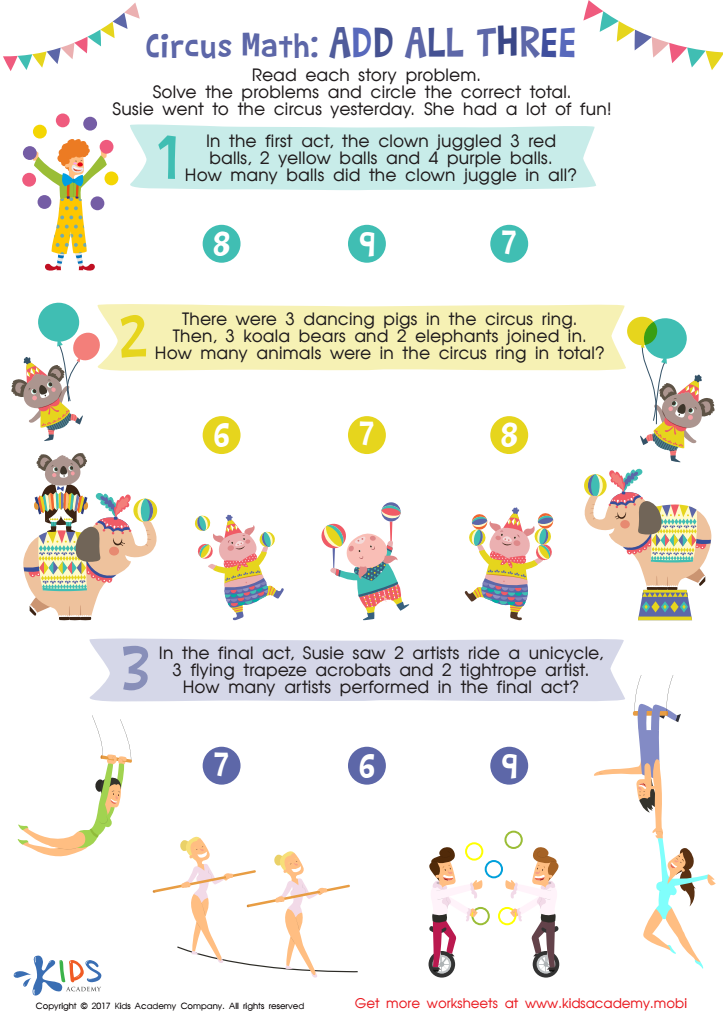
Circus Math Printable
 Assign to My Students
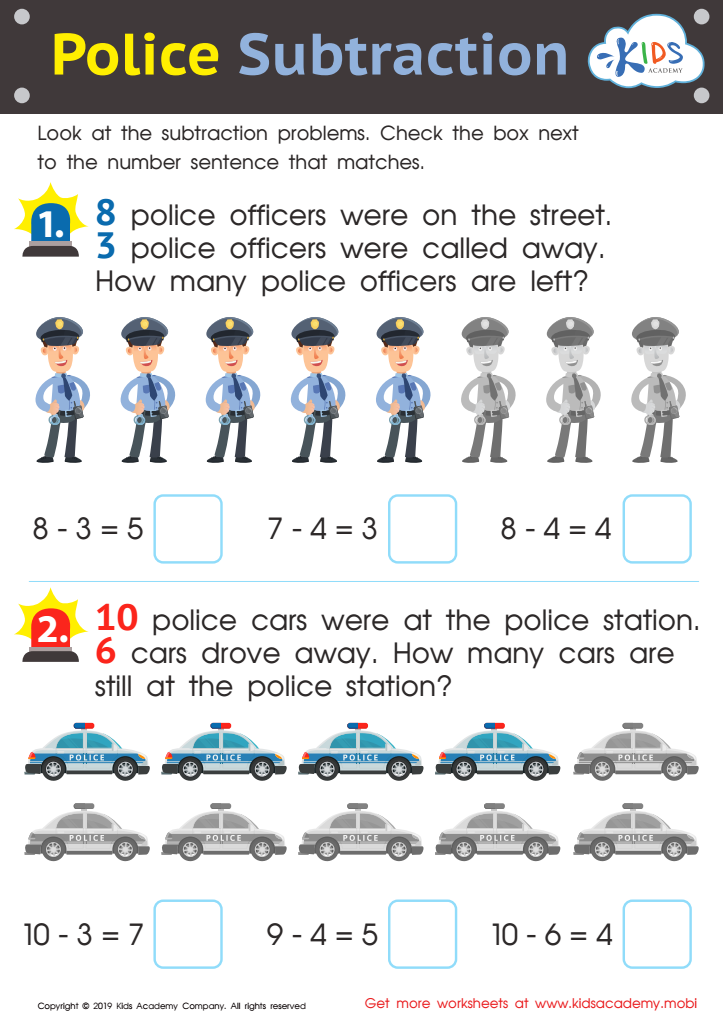
Police Subtraction Worksheet
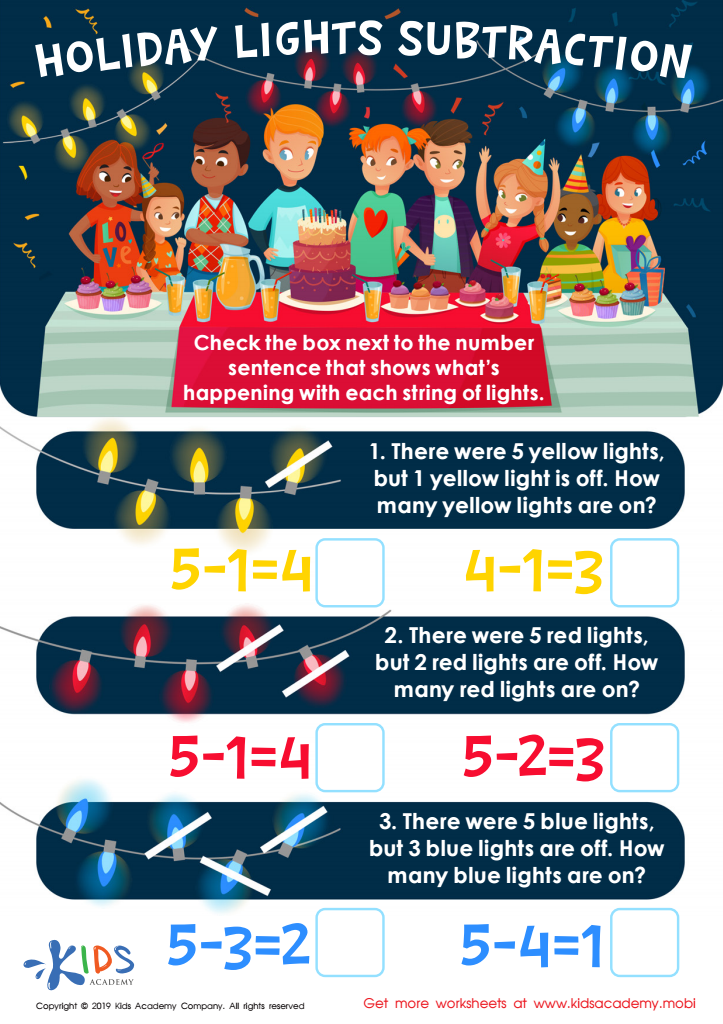
Holiday Lights Subtraction Worksheet
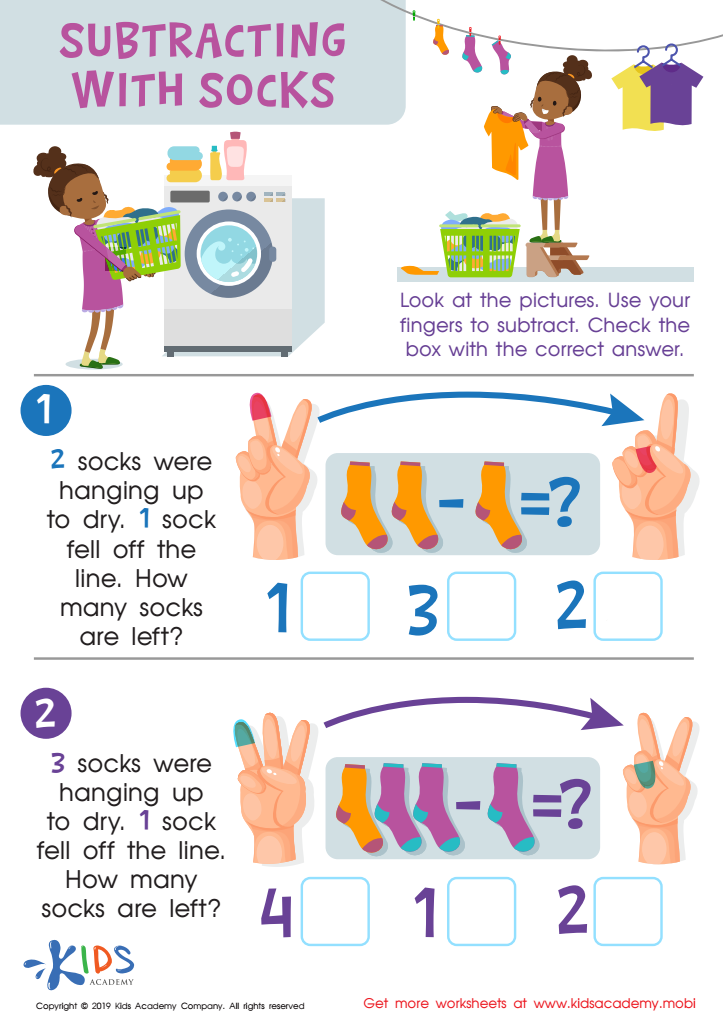
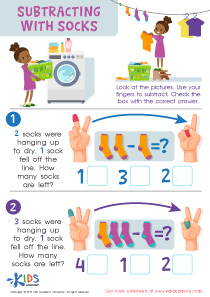
Subtracting Socks Worksheet
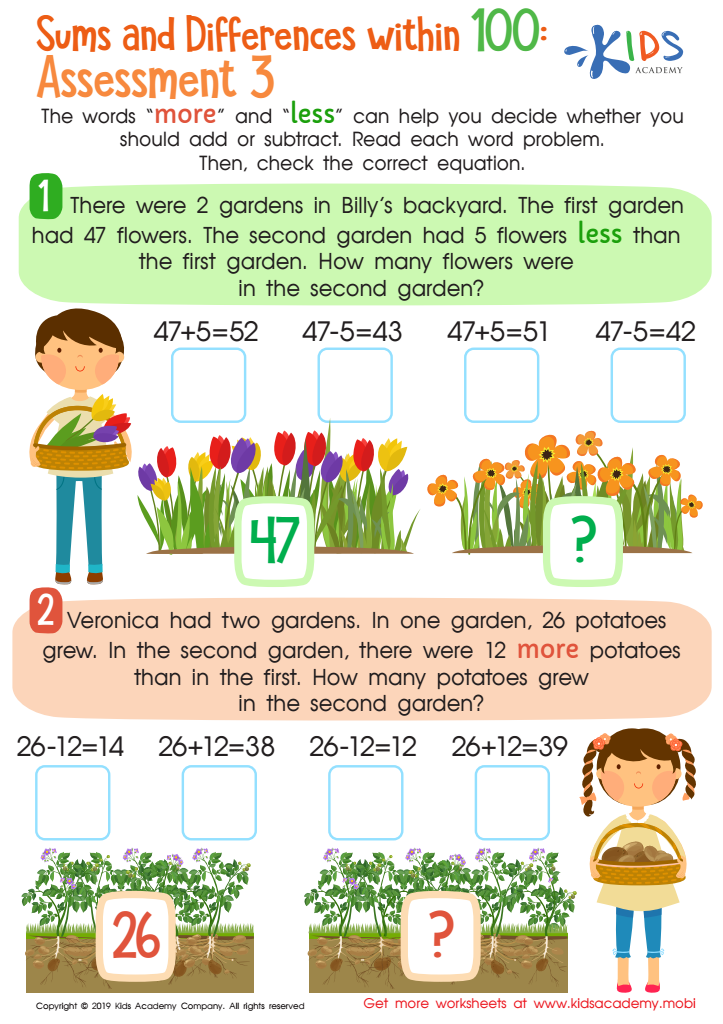
Sums and Differences Within 1 - Assessment 1 Worksheet
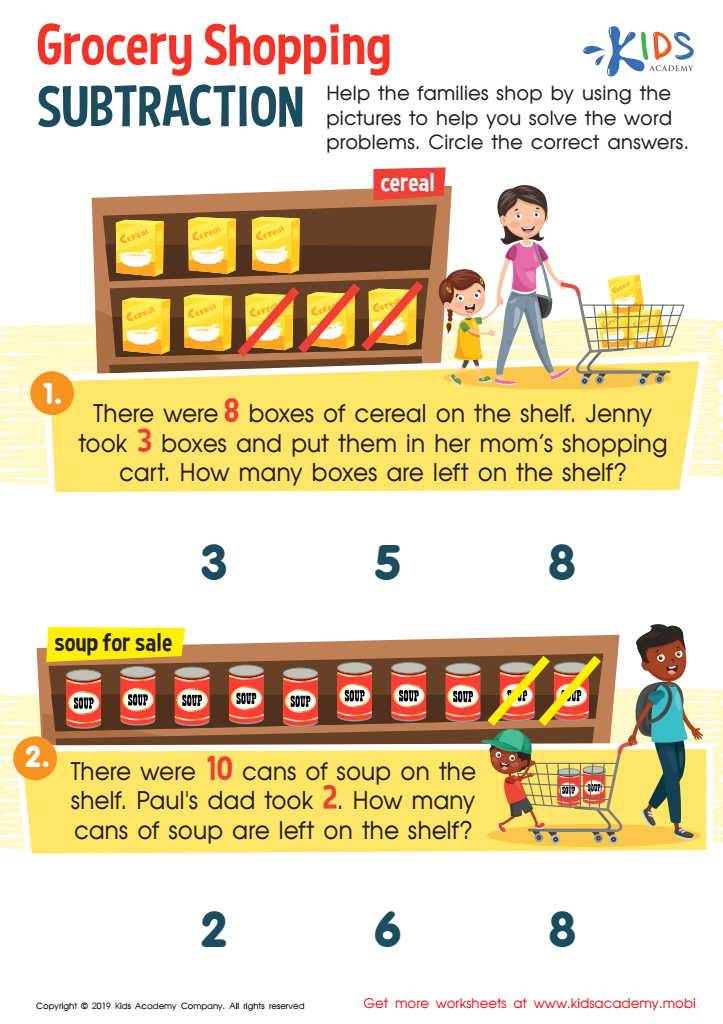
Grocery Shopping Subtraction Worksheet
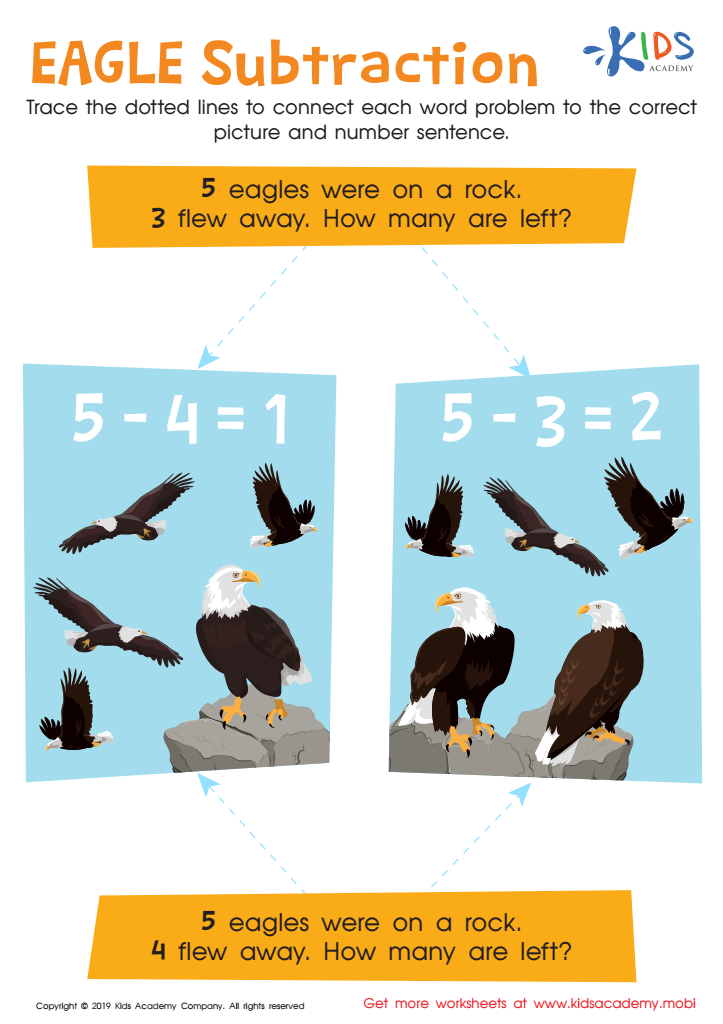
Eagle Subtraction Worksheet
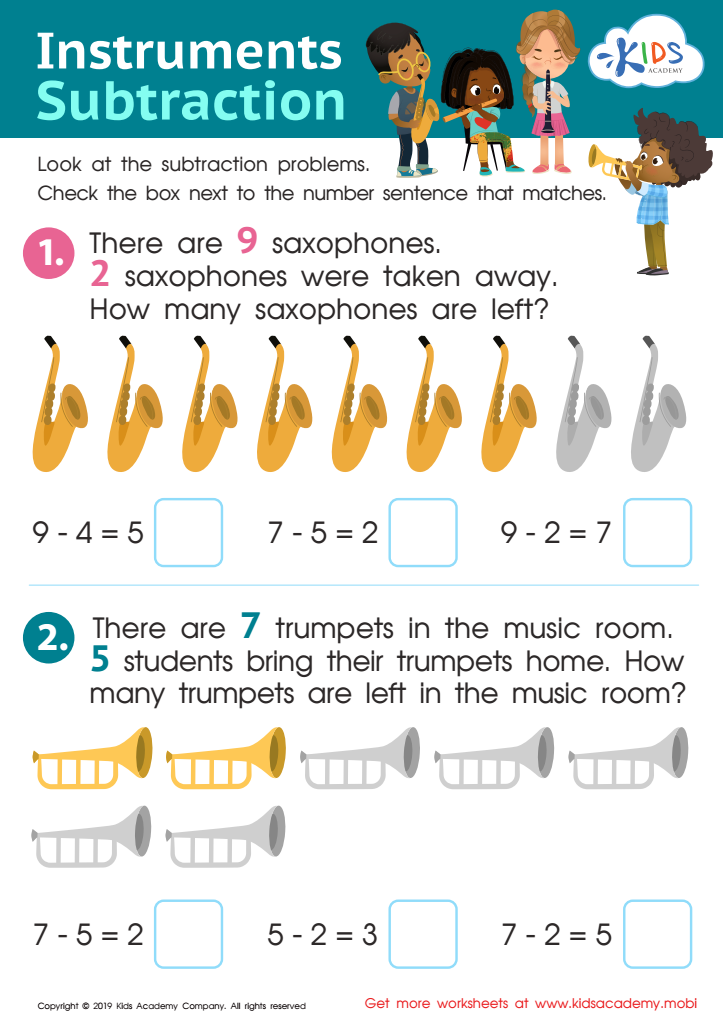
Instrument Subtraction Worksheet
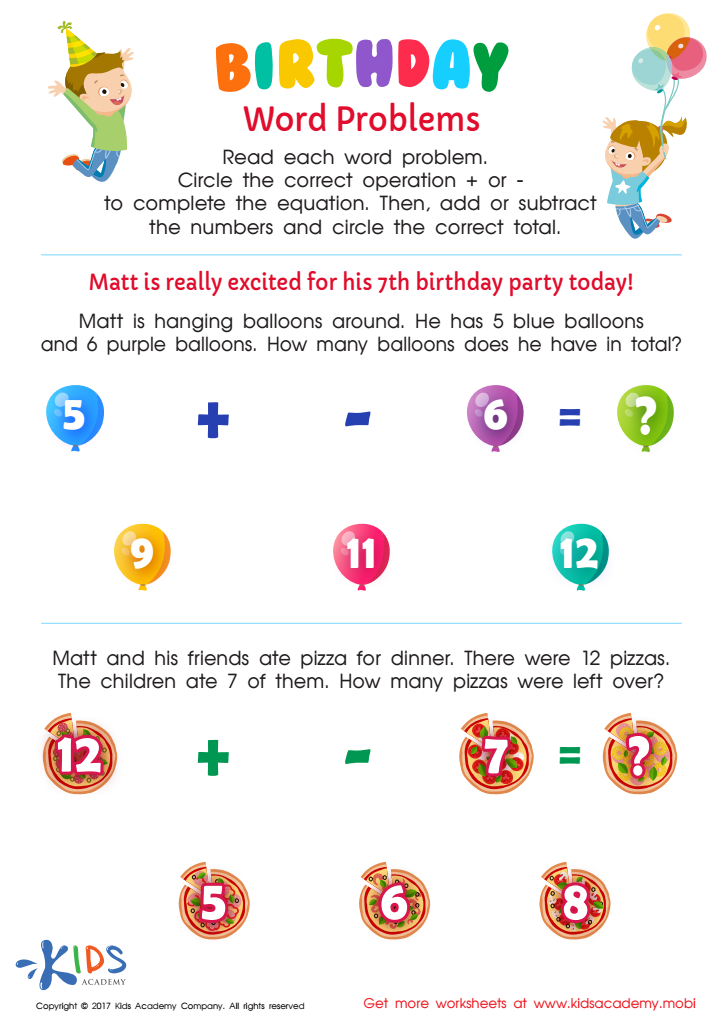
Birthday Word Problems Substraction Worksheet
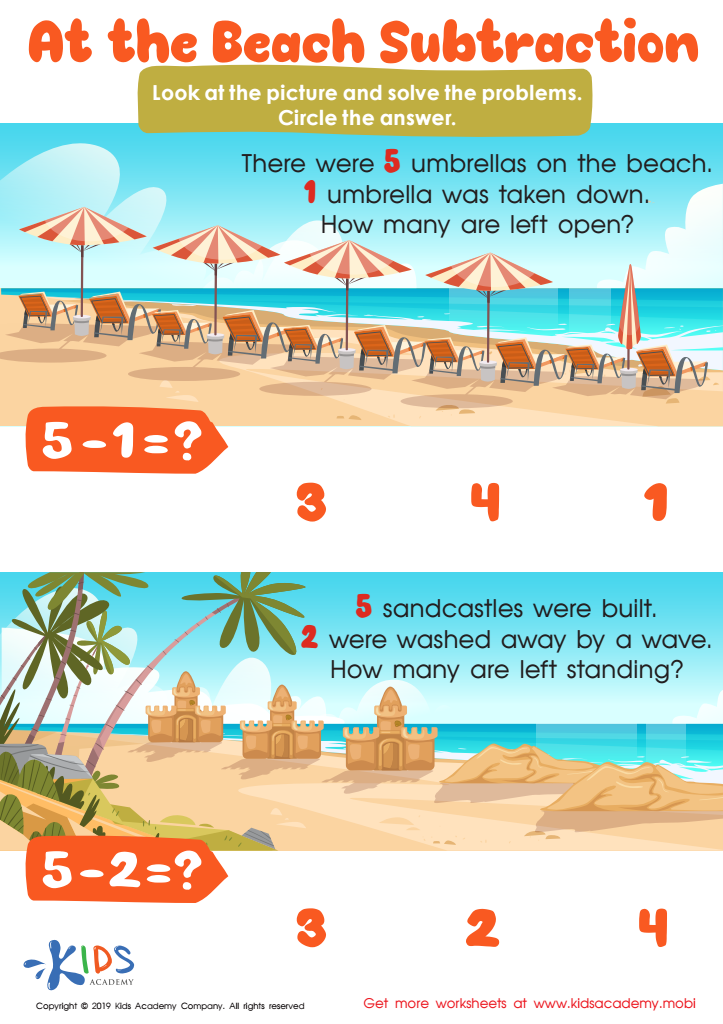
At the Beach Subtraction Worksheet
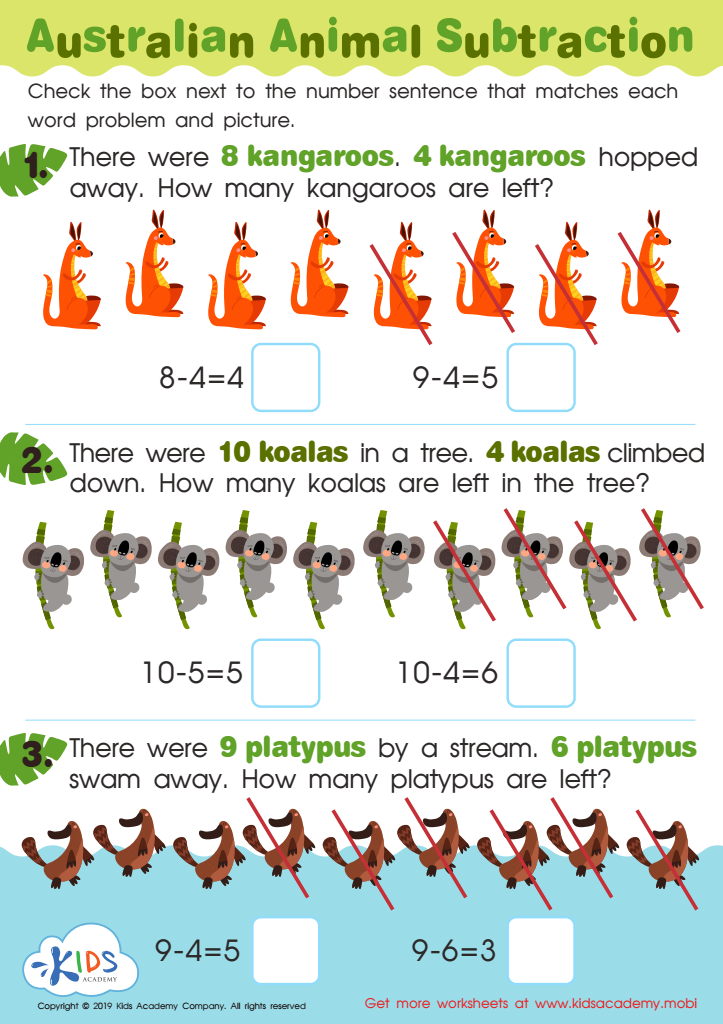
Australian Animal Subtraction Worksheet
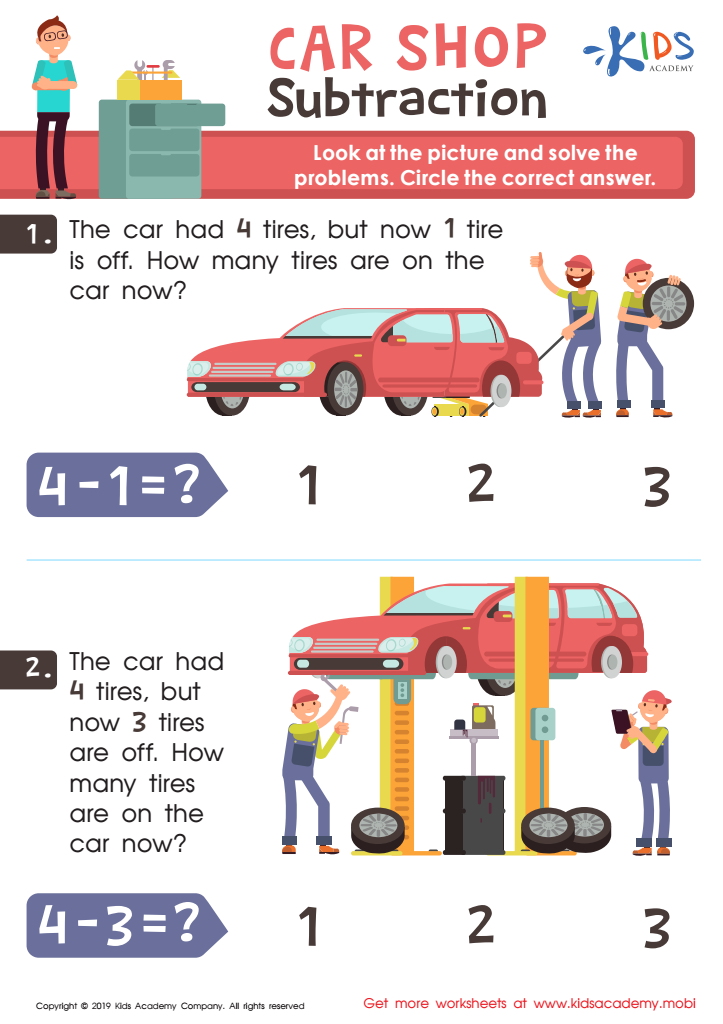
Car Shop Subtraction Worksheet
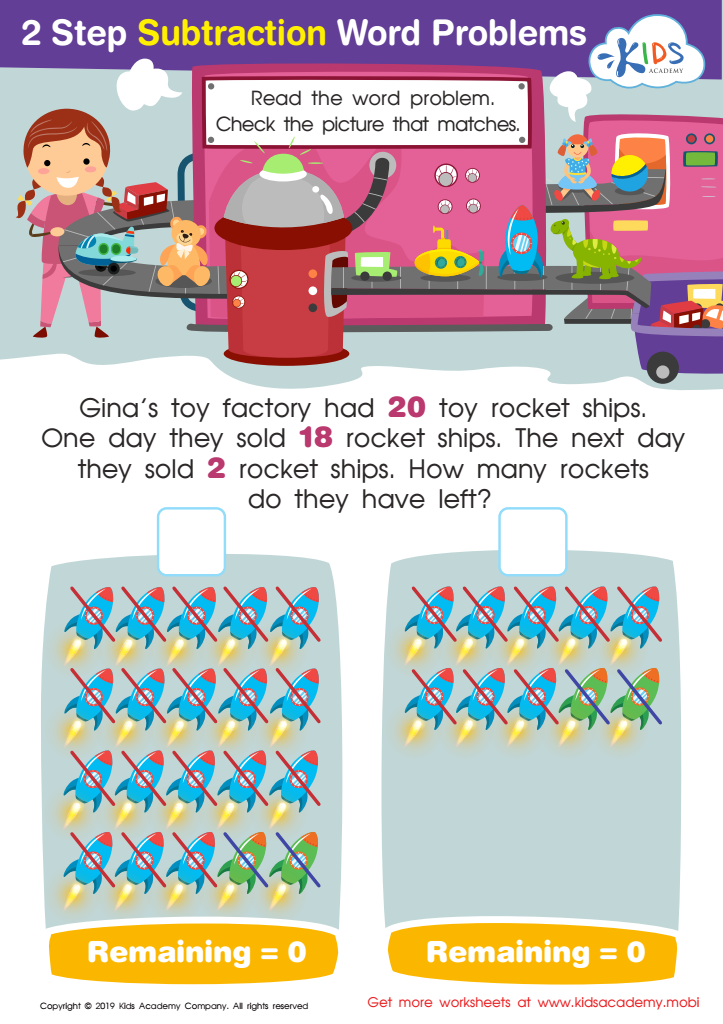
Step Subtraction Word Problems Worksheet
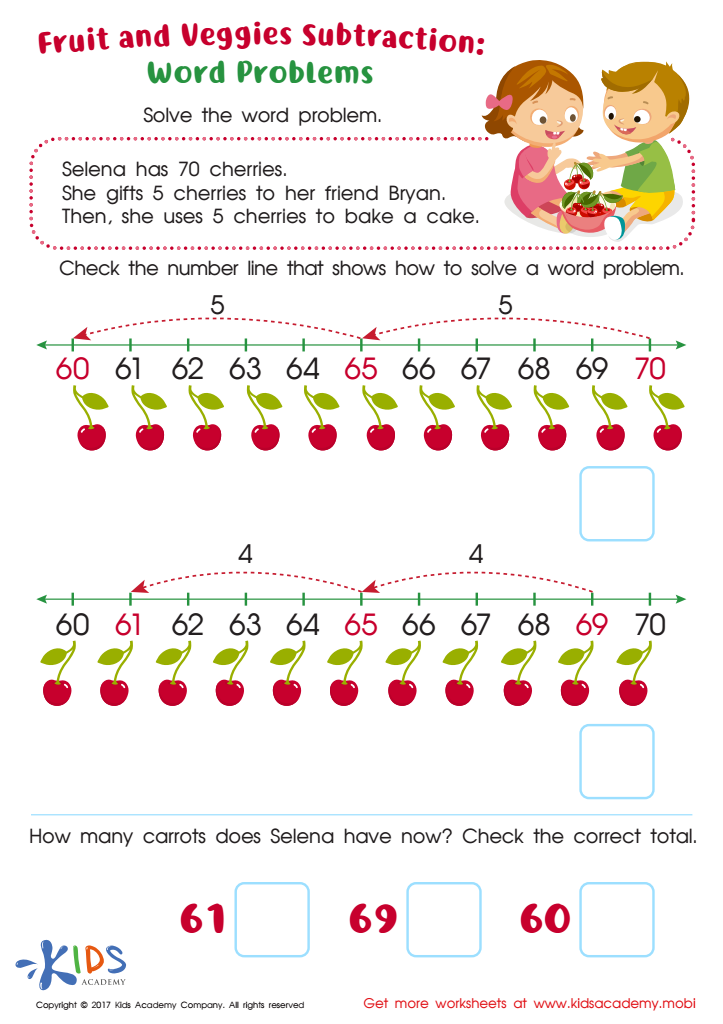
Subtraction Word Problems Free Printable
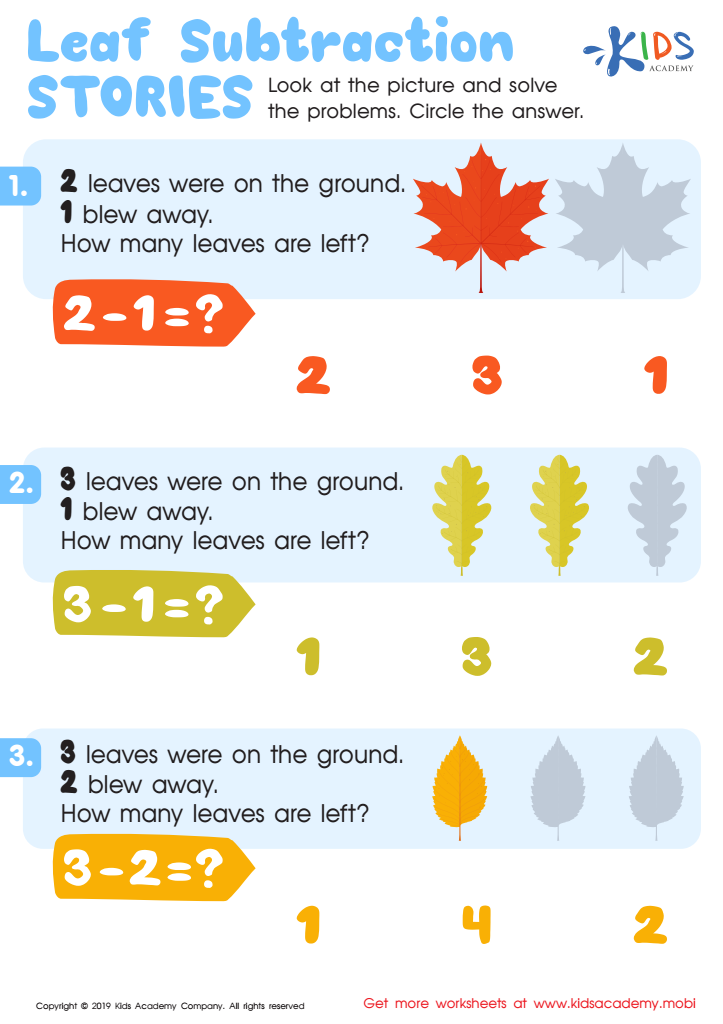
Leaf Subtraction Stories Worksheet
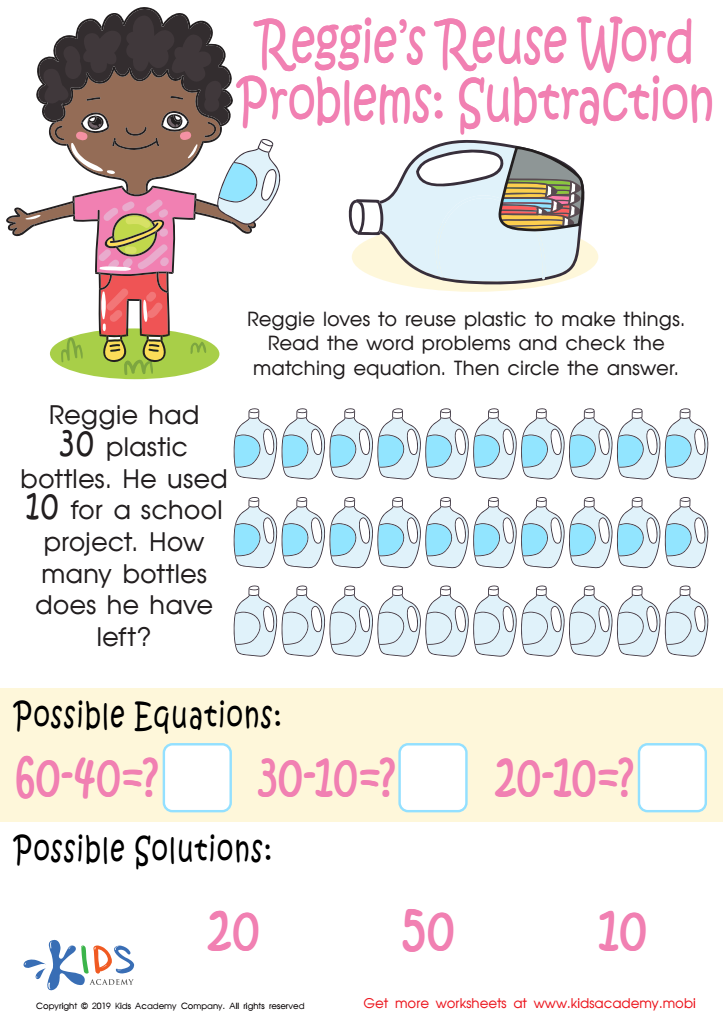
Reggie's Reuse Word Problems: Subtraction Worksheet
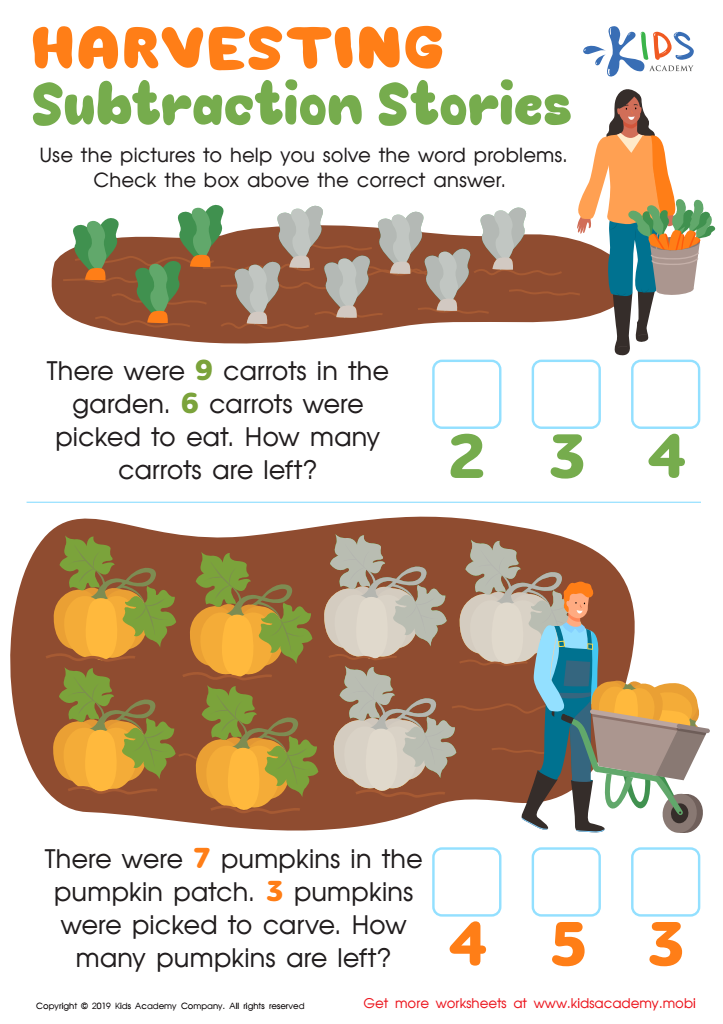
Harvesting Subtraction Stories Worksheet
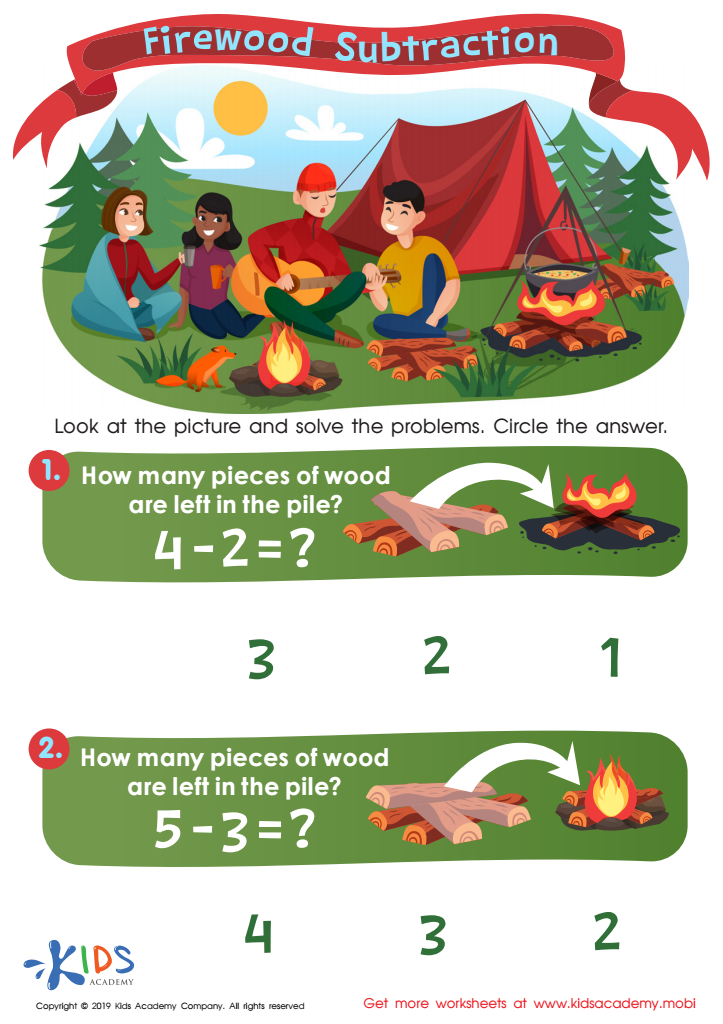
Firewood Subtraction Worksheet
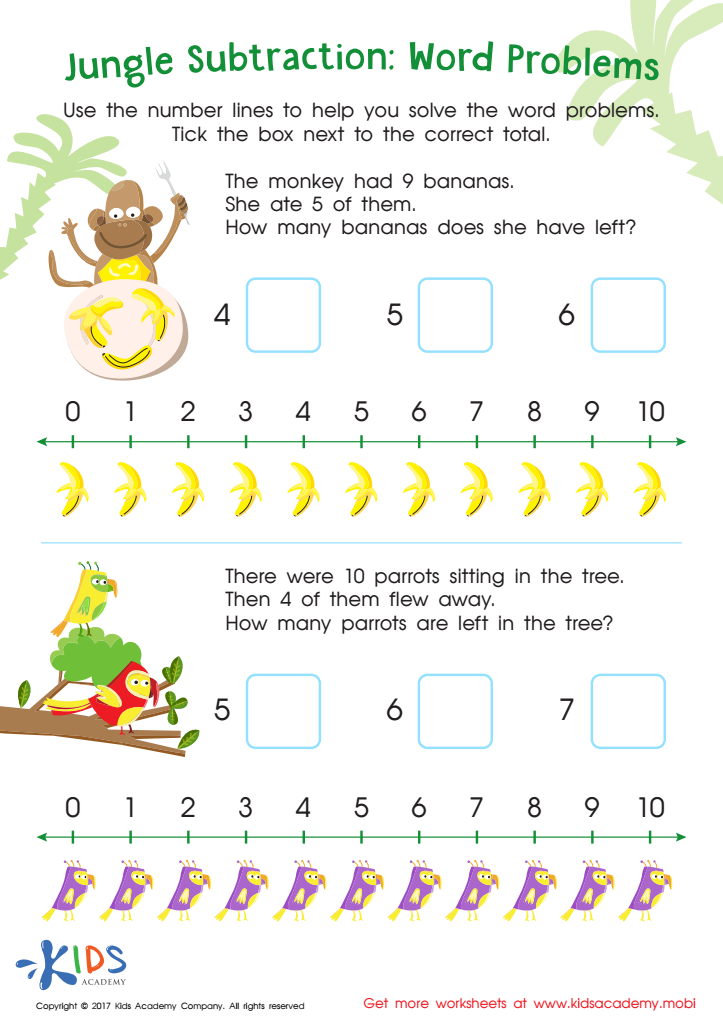
Jungle Subtraction Word Problems Substraction Worksheet








Parents and teachers should prioritize subtraction practice and addition and subtraction word problems for children aged 6-8 because these skills are fundamental to their overall mathematical development. At this age, children begin transitioning from concrete counting to more abstract problem-solving, which is critical for building a strong mathematical foundation.
Subtraction practice helps children understand the concept of "taking away," which is essential for grasping more complex mathematical operations later on. Regular practice not only boosts their accuracy but also enhances their confidence in their ability to solve problems.
Addition and subtraction word problems encourage critical thinking and help children apply their mathematical knowledge to real-world situations. They learn to read and interpret scenarios, extract relevant information, and formulate strategies for finding solutions. This type of problem-solving fosters logical reasoning and enhances comprehension skills, benefitting literacy development as well.
Moreover, mastering these concepts can prevent future math anxiety and build a positive attitude toward learning. By supporting children through subtraction practice and word problems, parents and teachers cultivate essential life skills, helping them become confident learners and adept problem solvers. Early engagement in these areas lays the groundwork for success in more advanced math concepts in their future education.