Visual Learning Addition and Subtraction Word Problems Worksheets for Ages 6-8
5 filtered results
-
From - To
Discover our engaging Visual Learning Addition and Subtraction Word Problems Worksheets designed specifically for children ages 6-8. These fun, interactive worksheets utilize vibrant visuals and relatable scenarios to help young learners grasp essential math concepts. By connecting pictures with problems, children build confidence and enhance their problem-solving skills in a supportive environment. Our worksheets encourage critical thinking and foster a love for math through enjoyable exercises that cater to various learning styles. Perfect for classroom use or at-home practice, these resources create a solid foundation in addition and subtraction, ensuring your child is well-equipped for future math challenges. Start learning today!
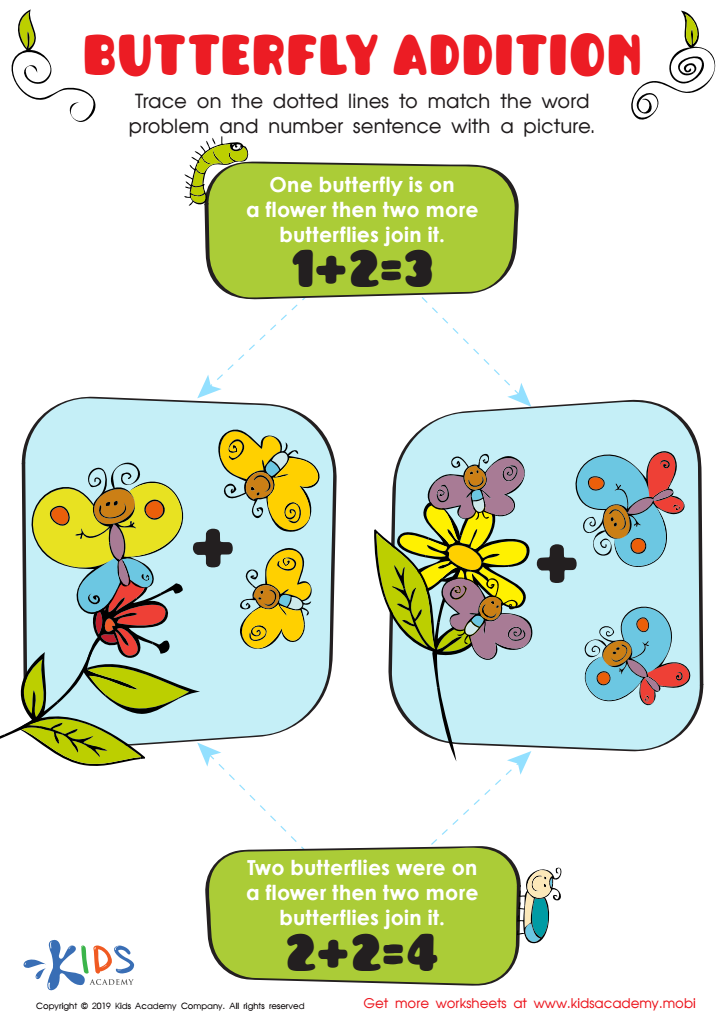
Butterfly Addition Worksheet
 Assign to My Students
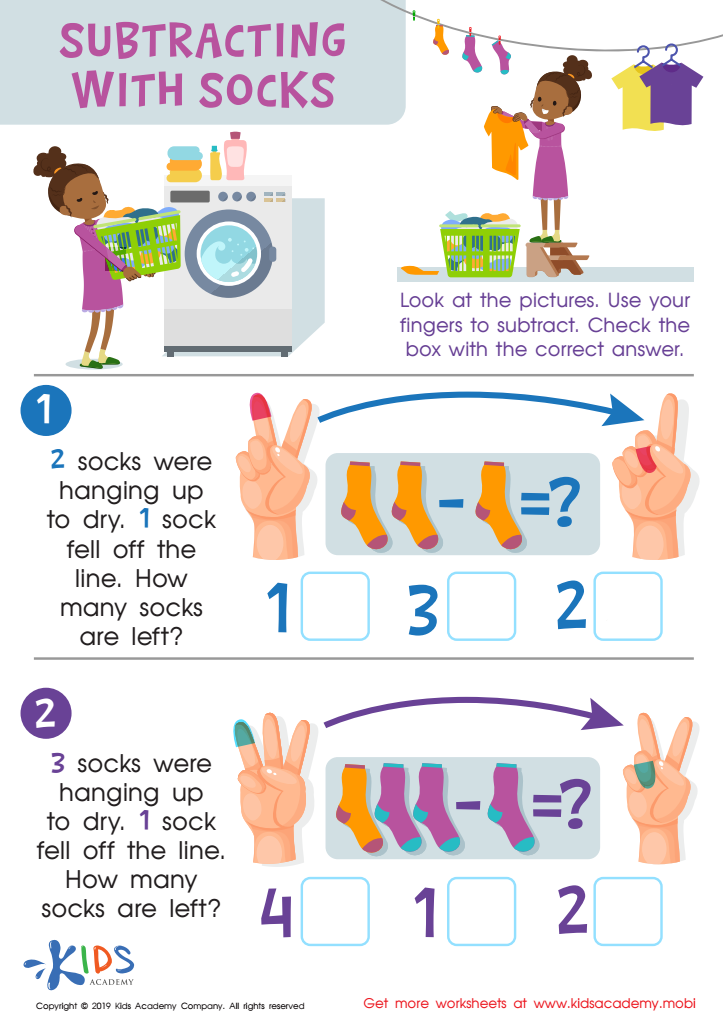
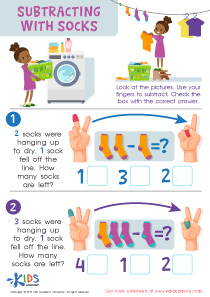
Subtracting Socks Worksheet
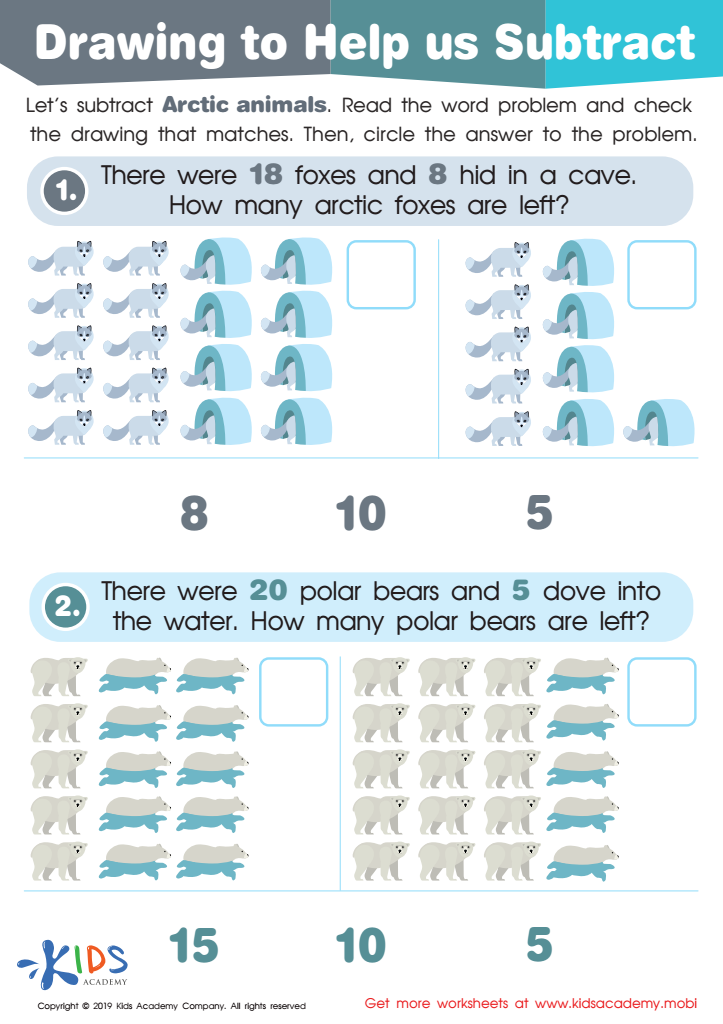
Drawing to Help Us Subtract Worksheet
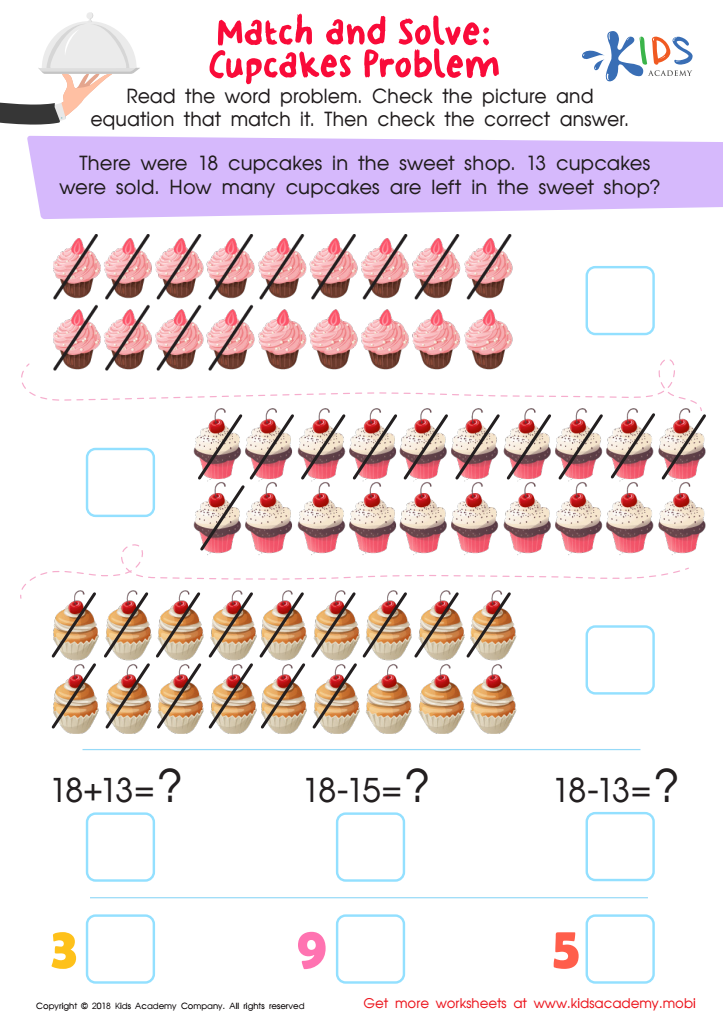
Match and Solve: Cupcakes Problem Worksheet
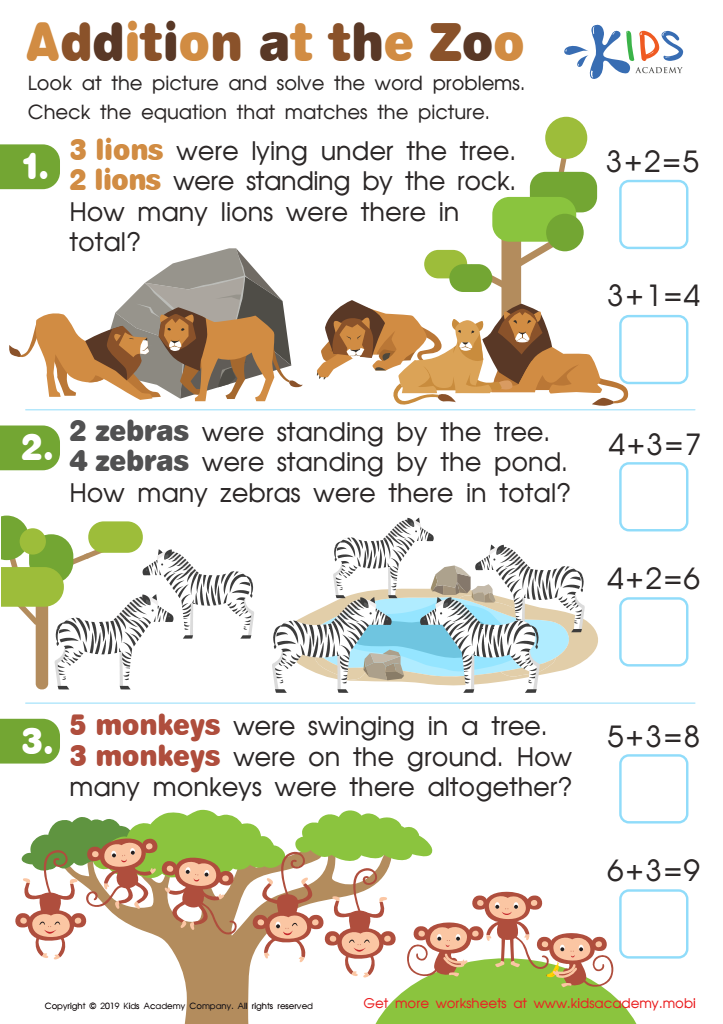
Addition at the Zoo Worksheet








Parents and teachers should prioritize visual learning approaches to addition and subtraction word problems for children aged 6-8 because these techniques cater to how young minds develop and process information. Visual learning is critical during early education as it helps children grasp abstract mathematical concepts through concrete representations. By using visual aids such as drawings, diagrams, and manipulatives, children can see the relationships between numbers and quantities, making it easier for them to comprehend and solve problems.
Furthermore, visual representations allow children to engage more actively in their learning experiences, which fosters critical thinking and problem-solving skills. Research shows that students who utilize visual strategies tend to retain information better and develop a deeper understanding of mathematical concepts, leading to improved performance in school.
Additionally, engaging in visual learning experiences builds confidence in young learners, as they can often visualize and manipulate problems to arrive at solutions. Early mastery of these skills sets the foundation for more advanced mathematical concepts in later years. By emphasizing visual learning in addition and subtraction word problems, parents and teachers can cultivate enthusiastic and capable learners, ensuring they not only succeed academically but also develop a lifelong interest in mathematics.