Comparing lengths Addition & Subtraction Worksheets for Ages 6-8
3 filtered results
-
From - To
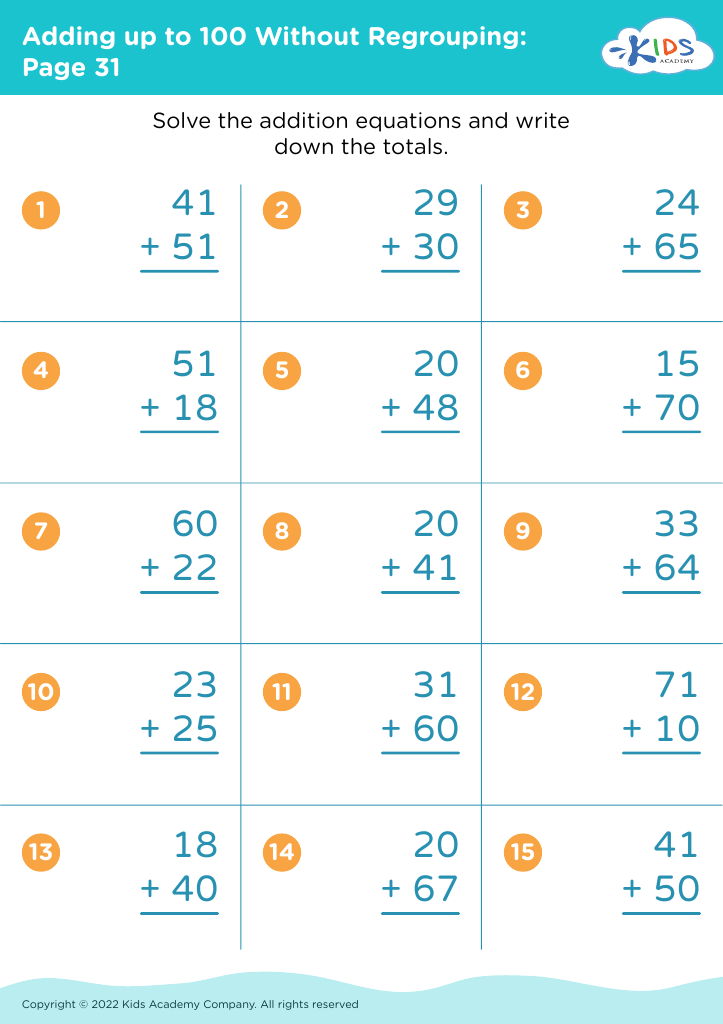
Looking for engaging worksheets to enhance your child's understanding of comparing lengths through addition and subtraction? Our "Comparing Lengths Addition & Subtraction Worksheets" are designed specifically for ages 6-8, providing a fun and interactive way for young learners to grasp this essential math concept. These worksheets feature colorful visuals and relatable scenarios that capture children's interest while reinforcing their skills. Your child will practice measuring lengths, comparing items, and applying addition and subtraction in real-life contexts. Perfect for classroom use or at-home learning, these worksheets help build foundational math skills while promoting confidence in young learners. Explore our collection today!
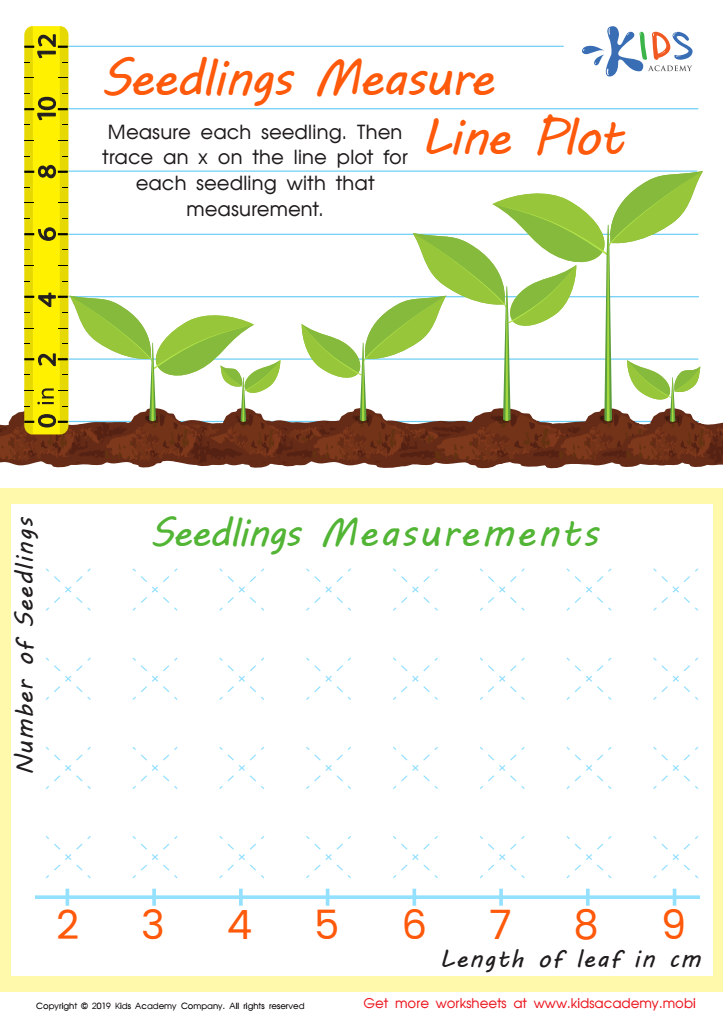
Seedling Measure Line Plot Worksheet
 Assign to My Students
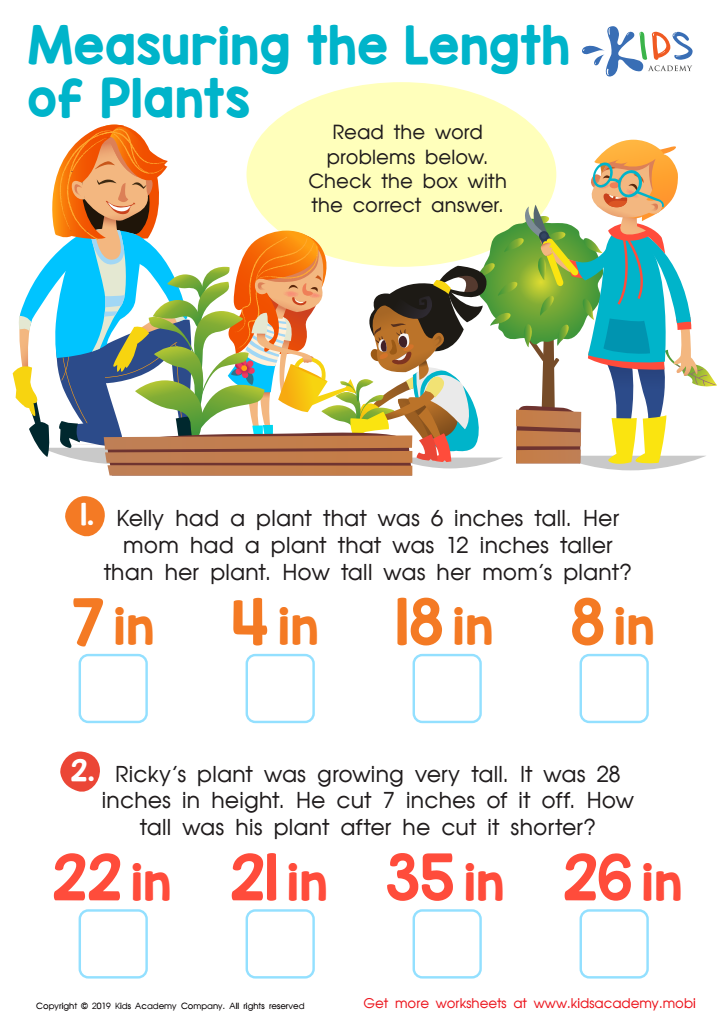
Measuring the Length of Plants Worksheet








Parents and teachers should prioritize teaching children aged 6-8 about comparing lengths and basic addition and subtraction because these skills form the foundation for critical thinking and problem-solving. Understanding length comparison encourages spatial awareness and enhances measurement skills, which are essential in everyday life. For instance, when children learn to compare the lengths of various objects, they develop observational skills and the ability to make logical conclusions, enhancing their cognitive development.
Moreover, addition and subtraction are fundamental mathematical concepts that are necessary for later, more advanced computations. Mastering these operations helps children build a solid number sense, paving the way for future mathematical success across various domains, such as geometry, data interpretation, and even financial literacy.
Integrating these skills in fun, practical activities promotes engagement and motivation, making learning enjoyable. For example, using everyday items like string or rulers can transform abstract concepts into tangible experiences. Additionally, these activities provide opportunities for parents and teachers to foster a collaborative learning environment, reinforcing the importance of teamwork and communication.
In essence, teaching comparing lengths and simple mathematical operations not only enhances children's academic performance but also equips them with essential life skills.








