Develop critical thinking Addition & Subtraction Worksheets for Ages 6-8
11 filtered results
-
From - To
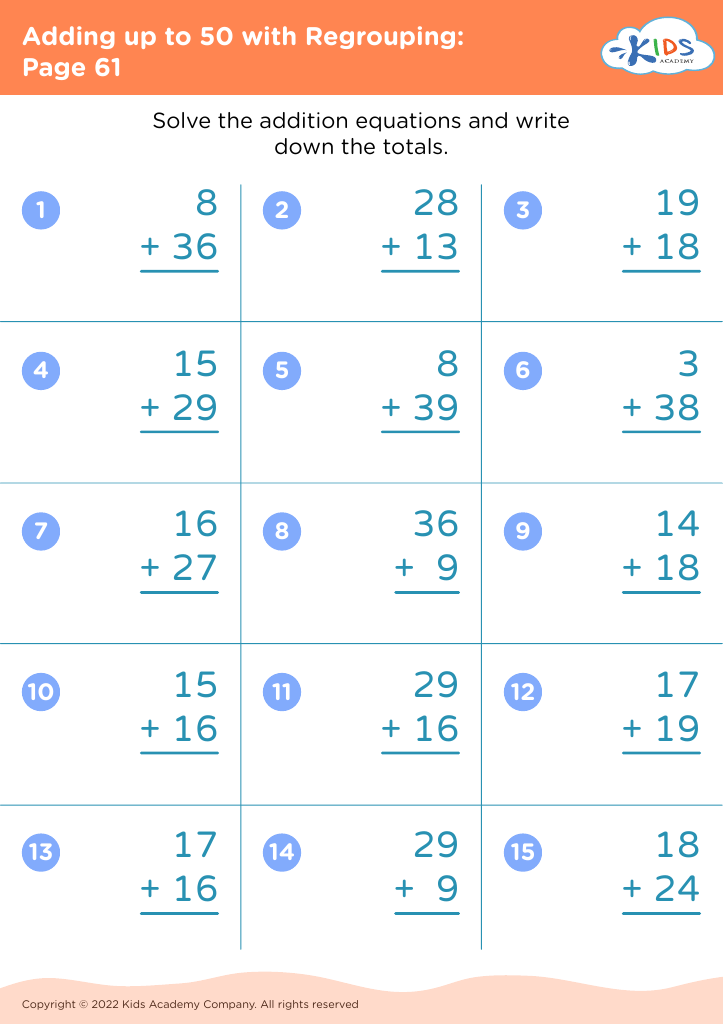
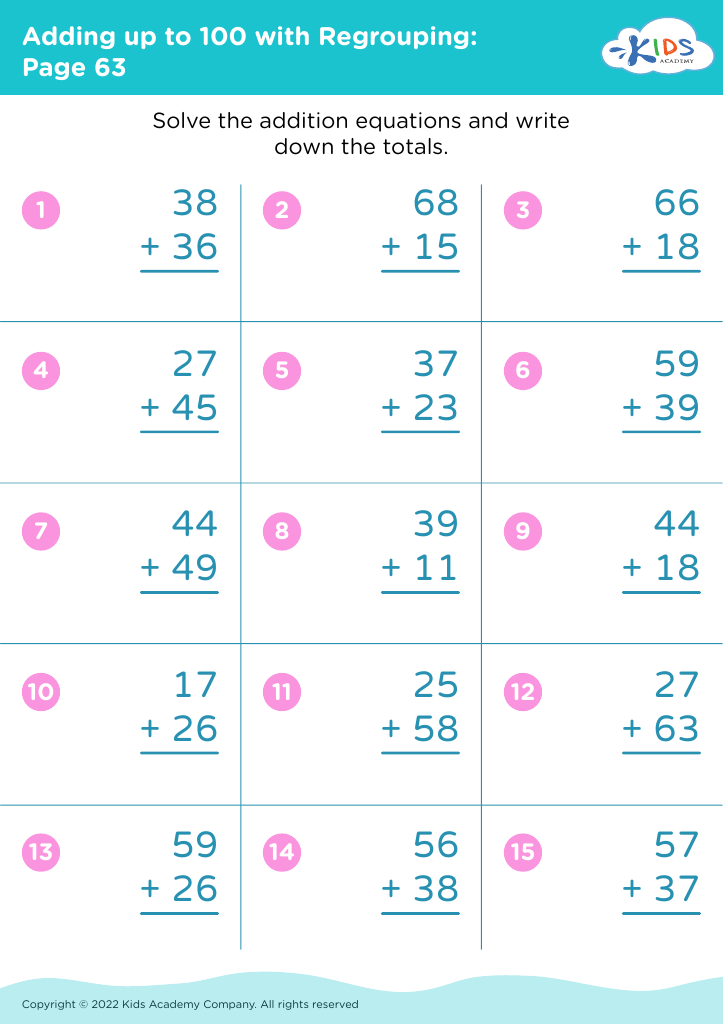
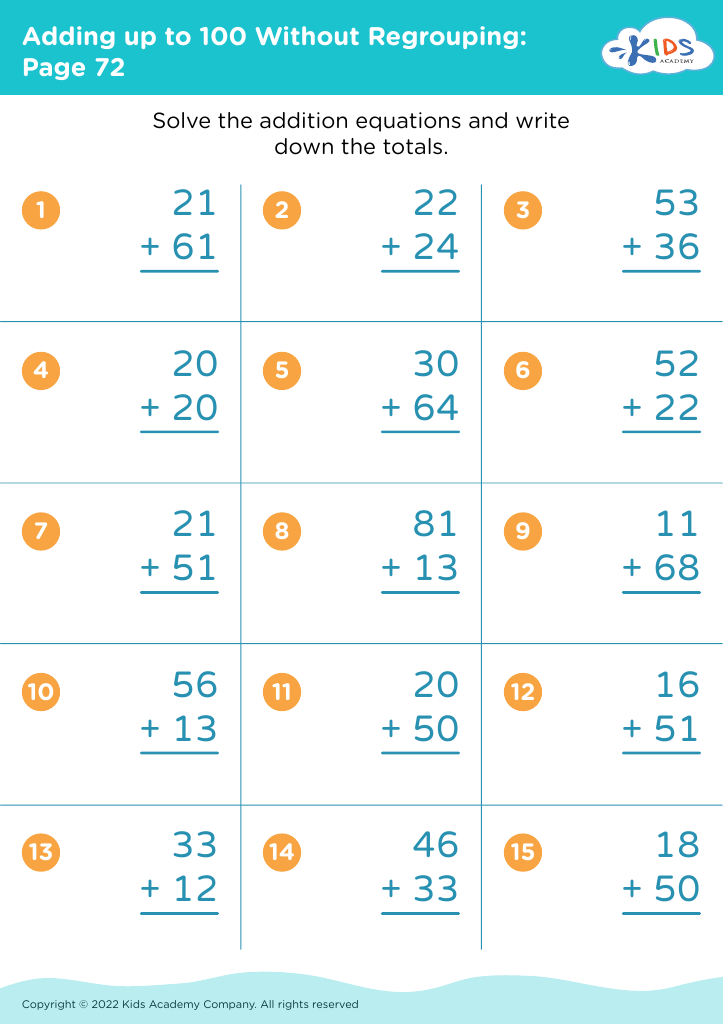
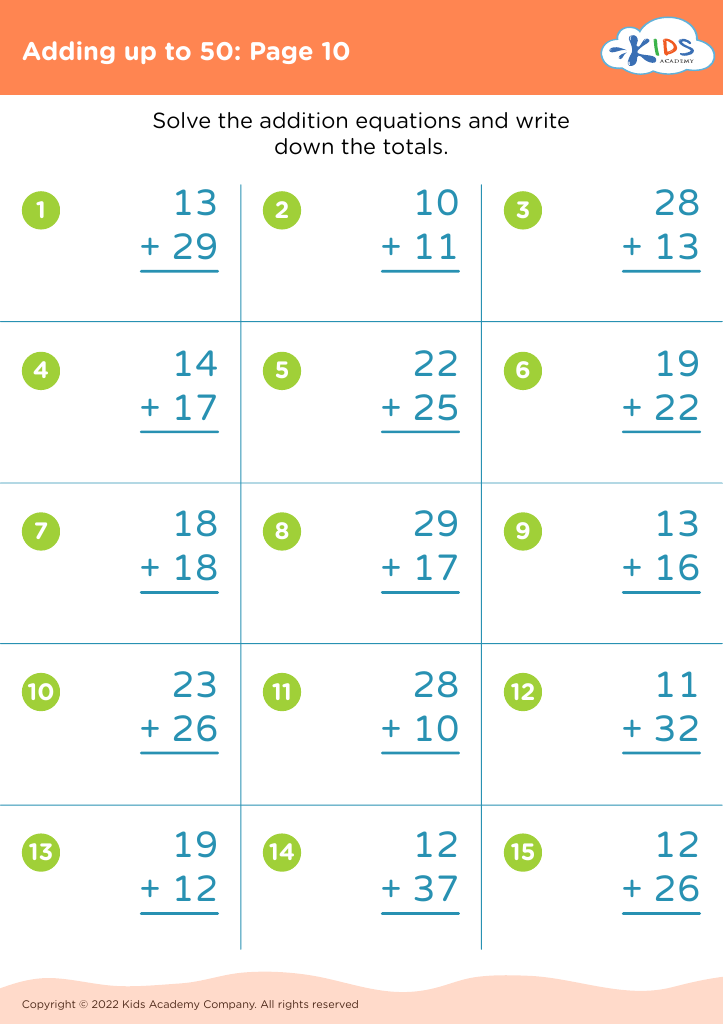
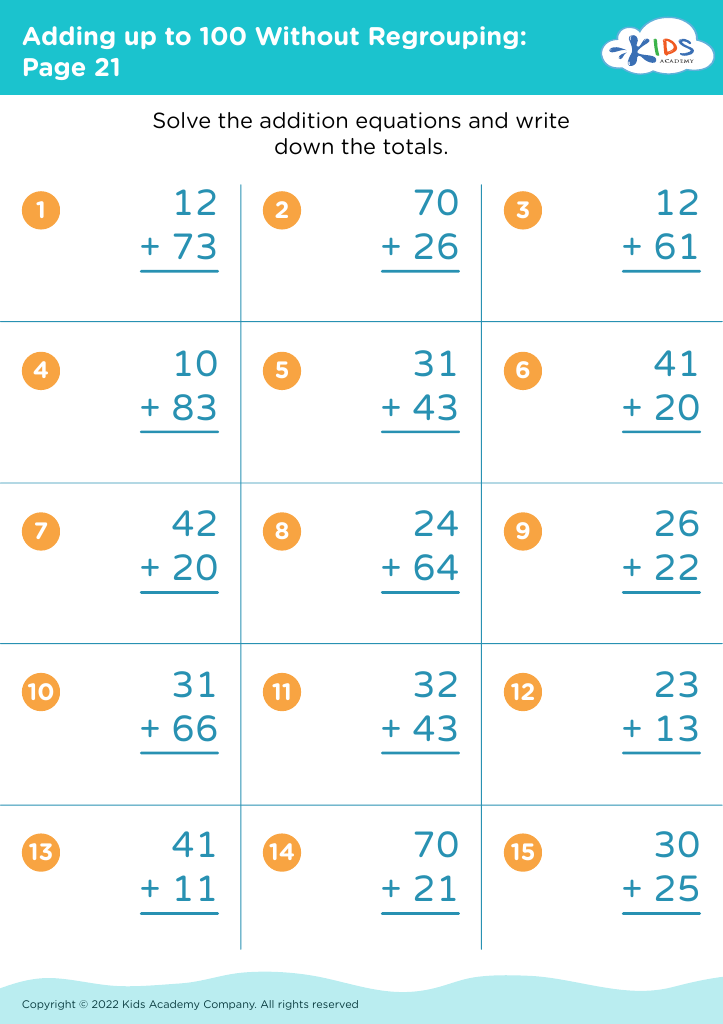
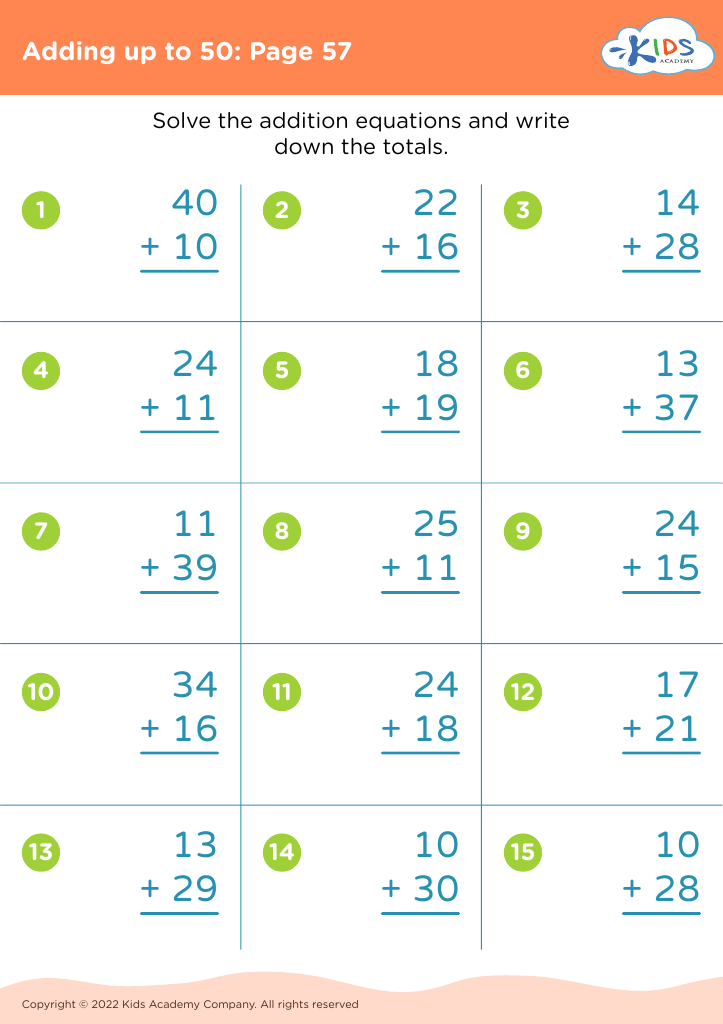
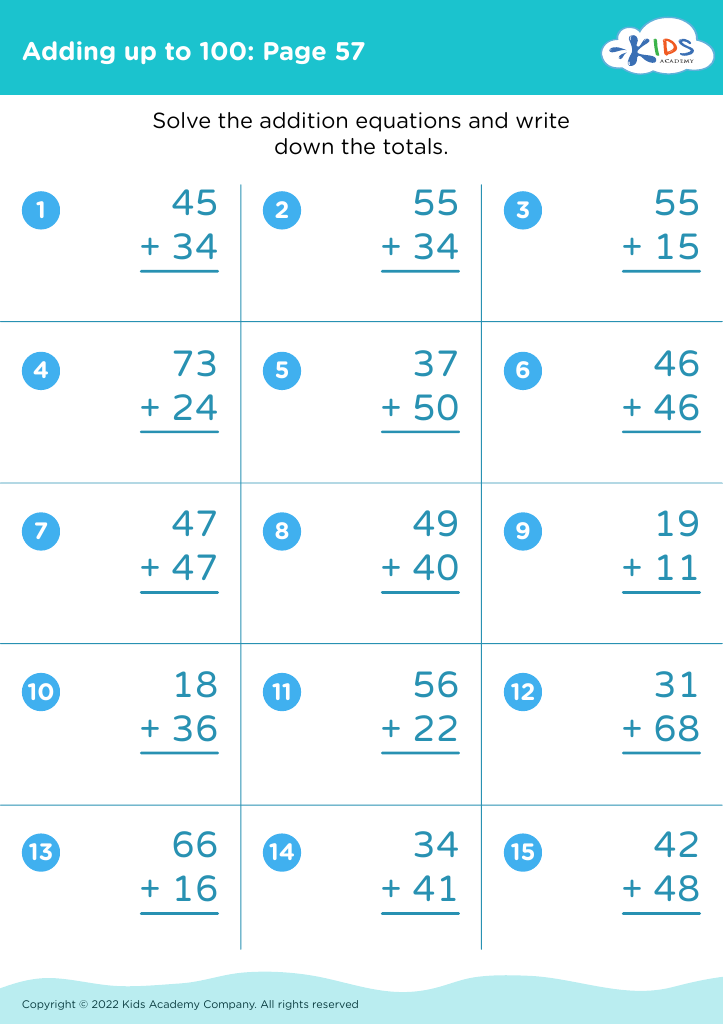
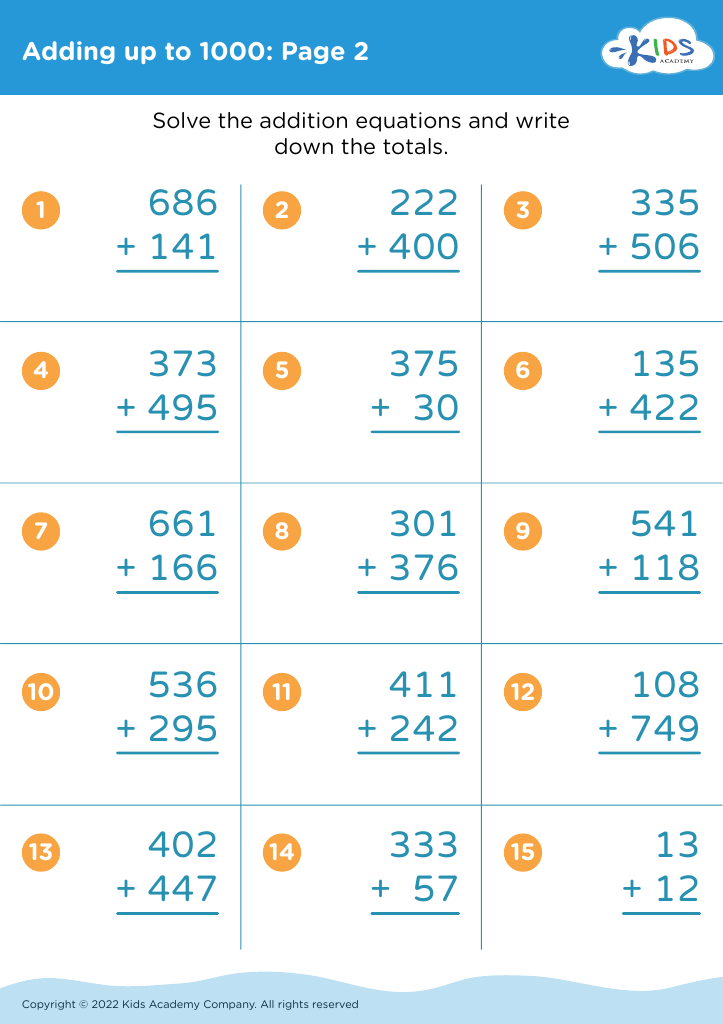
Unlock your child's potential with our "Develop Critical Thinking Addition & Subtraction Worksheets" tailored for ages 6-8. These engaging printables are designed to enhance mathematical skills while fostering critical thinking. Each worksheet presents age-appropriate addition and subtraction problems that challenge young minds to think logically and strategically. Perfect for both classroom and at-home learning, our expertly crafted worksheets ensure your child builds a strong foundation in math, paving the way for academic success. Discover a fun and educational way for your child to master essential math concepts and develop critical thinking skills with our thoughtfully designed worksheets.








Developing critical thinking skills through addition and subtraction for children aged 6-8 is fundamental for several reasons. At this young age, children's brains are highly receptive and rapidly absorbing information. Introducing them to basic mathematical operations like addition and subtraction helps them understand numerical relationships and foundational math concepts. This lays the groundwork for more complex problem-solving skills in the future.
When children practice addition and subtraction, they learn to approach problems methodically, evaluate different methods of solving them, and recognize patterns. These are essential components of critical thinking. By working through math problems, they also develop perseverance and analytical skills, which are critical not just in math, but across all subjects and real-life situations.
Furthermore, fostering these skills at an early stage boosts children's confidence in their academic abilities. They become more open to tackling new challenges and feel more equipped to handle school tasks independently. This positive attitude towards learning, nurtured by developing critical thinking through math, helps them become lifelong learners.
Teachers and parents who invest time and effort into cultivating these skills give their children a significant advantage in education and daily decision-making. These early experiences form a solid base that children will build upon throughout their academic and personal lives.








