Develop logical thinking Addition & Subtraction Worksheets for Ages 6-8
9 filtered results
-
From - To
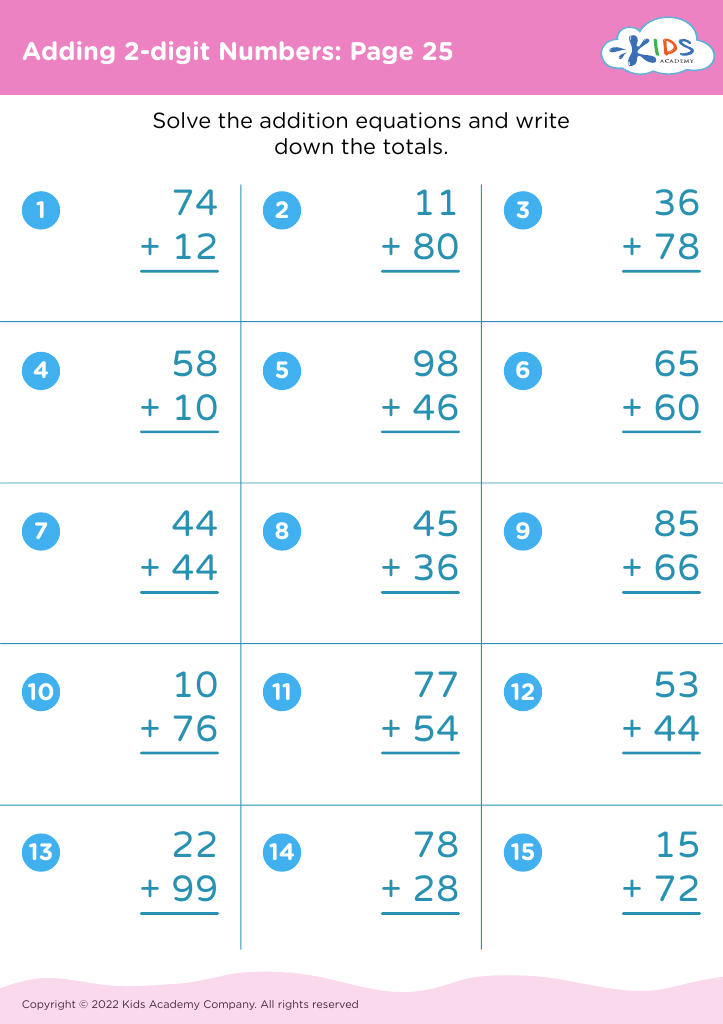
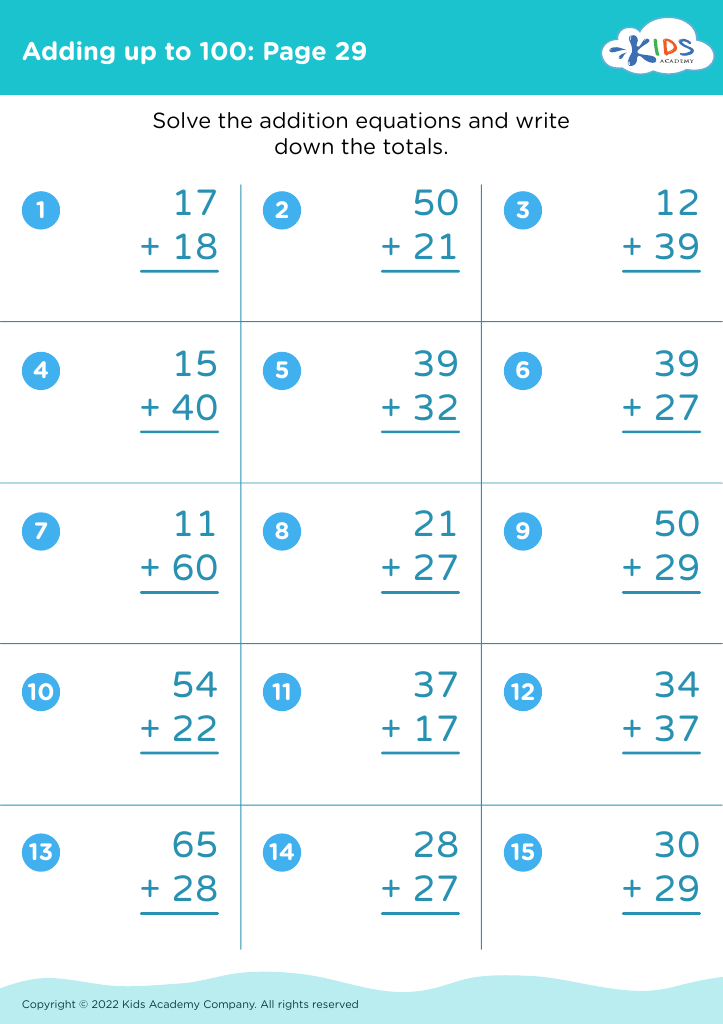
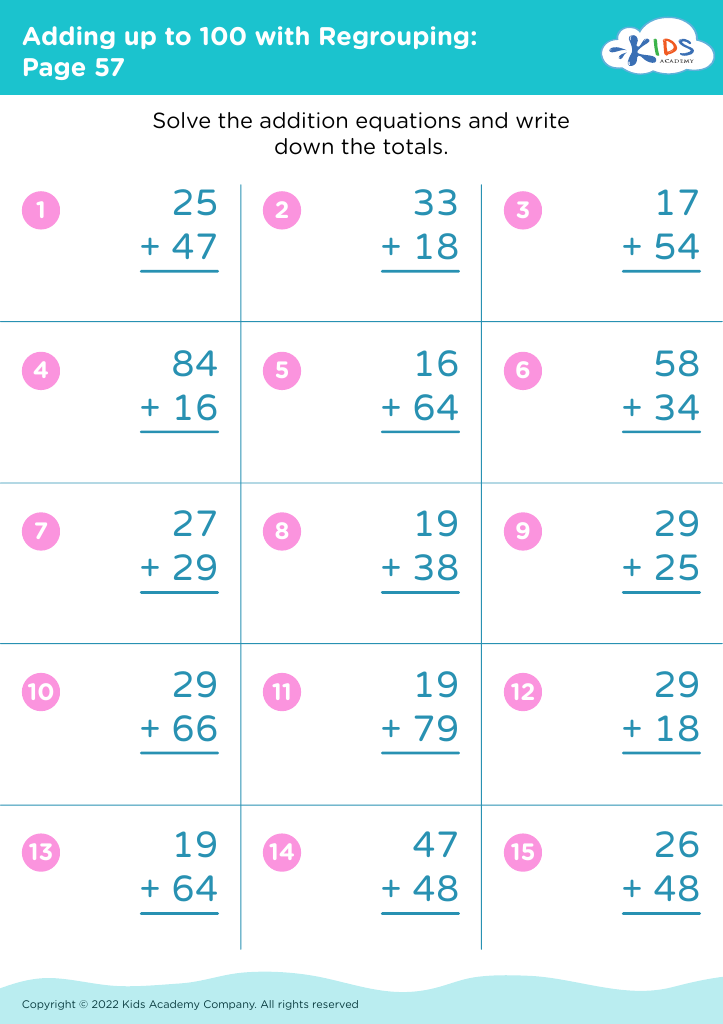
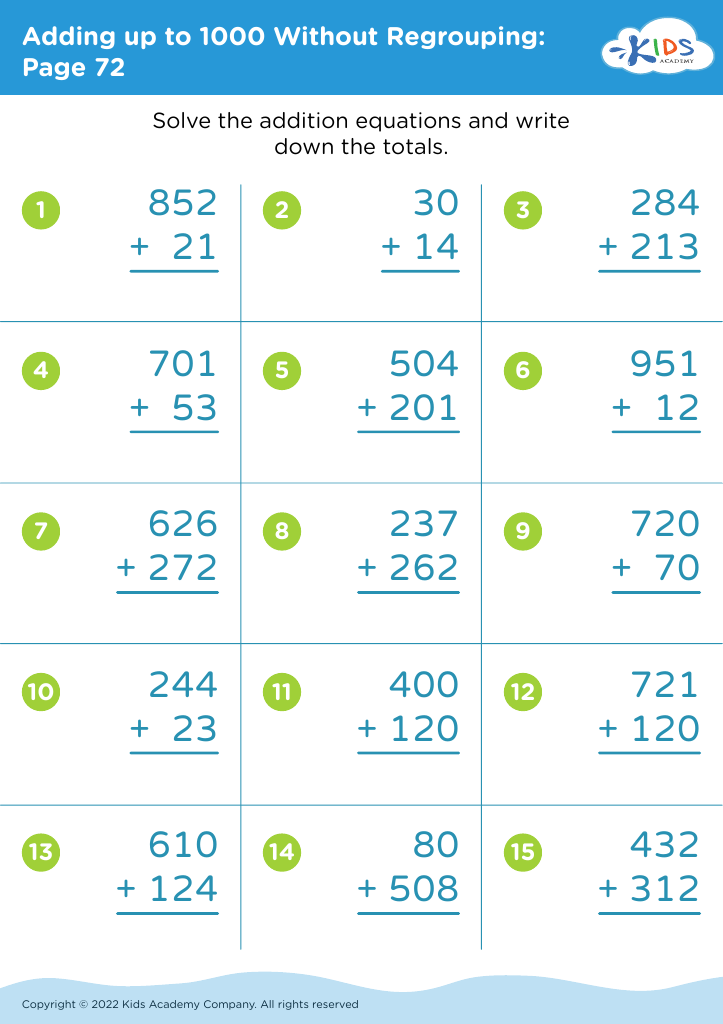
Enhance your child's logical thinking skills with our engaging Addition and Subtraction Worksheets designed for ages 6-8. These thoughtfully crafted activities focus on improving problem-solving abilities while reinforcing fundamental math concepts. Children will explore a variety of exercises that challenge their reasoning skills, such as solving word problems and recognizing patterns. Our worksheets cater to different learning styles, ensuring every child can thrive. Perfect for both classroom and at-home learning, these resources make math fun and interactive. Start your young learner’s journey into the world of logical thinking and foundational math with our comprehensive worksheet collection today!
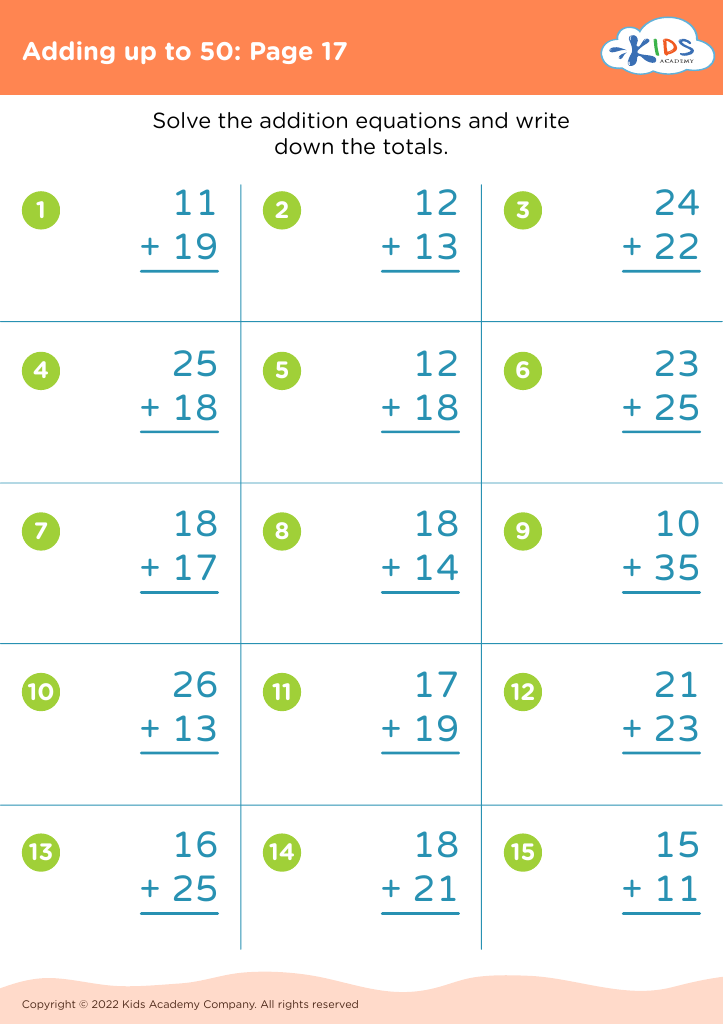
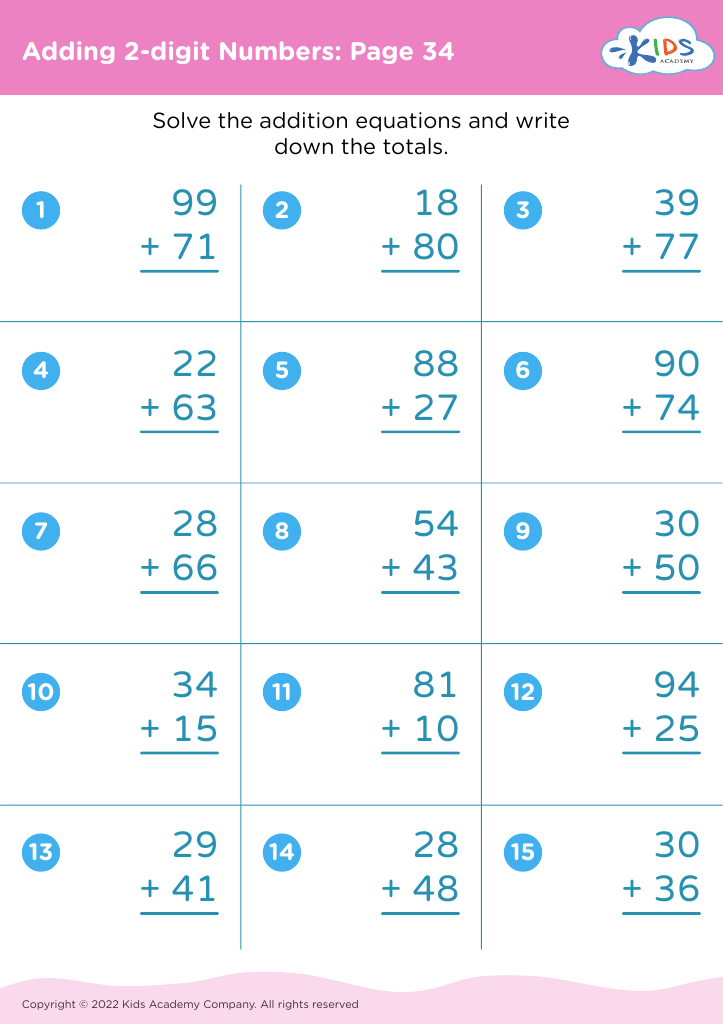
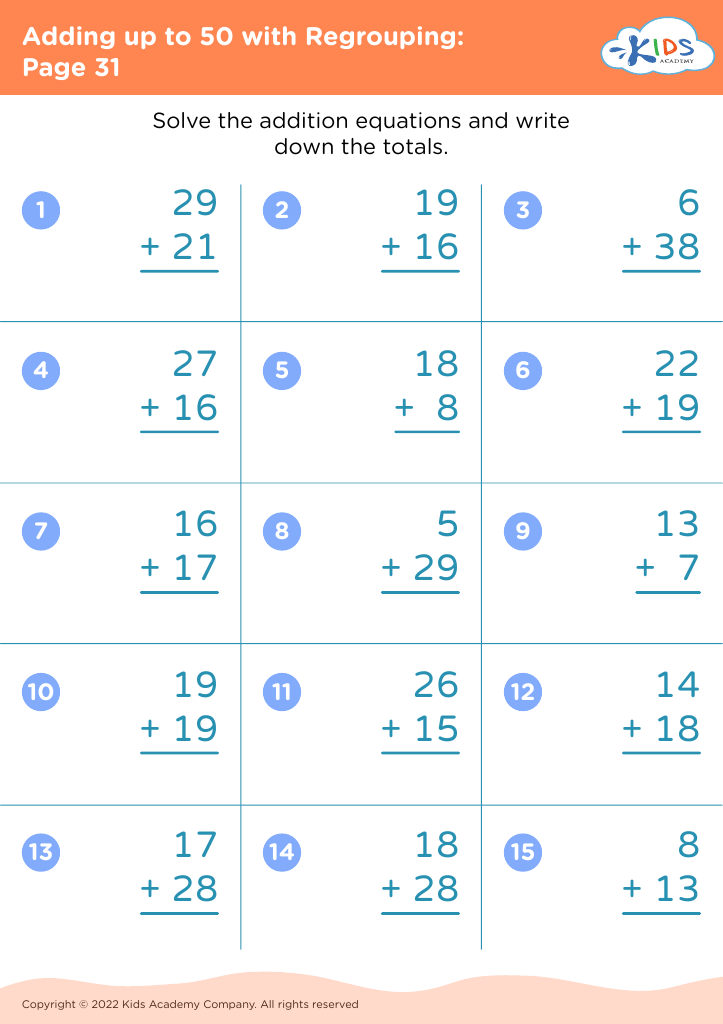
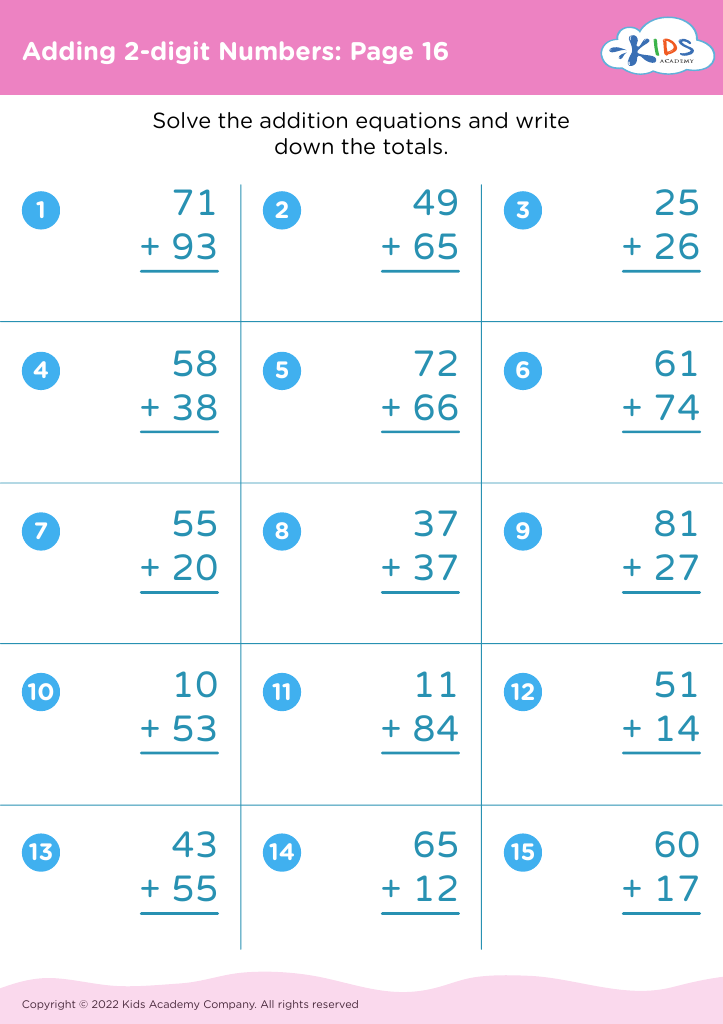
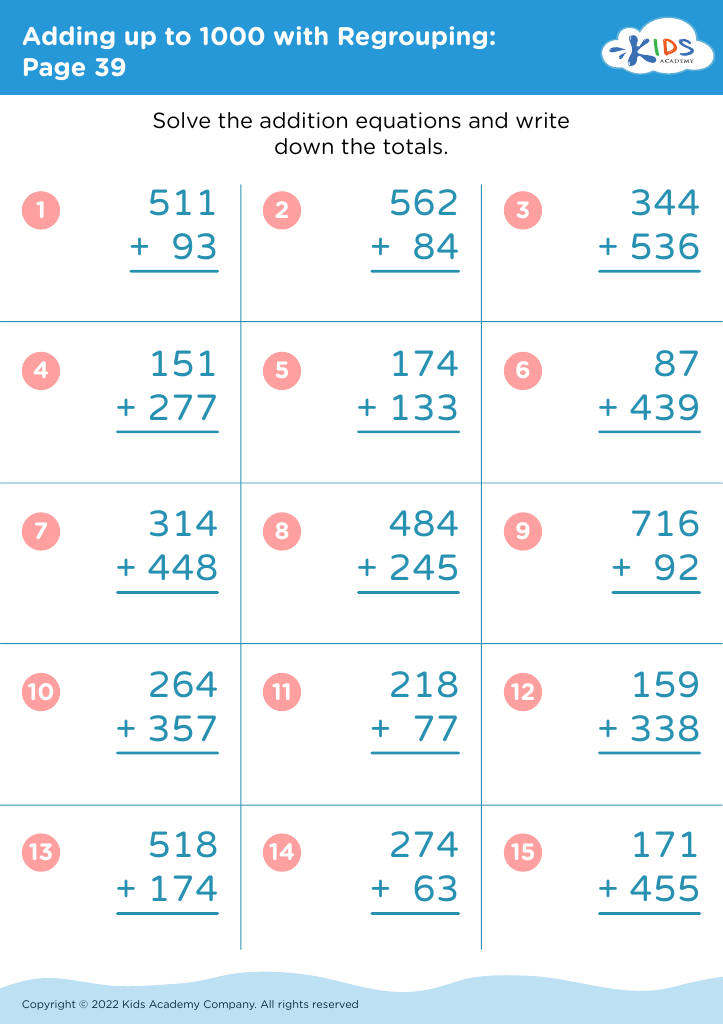








Developing logical thinking in addition and subtraction for children aged 6-8 is crucial for several reasons. First, this age group is at a pivotal stage in their cognitive development, where foundational math skills are formed. By focusing on logical thinking, teachers and parents can help children understand numerical relationships and problem-solving strategies, leading to a deeper comprehension of addition and subtraction beyond rote memorization.
Logical thinking in math involves recognizing patterns, making connections, and applying reasoning. These skills are essential not just for future math concepts, but also for everyday decision-making and critical thinking. Children who learn to approach addition and subtraction with a logical mindset are better equipped to tackle complex problems in the future, as they can break down challenges into manageable parts.
Moreover, fostering these skills can boost a child's confidence in their abilities, instilling a positive attitude towards learning and mathematics. When parents and teachers actively engage in building logical thinking through fun games and practical activities, they create a rich learning environment. Ultimately, by nurturing logical thinking in early math skills, adults set children on a path for lifelong success in mathematics and critical thinking. This investment in their development pays off as they approach more complex subjects in later years.








