Enhancing problem-solving skills Addition & Subtraction Worksheets for Ages 6-8
8 filtered results
-
From - To
Unlock your child's potential with our "Enhancing Problem-Solving Skills: Addition & Subtraction Worksheets" designed specifically for ages 6-8. These engaging, age-appropriate worksheets focus on developing critical thinking and problem-solving abilities through fun, interactive math exercises. Each worksheet encourages children to apply their addition and subtraction knowledge in real-world scenarios, fostering a deeper understanding of mathematical concepts. With vibrant visuals and creative formats, your young learners will be captivated while mastering essential skills. Ideal for classroom use or at-home learning, these worksheets provide an effective way to build confidence and proficiency in mathematics. Start their journey to mathematical mastery today!
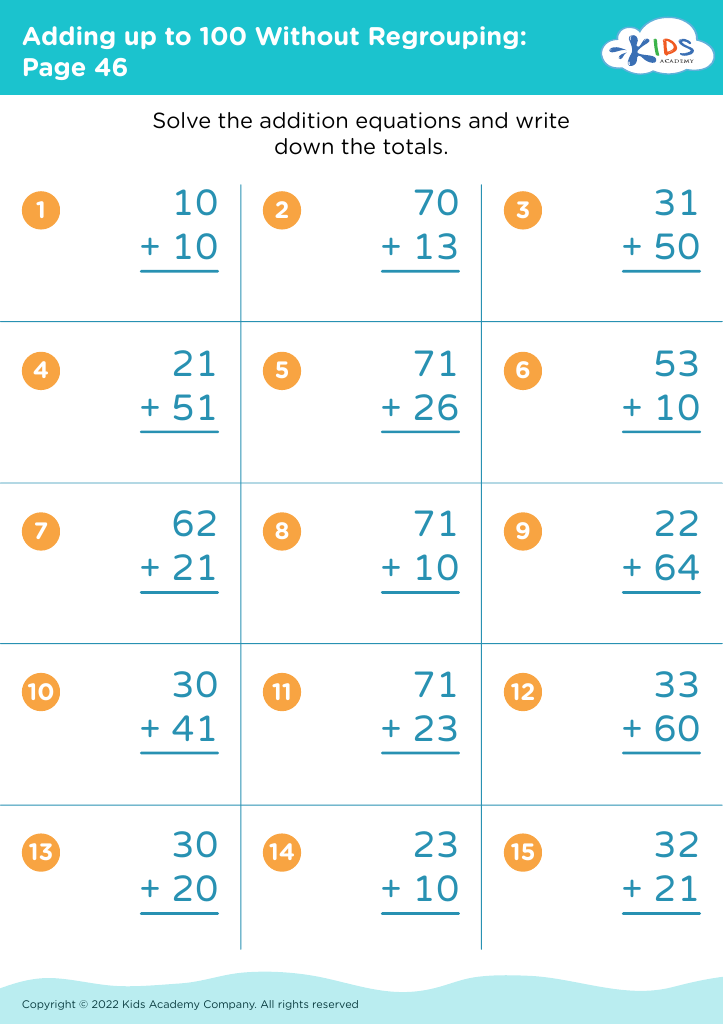

Daisy Subtraction Quest Worksheet
 Assign to My Students
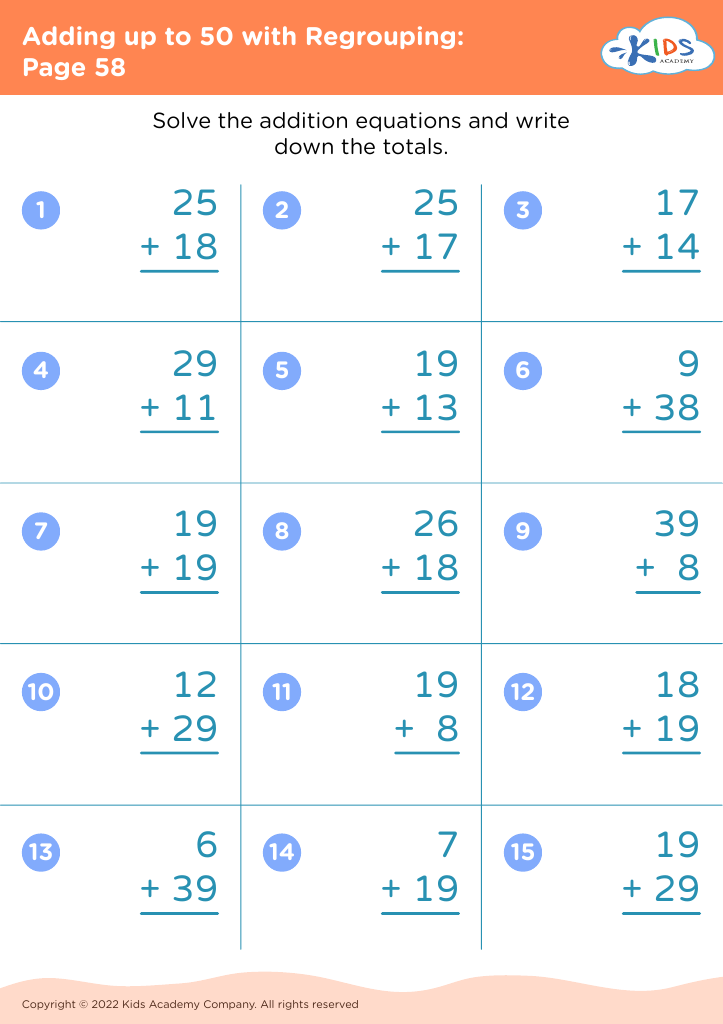
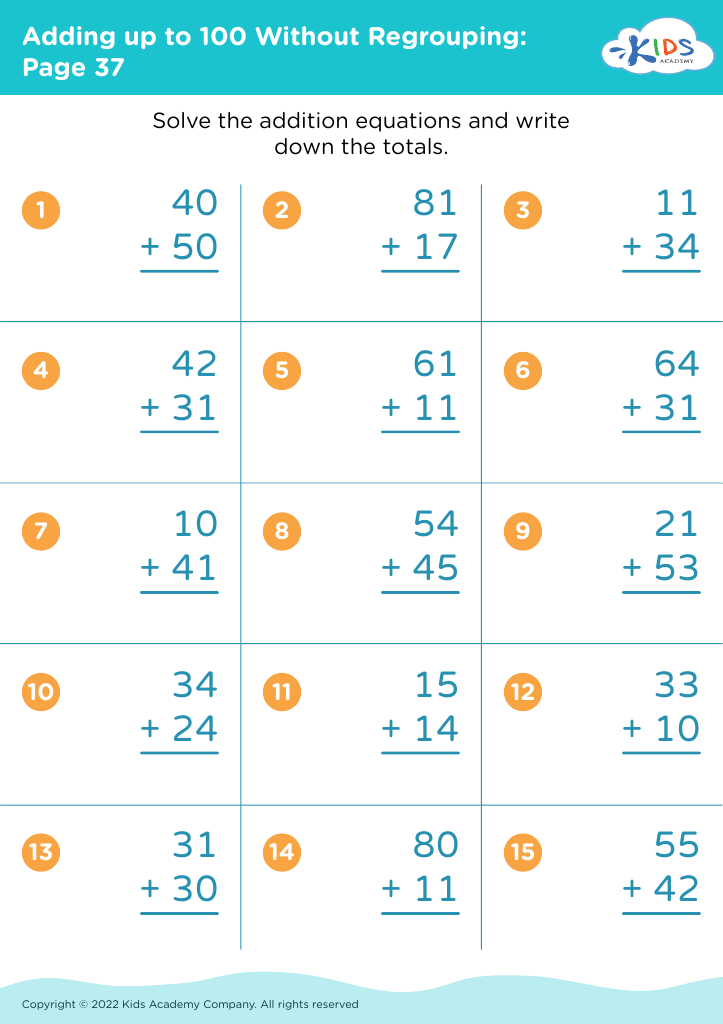
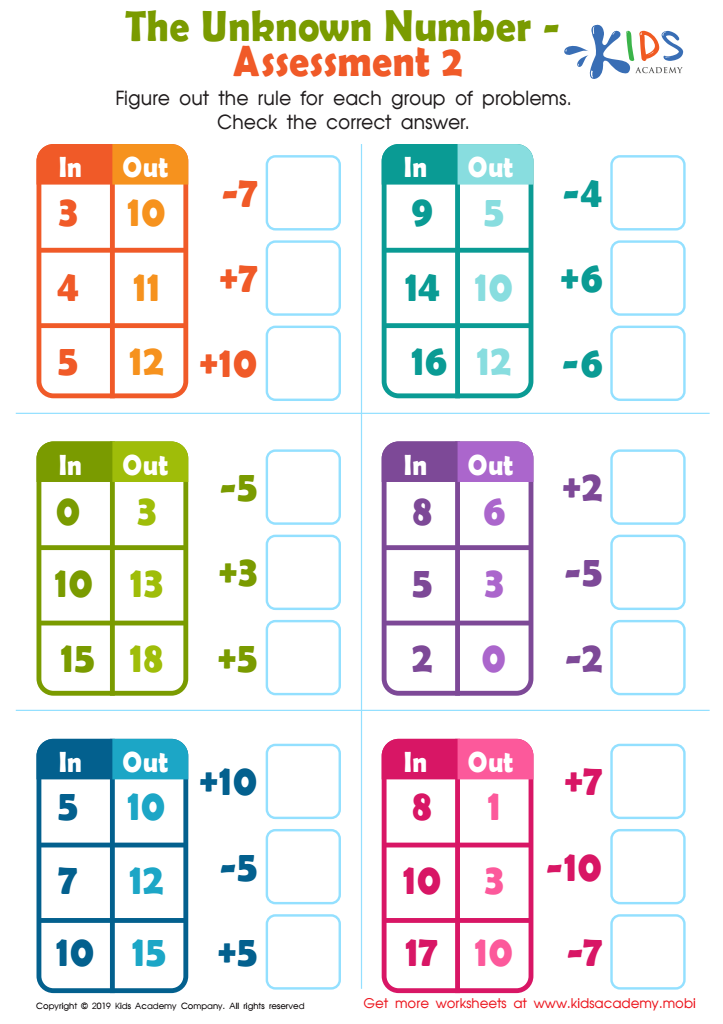
The Unknown Number - Assessment 2 Worksheet
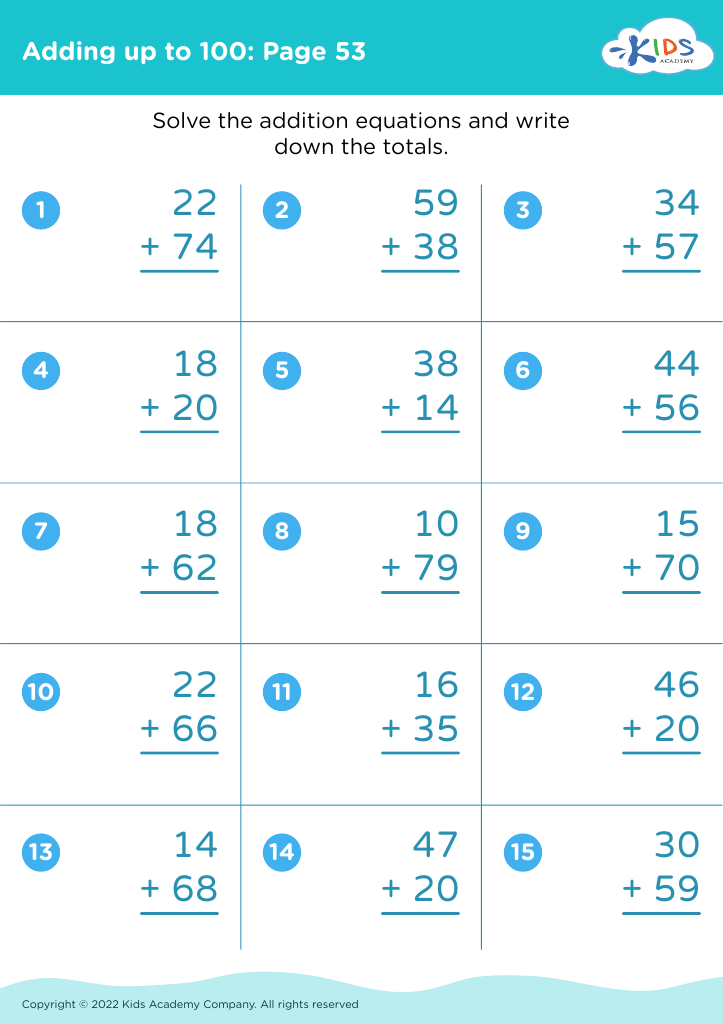
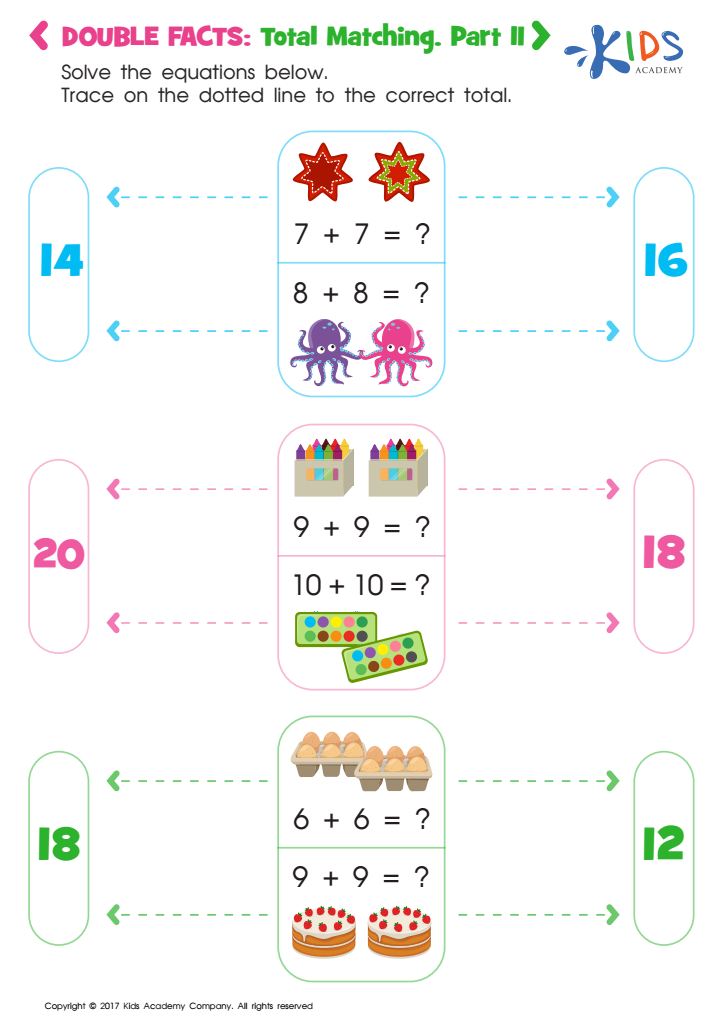
Double Facts: Total Matching 2 Worksheet
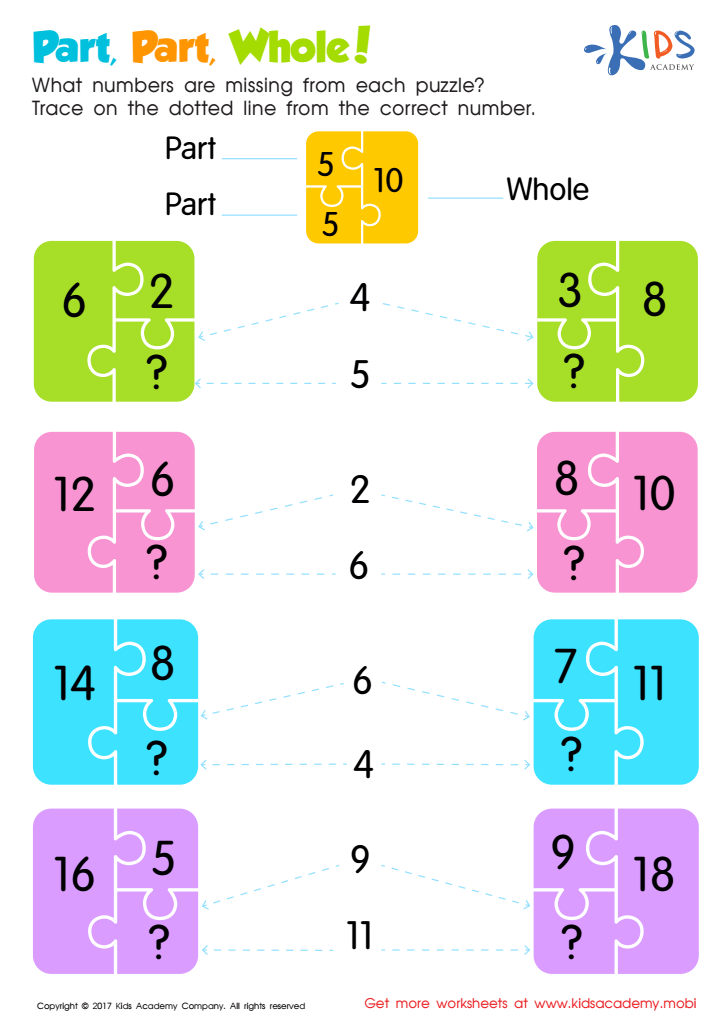
Part, Part, Whole Worksheet








Enhancing problem-solving skills in addition and subtraction for children aged 6-8 is crucial for several reasons. Firstly, these foundational math skills are building blocks for more complex mathematical concepts. Mastery of addition and subtraction lays the groundwork for understanding multiplication, division, and even fractions later on.
Additionally, fostering problem-solving abilities helps children develop critical thinking skills. By encouraging them to analyze, strategize, and find multiple ways to approach a problem, we instill a growth mindset. This mindset not only improves their mathematical understanding but also equips them to face challenges in everyday life, promoting resilience and adaptability.
Moreover, problem-solving in math encourages collaboration and communication skills. As children discuss their approaches with peers or seek help from adults, they learn to articulate their thoughts clearly, enhancing their capacity to work effectively in team settings.
Lastly, instilling a strong foundation in problem-solving helps cultivate a positive attitude towards learning. When children experience success in overcoming challenges, they become more motivated and confident learners. This confidence can spark a lifelong interest in mathematics and learning as a whole, enriching their educational journey. Thus, both parents and teachers play vital roles in nurturing these essential skills.








