Improving calculation skills Addition & Subtraction Worksheets for Ages 6-8
3 filtered results
-
From - To
Enhance your child’s mathematical abilities with our engaging Addition & Subtraction Worksheets designed for ages 6-8. These interactive resources focus on improving calculation skills, making math fun and accessible for young learners. Each worksheet offers a variety of exercises that reinforce fundamentals while fostering critical thinking and problem-solving. Tailored to match developmental stages, these materials provide gradual challenges, ensuring confident mastery of addition and subtraction concepts. Perfect for classroom use or at-home practice, our worksheets help establish a strong mathematical foundation, paving the way for future success in math. Download them today and watch your child thrive in their calculations!
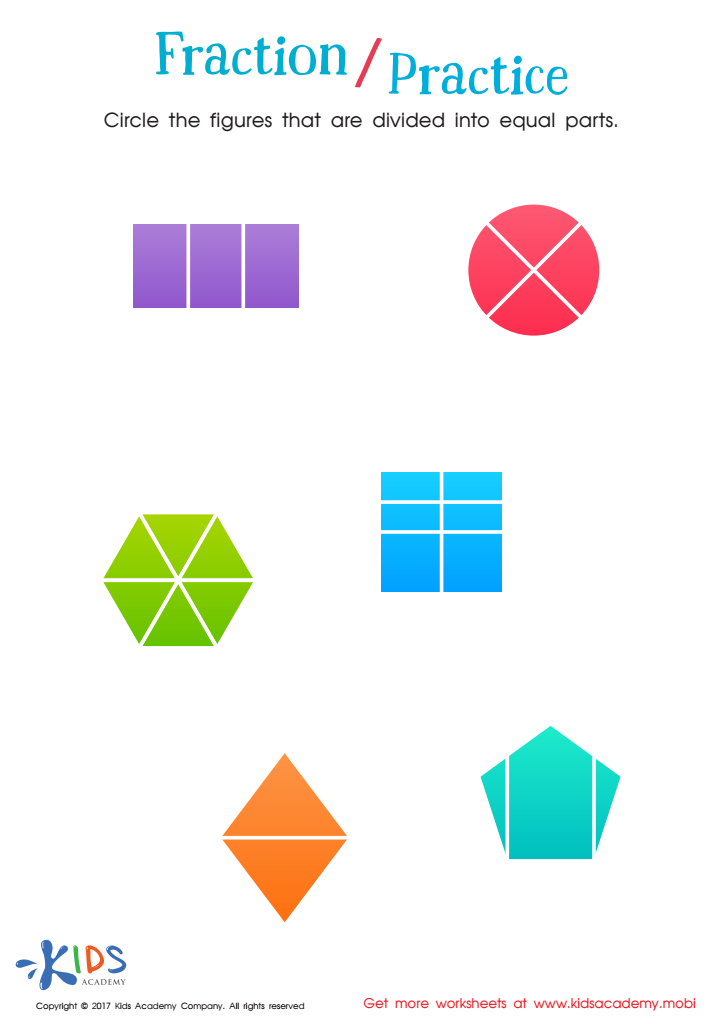
Fractions: Shapes Worksheet
 Assign to My Students
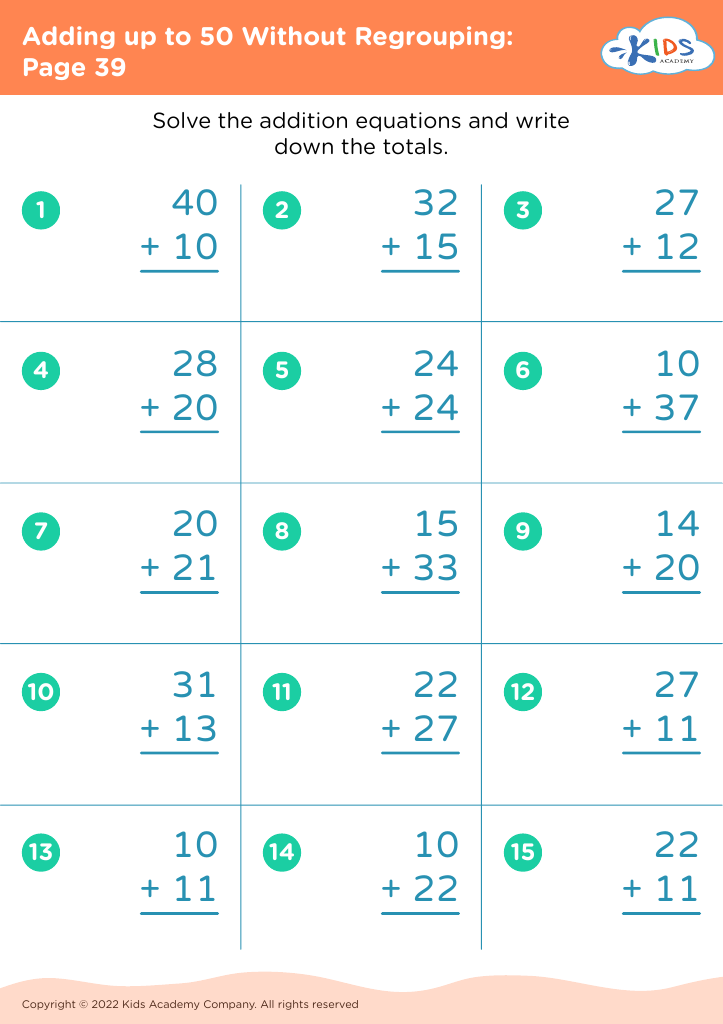
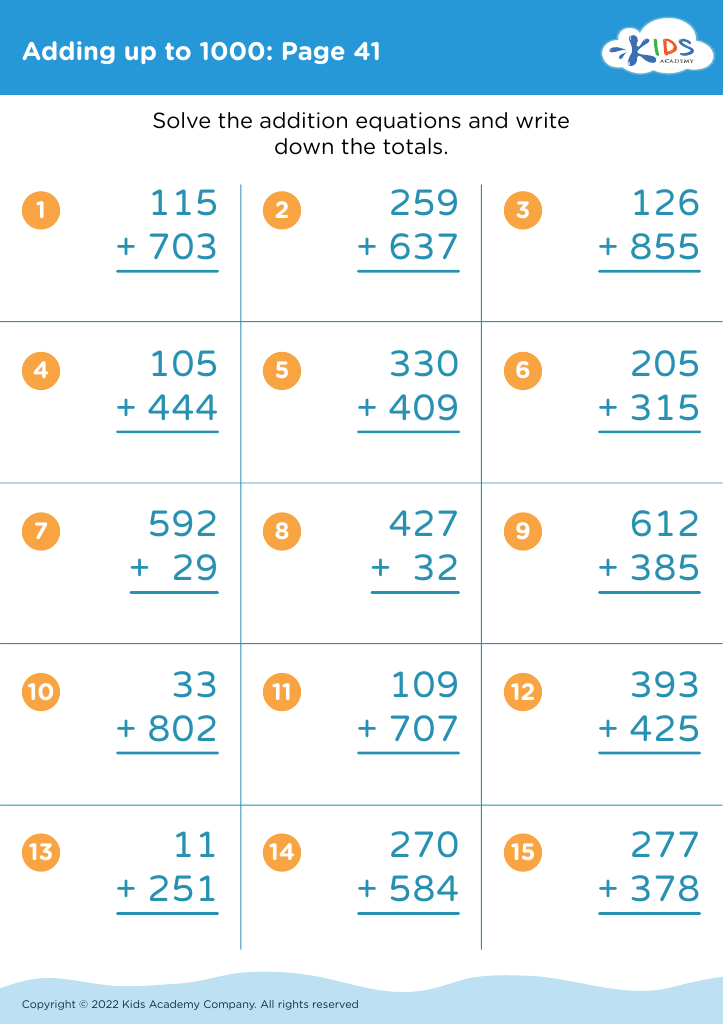








Improving calculation skills in addition and subtraction for children aged 6-8 is fundamental to their overall math development and academic success. Mastering these basic arithmetic operations lays the groundwork for more advanced mathematical concepts that children will encounter as they progress through their education, such as multiplication, division, fractions, and problem-solving techniques.
At this age, children are naturally curious and eager to learn, making it the perfect time to strengthen their numerical understanding. Improved calculation skills enhance their confidence in math, allowing them to engage more fully in classroom activities and discussions. Furthermore, strong foundational skills can lead to better performance on standardized tests and assessments, which can impact future opportunities for advanced classes and programs.
In daily life, proficiency in addition and subtraction is essential for tasks such as budgeting, shopping, and time management, preparing children for life beyond the classroom. Both parents and teachers play vital roles in fostering a positive attitude toward math and ensuring that children develop these crucial skills through engaging, collaborative, and fun learning experiences. Ultimately, investing time and energy into improving these basic mathematical skills cultivates lifelong learners equipped to tackle future challenges.








