Logical thinking Addition & Subtraction Worksheets for Ages 6-8
10 filtered results
-
From - To
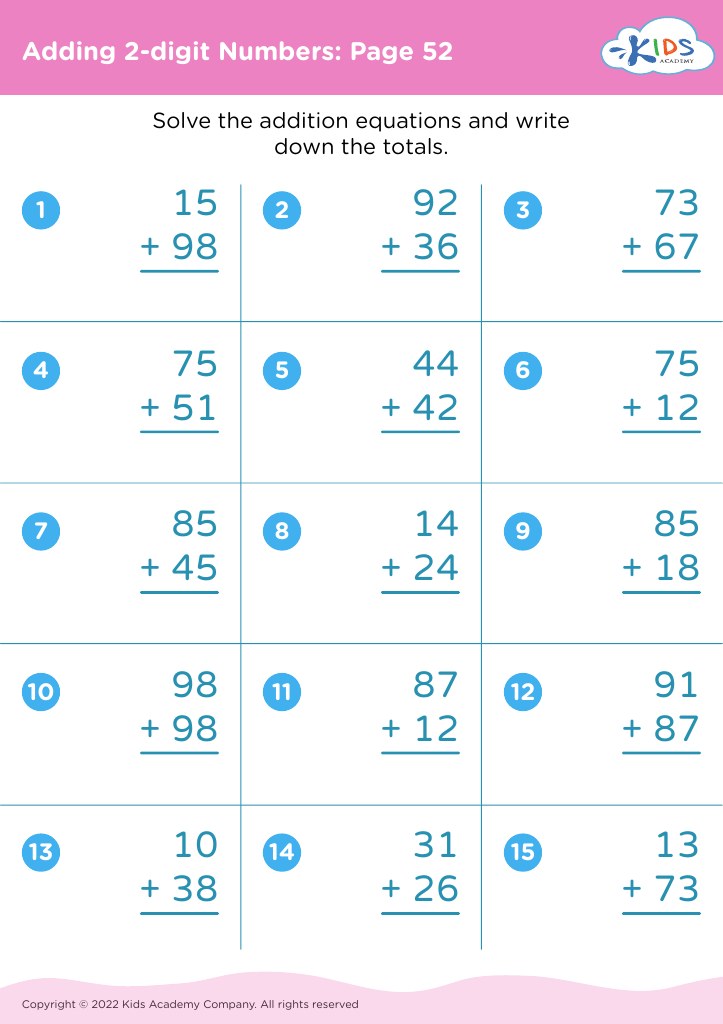
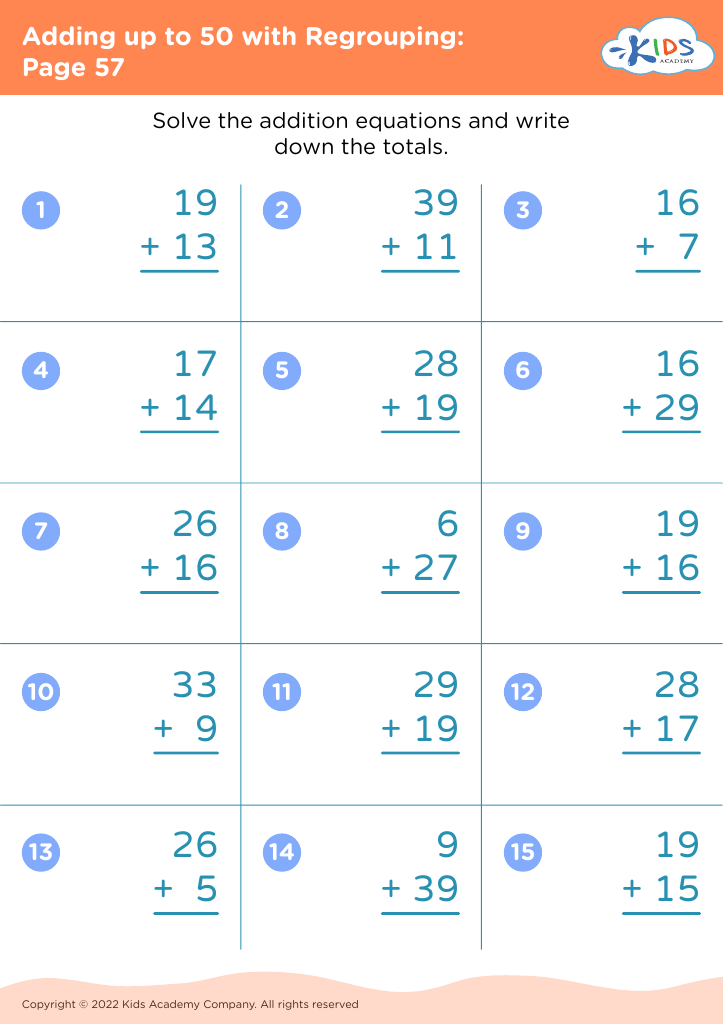
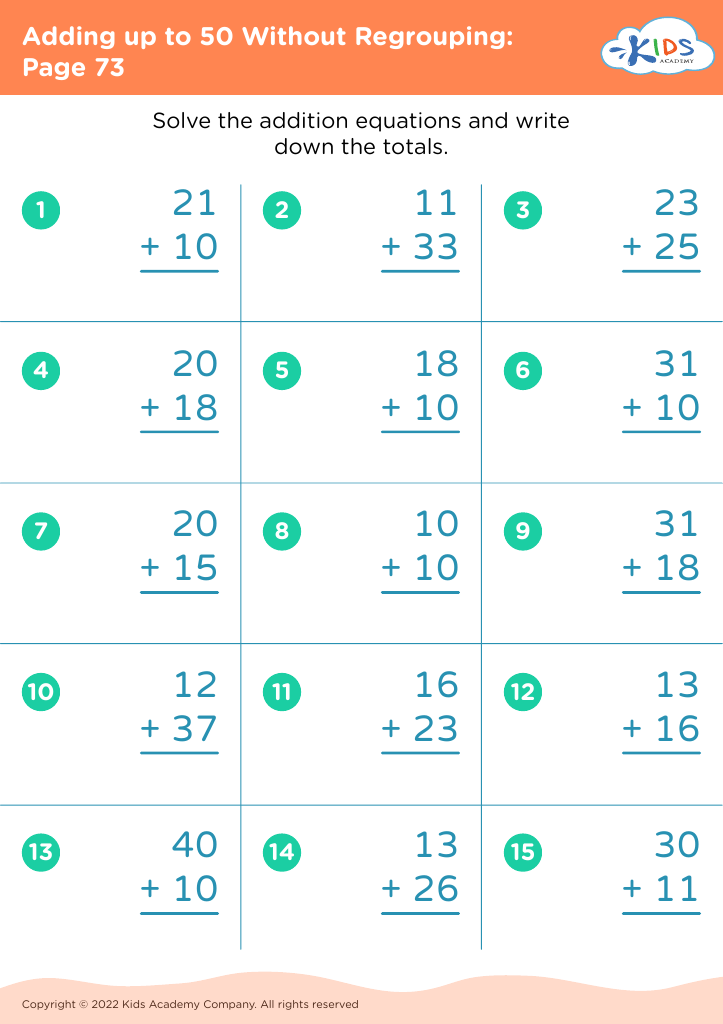
Enhance your child’s problem-solving skills with our "Logical Thinking Addition & Subtraction Worksheets for Ages 6-8." These specially designed resources foster critical thinking and mathematical proficiency through engaging exercises. Perfect for early learners, our worksheets blend fun with education, captivating young minds while illustrating fundamental math concepts. Help your child develop a strong foundation in addition and subtraction, while boosting logical reasoning and analysis skills. Whether they are practicing at home or in the classroom, these worksheets provide a delightful and effective learning experience. Set your child on the path to mathematical confidence with our comprehensive collection.
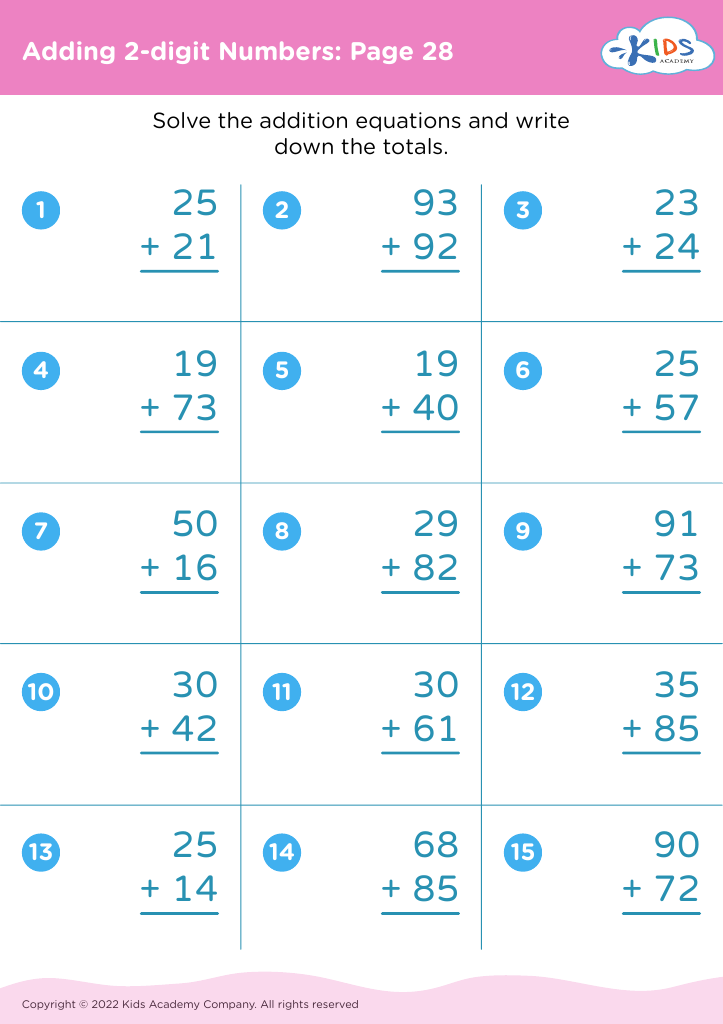
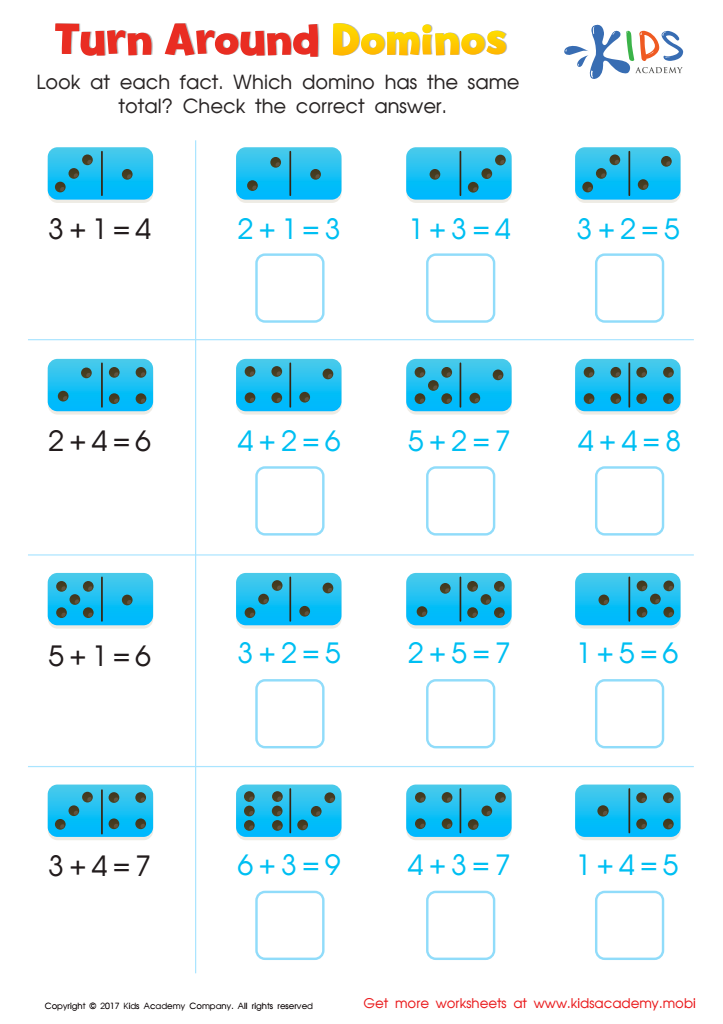
Turn Around Dominos Worksheet
 Assign to My Students
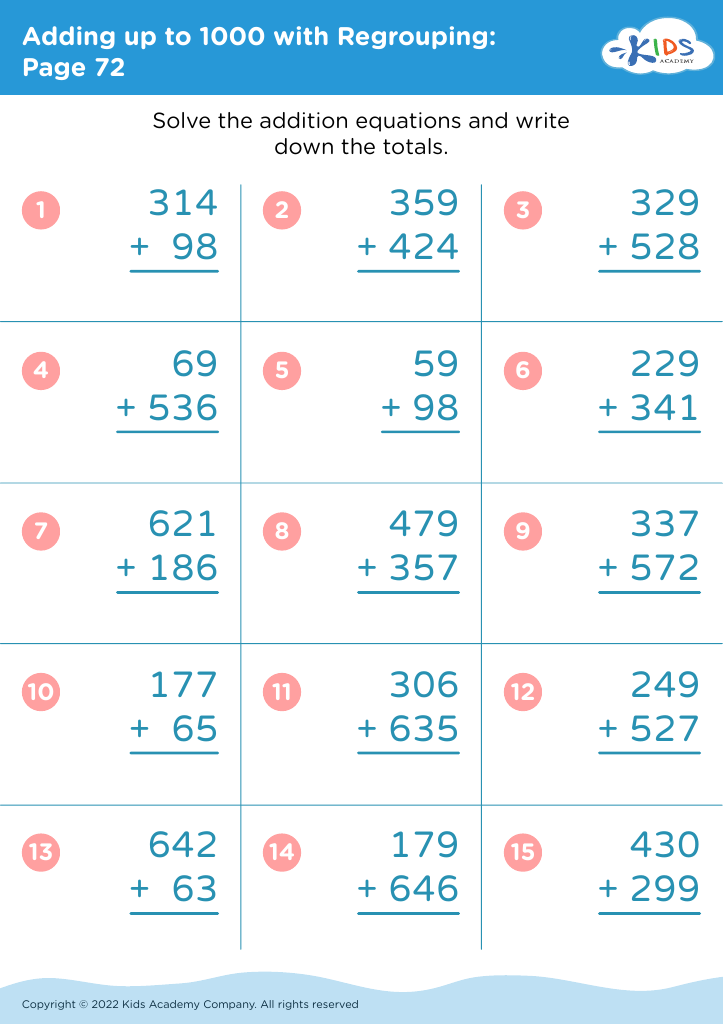
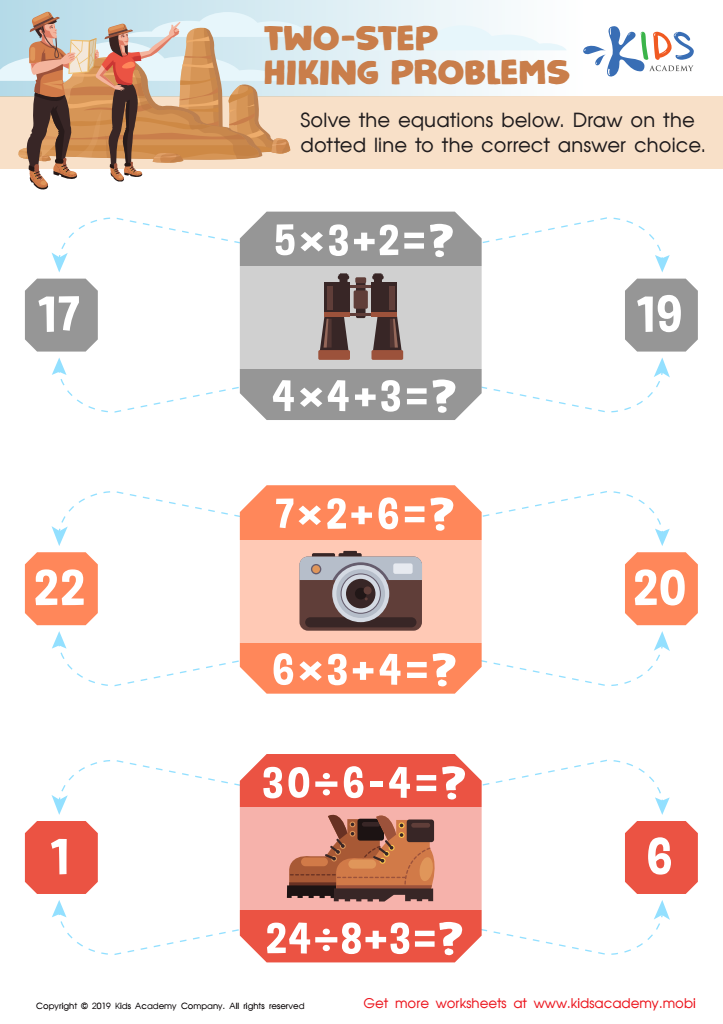
Two-Step Hiking Problems Worksheet
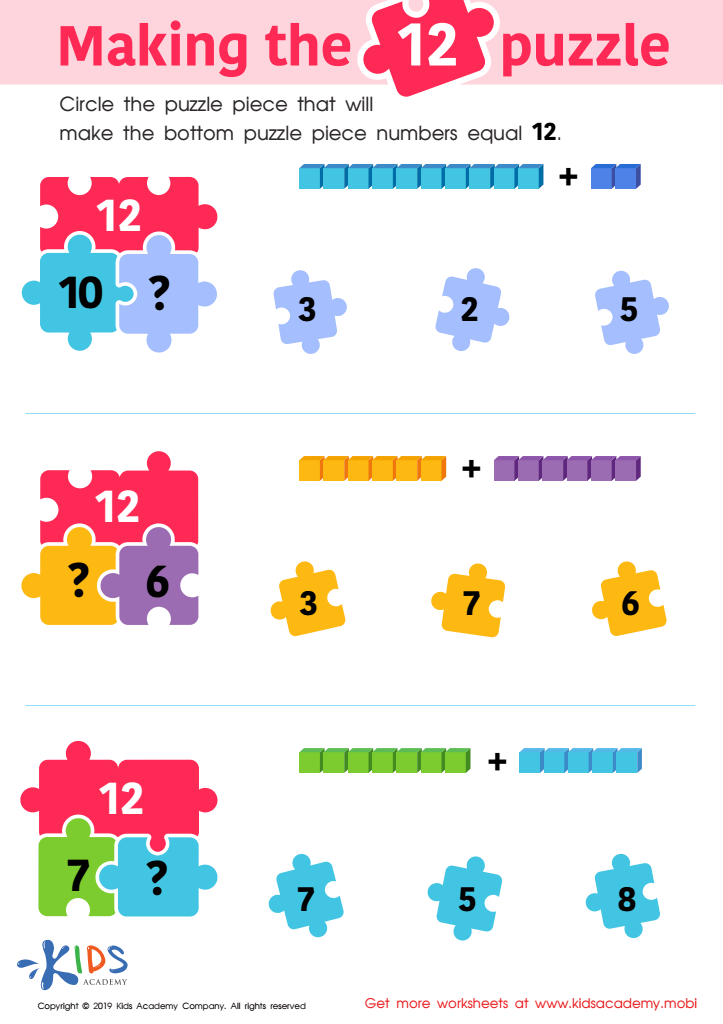
Making the 12 Puzzle Worksheet
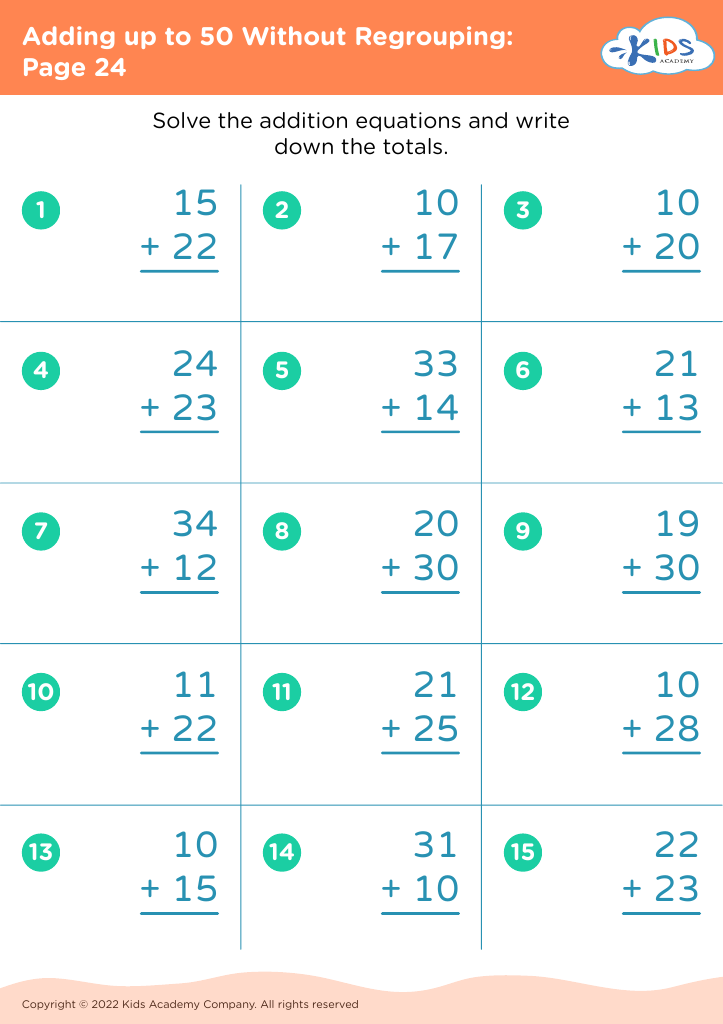
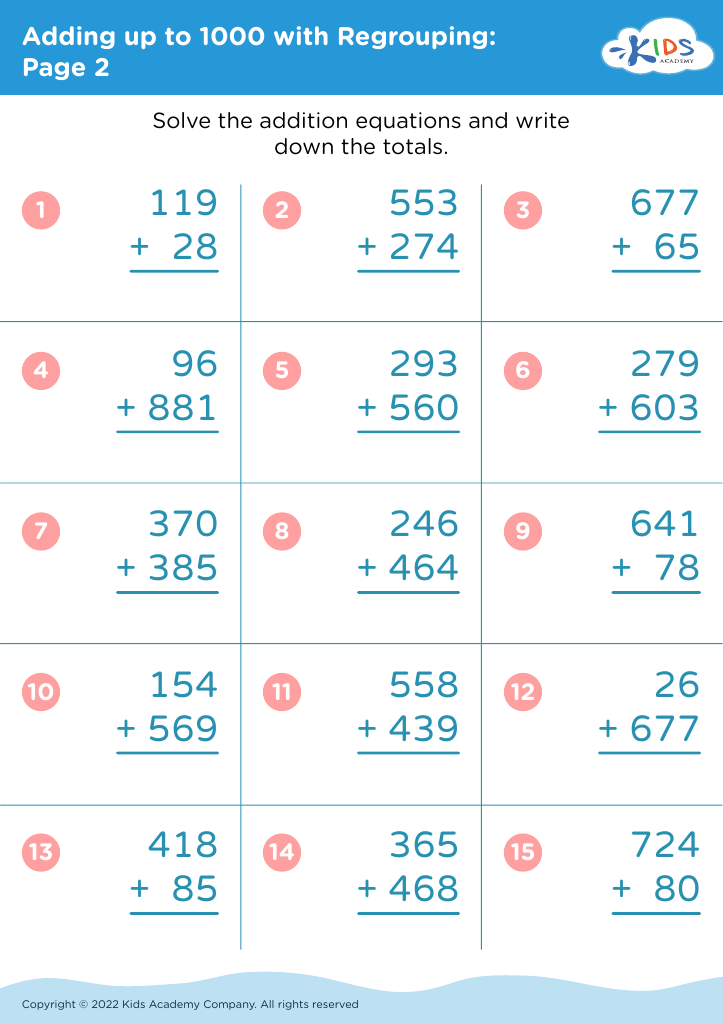








Parents and teachers should care deeply about cultivating logical thinking skills along with proficiency in addition and subtraction for children aged 6-8 because it forms the foundation for future academic success and real-world problem-solving abilities. At this developmental stage, cognitive skills are highly malleable, making it the perfect time to introduce concepts that involve both logical reasoning and basic arithmetic.
Logical thinking empowers children to approach problems systematically, make sound decisions, and understand the cause-and-effect relationships. When integrating these skills with basic arithmetic tasks like addition and subtraction, children not only learn to compute numbers but also develop a crucial understanding of mathematical concepts such as number sense, sequencing, and pattern recognition. This blend of skills is essential for success in more advanced math and science courses in later years.
Moreover, mastering these basic skills boosts confidence and encourages a positive attitude toward learning. Engaging in activities that promote logical thinking and arithmetic also improves attention to detail and enhances memory, attributes that are beneficial in all academic areas. Therefore, prioritizing these skills helps children build a strong educational foundation, promotes critical thinking, and encourages lifelong learning habits, equipping them for future challenges.








