Pattern recognition Addition & Subtraction Worksheets for Ages 6-8
7 filtered results
-
From - To
Discover our engaging Pattern Recognition Addition & Subtraction Worksheets, designed specifically for children ages 6-8! These worksheets provide a fun and interactive way for young learners to sharpen their math skills while recognizing patterns in addition and subtraction. Each activity is crafted to enhance critical thinking and problem-solving abilities, ensuring that children not only practice math concepts but also develop mathematical reasoning. With vivid illustrations and age-appropriate challenges, your child will gain confidence and mastery in their addition and subtraction abilities. Explore our comprehensive collection now to support your child's early math education in an enjoyable and effective way!
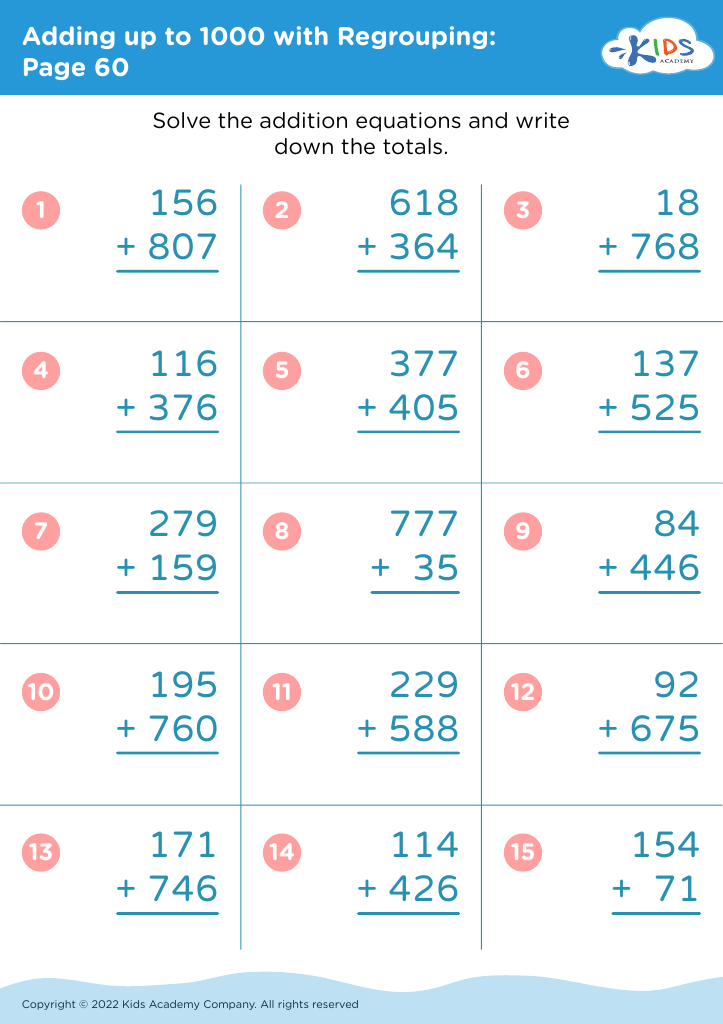
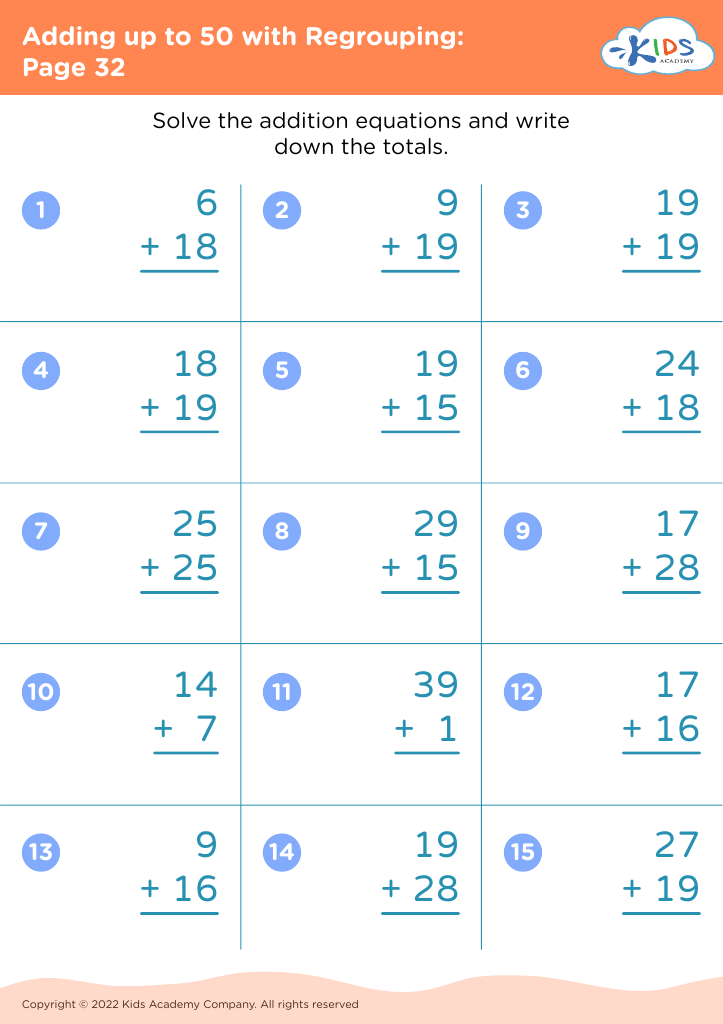
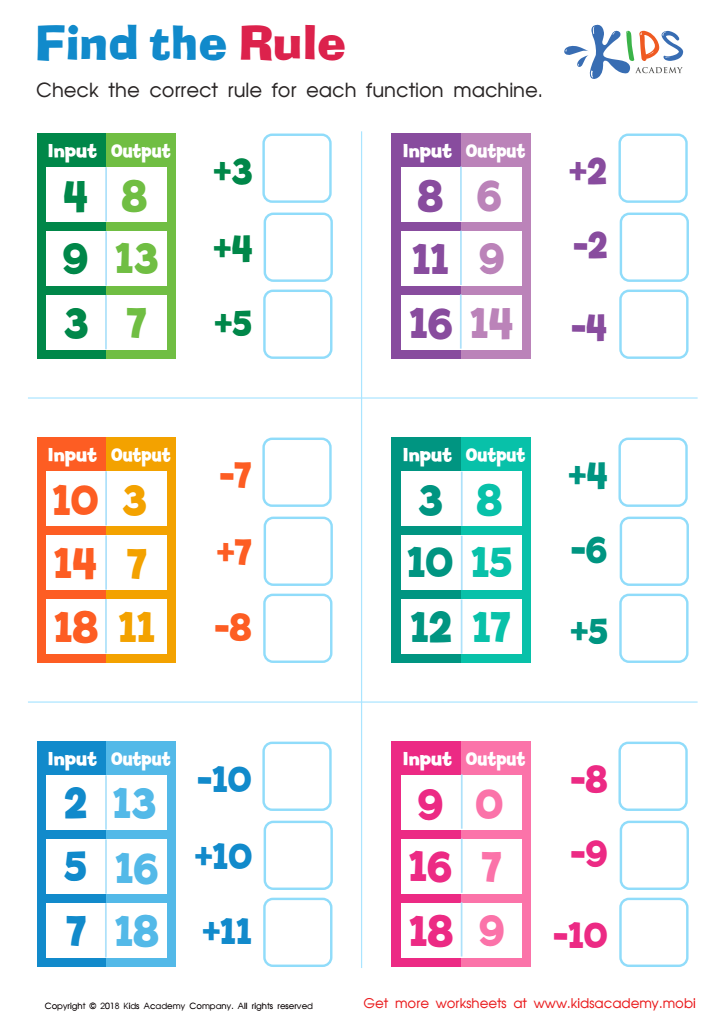
Find the Rule Worksheet
 Assign to My Students
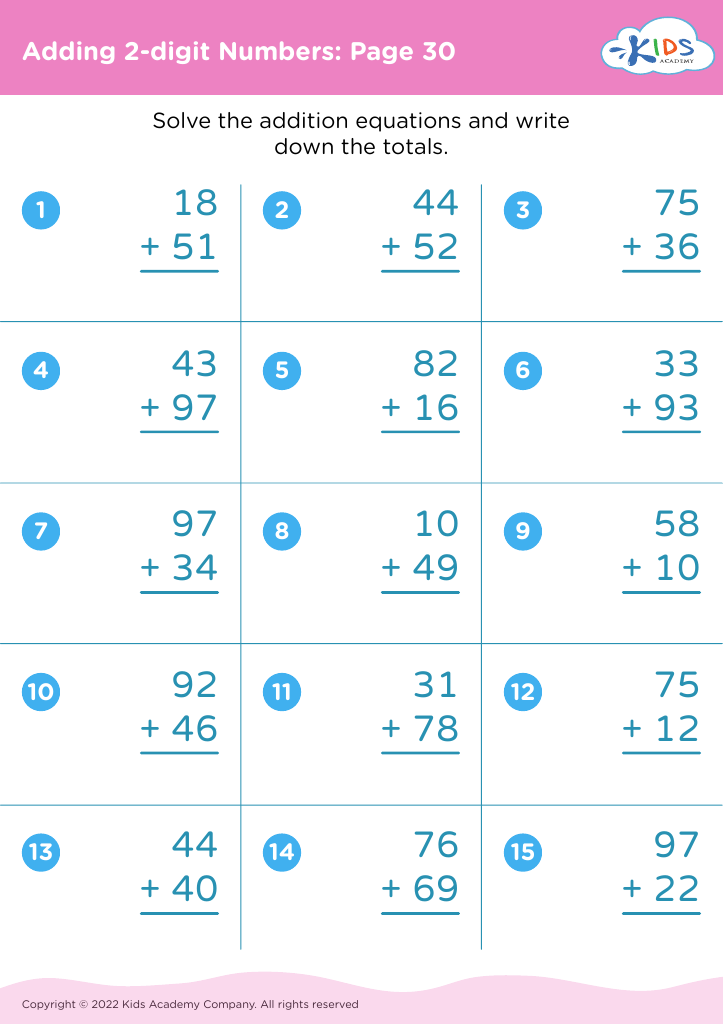
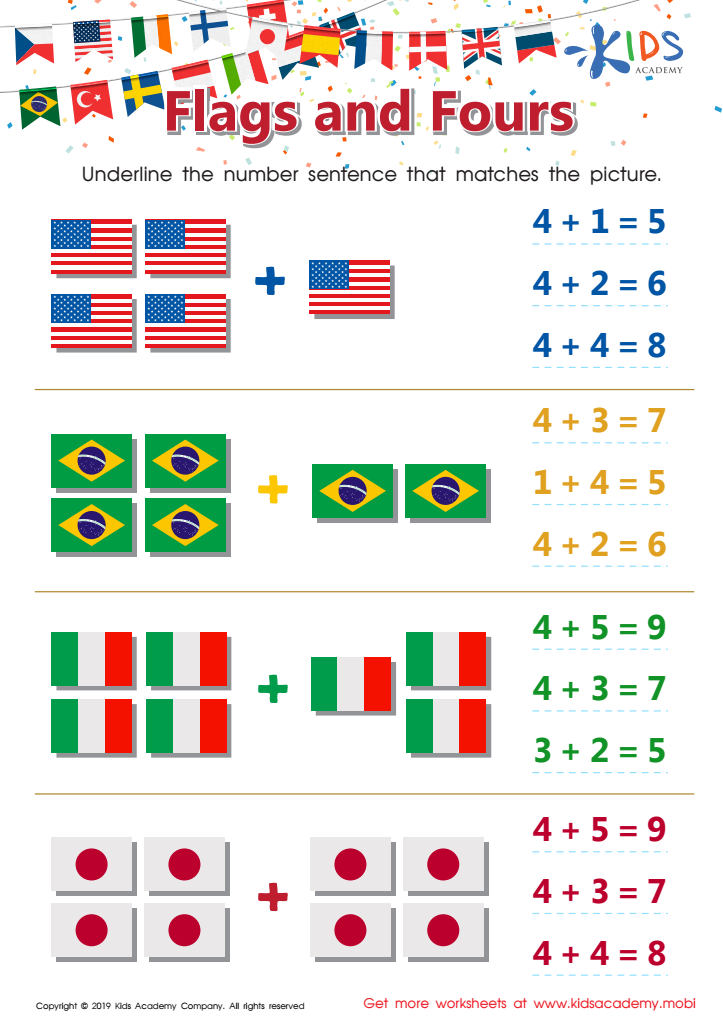
Flags and Fours Worksheet








Pattern recognition in addition and subtraction is vital for students aged 6-8 as it lays the groundwork for mathematical understanding and problem-solving skills. At this developmental stage, children are increasingly capable of spotting patterns, which enhances their ability to perform arithmetic more efficiently and effectively.
When children learn to recognize patterns in numbers, they can predict and extend those patterns to solve problems, making math less intimidating and more relatable. For example, seeing that adding 2 to an odd number always results in an odd number can help reinforce not only addition skills but also encourage reasoning about numbers.
Furthermore, creating a connection between pattern recognition and real-life situations helps students to see the relevance of math in their everyday lives. Parents and teachers can support this by using everyday examples like recognizing patterns in nature, routines, or even art.
By fostering pattern recognition, adults are equipping children with critical thinking skills, preparing them for more complex mathematical concepts in later years. Consequently, emphasizing this type of thinking can cultivate a more positive attitude towards mathematics, build confidence, and foster a lifelong love of learning. Overall, supporting children's development in this area is essential for their educational journey.








