Understanding bar graphs Addition & Subtraction Worksheets for Ages 6-8
3 filtered results
-
From - To
Welcome to our "Understanding Bar Graphs Addition & Subtraction Worksheets" tailored for children aged 6-8! These engaging, printable worksheets help young learners grasp foundational math concepts while exploring bar graphs. Designed to promote critical thinking, our activities allow students to practice addition and subtraction through visual representation, making math both exciting and approachable. Kids will gain essential skills in interpreting data and drawing conclusions, preparing them for more complex mathematical concepts in the future. Perfect for classroom use or at-home enrichment, these worksheets provide an interactive way to enhance your child's understanding of math and data interpretation. Explore, learn, and have fun with math!
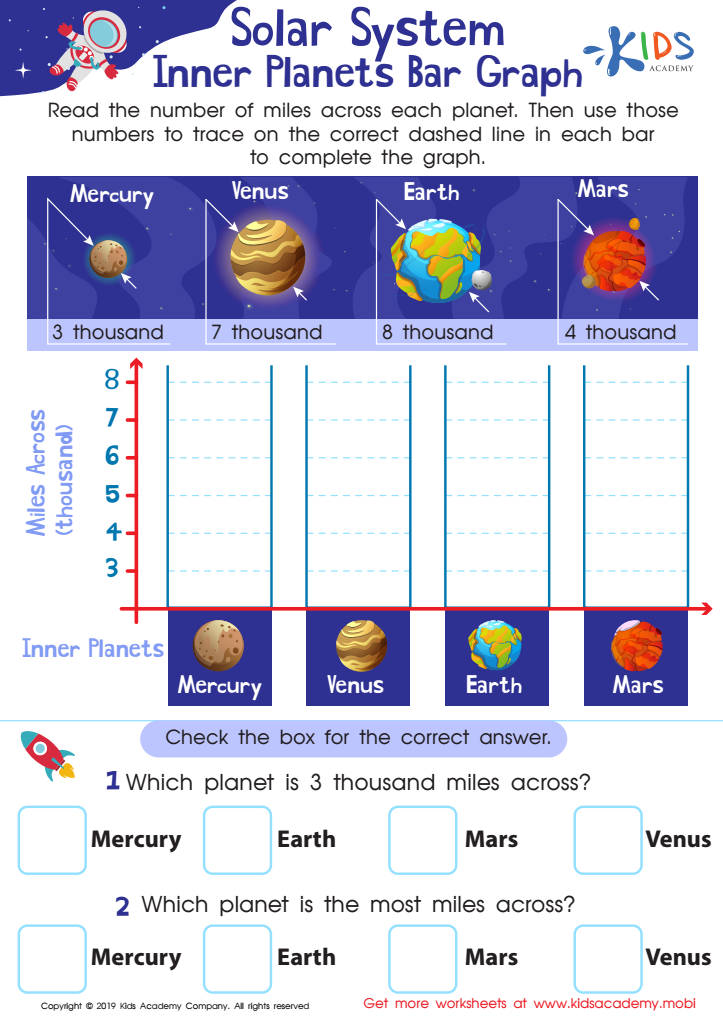
Planets Bar Graph Worksheet
 Assign to My Students
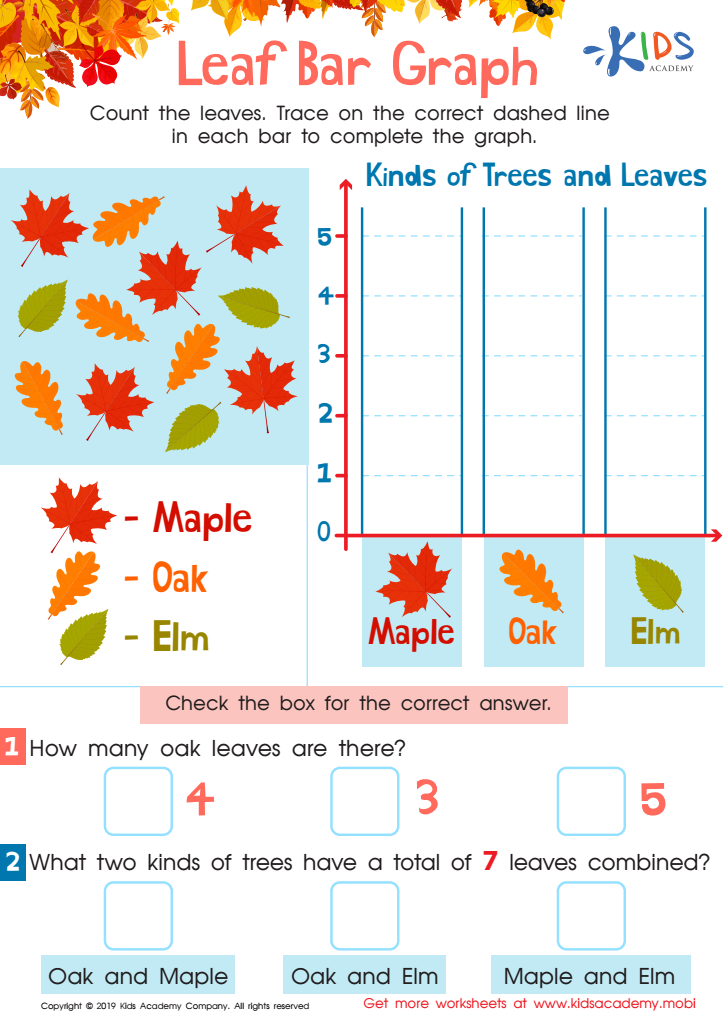
Leaf Bar Graph Worksheet
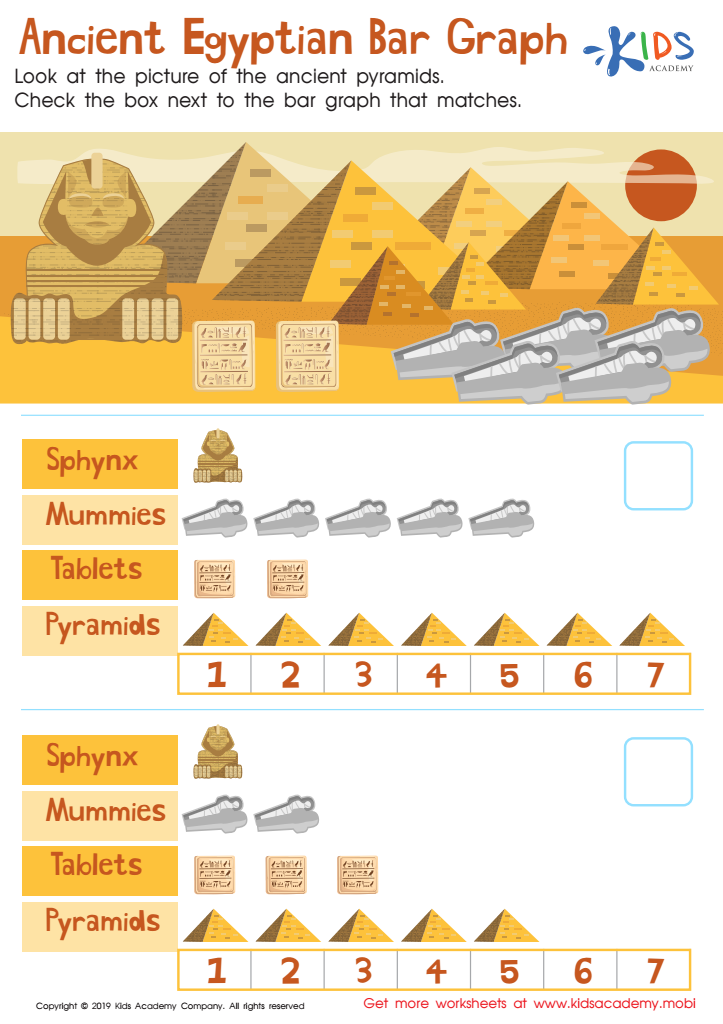
Egyptian Bar Graph Worksheet








Understanding bar graphs and mastering addition and subtraction are foundational skills for children ages 6-8, both in math and in life. For parents and teachers, emphasizing these concepts fosters critical thinking, analytical skills, and a strong mathematical foundation that benefits academic achievement.
Bar graphs provide a visual way for children to interpret data, helping them make comparisons and identify trends. This skill translates to real-world applications, such as understanding sports statistics or election results. By engaging with bar graphs, children learn to extract meaningful information from data, a critical capability in our data-driven world.
Moreover, addition and subtraction are essential for everyday activities, from budgeting allowance to measuring ingredients in cooking. Mastery of these operations supports proficiency in more complex mathematics in later years. Teachers and parents can create engaging, hands-on activities that integrate these concepts, making learning fun and relevant.
Ultimately, by prioritizing the understanding of bar graphs and basic arithmetic, adults equip children to become mathematically literate individuals. This foundation not only augments academic success but also enhances their ability to make informed decisions in everyday life, setting them on a path for lifelong learning and problem-solving.








