Check out this FREE Trial Lesson on Addition & Subtraction for age 6-8!

Match Objects that Fit Together

Favorites
With answer key
Interactive
  • 6-8
  • Understanding fractions
  • Addition & Subtraction
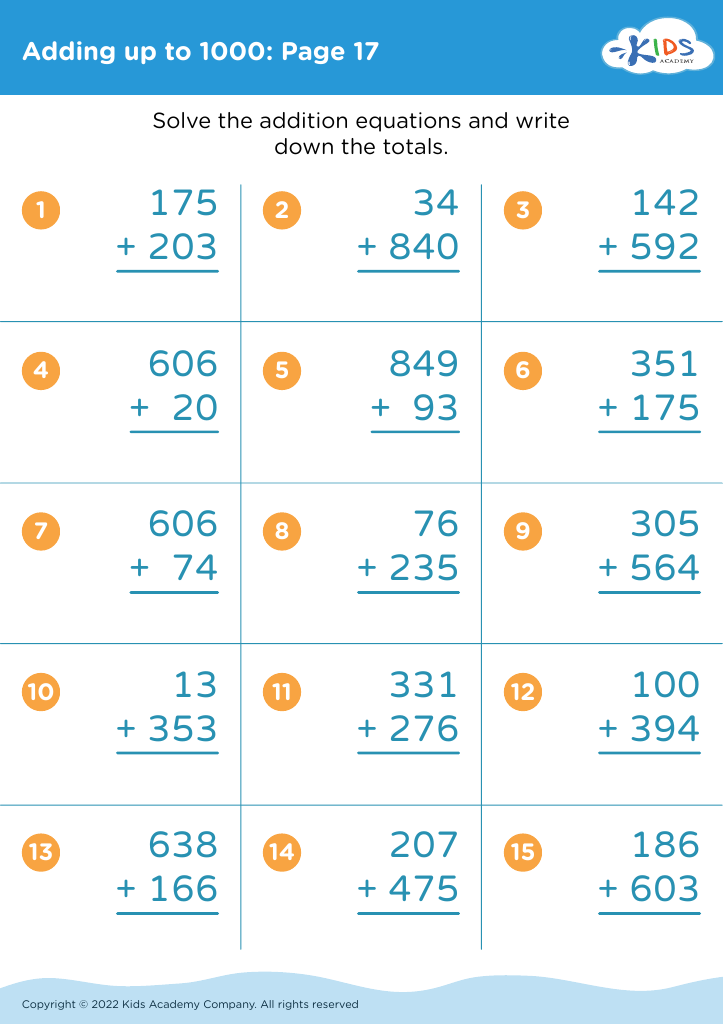
Adding up to 1000: Page 17

Adding up to 1000: Page 17

Adding up to 1000: Page 17
Worksheet
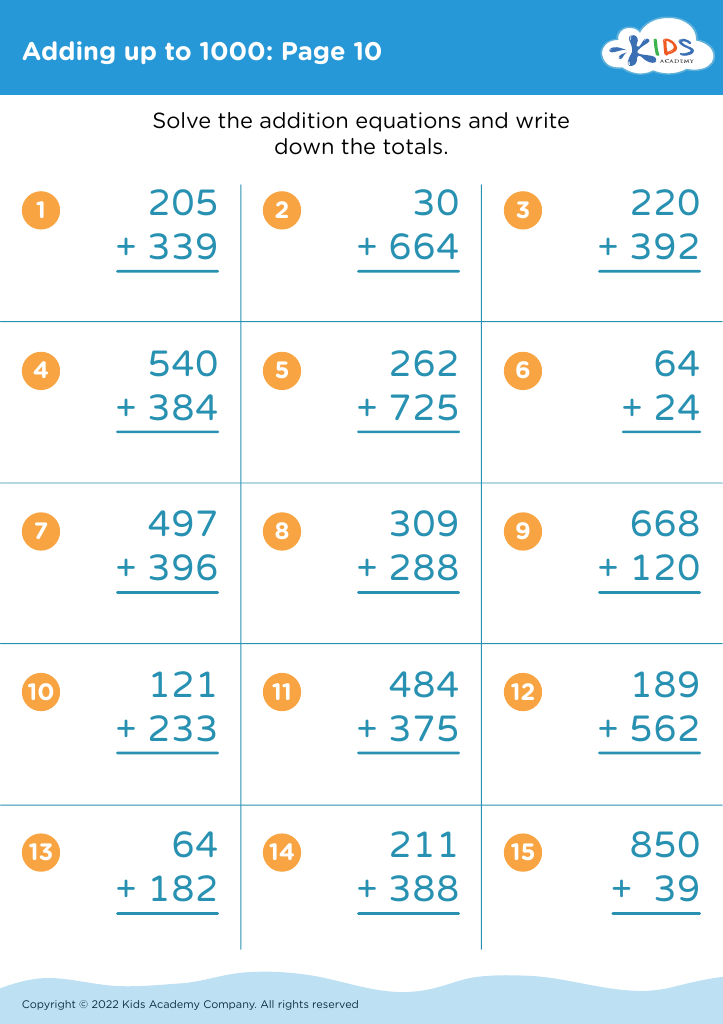
Adding up to 1000: Page 10

Adding up to 1000: Page 10

Adding up to 1000: Page 10
Worksheet
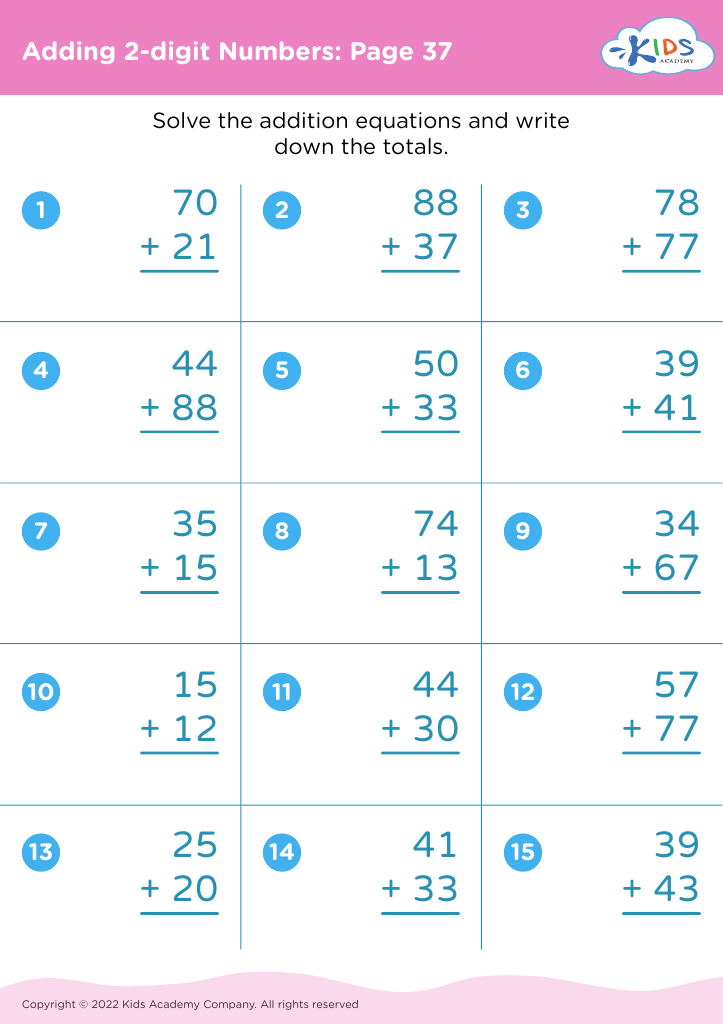
Adding 2-digit Numbers: Page 37

Adding 2-digit Numbers: Page 37

Adding 2-digit Numbers: Page 37
Worksheet
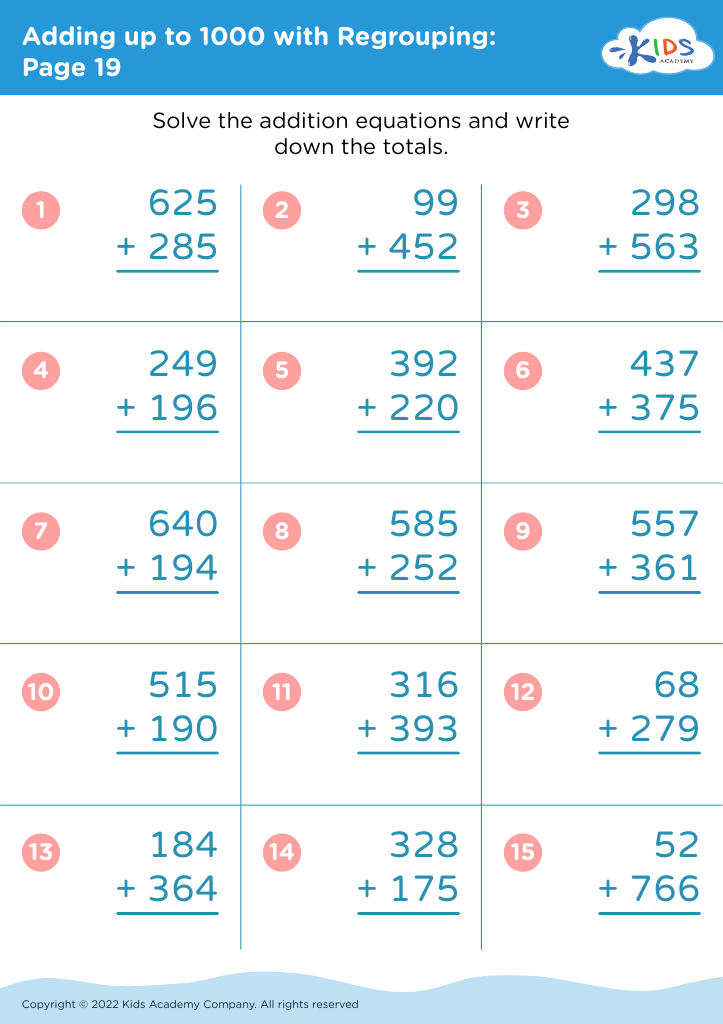
Adding up to 1000 with Regrouping: Page 19
Worksheet
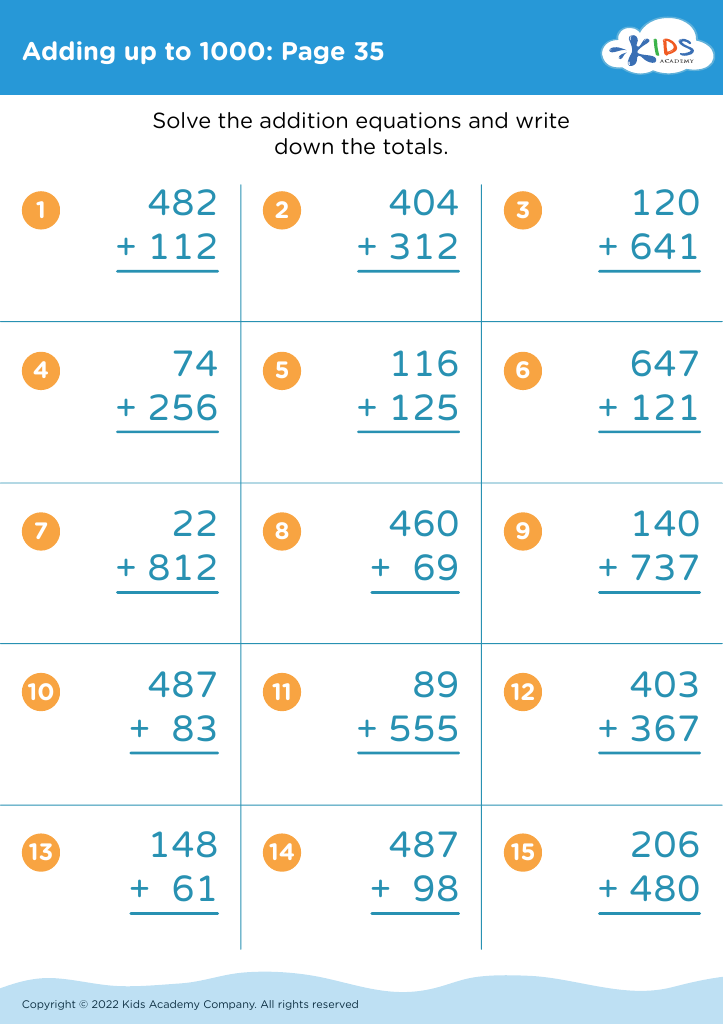
Adding up to 1000: Page 35

Adding up to 1000: Page 35

Adding up to 1000: Page 35
Worksheet
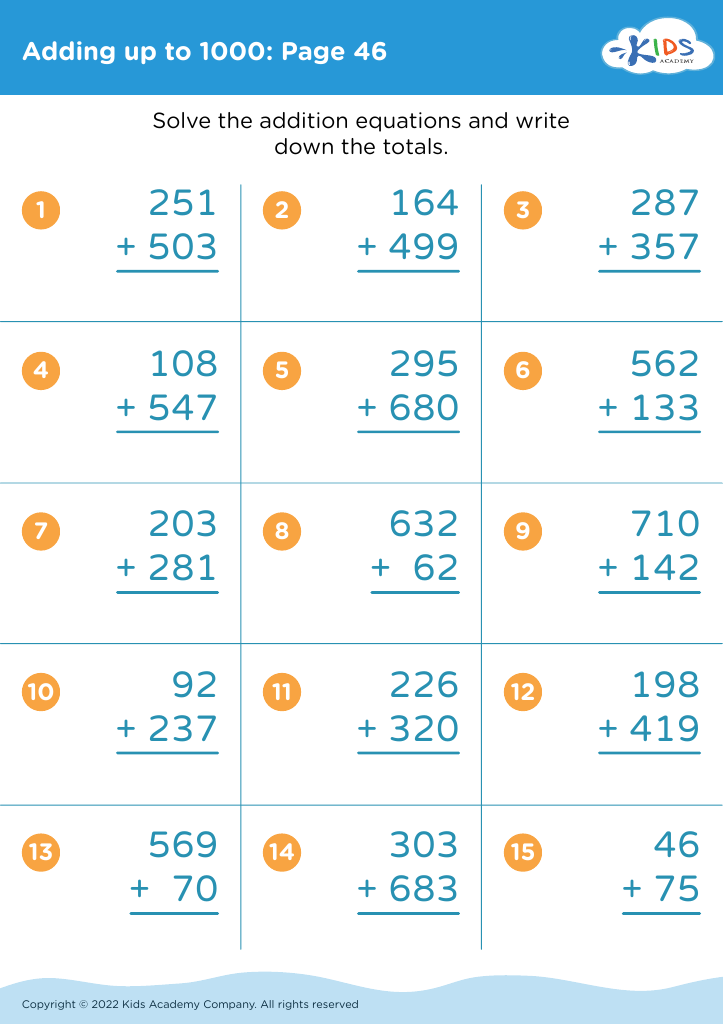
Adding up to 1000: Page 46

Adding up to 1000: Page 46

Adding up to 1000: Page 46
Worksheet
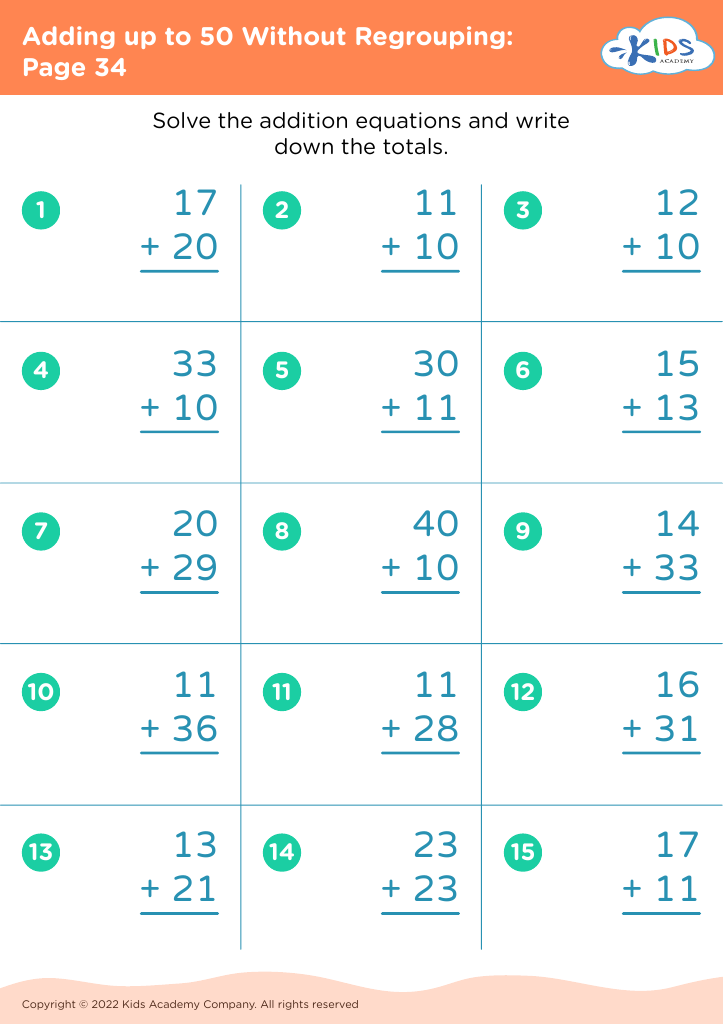
Adding up to 50 Without Regrouping: Page 34
Worksheet
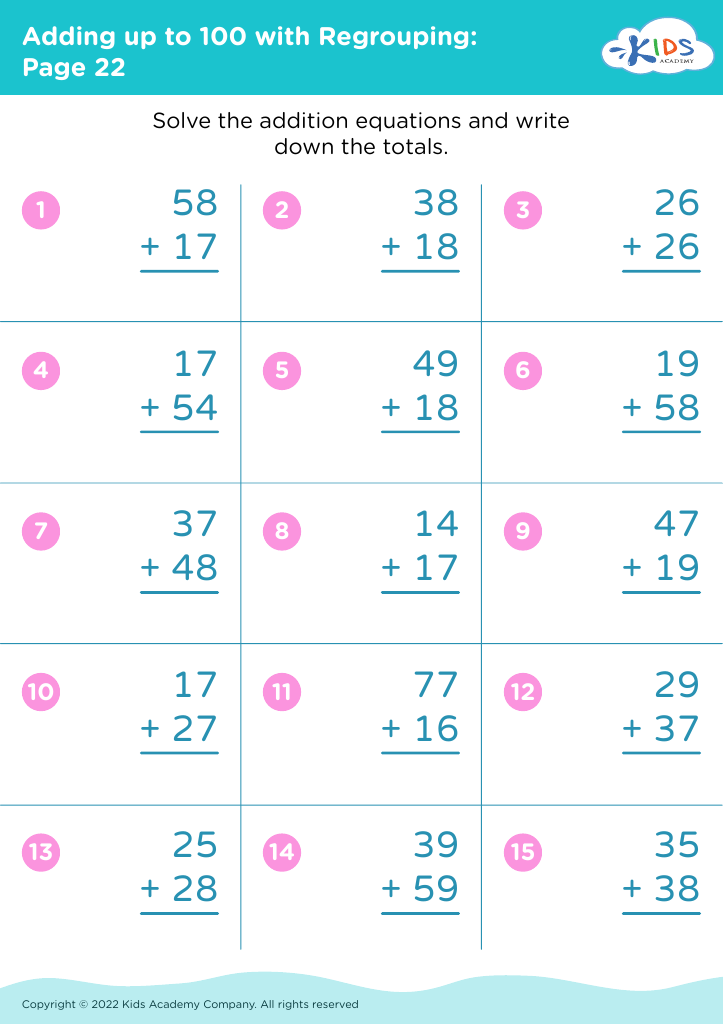
Adding up to 100 with Regrouping: Page 22
Worksheet
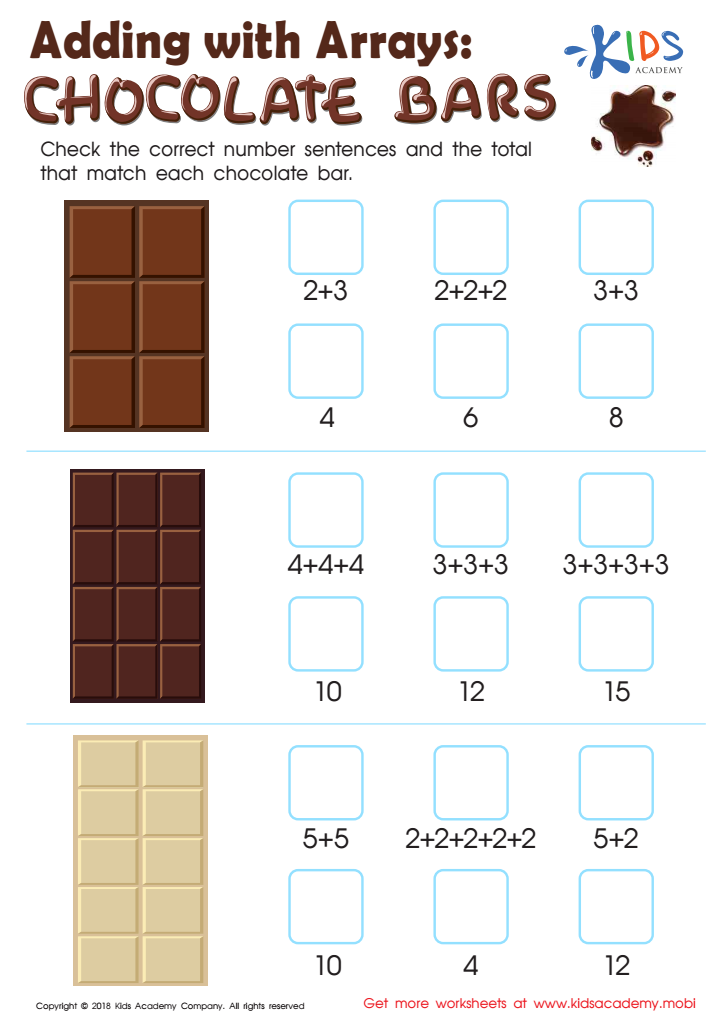
Adding with Arrays: Chocolate Bars Worksheet

Adding with Arrays: Chocolate Bars Worksheet

Kids love chocolates! Gauge how enthused your kids get when you mention them. This worksheet is a fun exercise about chocolates - get your kids to check the correct number sentences and totals for each chocolate bar. Reward their hard work with some chocolates - extra incentive for a job well done!
Adding with Arrays: Chocolate Bars Worksheet
Worksheet
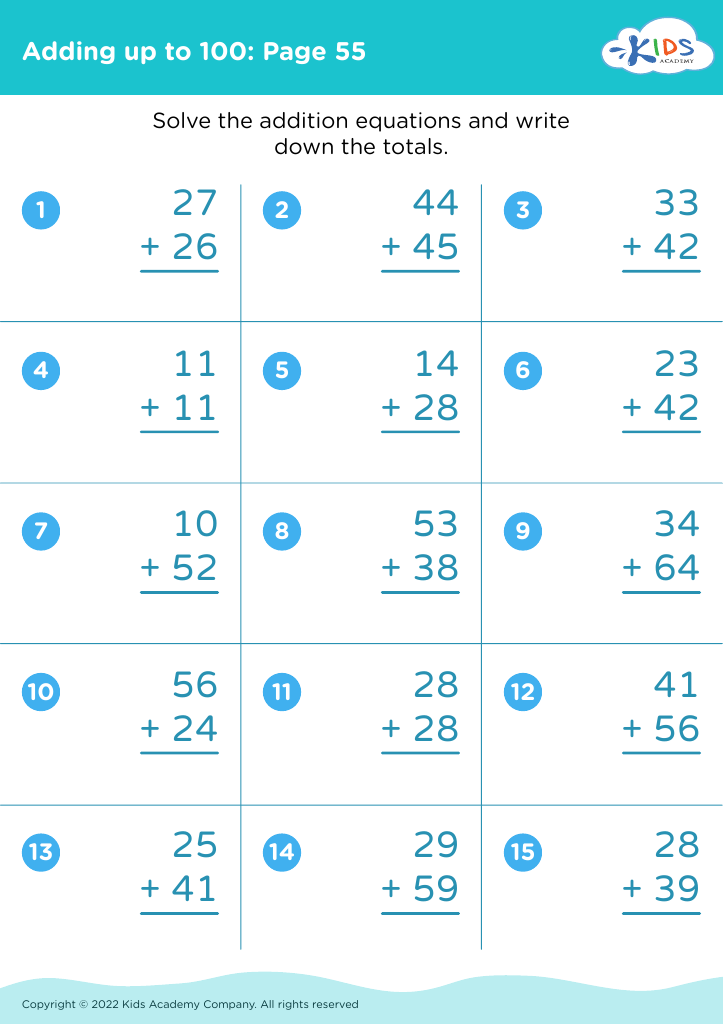
Adding up to 100: Page 55

Adding up to 100: Page 55

Adding up to 100: Page 55
Worksheet
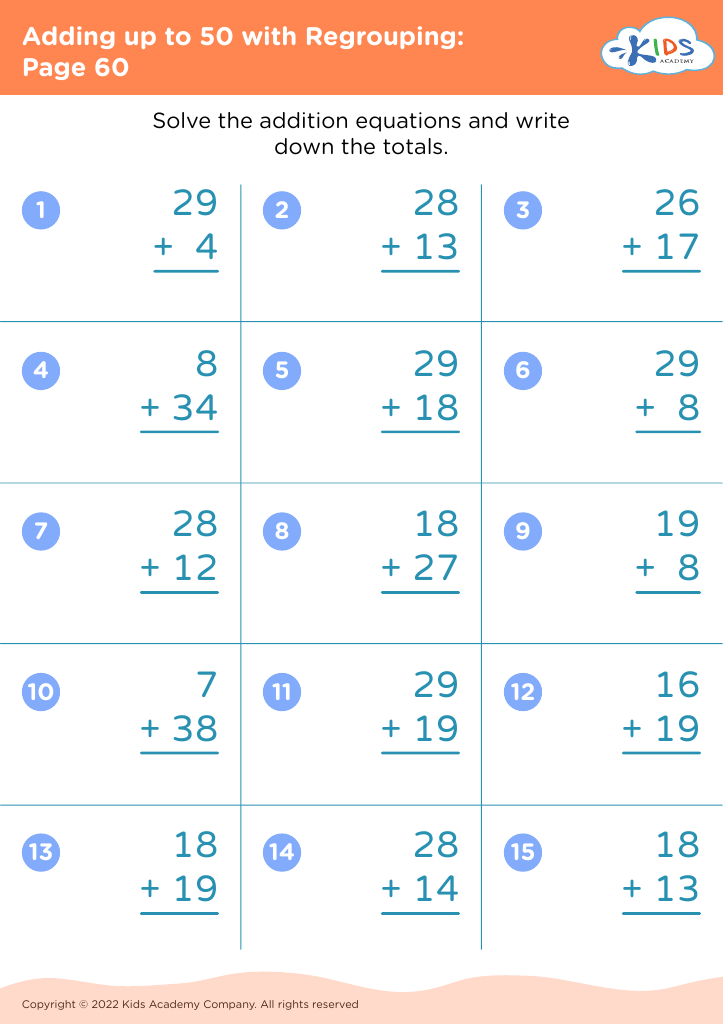
Adding up to 50 with Regrouping: Page 60
Worksheet
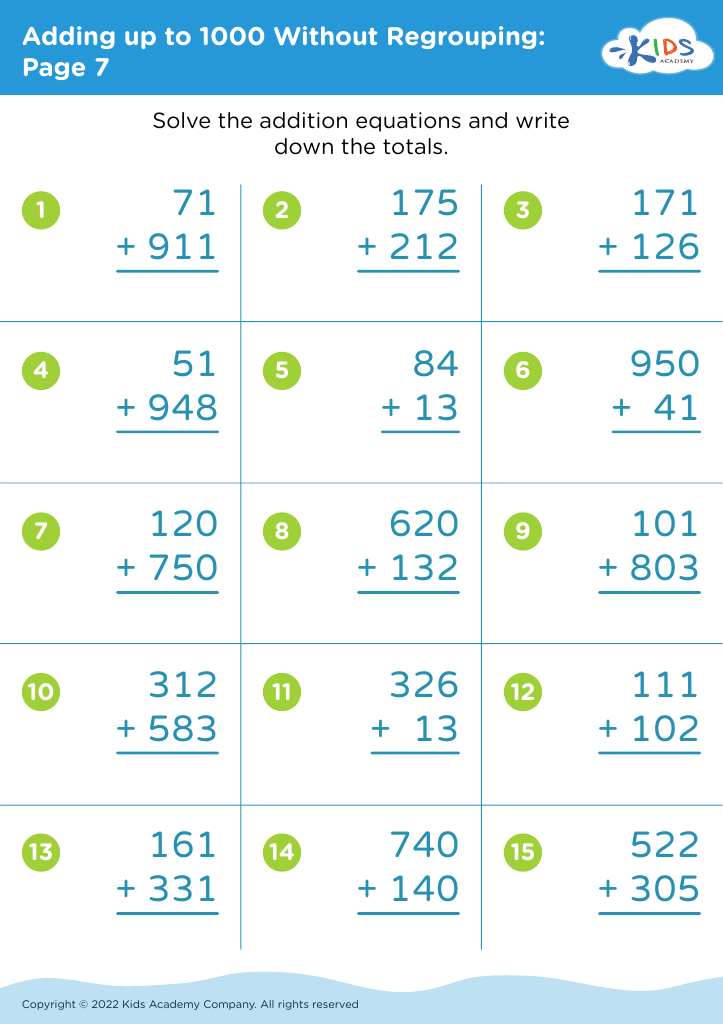
Adding up to 1000 Without Regrouping: Page 7
Worksheet
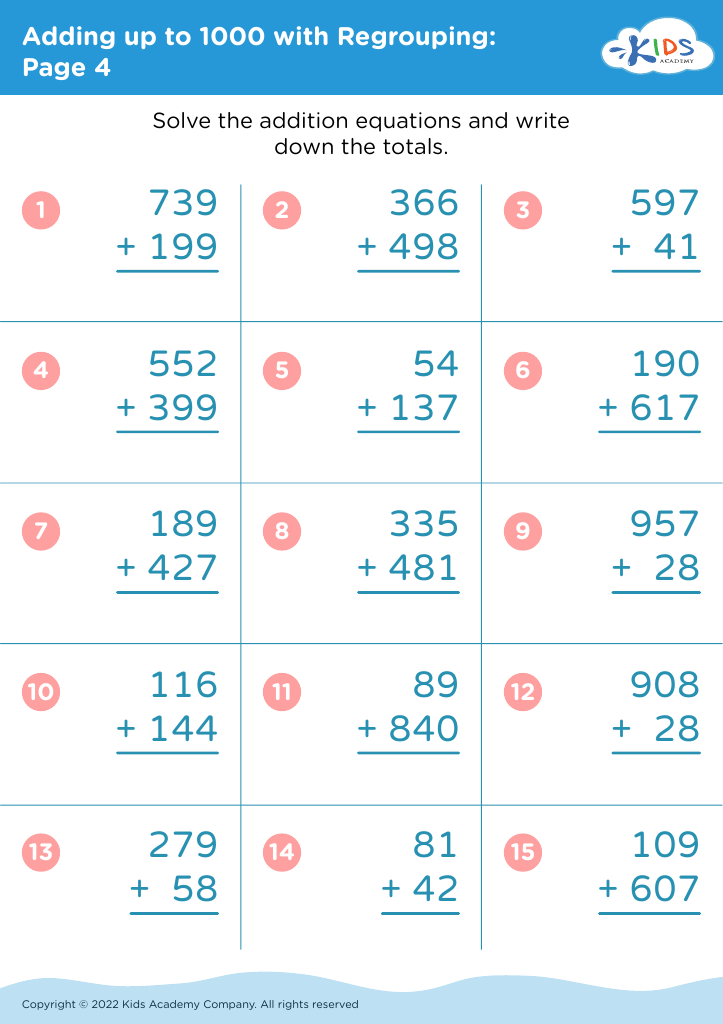
Adding up to 1000 with Regrouping: Page 4
Worksheet
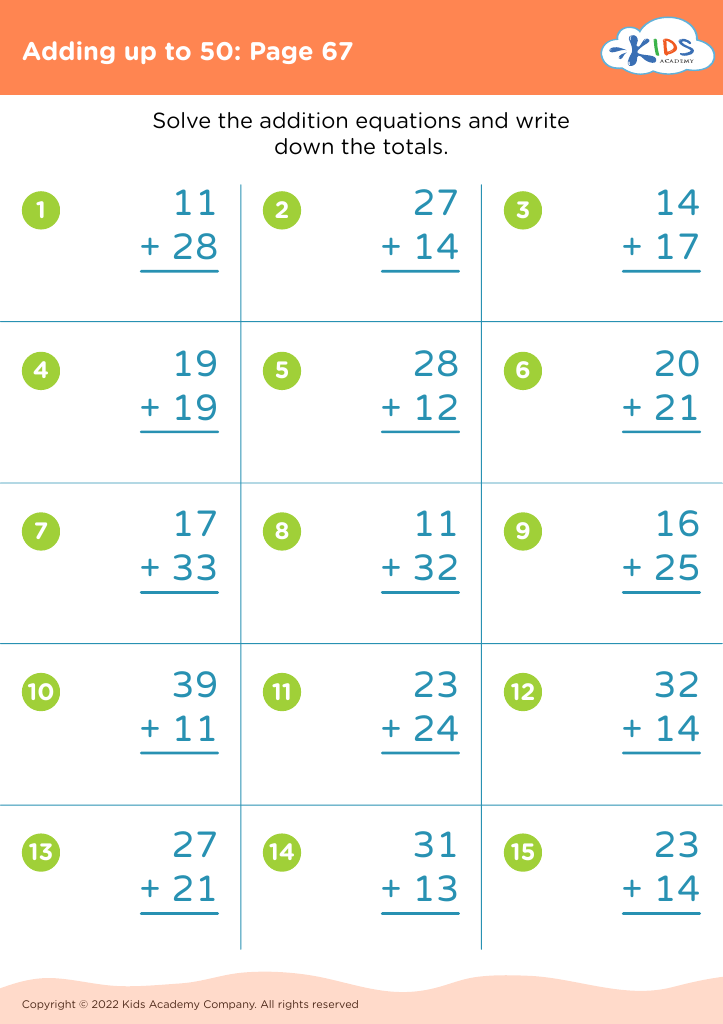
Adding up to 50: Page 67

Adding up to 50: Page 67

Adding up to 50: Page 67
Worksheet
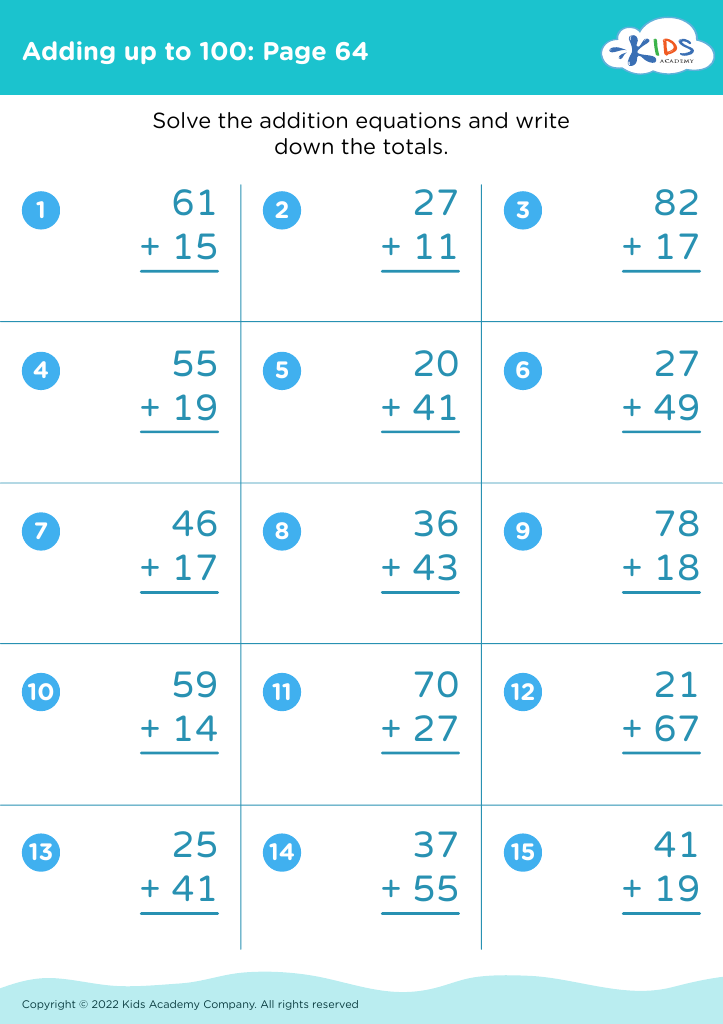
Adding up to 100: Page 64

Adding up to 100: Page 64

Adding up to 100: Page 64
Worksheet
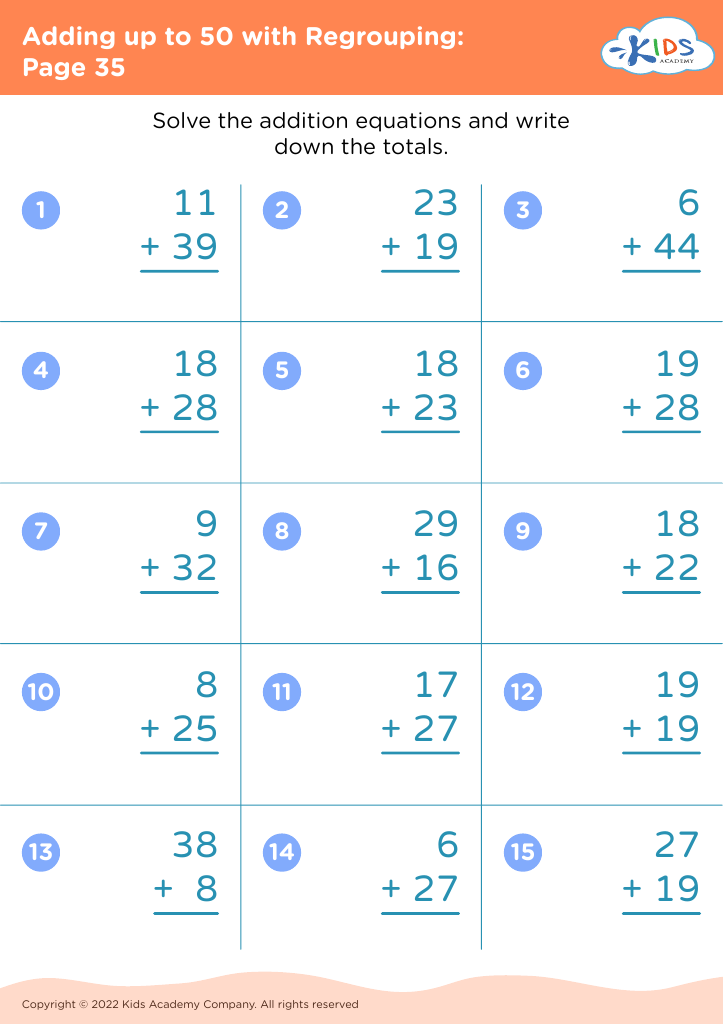
Adding up to 50 with Regrouping: Page 35
Worksheet
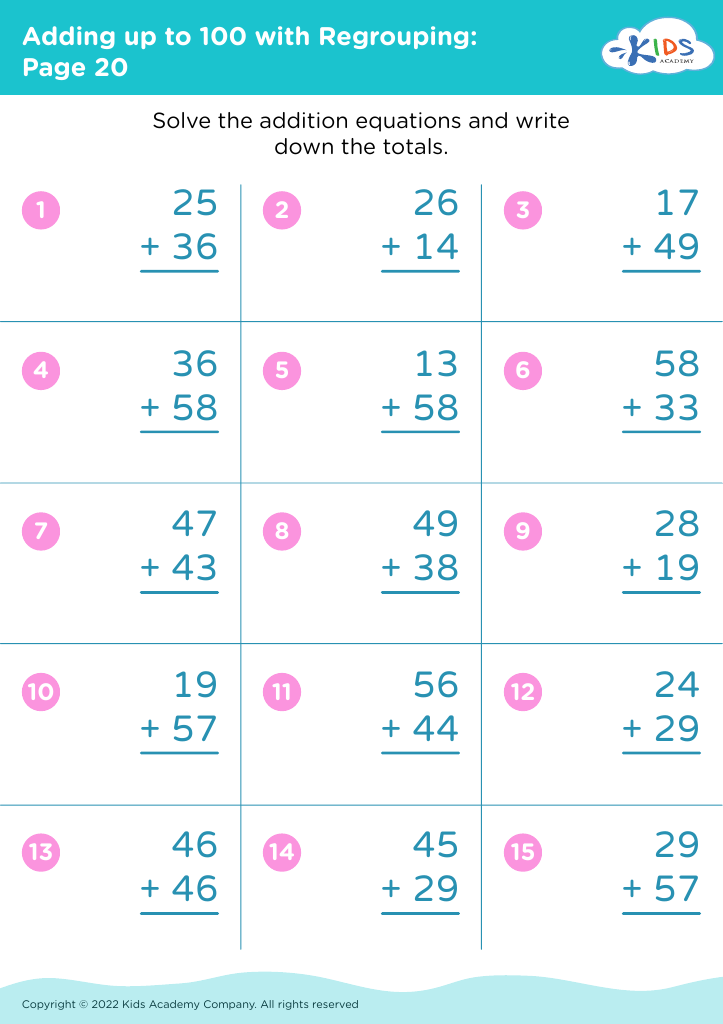
Adding up to 100 with Regrouping: Page 20
Worksheet
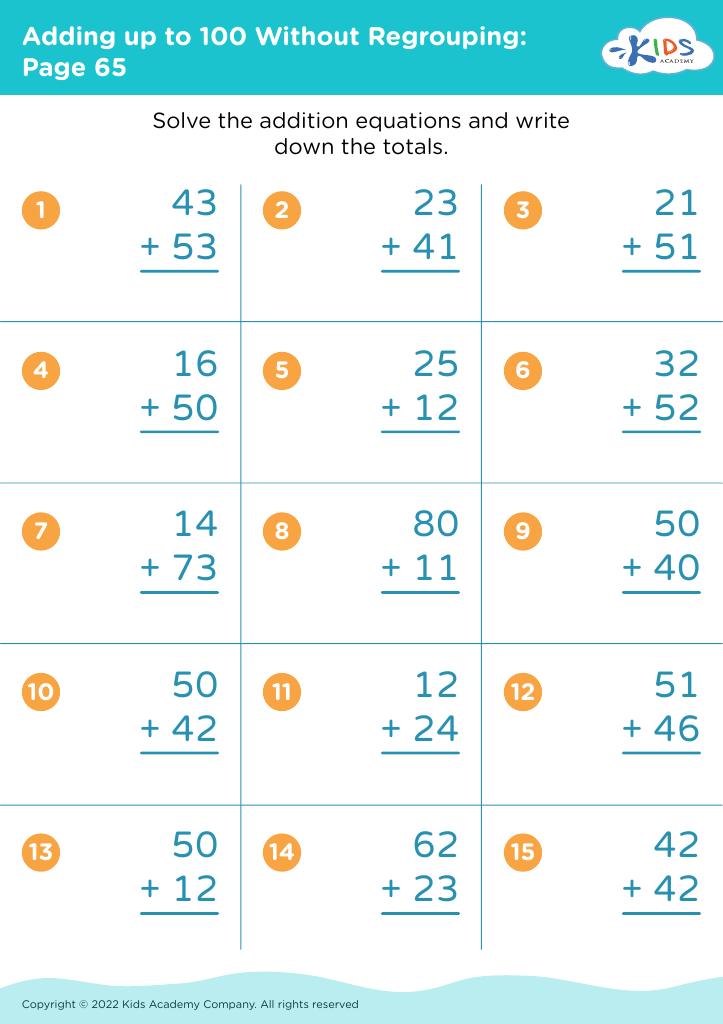
Adding up to 100 Without Regrouping: Page 65
Worksheet
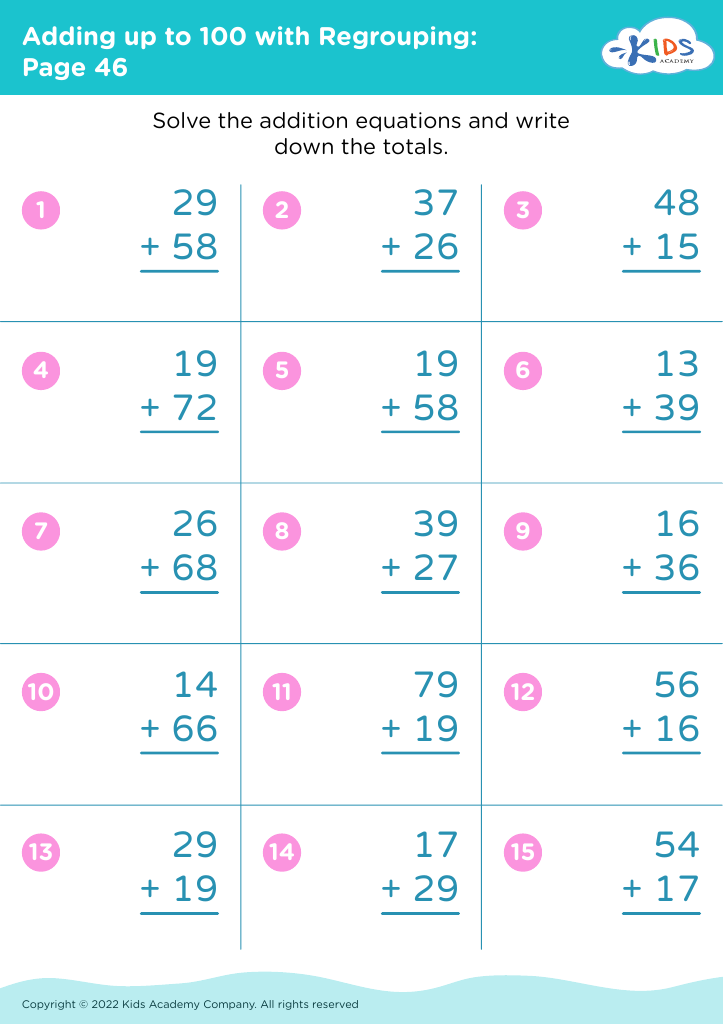
Adding up to 100 with Regrouping: Page 46
Worksheet
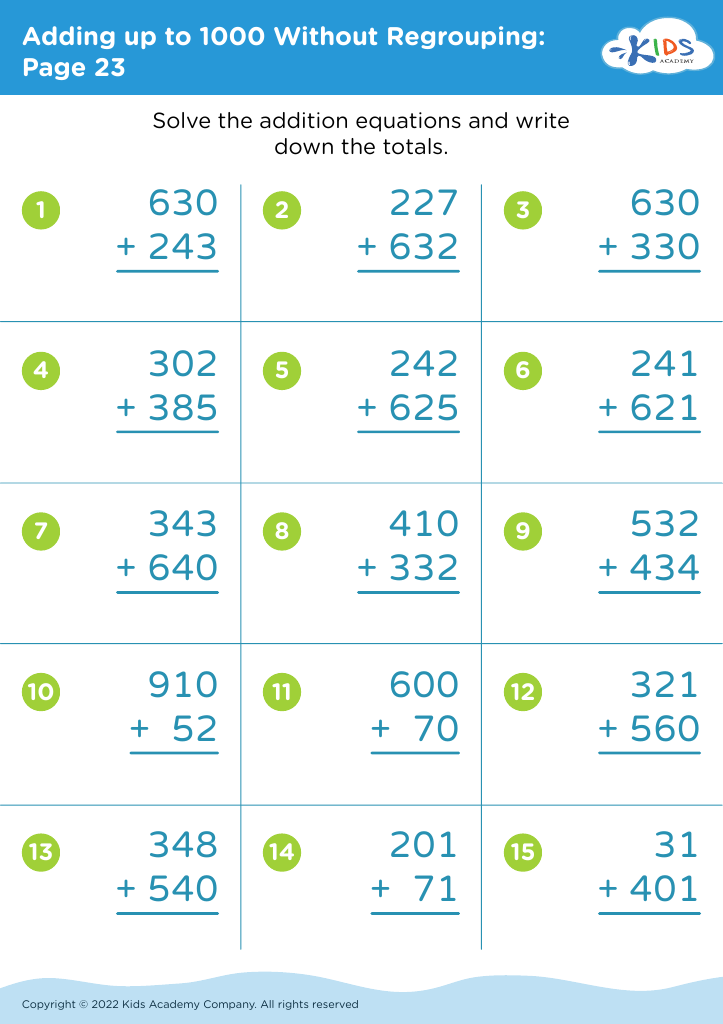
Adding up to 1000 Without Regrouping: Page 23
Worksheet
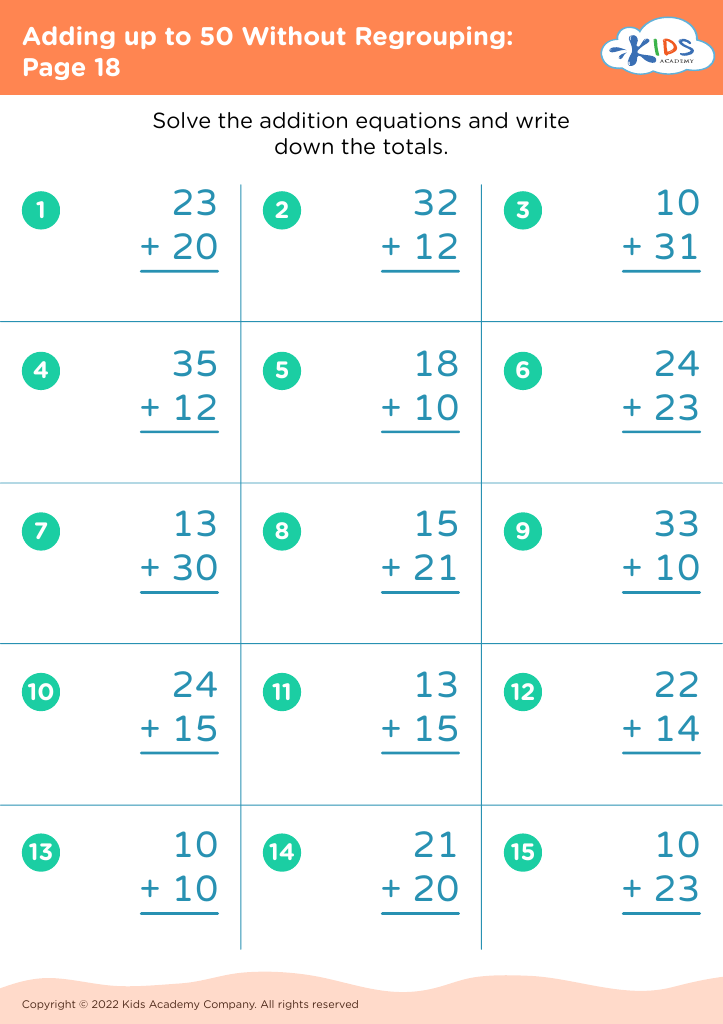
Adding up to 50 Without Regrouping: Page 18
Worksheet
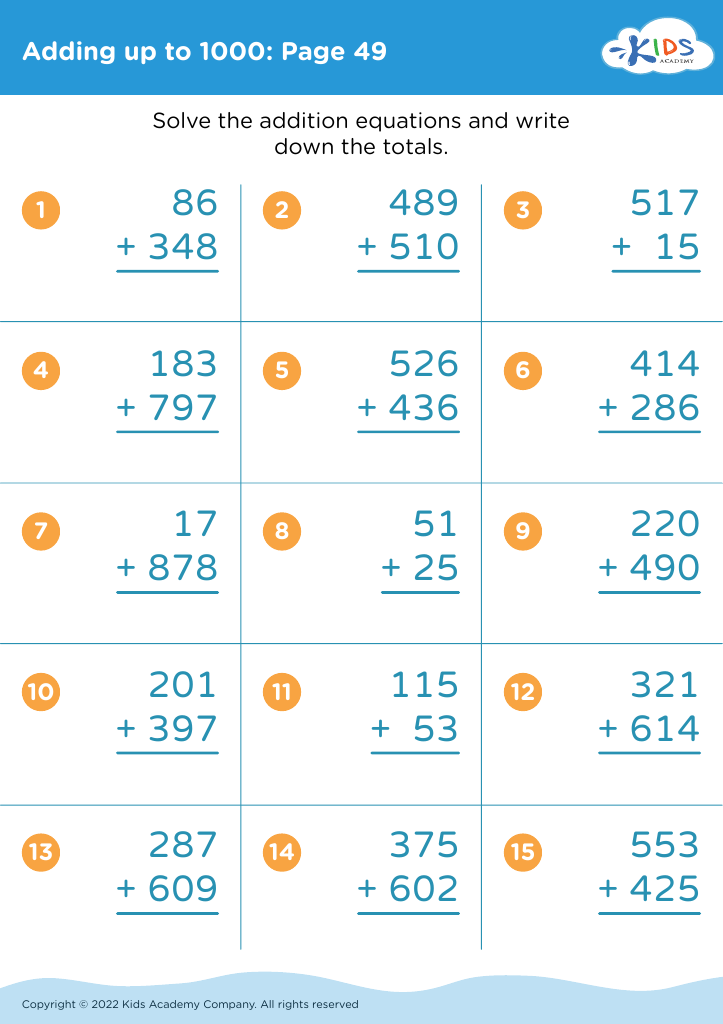
Adding up to 1000: Page 49

Adding up to 1000: Page 49

Adding up to 1000: Page 49
Worksheet
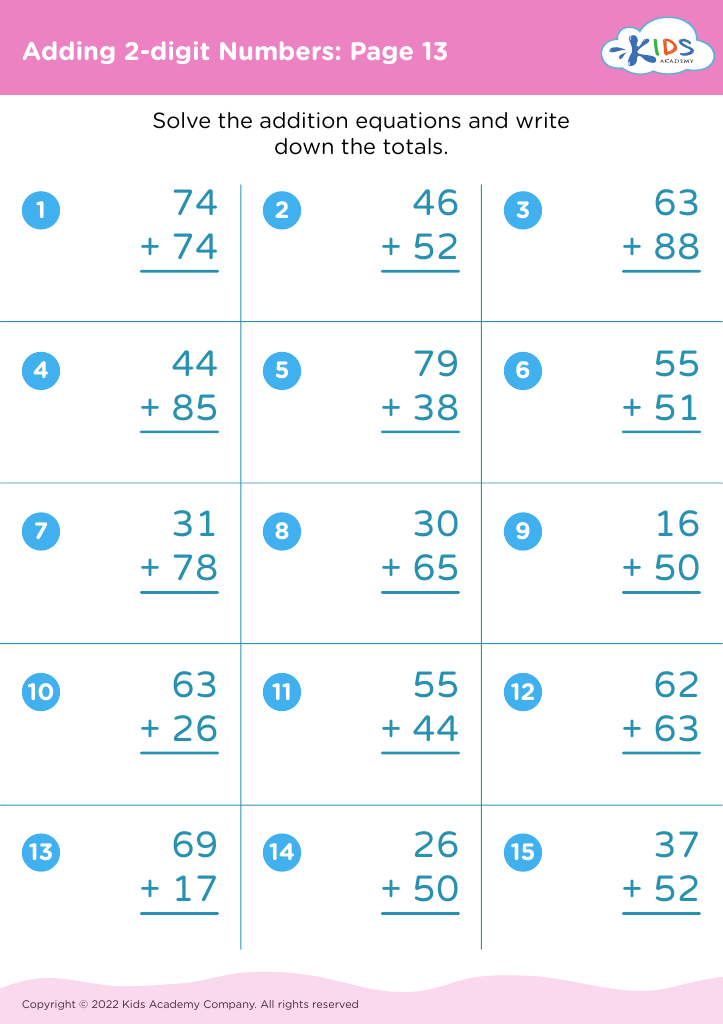
Adding 2-digit Numbers: Page 13

Adding 2-digit Numbers: Page 13

Adding 2-digit Numbers: Page 13
Worksheet
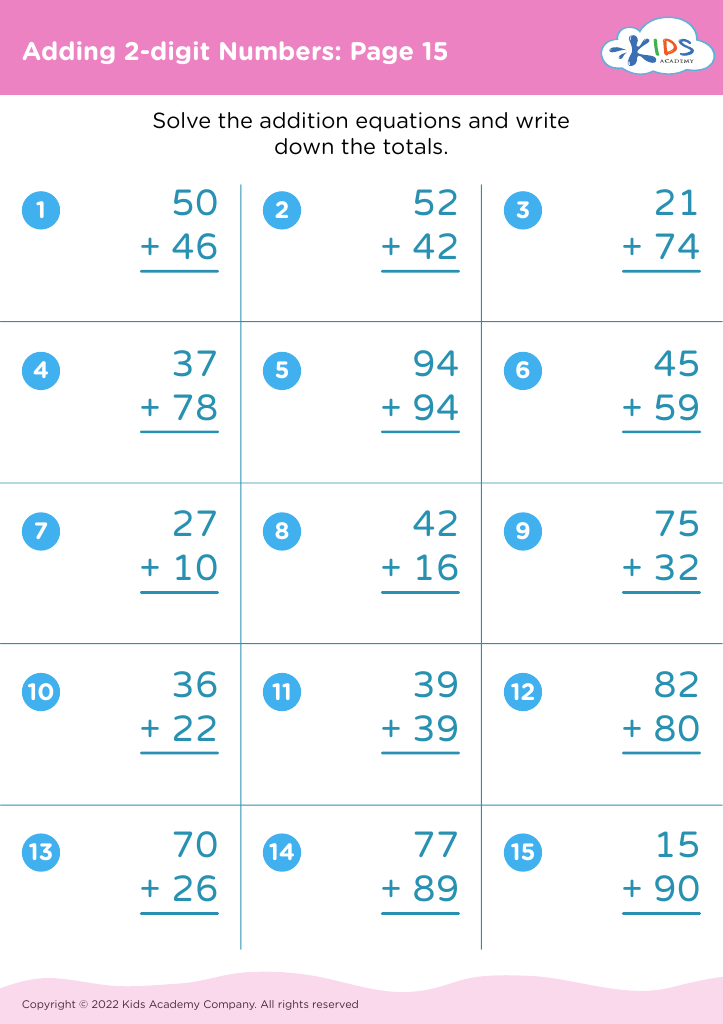
Adding 2-digit Numbers: Page 15

Adding 2-digit Numbers: Page 15

Adding 2-digit Numbers: Page 15
Worksheet


Understanding fractions and their operations, such as addition and subtraction, is fundamental for children aged 6-8, and it's imperative for both parents and teachers to nurture these skills. First, foundational math concepts pr.ovide the building blocks for future learning. Grasping fractions at an early age lays the groundwork for more complex mathematical topics students will encounter in later grades, like algebra and geometry.

Secondly, fractions are prevalent in everyday life. Whether it's slicing a pizza, using measurements in cooking, or understanding time, children who comprehend fractions can navigate real-world situations with ease and confidence.

Moreover, developing strong mathematical skills can boost a child's overall academic performance. Math competency is linked to improved problem-solving abilities, logical thinking, and critical analysis, which are essential across all subjects.

Additionally, proficiency in fractions can bolster a child's self-esteem and encourage a positive attitude toward learning. When children master challenging concepts, they gain confidence and are more likely to take on and persist in new learning challenges.

Thus, it's crucial for parents and teachers to emphasize understanding fractions. Interventions might include using visual aids, interactive activities, and real-life examples to make learning engaging and effective, ensuring children build a solid mathematical foundation that will benefit them in academics and daily life.