Understanding word problems Addition & Subtraction Worksheets for Ages 6-8
3 filtered results
-
From - To
Explore our engaging "Understanding Word Problems: Addition & Subtraction Worksheets for Ages 6-8." These expertly designed worksheets help young learners grasp the concepts of addition and subtraction through relatable word problems. Each activity encourages critical thinking, improves problem-solving skills, and reinforces essential math concepts in real-world contexts. Perfect for classroom or at-home practice, our worksheets support the development of mathematical fluency and confidence. Ideal for ages 6-8, these resources make mastering word problems fun and interactive. Help your child build a solid math foundation with our comprehensive, easy-to-follow worksheets today!
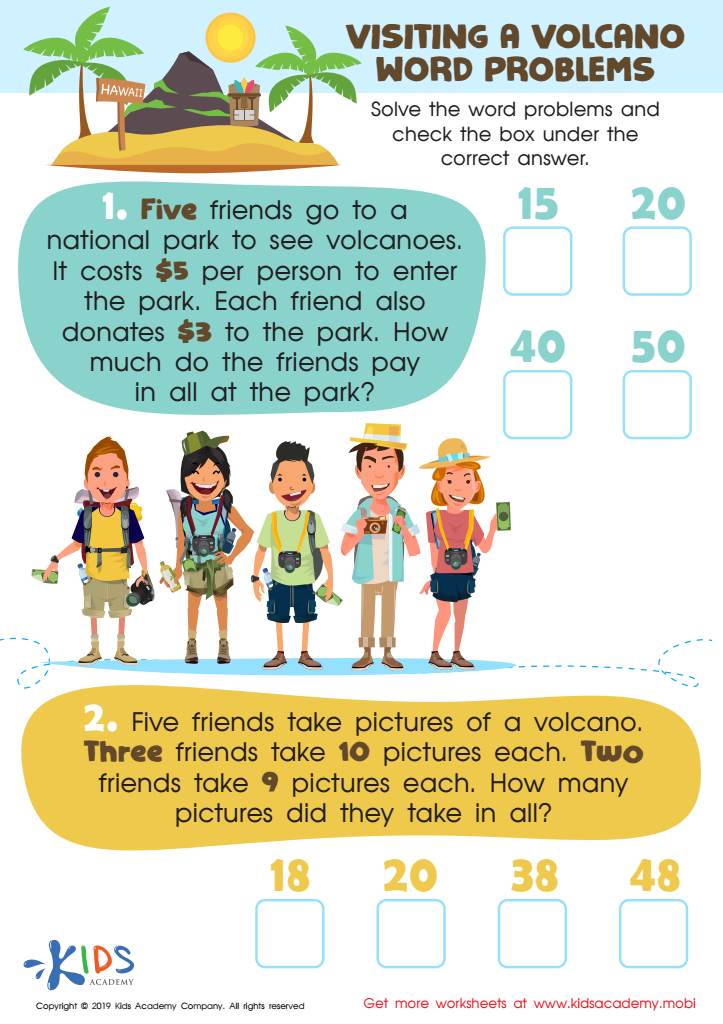
Visiting a Volcano Word Problems Worksheet
 Assign to My Students
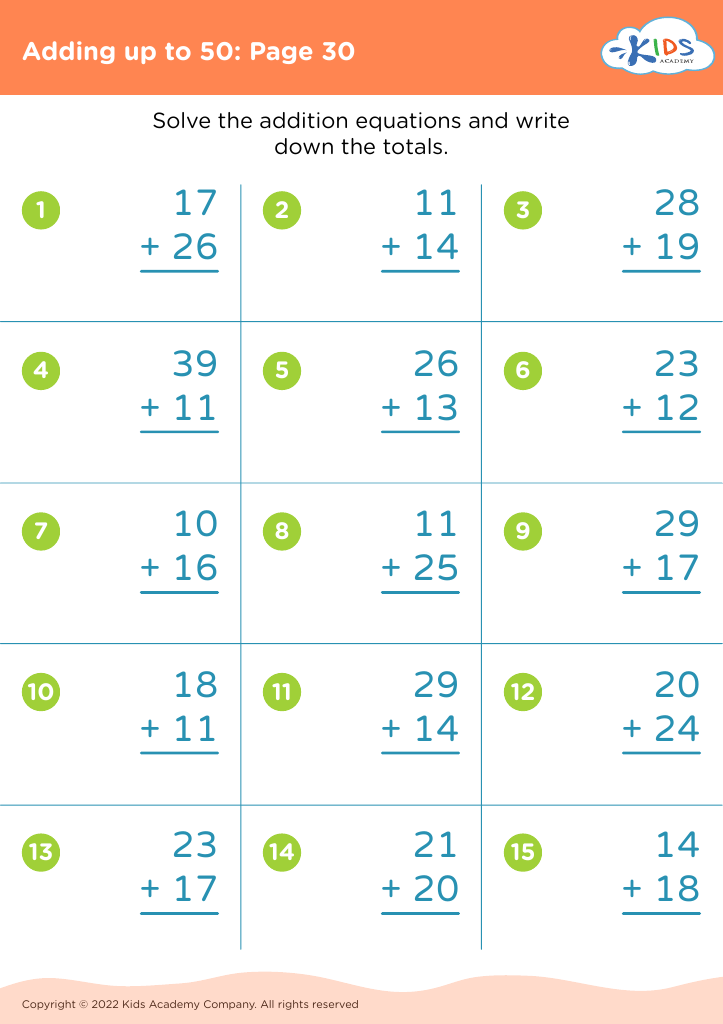
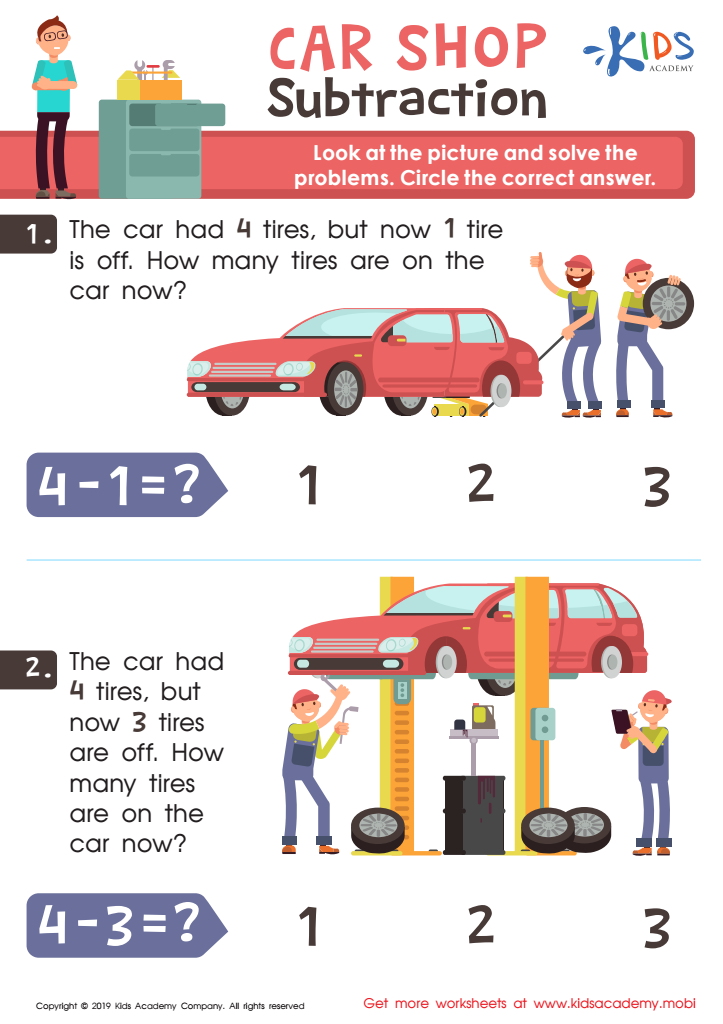
Car Shop Subtraction Worksheet








Understanding word problems in addition and subtraction for ages 6-8 is crucial for several reasons that impact both academic and real-life skills. First, mastering these basic math concepts early on builds a solid foundation for more advanced mathematical topics. Children who can solve word problems efficiently are more likely to excel in future math courses.
Second, word problems enhance critical thinking and problem-solving skills. Unlike simple arithmetic exercises, word problems require children to read carefully, comprehend the scenario, identify relevant information, and determine the necessary steps to find the solution. This process develops logical reasoning and decision-making capabilities.
Third, learning to solve word problems enhances reading comprehension. These exercises require children to interpret text, which aids in improving their reading skills. This dual benefit reinforces both math and literacy development.
Lastly, real-world application is another vital aspect. Many daily tasks involve problem-solving skills that are directly linked to these early math concepts, from shopping and cooking to budgeting and planning. By understanding addition and subtraction word problems, children gain the necessary skills to navigate various situations they will encounter, making them more competent and confident individuals.
Therefore, parents and teachers should prioritize these skills to support overall cognitive development, ensuring children are well-equipped for both academic and everyday life challenges.








