Vocabulary expansion Addition & Subtraction Worksheets for Ages 6-8
13 filtered results
-
From - To
Explore our engaging Vocabulary Expansion Addition & Subtraction Worksheets tailored specifically for children aged 6-8! Designed to enhance both mathematical skills and vocabulary, these worksheets encourage young learners to connect math concepts with language development. Discover fun exercises that integrate addition and subtraction with new words, promoting a deeper understanding of math operations while enriching vocabulary. Perfect for classroom use or at-home learning, our worksheets provide a comprehensive toolset for educators and parents to support their children's growth in math and language. Equip your child with the skills they need for academic success while having fun with numbers and words!
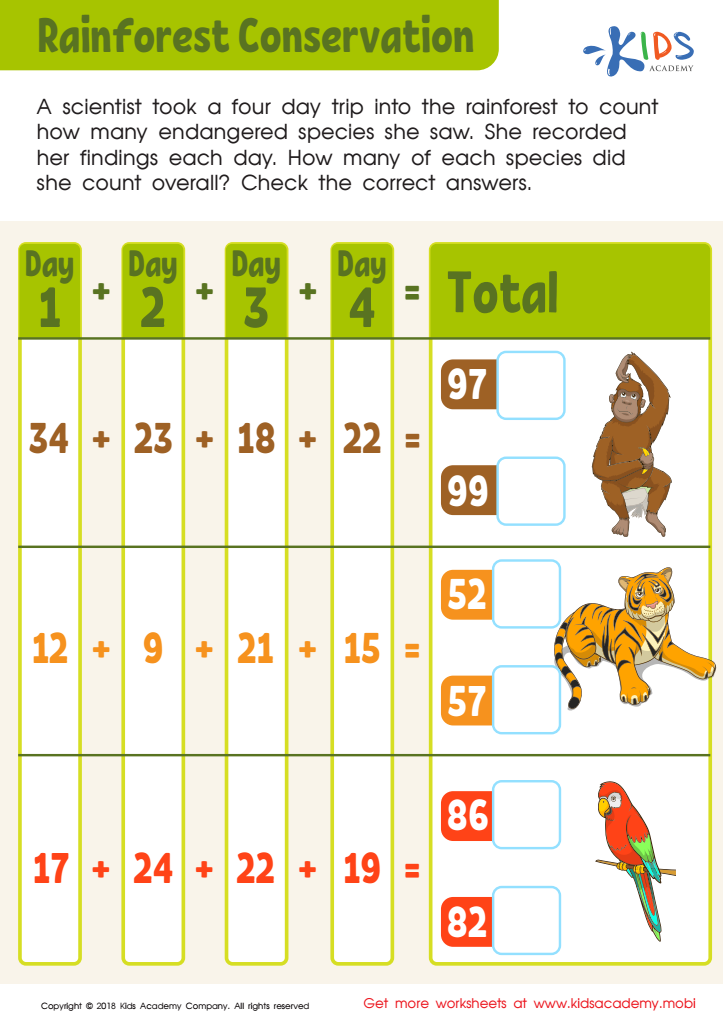
Rainforest Conservation Worksheet
 Assign to My Students
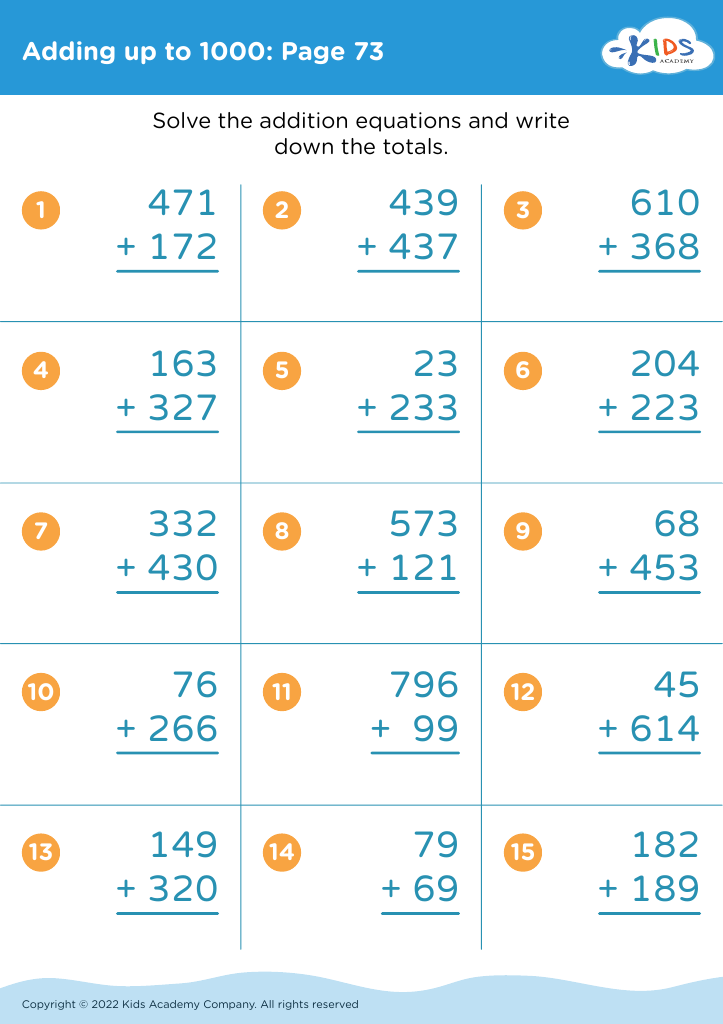
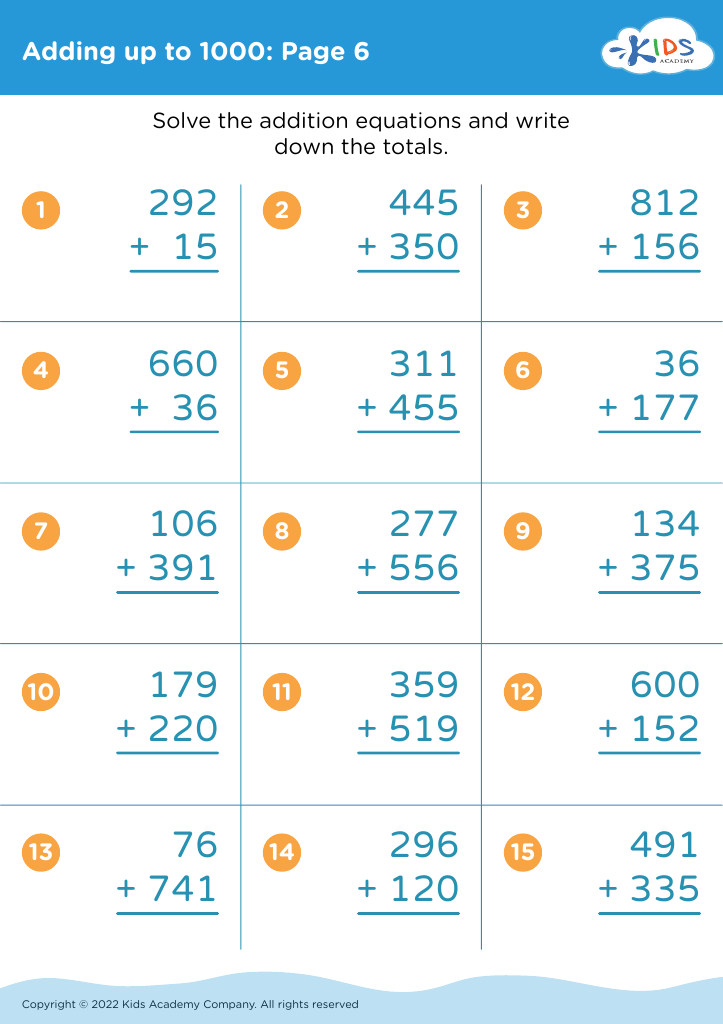
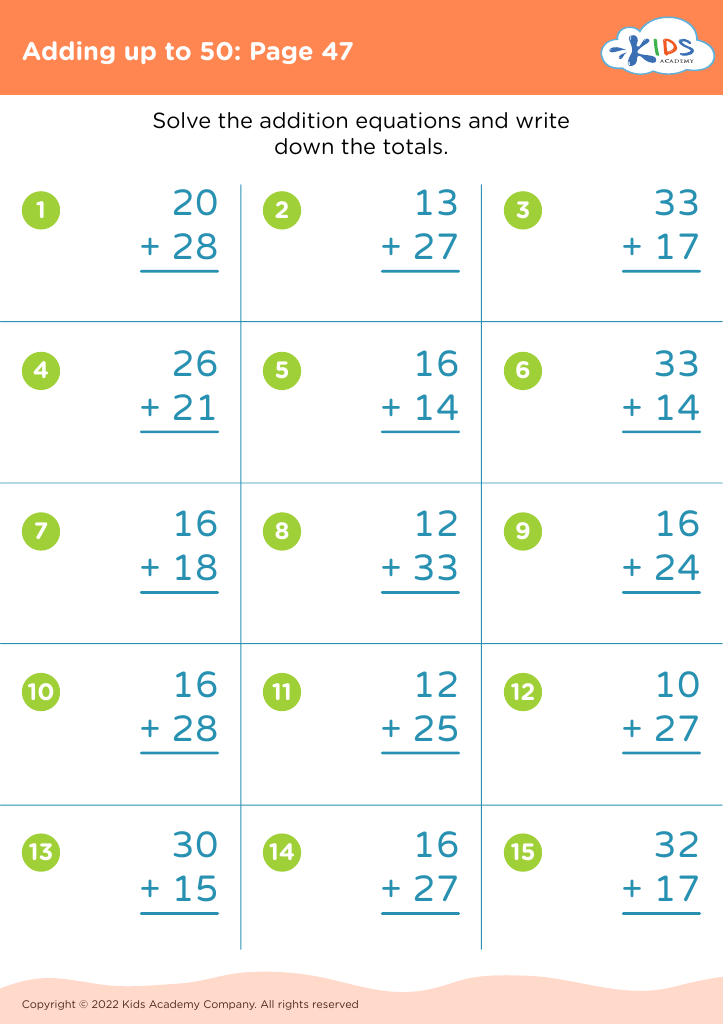
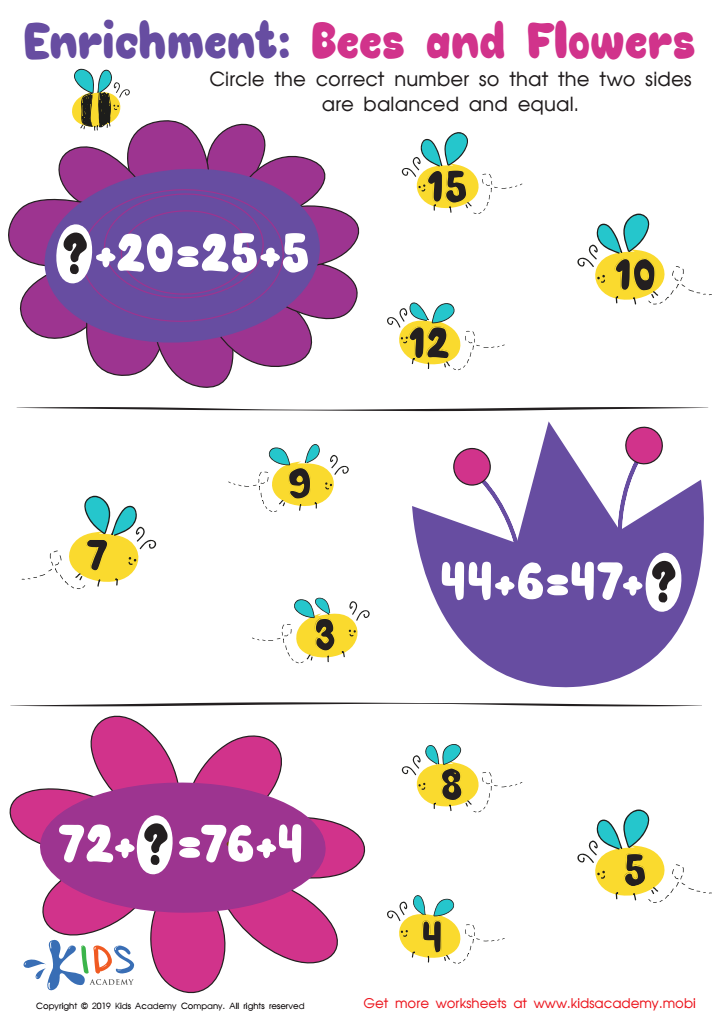
Enrichment: Bees and Flowers Worksheet
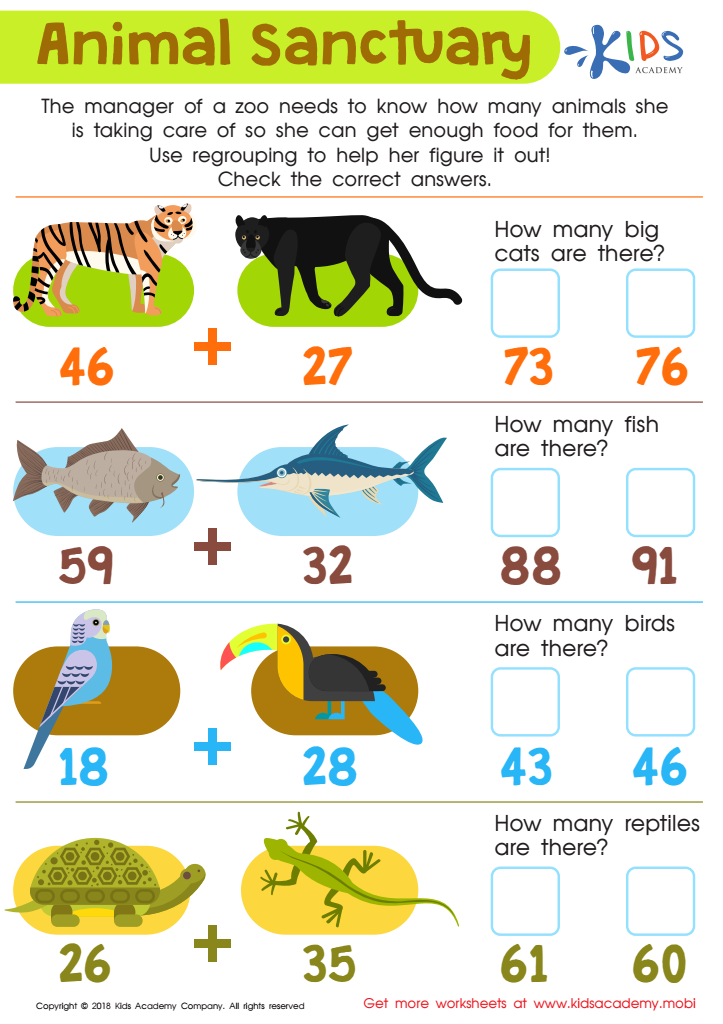
Animal Sanctuary Worksheet
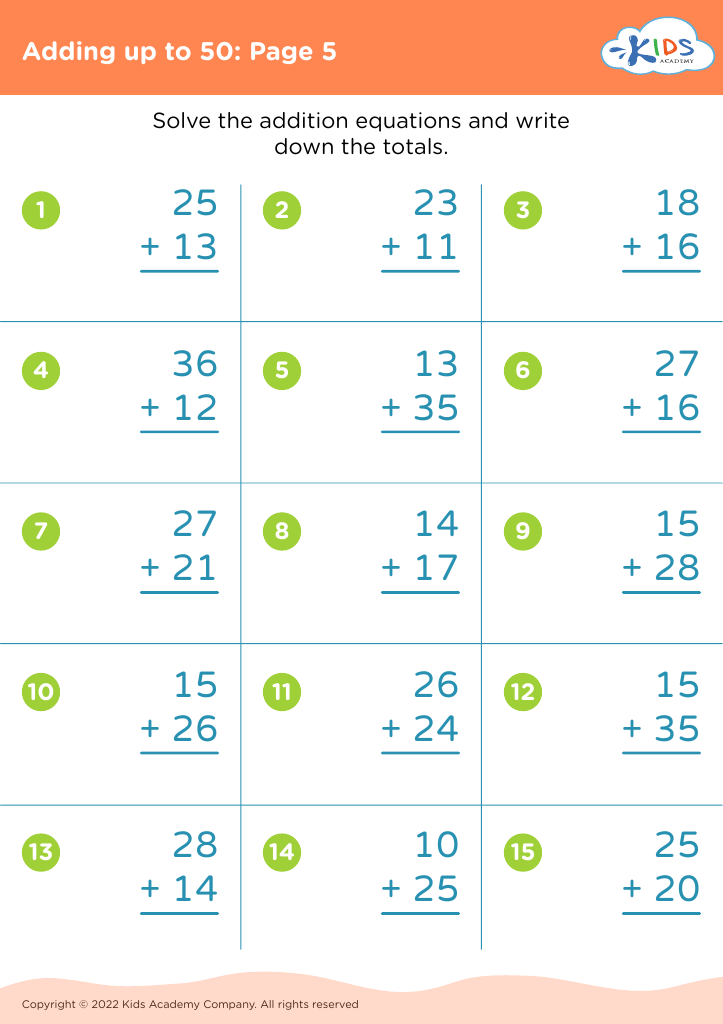








Vocabulary expansion in addition to subtraction is crucial for children aged 6-8 as it lays the foundation for their mathematical comprehension and overall academic achievement. At this developmental stage, children are becoming more proficient in their language skills, making it an optimal time to introduce specialized vocabulary associated with math concepts. Terms such as "sum," "difference," "plus," "minus," and "equals" not only build their vocabulary but also enhance their understanding of math operations.
Moreover, language comprehension significantly influences problem-solving abilities. When students grasp the terminology, they're better equipped to understand word problems and thus can apply addition and subtraction to real-world scenarios. This empowers them to communicate their thought processes clearly and increases their confidence in tackling math challenges.
Furthermore, a rich vocabulary in mathematics fosters critical thinking. When children can articulate their reasoning, they learn to analyze and approach problems flexibly. By encouraging vocabulary expansion in relation to addition and subtraction, parents and teachers are setting the groundwork for disciplined thinkers and lifelong learners. Engaging with math vocabulary helps make complex ideas more accessible, ensuring that children are not only high achievers in math but also capable thinkers in their broader educational journey.








