Animal recognition Addition Worksheets for Ages 6-8
4 filtered results
-
From - To
Introduce your child to the fun and engaging world of math with our Animal Recognition Addition Worksheets for ages 6-8! Designed specifically for young learners, these worksheets combine basic addition problems with vibrant animal illustrations to capture kids' interest and boost learning efficiency. Each page integrates exciting animal-themed activities that help children practice addition while also improving their animal recognition skills. Through this creative approach, students build foundational math skills effortlessly and develop a lasting love for learning. Perfect for at-home practice or classroom use, our worksheets make studying addition both educational and enjoyable. Download now and watch your child thrive!
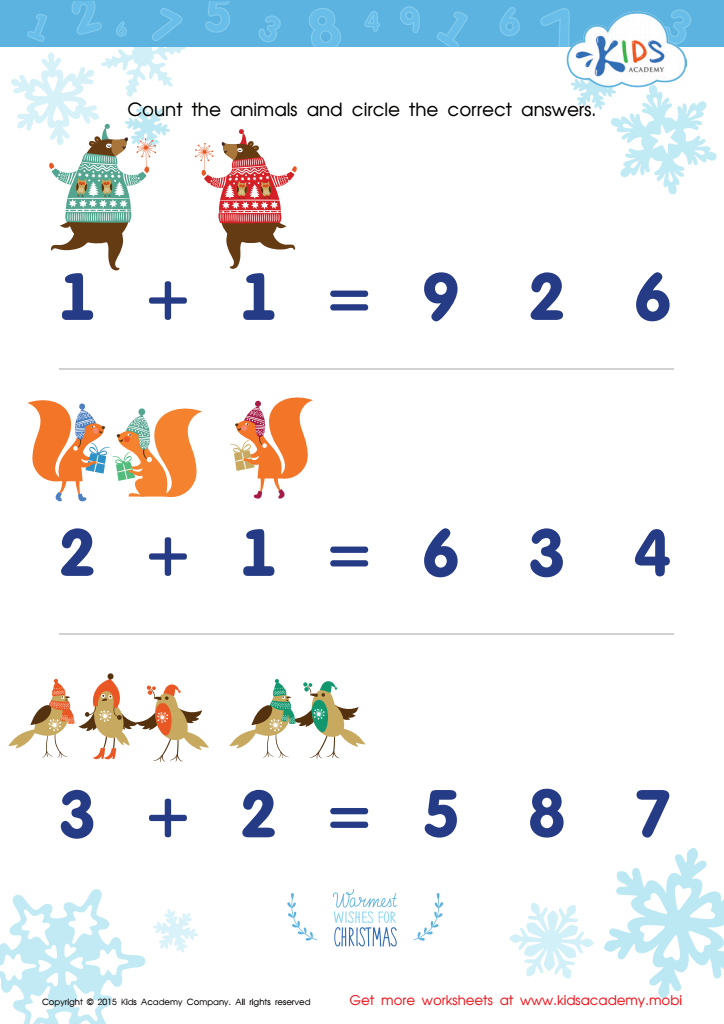
Count Funny Animals Worksheet
 Assign to My Students
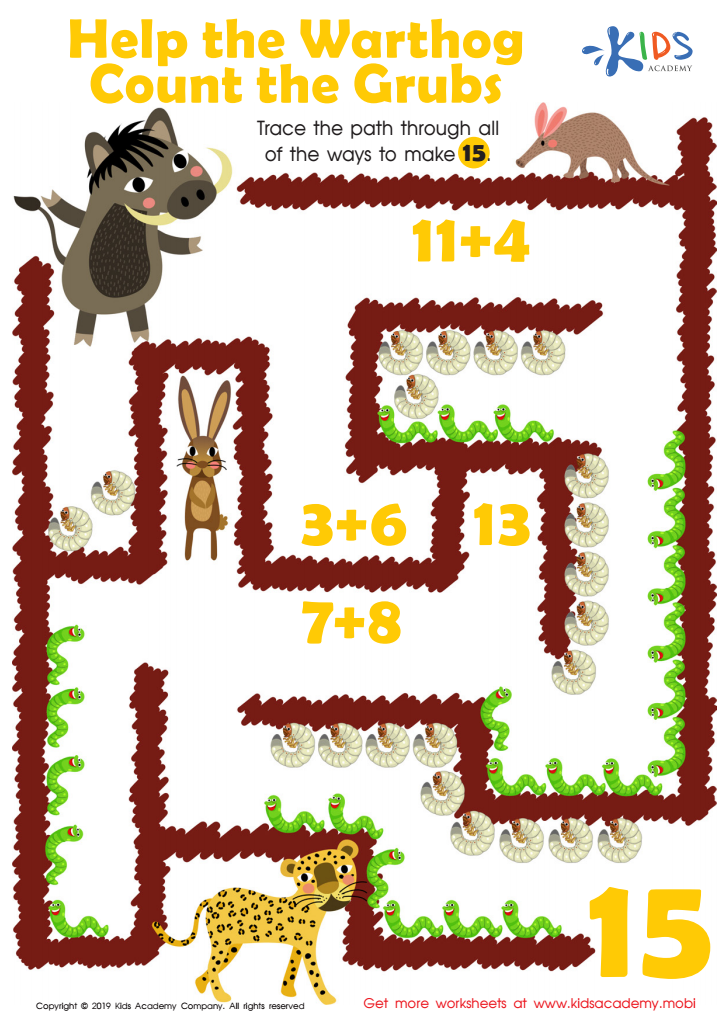
Help the Warthog Count the Grubs Worksheet
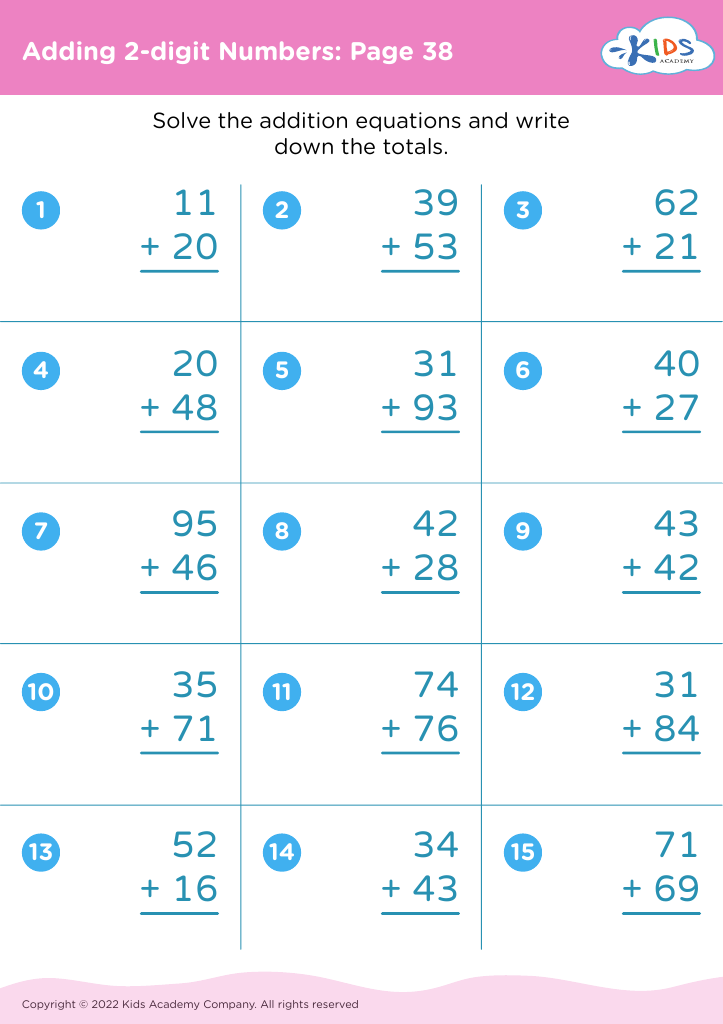
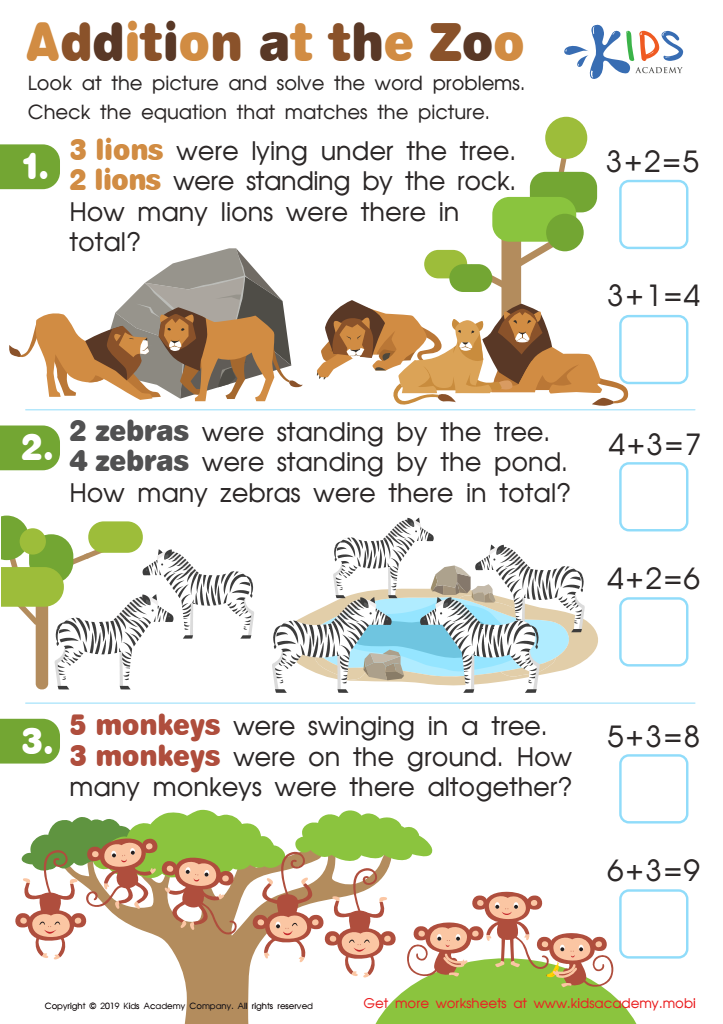
Addition at the Zoo Worksheet








Animal recognition addition for children ages 6-8 is a brilliant way to blend fundamental math skills with curiosity about the natural world. Engaging children in these activities offers a dual advantage. Firstly, it enhances their mathematical proficiency. At this critical developmental stage, mastering basic addition is crucial. Incorporating animals into the mix makes math enjoyable and accessible, ensuring that children not only learn but also retain these essential skills more effectively.
Secondly, fostering an understanding and appreciation of animals stimulates cognitive and emotional development. Recognizing different animals expands children's knowledge about biodiversity and instills a sense of wonder about the world around them. It can spark a lifelong interest in science and nature, encouraging future explorations and discoveries.
Using animals to teach addition also nurtures creativity and imagination. Children often exhibit higher engagement levels when lessons overlap with their interests and curiosities. This approach makes learning feel like play and can significantly reduce math anxiety. Moreover, it encourages problem-solving and critical-thinking skills as children work out answers in an enjoyable context.
Therefore, integrating animal recognition with addition practices supports holistic learning, ensuring children develop a love for both math and the natural world, setting a solid foundation for future educational success.








