Filters

18 filtered results

Clear all filters
Favorites
With answer key
Interactive

18 filtered results

Difficulty Level

Grade


Discover our engaging Cognitive Development Addition Worksheets designed specifically for children aged 6-8. These interactive resources focus on enhancing critical thinking and problem-solving skills while reinforcing foundational math concepts through fun addition exercises. Each worksheet encourages kids to think creatively, recognize patterns, and improve their cognitive abilities as they solve captivating addition problems. Perfect for home or classroom use, our worksheets cater to diverse learning styles, ensuring that every child develops a strong understanding of addition. Boost your child’s confidence in math and cognitive skills today with our expertly crafted worksheets that make learning both effective and enjoyable!

Check out this FREE Trial Lesson on Addition for age 6-8!

Adding with 2's

Favorites
With answer key
Interactive
  • 6-8
  • Cognitive Development
  • Addition
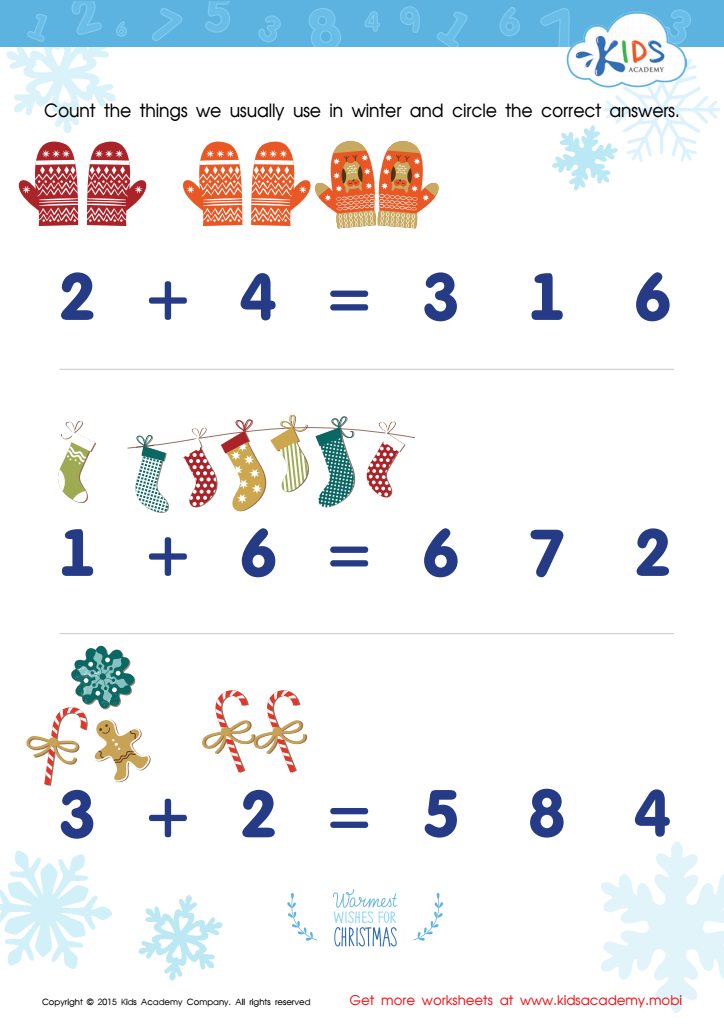
Math PDF Worksheet: Count Winter Things

Count Winter Things Worksheet

This chilly winter afternoon, help your kid warm up with Kids Academy's free math worksheet - full of bright pictures and addition practice. Let them count the things and write in the numbers for a great brain training and math head start. Get more free math worksheets here. (80 words)
Count Winter Things Worksheet
Worksheet
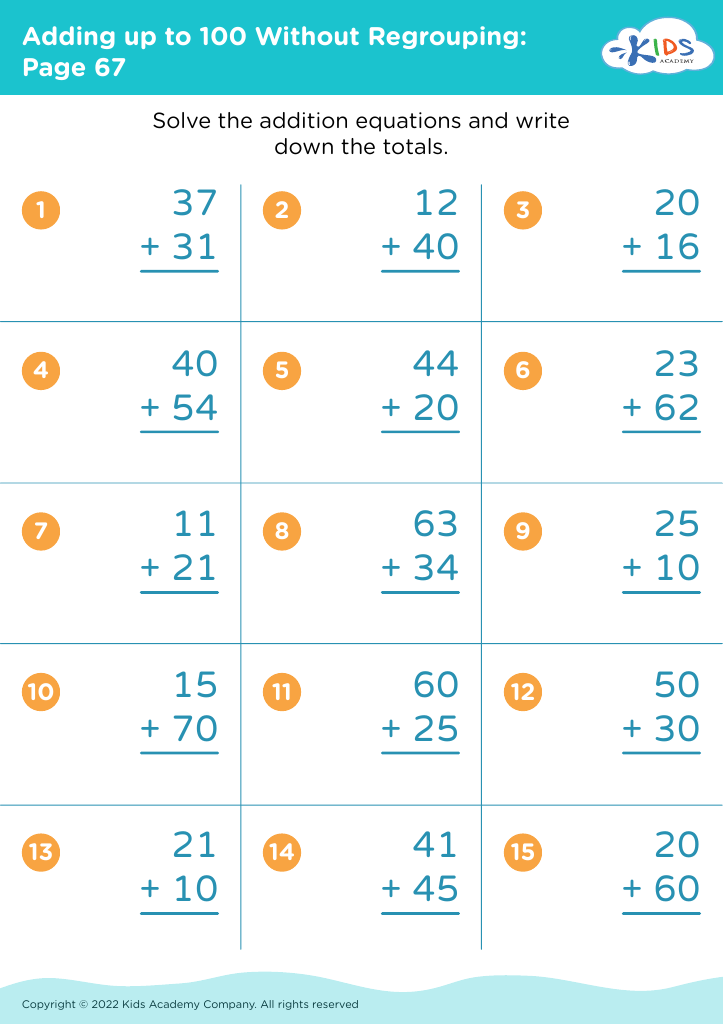
Adding up to 100 Without Regrouping: Page 67
Worksheet
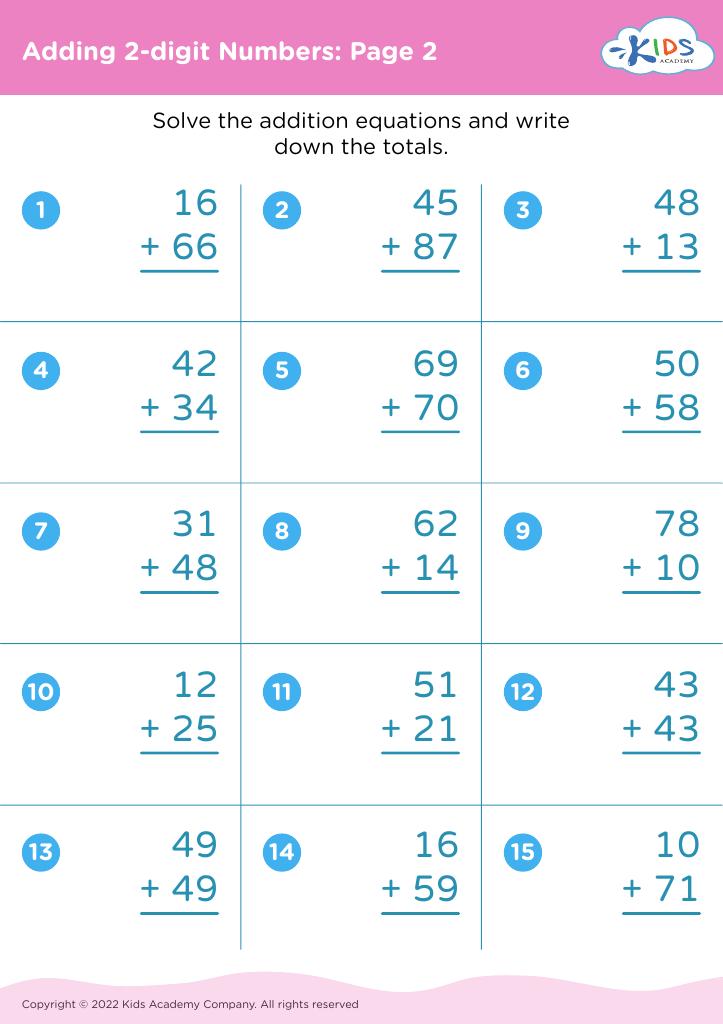
Adding 2-digit Numbers: Page 2

Adding 2-digit Numbers: Page 2

Adding 2-digit Numbers: Page 2
Worksheet
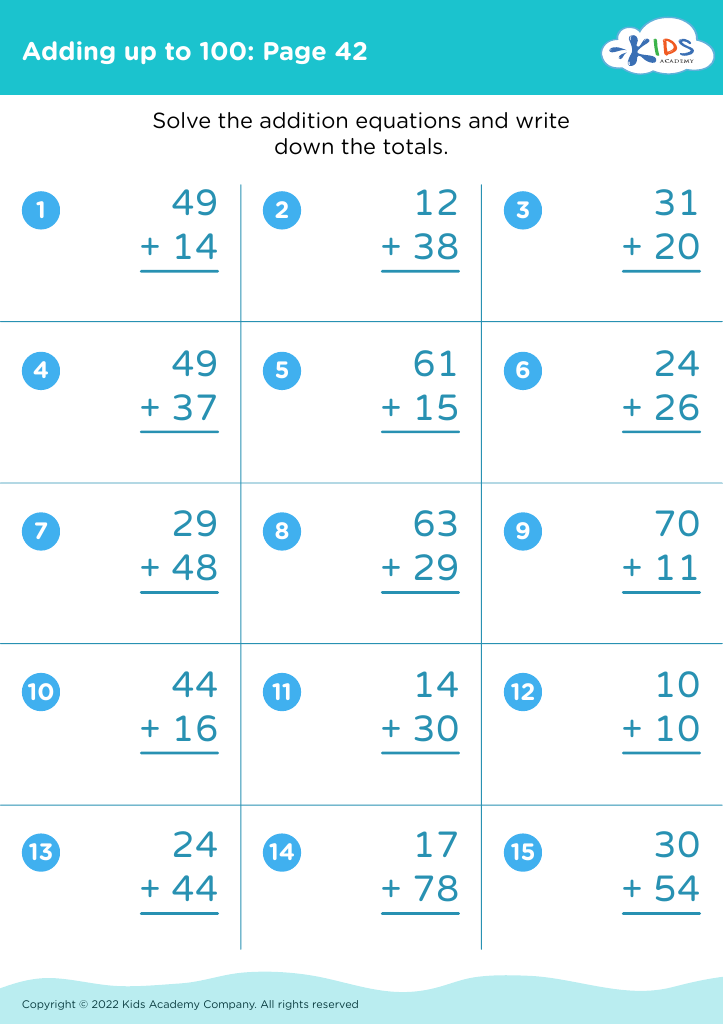
Adding up to 100: Page 42

Adding up to 100: Page 42

Adding up to 100: Page 42
Worksheet
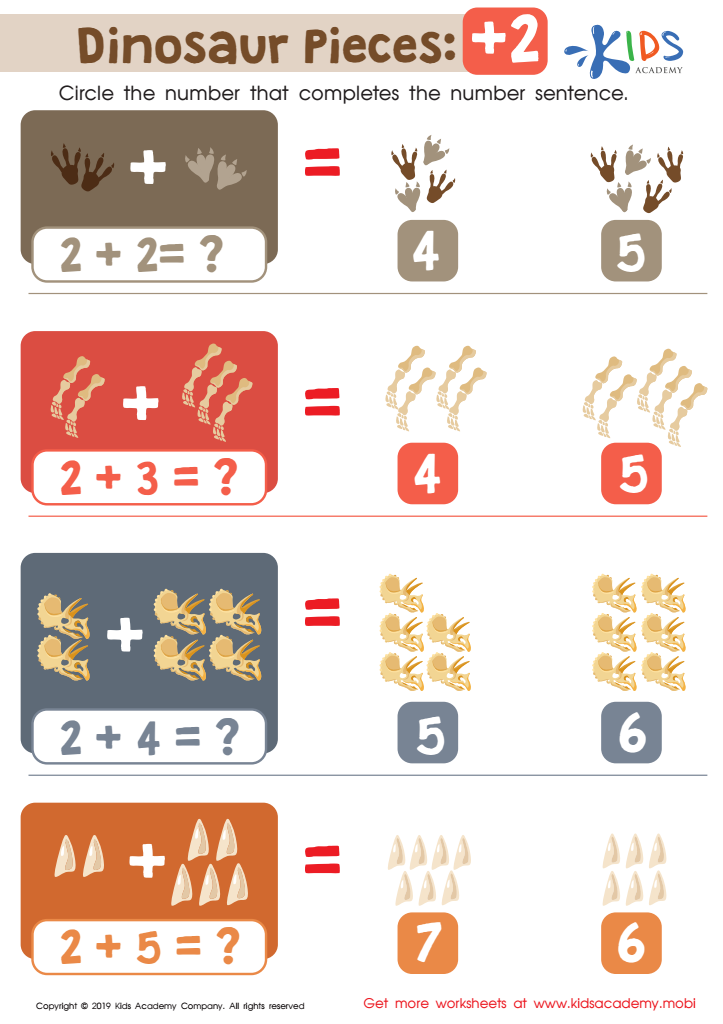
Dinosaur Pieces: +2 Worksheet

Dinosaur Pieces: +2 Worksheet

Kids love dinosaurs! See if your kids can solve these three equations featuring the mysterious creatures. Download the PDF and have them circle the number that completes each equation. Dinosaurs are extinct, not seen for thousands of years, but they can still help kids work on their math skills!
Dinosaur Pieces: +2 Worksheet
Worksheet
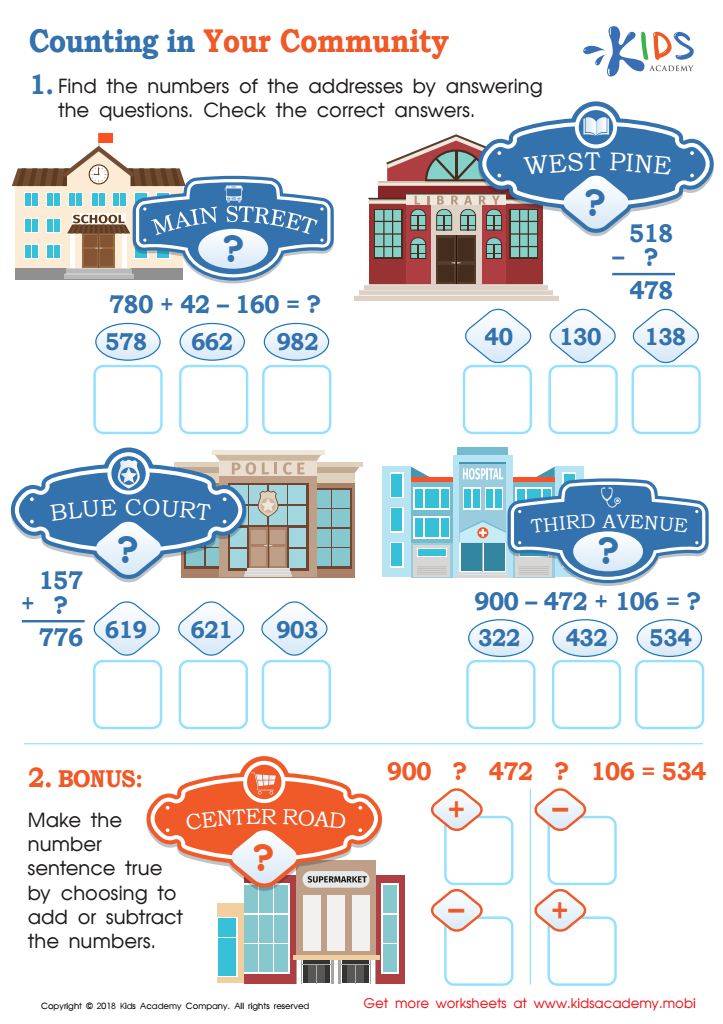
Counting in Your Community Worksheet
Counting in Your Community Worksheet
Introduce your kids to the idea of a community, where different people and buildings co-exist, each playing their part for the community's progress. Ask them to name the buildings they see in their community. Then work through this worksheet to find the numbers of the addresses by answering the questions. Check the answers once they've solved the equations.
Counting in Your Community Worksheet
Worksheet
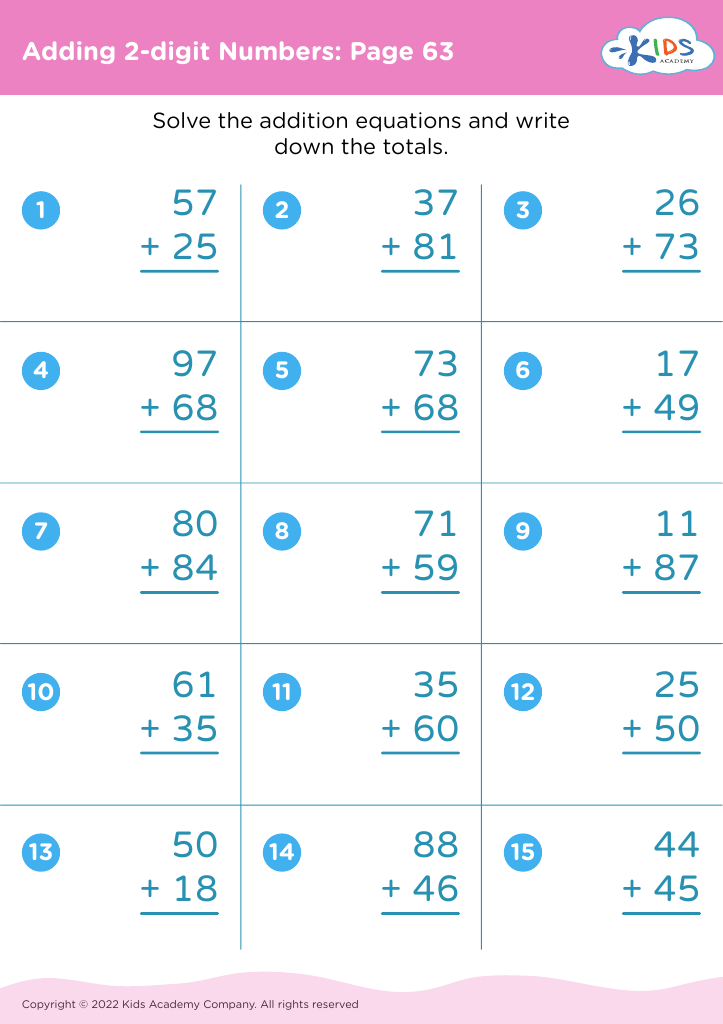
Adding 2-digit Numbers: Page 63

Adding 2-digit Numbers: Page 63

Adding 2-digit Numbers: Page 63
Worksheet
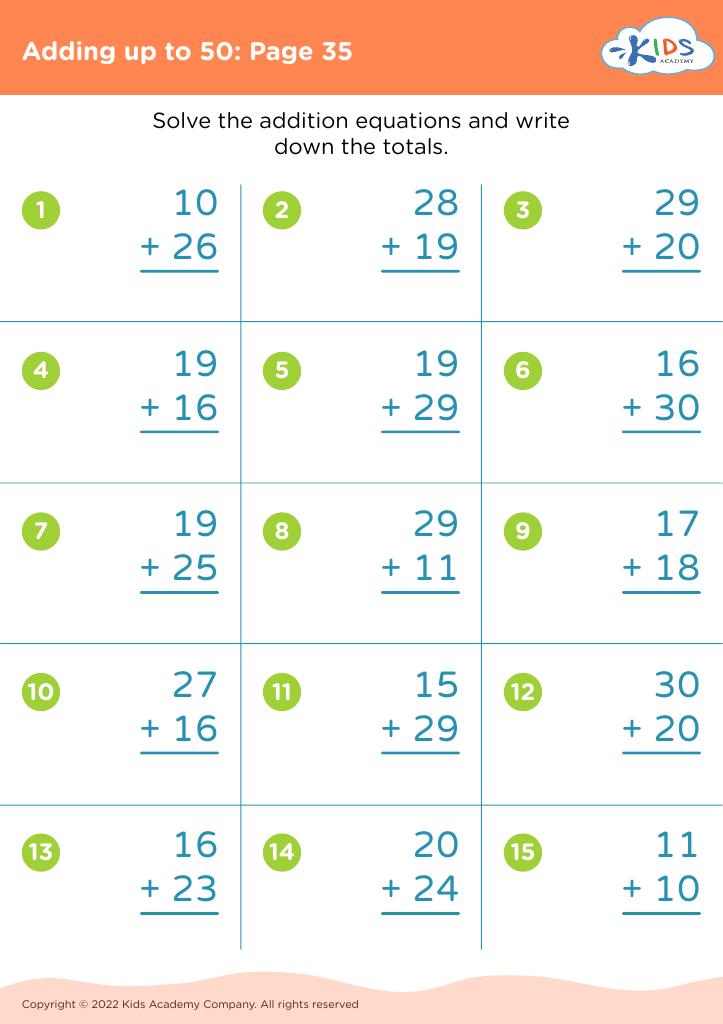
Adding up to 50: Page 35

Adding up to 50: Page 35

Adding up to 50: Page 35
Worksheet
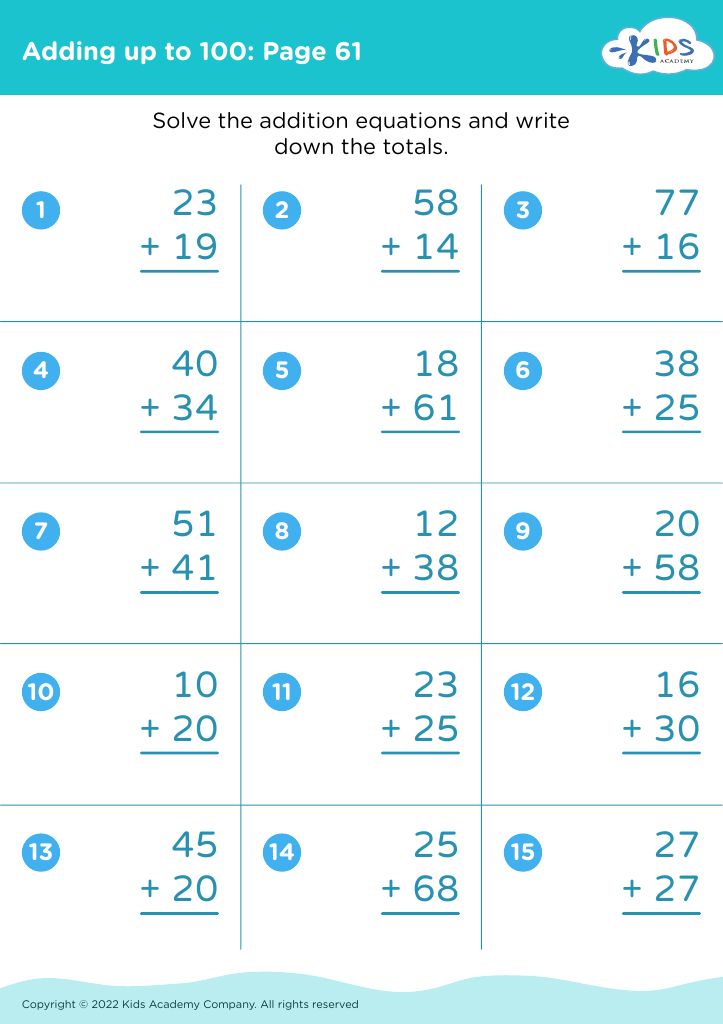
Adding up to 100: Page 61

Adding up to 100: Page 61

Adding up to 100: Page 61
Worksheet
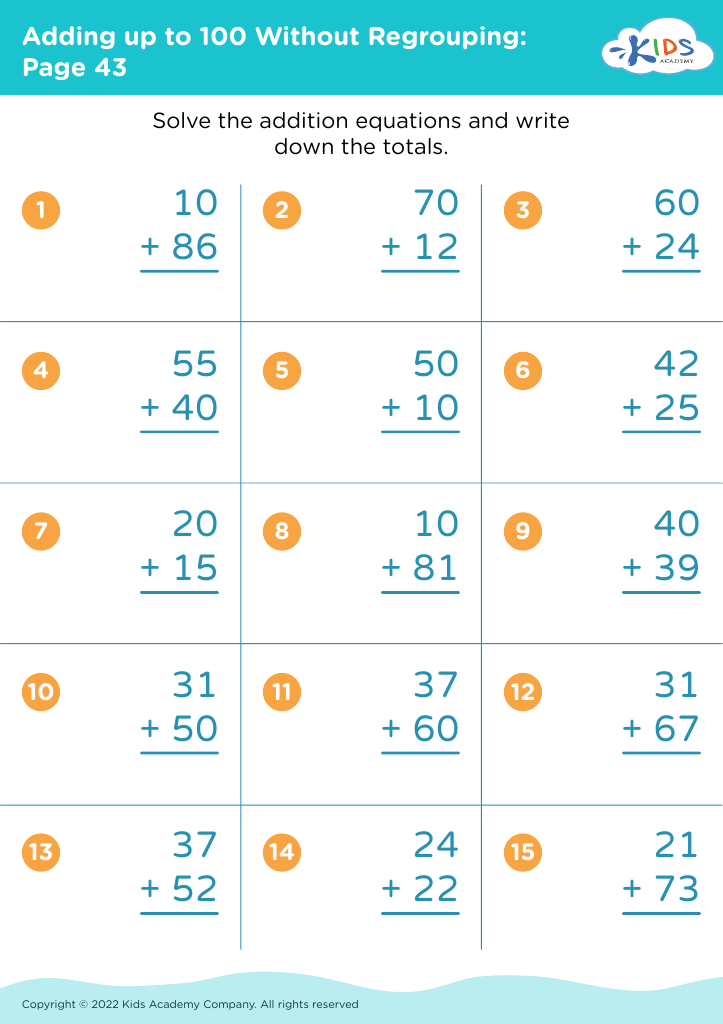
Adding up to 100 Without Regrouping: Page 43
Worksheet
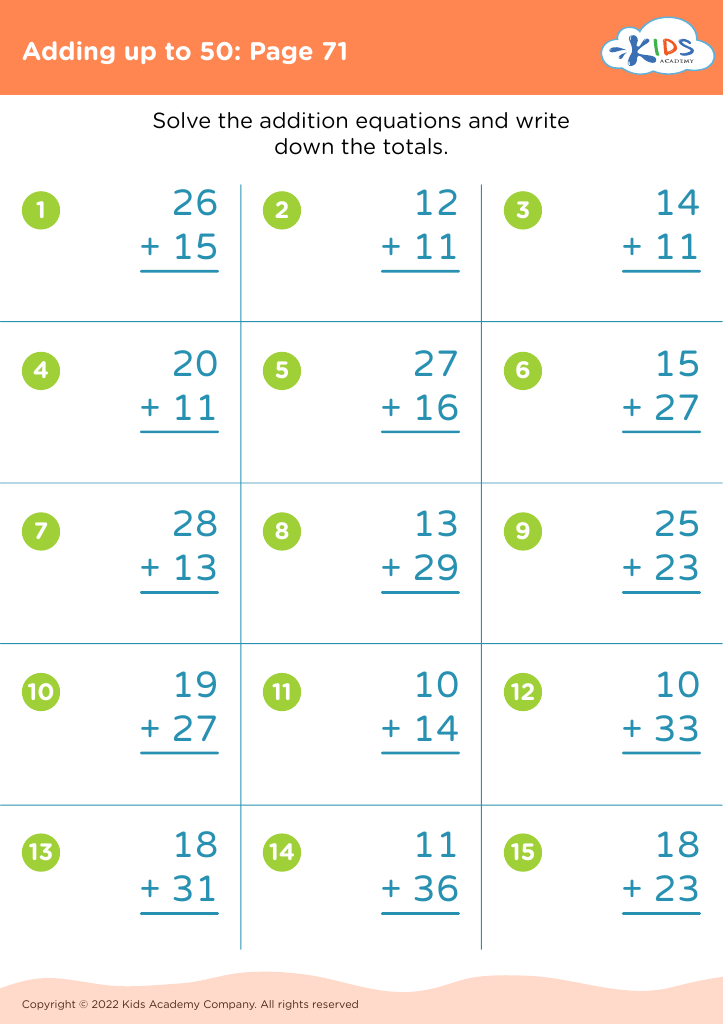
Adding up to 50: Page 71

Adding up to 50: Page 71

Adding up to 50: Page 71
Worksheet
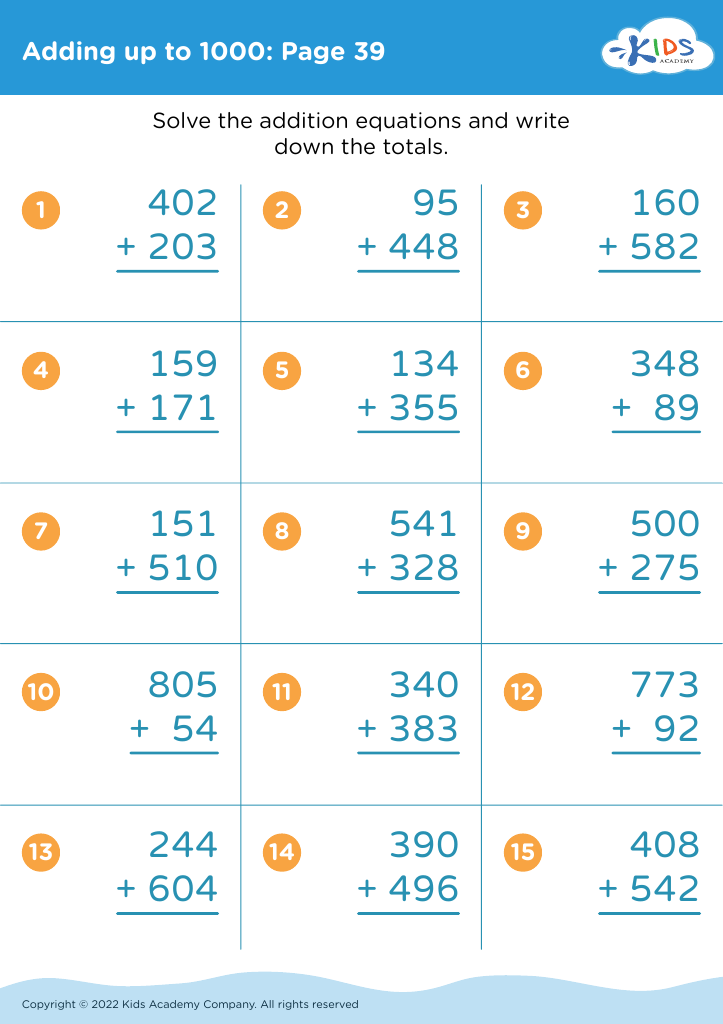
Adding up to 1000: Page 39

Adding up to 1000: Page 39

Adding up to 1000: Page 39
Worksheet
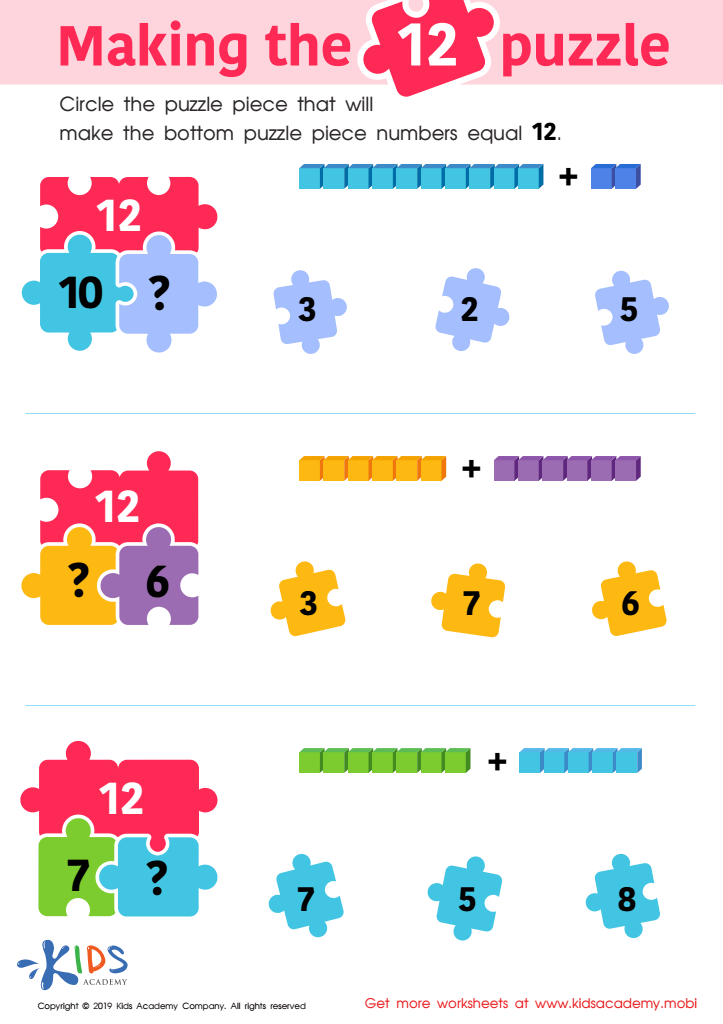
Making the 12 Puzzle Worksheet

Making the 12 Puzzle Worksheet

Engage preschoolers in learning with this fun and colorful worksheet. Ask them to look at the picture and identify the missing equation on each puzzle piece; then help them solve the problems. When all the puzzle pieces make the bottom numbers equal 12, have them circle it. This is a great way to combine learning and fun!
Making the 12 Puzzle Worksheet
Worksheet
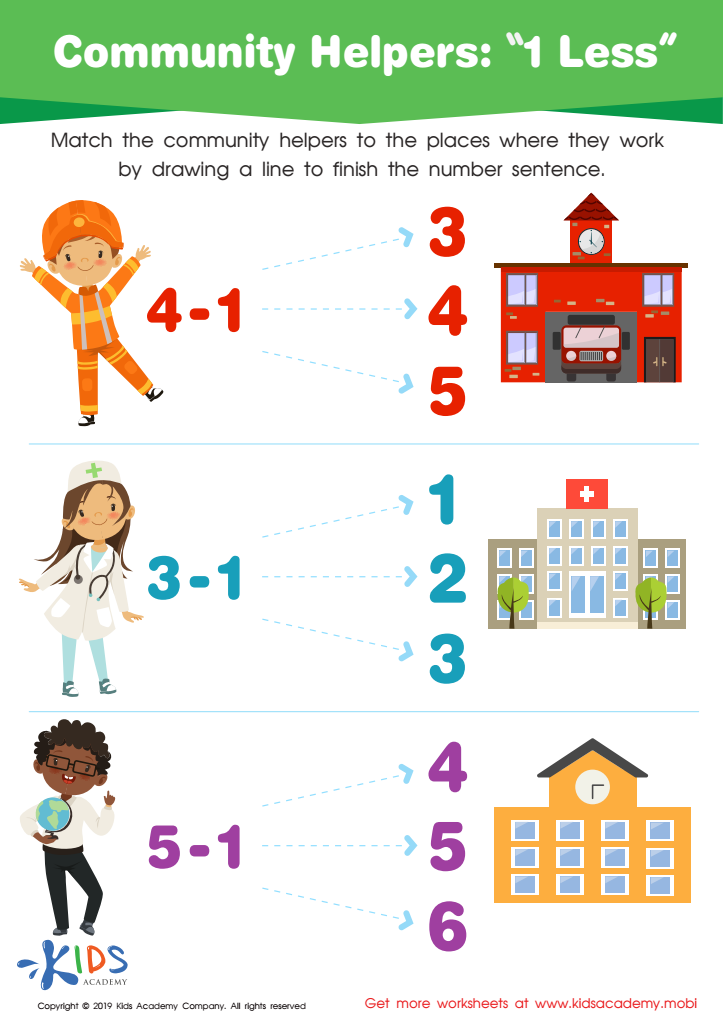
Community Helpers: 1 less Worksheet
Community Helpers: 1 less Worksheet

Look at this worksheet with your child and ask them to identify the different community helpers. Match them to the places where they work by drawing a line to finish the number sentence. This helps them identify the people that help keep the community organized and running smoothly. Examples of community helpers include doctors, police officers, firefighters, teachers, etc.
Community Helpers: 1 less Worksheet
Worksheet
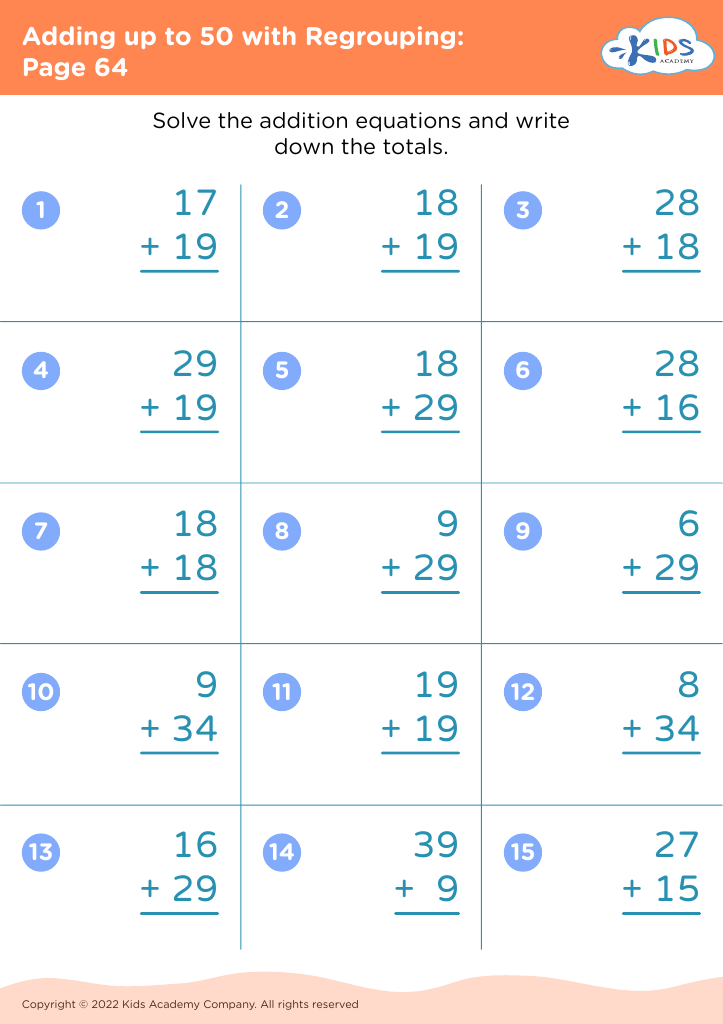
Adding up to 50 with Regrouping: Page 64
Worksheet
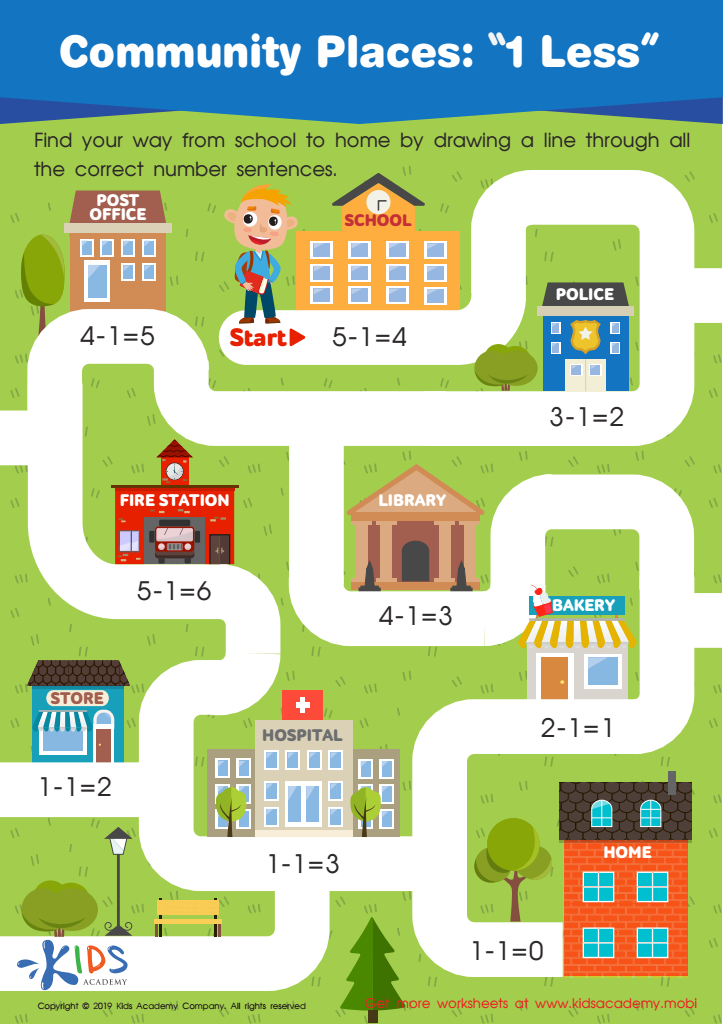
Community Places: 1 Less Worksheet
Community Places: 1 Less Worksheet

Have your kindergarteners draw a line through the correct number sentences as they find their way home from school. Ask them to identify the people, places, and buildings in their community and the jobs they do.
Community Places: 1 Less Worksheet

Worksheet
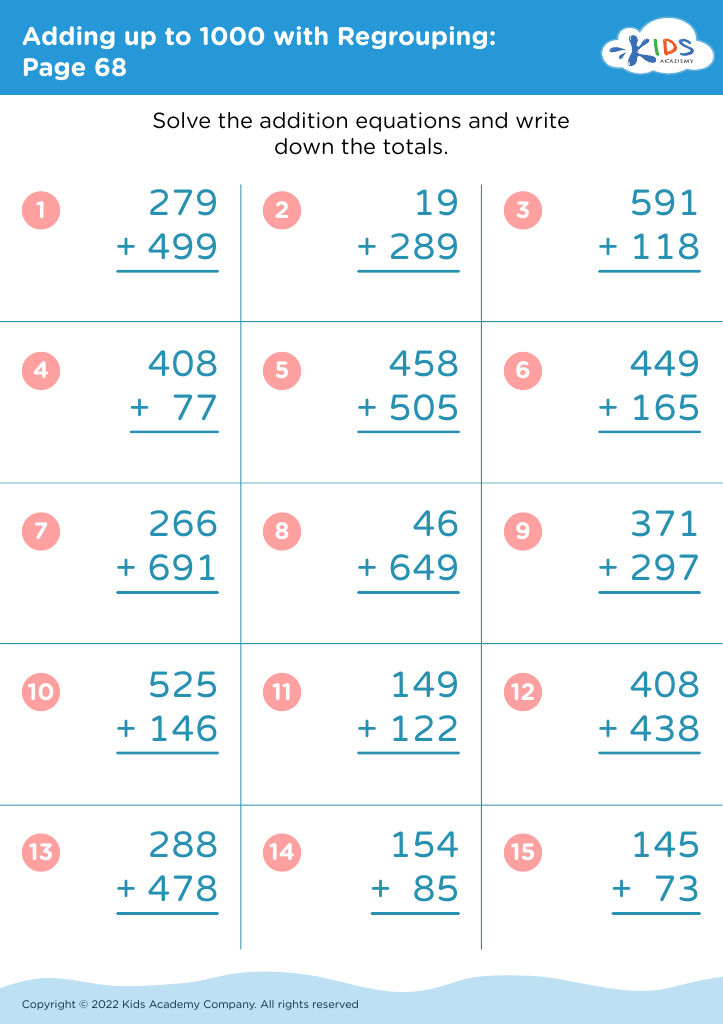
Adding up to 1000 with Regrouping: Page 68
Worksheet
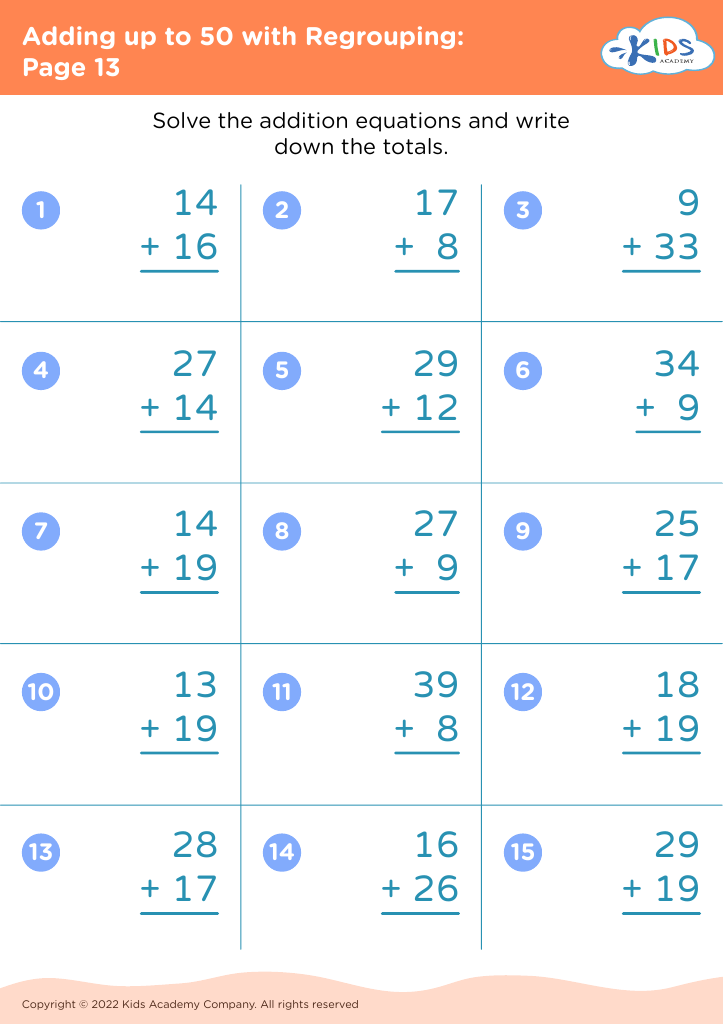
Adding up to 50 with Regrouping: Page 13
Worksheet


Cognitive development in children ages 6-8 is crucial as this stage marks significant growth in thinking, reasoning, and problem-solving capabilities. Parents and teachers should care about this phase because it forms the foundation for lifelong learning. At this age, children become more curious and begin to process information more independently; fostering cognitive skills enhances their ability to understand complex concepts in subjects like math and language.

Additionally, cognitive development directly impacts a child’s social skills and emotional understanding. A robust cognitive framework enables children to better interpret social cues, empathize with peers, and build healthy relationships. Working on cognitive skills through engaging activities, games, and hands-on learning can contribute to improving a child's concentration, memory, and attention span.

Moreover, supporting cognitive growth helps bridge learning gaps, ensuring that children feel confident and motivated in their educational journey. By understanding and nurturing the cognitive development of children ages 6-8, parents and teachers can collaboratively create an enriching learning environment that stimulates curiosity, resilience, and a love for learning. Ultimately, investing in this critical developmental stage benefits not only the individual child but also enriches the classroom and community as a whole.