Compare fractions Addition Worksheets for Ages 6-8
6 filtered results
-
From - To
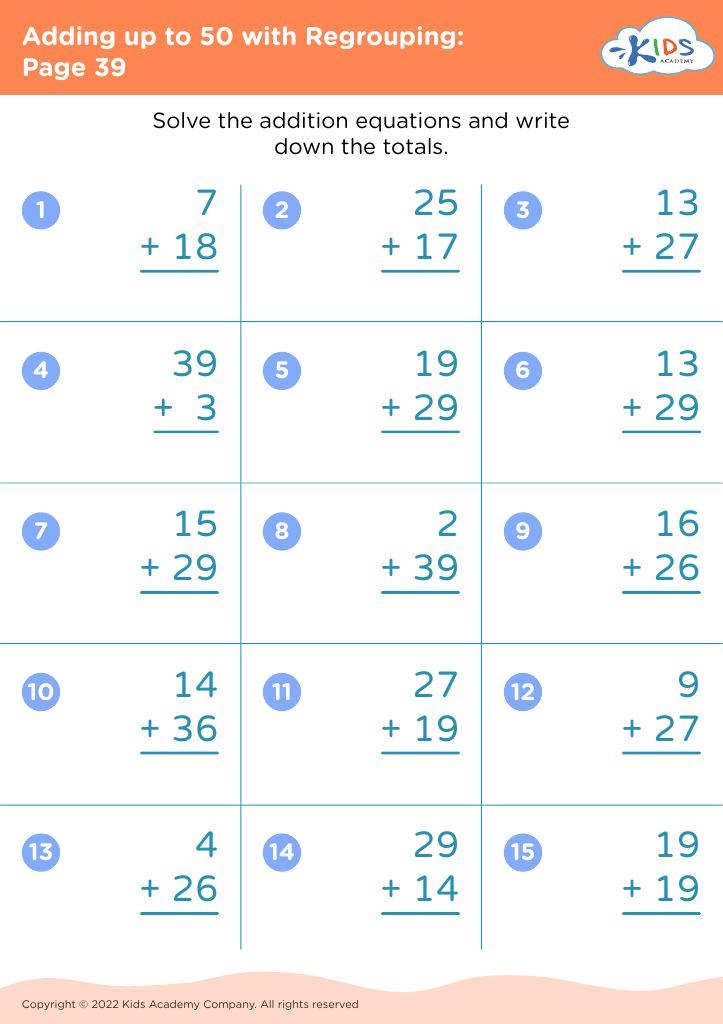
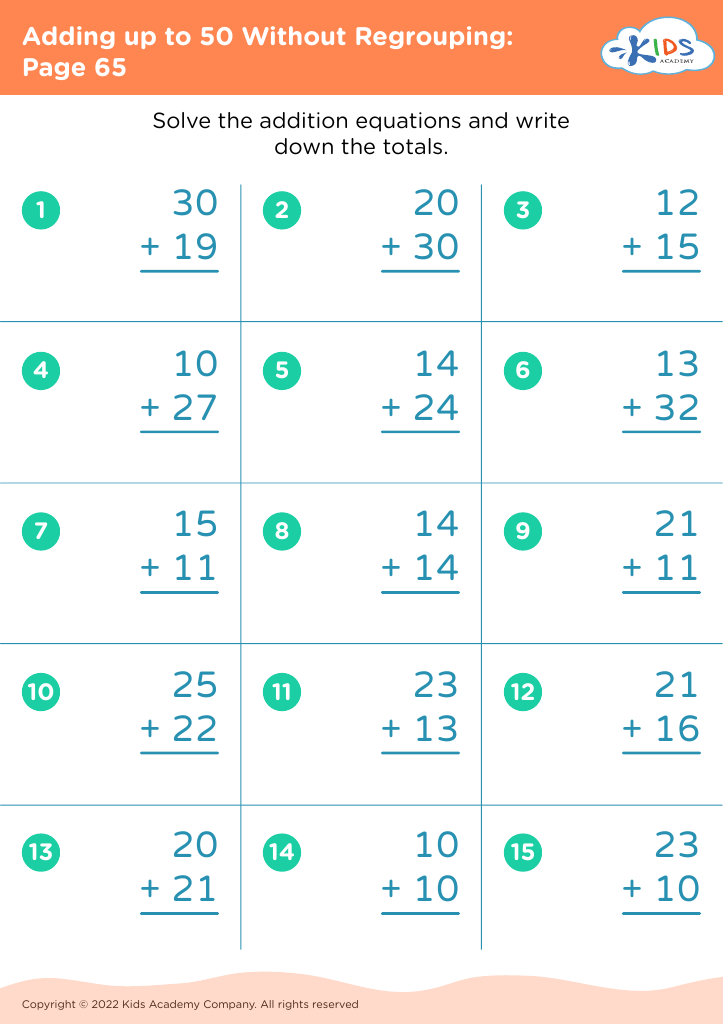
Discover our engaging "Compare Fractions Addition Worksheets" designed specifically for children aged 6-8. These worksheets focus on enhancing students' understanding of fractions by comparing and adding them in a fun, interactive way. Tailored for early learners, our materials offer a variety of exercises that encourage critical thinking and problem-solving skills. With colorful illustrations and clear instructions, kids will enjoy practicing their math skills while building confidence in their abilities. Perfect for classroom use or at-home learning, our worksheets provide a solid foundation in fractions, setting the stage for future mathematical success. Get started today and watch your young learners thrive!
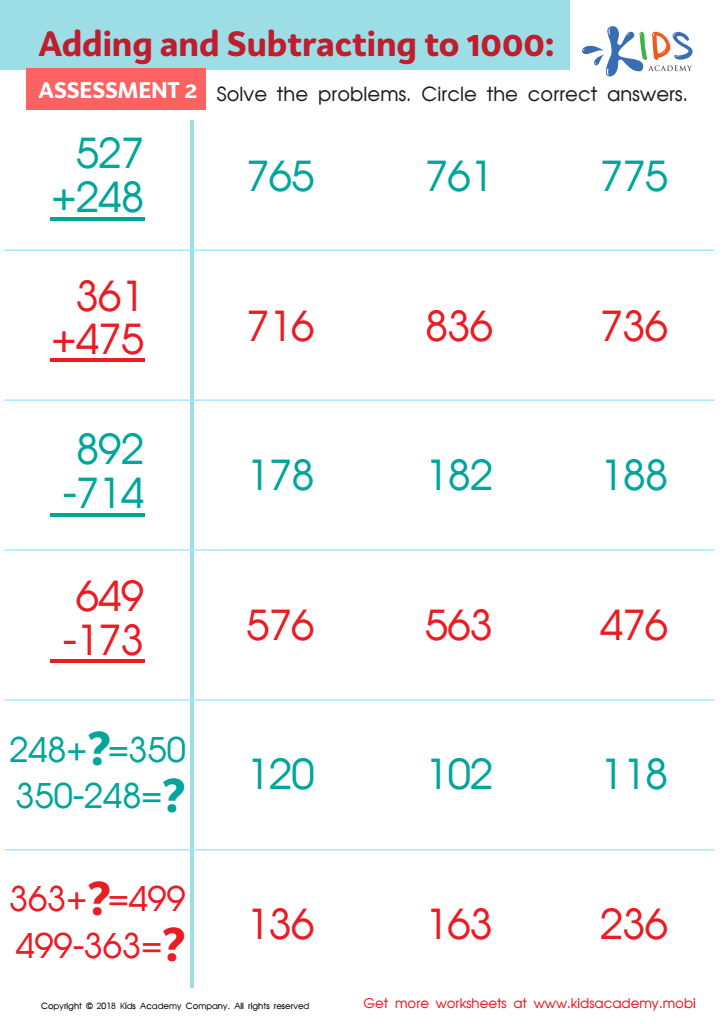
Adding and Subtracting to 1 Worksheet: Assessment 2
 Assign to My Students








Understanding how to compare fractions is an essential skill for children ages 6-8. Parents and teachers should prioritize fraction comprehension because it forms the building blocks for more complex mathematical concepts later on. By mastering comparing fractions, children learn about quantities and relationships, laying a foundation for addition, subtraction, and even basic algebra. This understanding enables them to make sense of everyday situations, such as sharing food or measuring ingredients in recipes.
Additionally, grasping fraction comparison develops critical thinking and problem-solving skills. Children learn to discern differences and similarities between values, which reveals broader mathematical principles such as equivalence and proportionality. This analytical skill is vital not just for math class but also for real-life decision-making.
Furthermore, understanding fractions is a key component of future academic success in STEM (Science, Technology, Engineering, Mathematics) fields. It encourages logical reasoning and boosts confidence in handling numbers, laying a strong groundwork for higher-level math. Engaging in activities that involve comparing fractions can be fun and interactive, making learning enjoyable.
Thus, parents and teachers play a crucial role in fostering this understanding, reminding children that math is not just an abstract concept, but a practical tool they can use in their everyday lives.








