
Handwriting practice Addition Worksheets for Ages 6-8
5 filtered results
Difficulty Level
Grade
Age
-
From - To
Subject
Activity
Standards
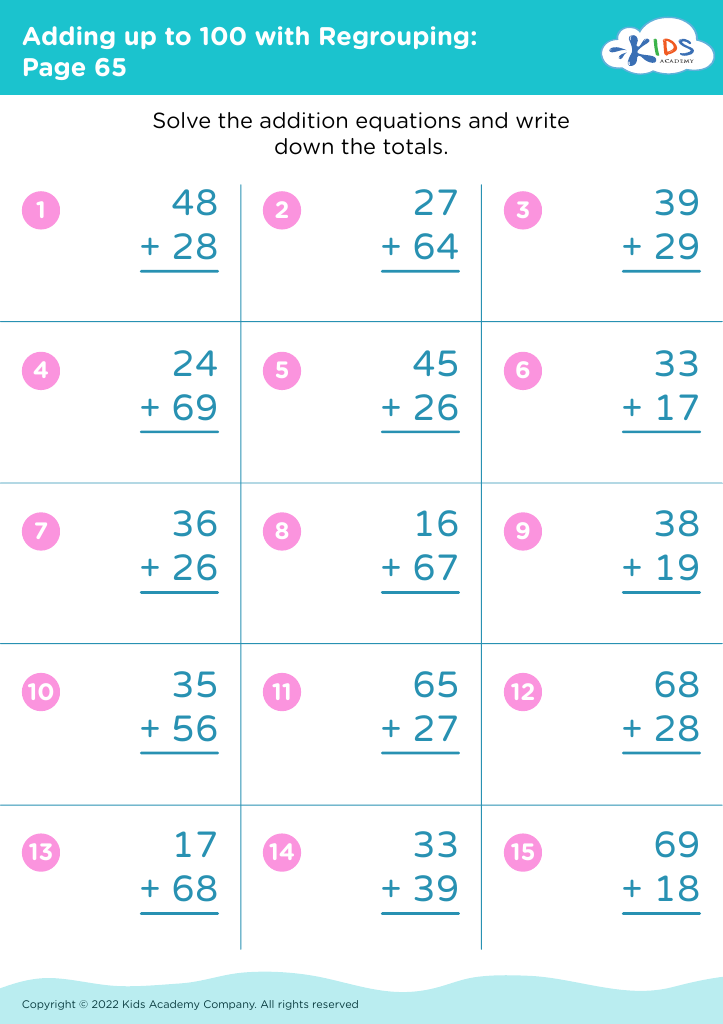
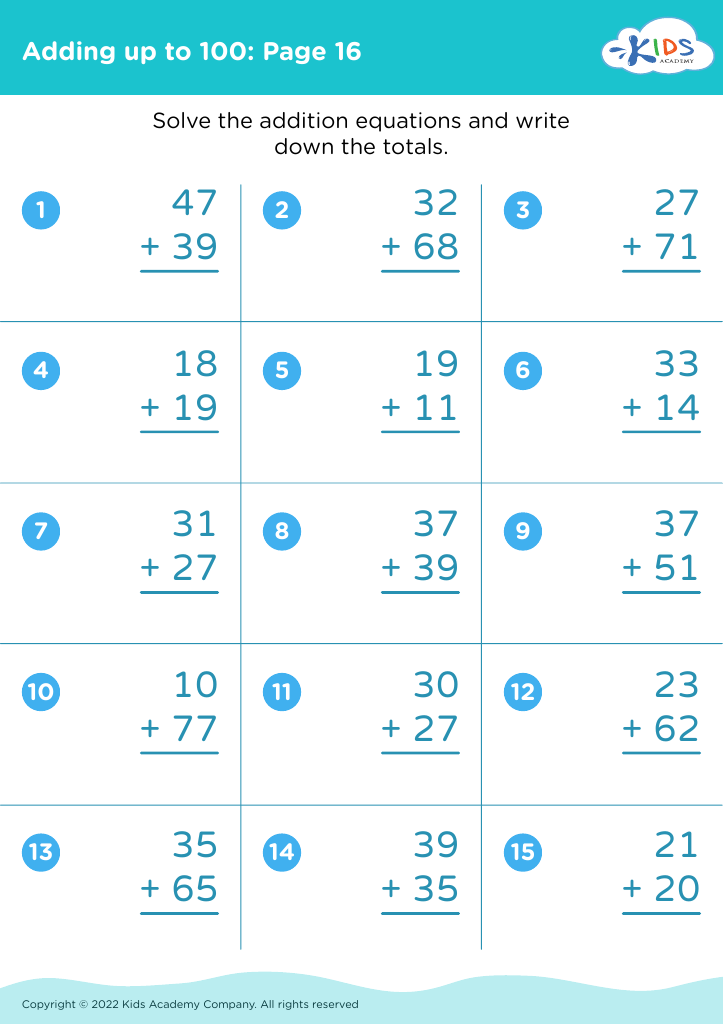
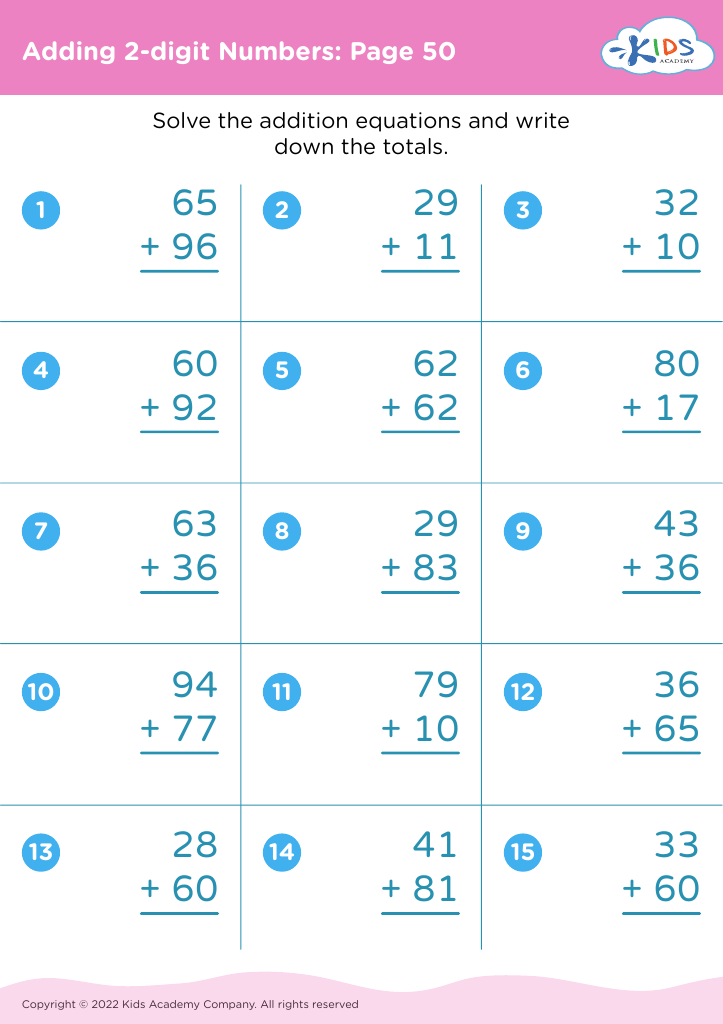
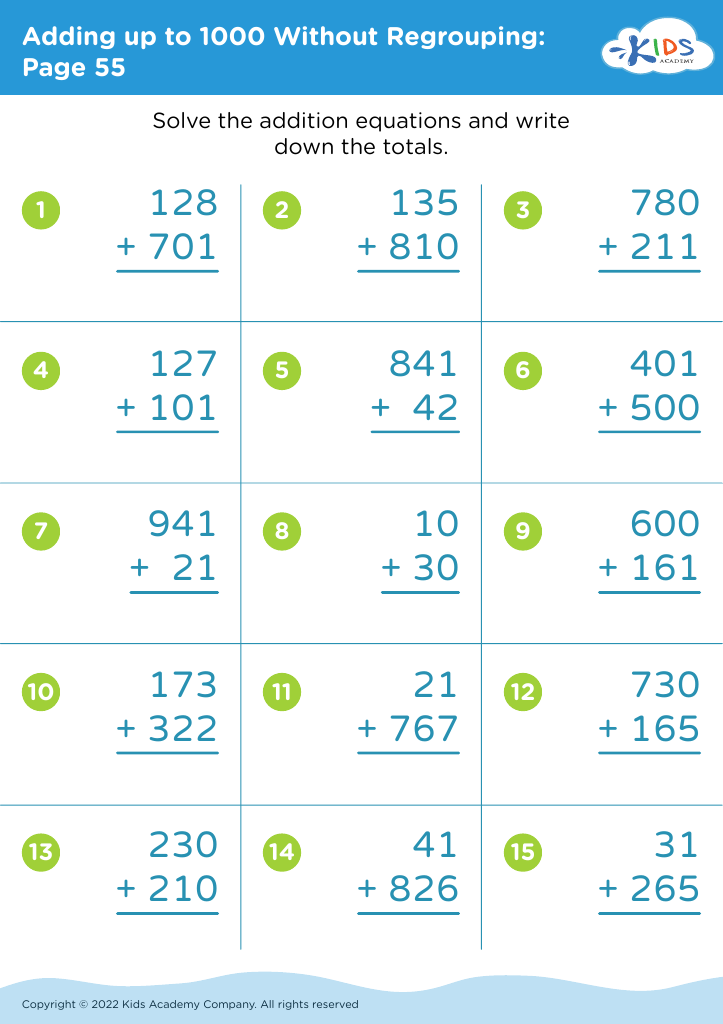
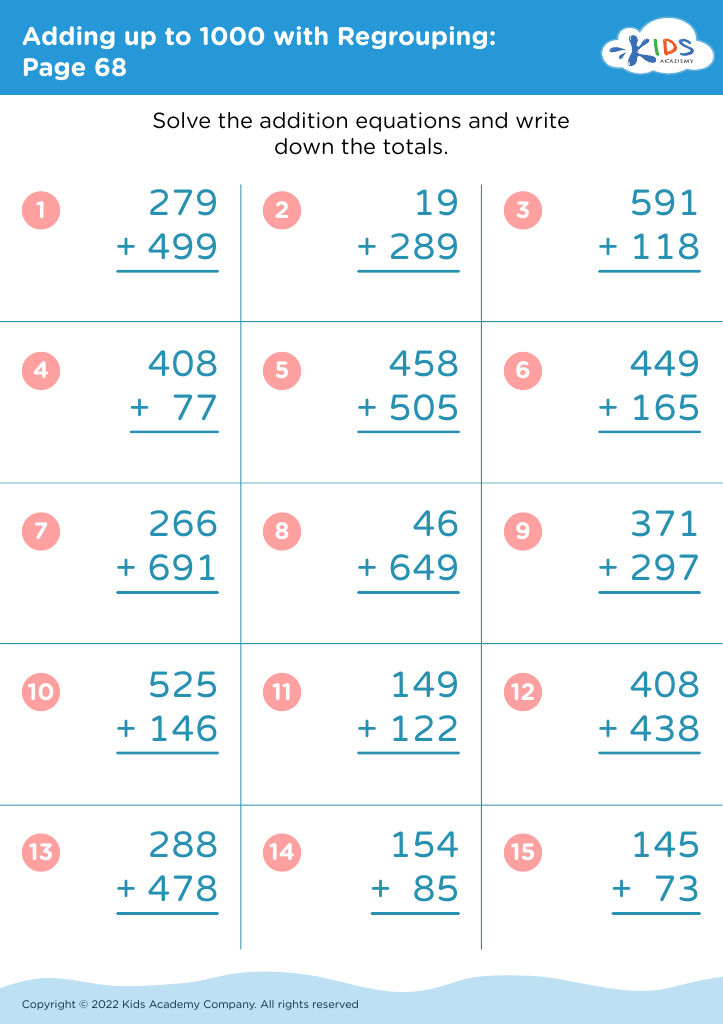
Boost your child's handwriting and math skills with our engaging Handwriting Practice Addition Worksheets for ages 6-8! These worksheets are designed to help young learners improve their fine motor skills while mastering basic addition concepts. Each worksheet features a variety of colorful, fun designs that will keep your child motivated and excited to learn. As they trace numbers and solve addition problems, they'll confidently strengthen their writing abilities and enhance their understanding of math. Perfect for at-home practice or classroom use, our resources make learning enjoyable, interactive, and effective. Unlock your child's potential in both handwriting and mathematics today!
Favorites
With answer key
Interactive
Join Kids Academy for Free
Who is primarily going to use this learning content?








Handwriting practice is critical for children aged 6-8, as it lays the foundation for essential skills that extend beyond merely writing. During these formative years, children refine their fine motor skills and develop hand-eye coordination, both of which are crucial for effective handwriting. When parents and teachers prioritize handwriting practice, they help children enhance their ability to convey their thoughts clearly and uniformly on paper. This clarity is fundamental for academic success, particularly in subjects that involve written expression, such as language arts and mathematics.
Additionally, consistent handwriting practice can boost children’s confidence and self-esteem. As they improve their penmanship, they often feel a sense of accomplishment, which encourages them to engage more actively in their learning journey. Furthermore, good handwriting promotes better organization of thoughts, aiding in the development of critical thinking and communication skills.
Teachers and parents also play a pivotal role in fostering a positive attitude toward writing. By integrating fun activities and creative prompts, educators and caregivers can make handwriting practice enjoyable. Ultimately, investing time in handwriting practice equips young learners with vital skills that support their educational development and pave the way for future academic achievements.








