Mental math practice Addition Worksheets for Ages 6-8
7 filtered results
-
From - To
Boost your child's math skills with our "Mental Math Practice Addition Worksheets for Ages 6-8". These engaging, printable worksheets from Kids Academy are expertly designed to enhance young learners' addition abilities. Perfect for classroom and at-home learning, each worksheet encourages mental calculation, improving speed and accuracy. Children will practice single-digit and simple multi-digit addition, gradually building confidence. Ideal for first graders and second graders, our worksheets provide a fun, interactive approach to mastering math fundamentals. Discover how to make addition enjoyable and efficient with tailored exercises that turn learning into an adventure. Download and start practicing today!
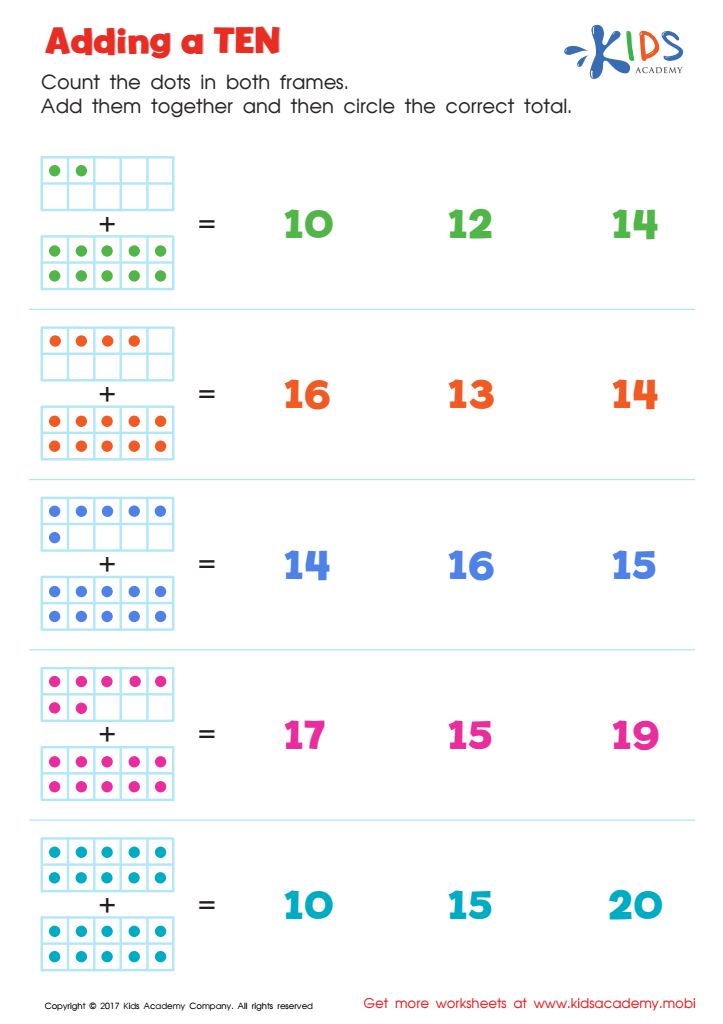
Adding a Ten Worksheet
 Assign to My Students
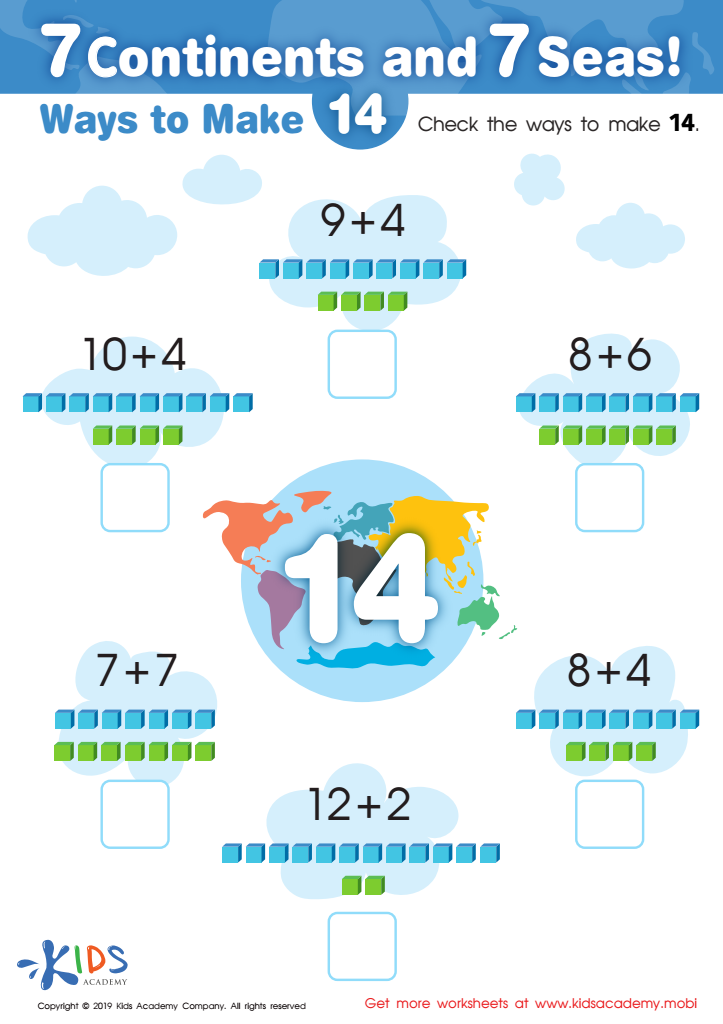
7 Continents and 7 Seas Worksheet
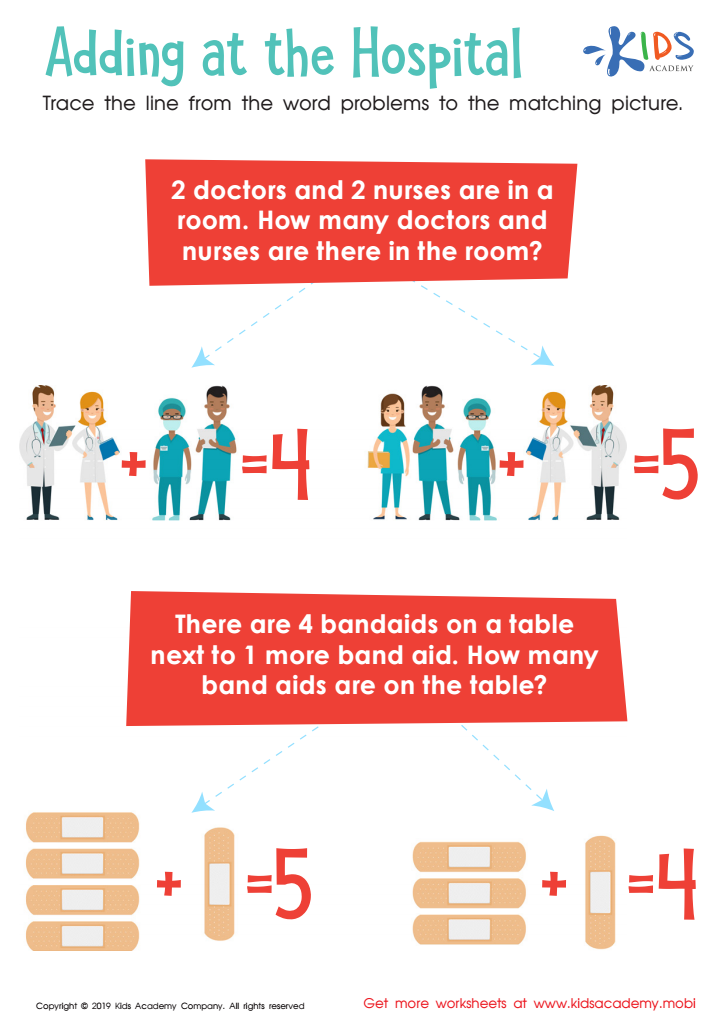
Adding at the Hospital Worksheet
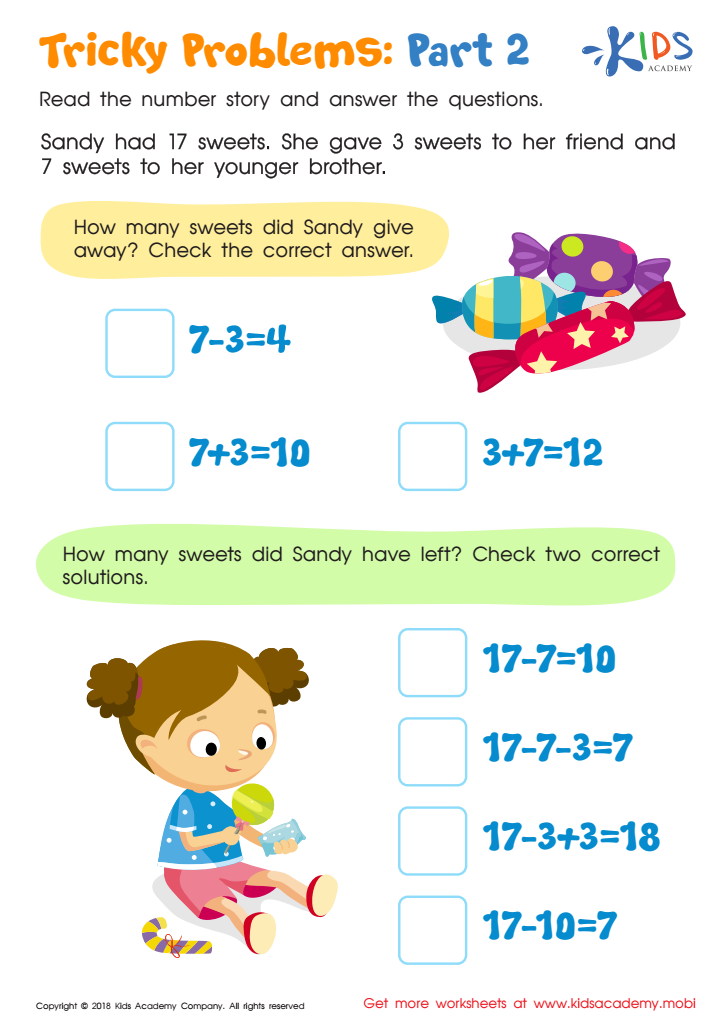
Tricky Problems Worksheet: Part 2
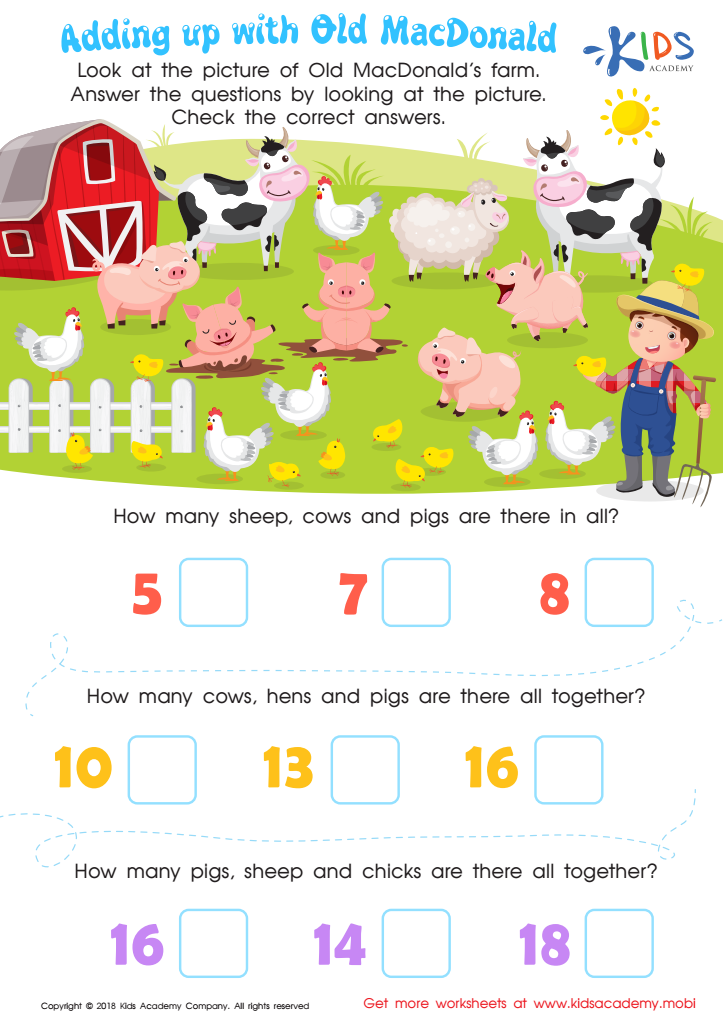
Adding Up with Old MacDonald Worksheet
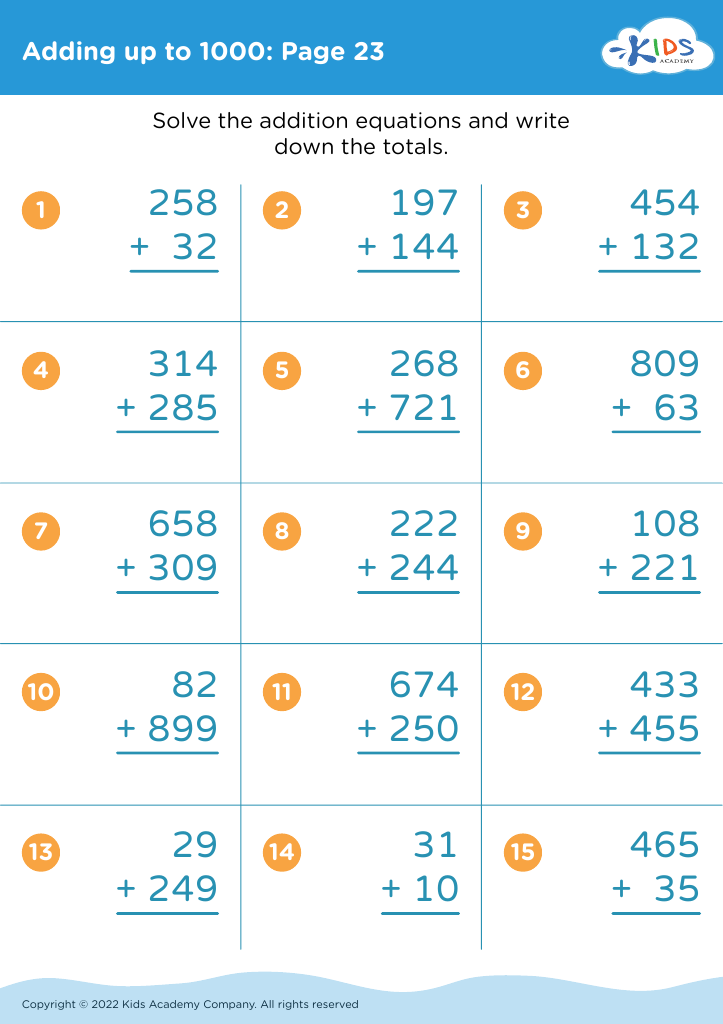
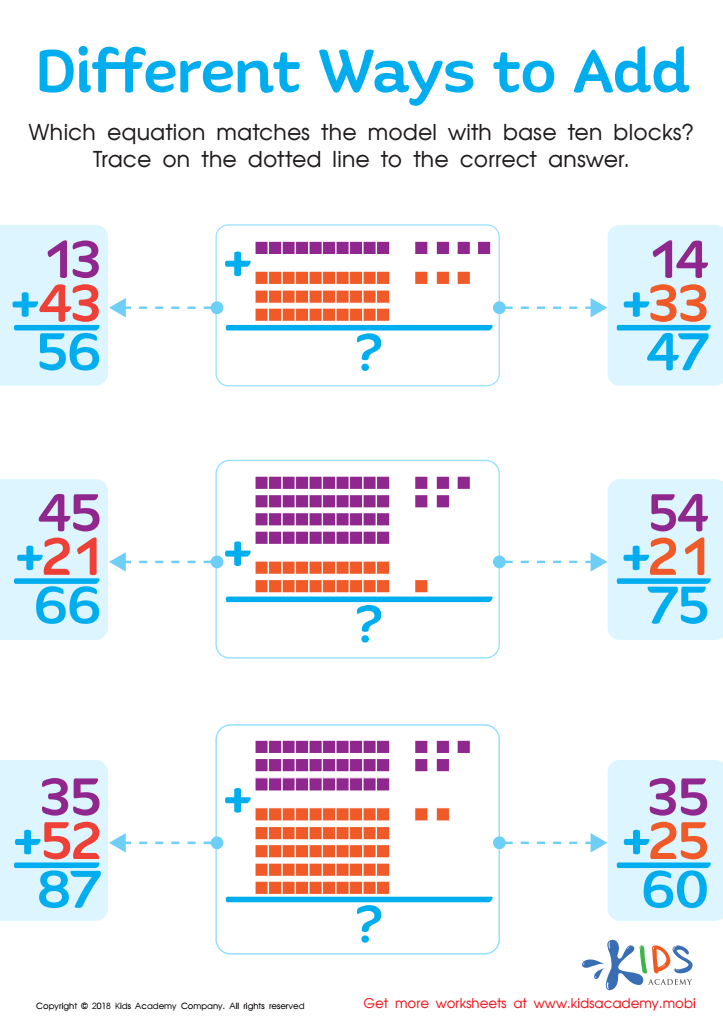
Different Ways to Add Worksheet








Mental math practice, particularly in addition, is crucial for children ages 6-8 for several reasons. At this stage, young learners are developing foundational numeracy skills which are the building blocks for all future math education. When children practice mental math, they improve their number sense, which means they understand number relationships better. This is key in helping them solve more complex problems later on.
Moreover, mental math enhances cognitive abilities such as working memory and concentration. As children frequently engage in these mental exercises, they learn to hold and manipulate information in their minds, which is an important life skill. It also fosters quicker decision-making abilities, as they aim to find the fastest route to the correct answer.
Additionally, routinely practicing mental math builds confidence. When children can quickly solve problems without visual aids or counting fingers, it reinforces their self-esteem and motivates them to tackle more challenging tasks. Confidence in math often translates to better performance in other subjects as well, fostering a positive attitude towards learning.
Finally, engaging in mental math supports parents and teachers in identifying any learning gaps or misconceptions that students might have. This allows for timely interventions and tailored support, ensuring that students build strong mathematical foundations from an early age.








