Number Sequencing Addition Worksheets for Ages 6-8
10 filtered results
-
From - To
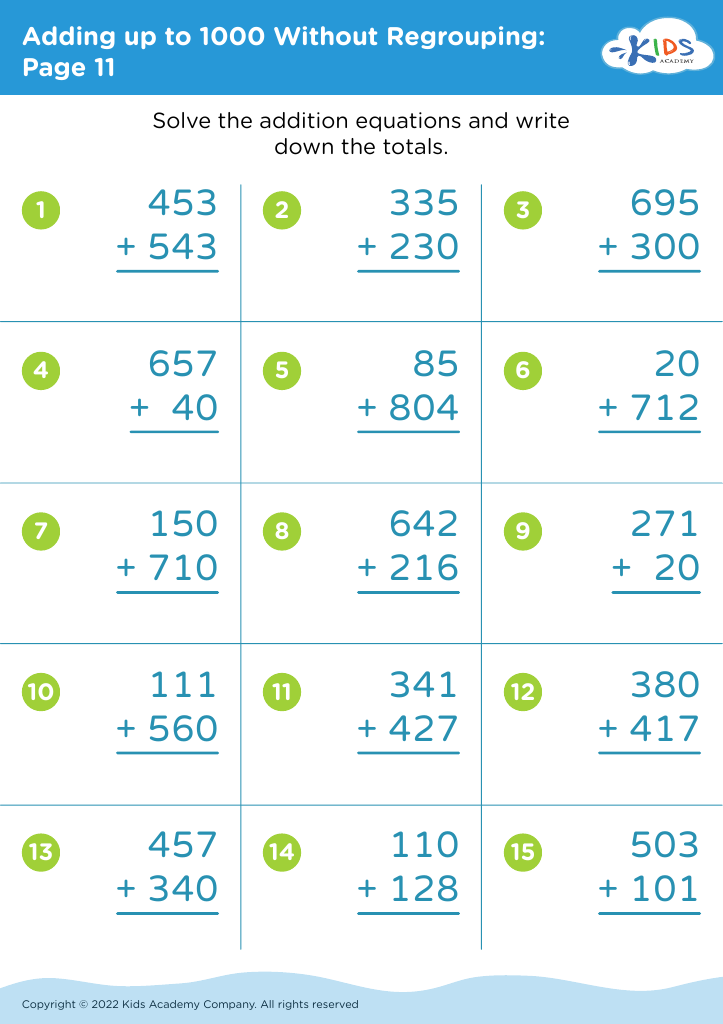
Welcome to our Number Sequencing Addition Worksheets for Ages 6-8! These engaging and interactive worksheets are designed to help young learners develop their addition skills while mastering number sequencing. Our resource features a variety of fun exercises that encourage critical thinking and enhance mathematical understanding. Children will enjoy practicing addition through number patterns, improving their problem-solving abilities. Ideal for both classroom use and at-home learning, these worksheets make math fun and approachable. Perfect for kindergarten and early grade students, our materials nurture a love for math while building confidence in their abilities. Start your child’s math journey today!
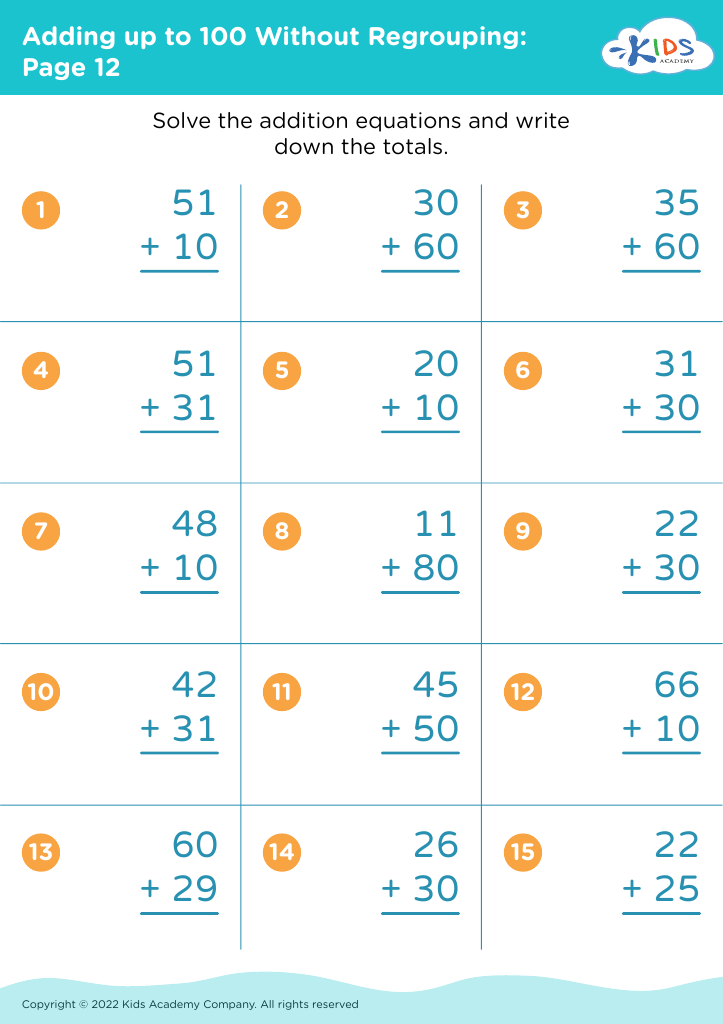
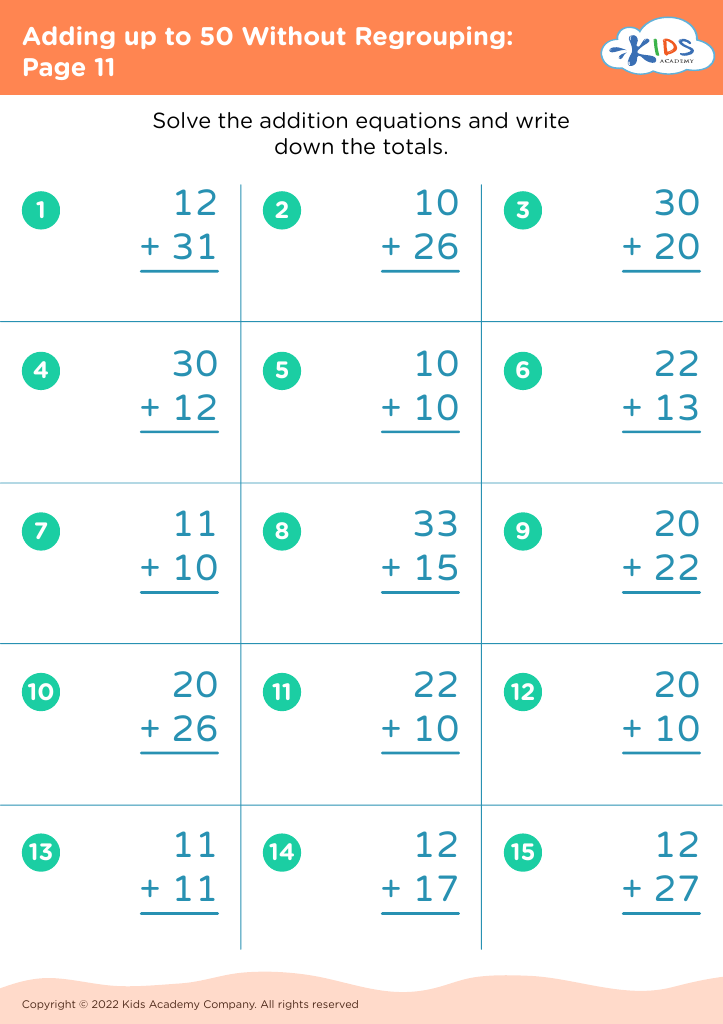
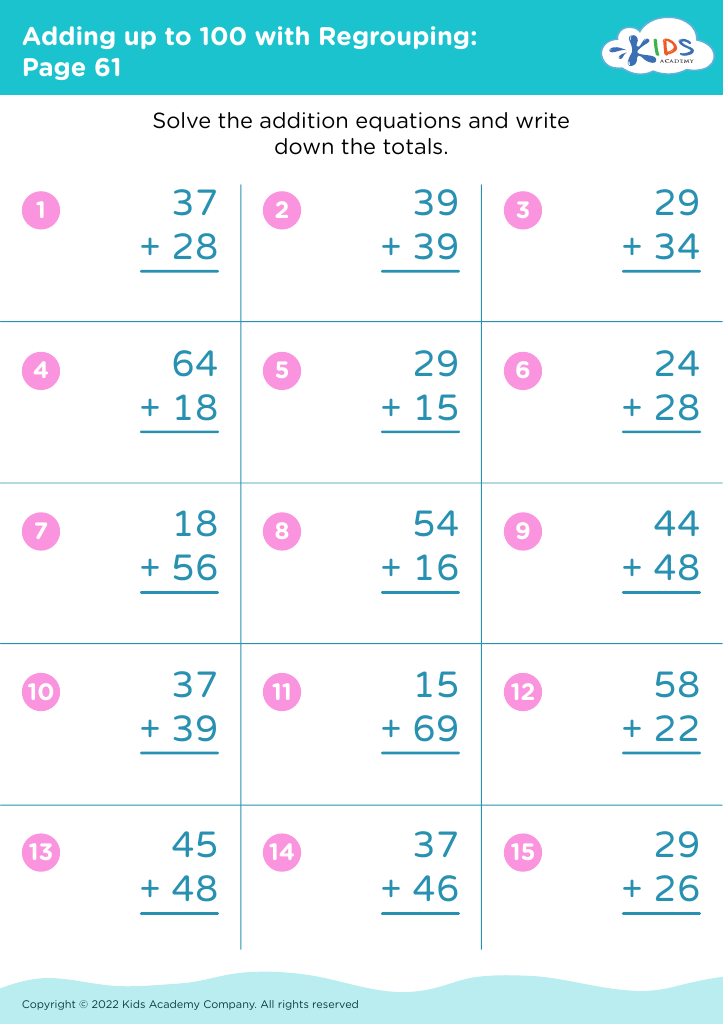
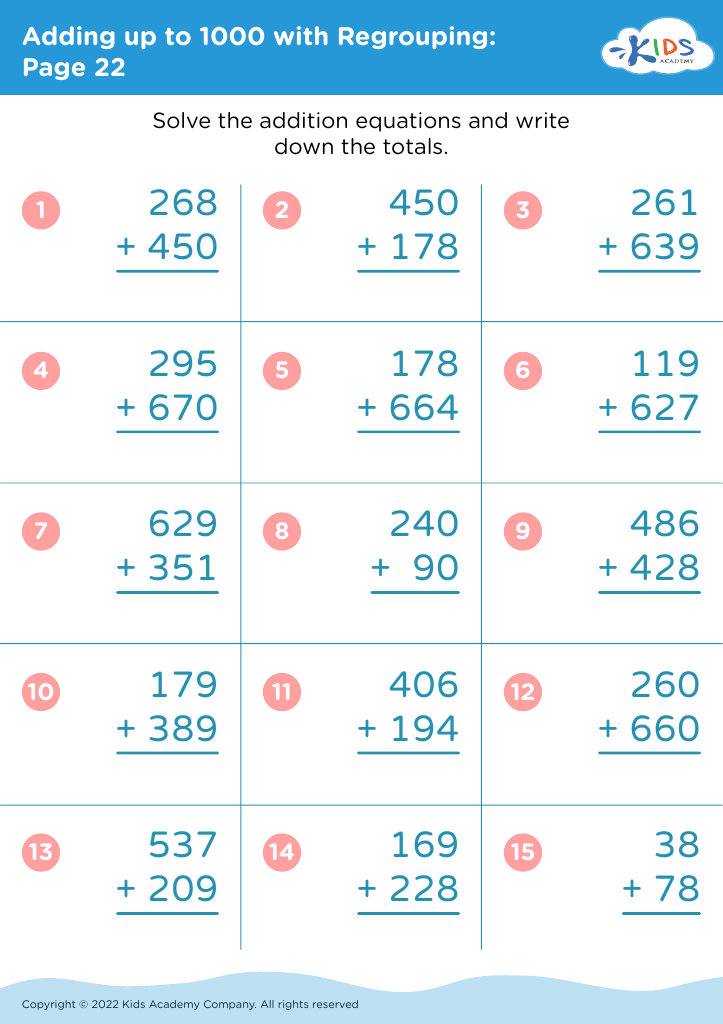
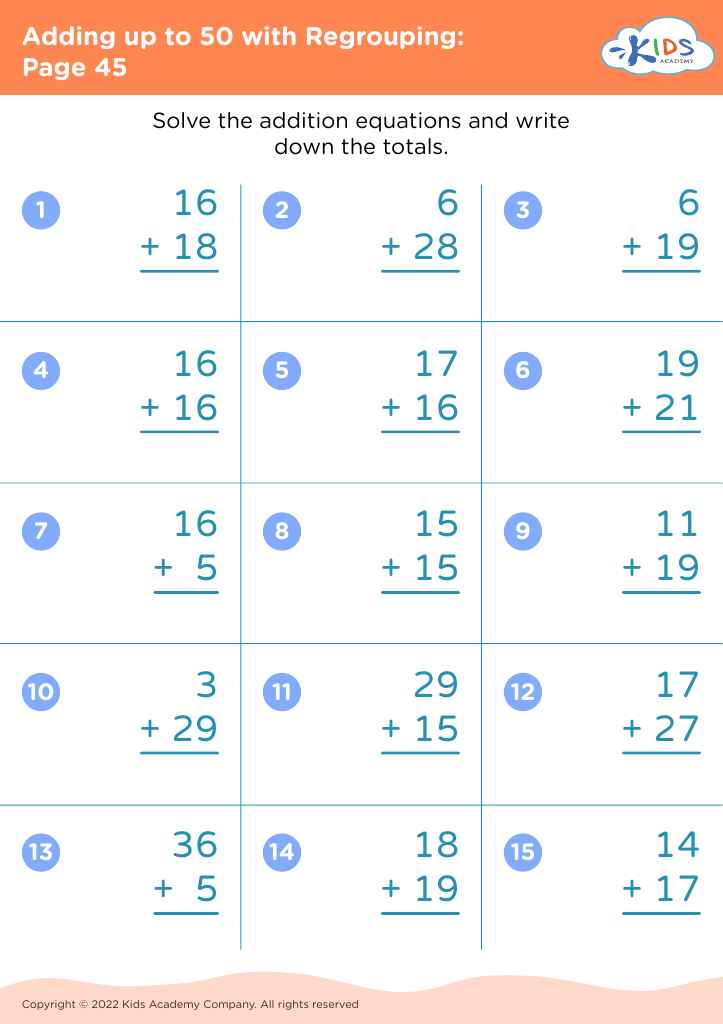
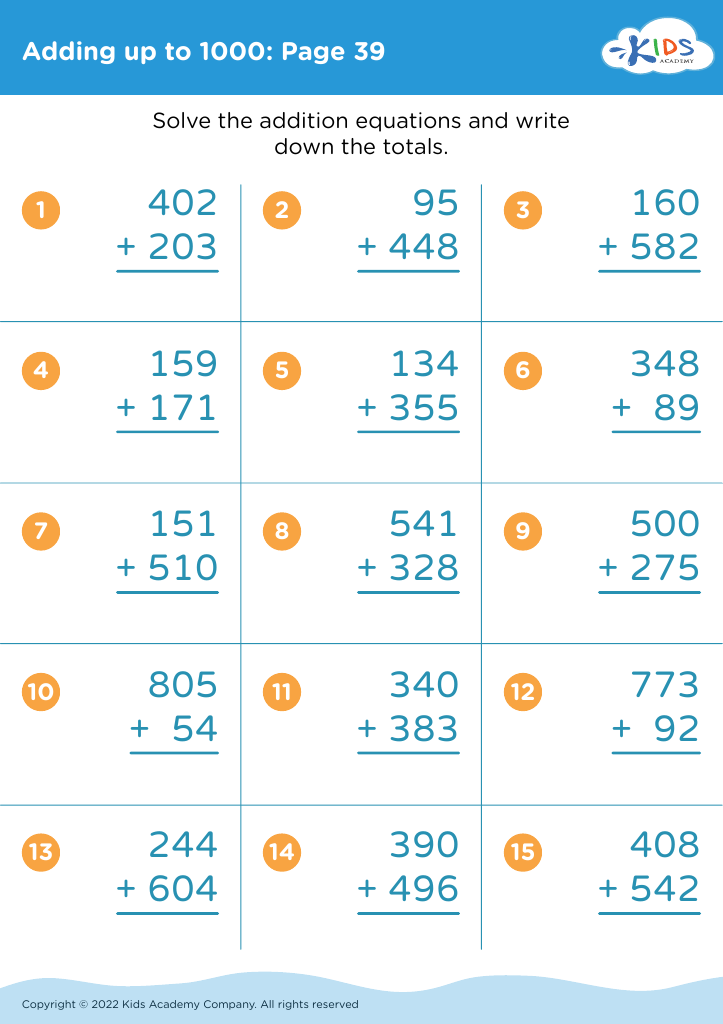
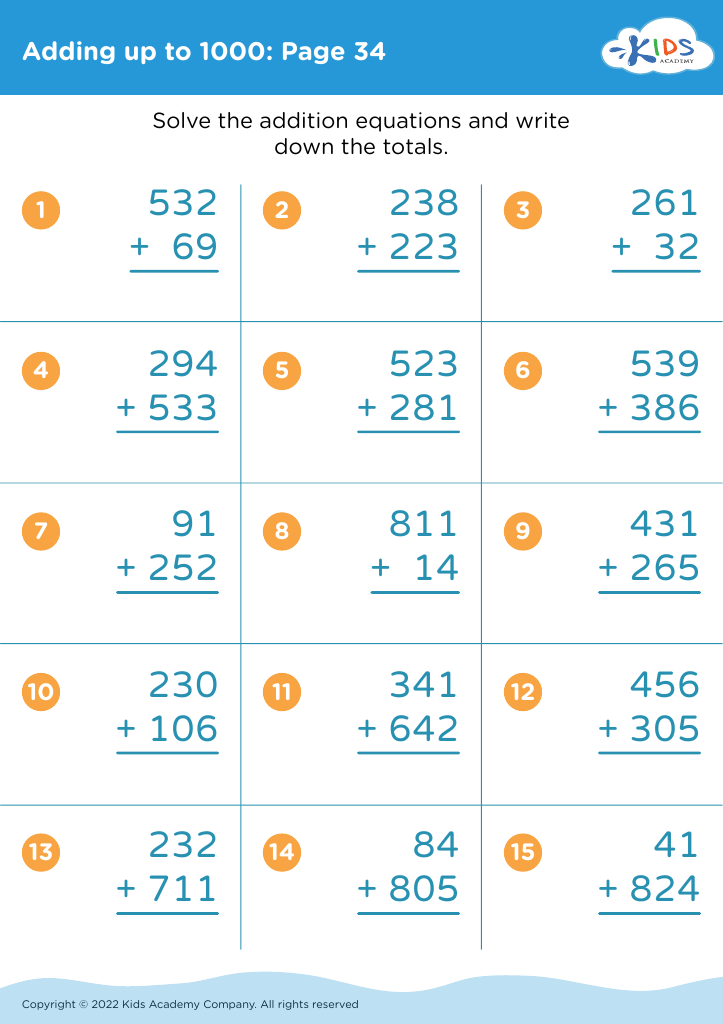
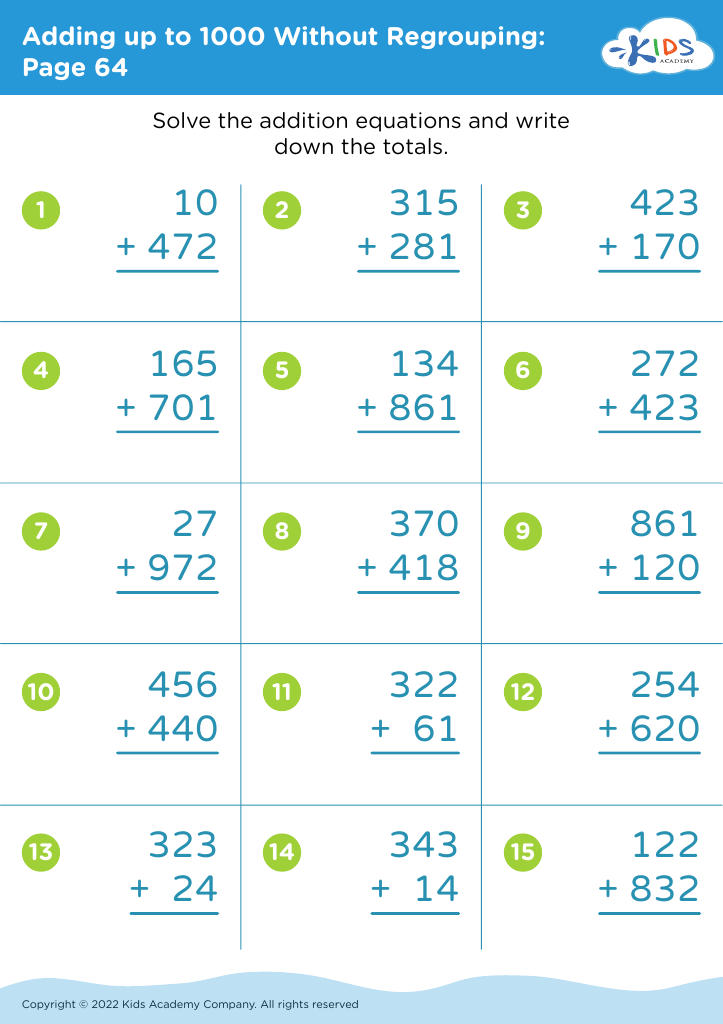
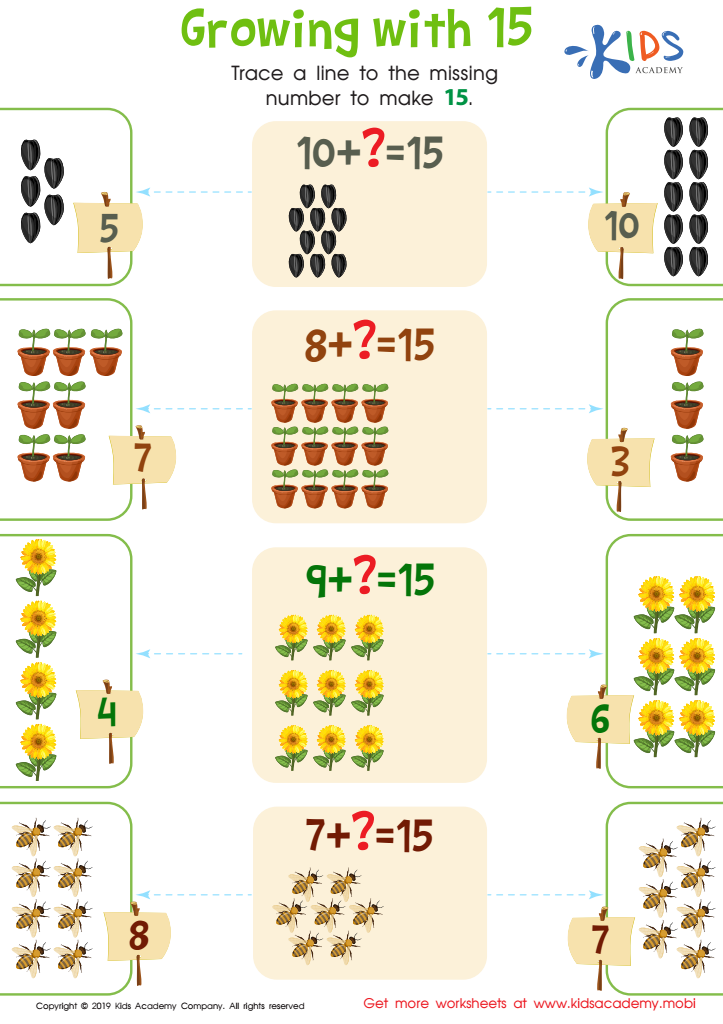
Growing with 15 Worksheet
 Assign to My Students








Number sequencing addition is a foundational skill for children aged 6-8 and holds significant importance in their overall mathematical development. During these formative years, kids transition from simple arithmetic to more complex problem-solving, forming the building blocks for future math concepts. Understanding number sequences helps children recognize patterns and relationships between numbers, which fosters logical thinking.
Parents and teachers should care about this aspect of learning because it not only enhances computational fluency but also boosts a child's confidence in their mathematical abilities. Proficiency in number sequencing aids in quick mental calculations, essential for everyday life tasks such as budgeting, measuring, and time management. Moreover, early mastery of these skills can lead to better performance in standardized tests and future educational opportunities.
Additionally, number sequencing activities can be engaging and fun, capturing children's interest through interactive games and challenges. This ultimately promotes a positive attitude toward math, making it less intimidating. By nurturing number sequencing addition skills, parents and teachers are equipping children with critical thinking abilities that will benefit them across multiple domains, including logical reasoning, spatial awareness, and collaborative problem-solving. Ultimately, ensuring proficiency in these early skills sets the stage for lifelong learning in mathematics and related fields.








