Recognizing numbers Addition Worksheets for Ages 6-8
4 filtered results
-
From - To
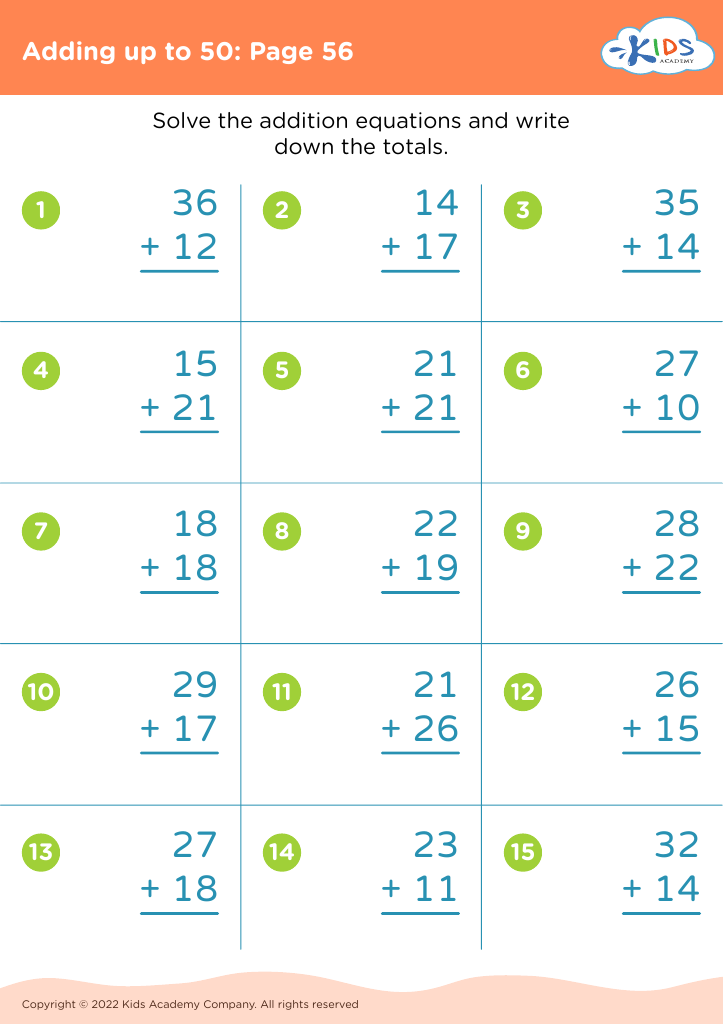
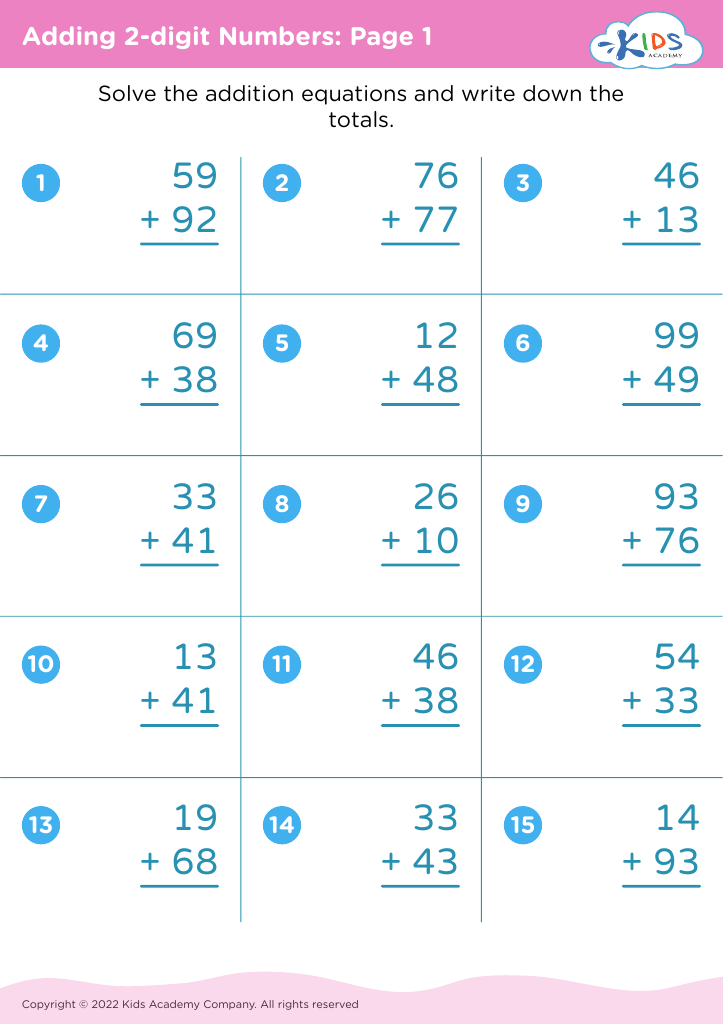
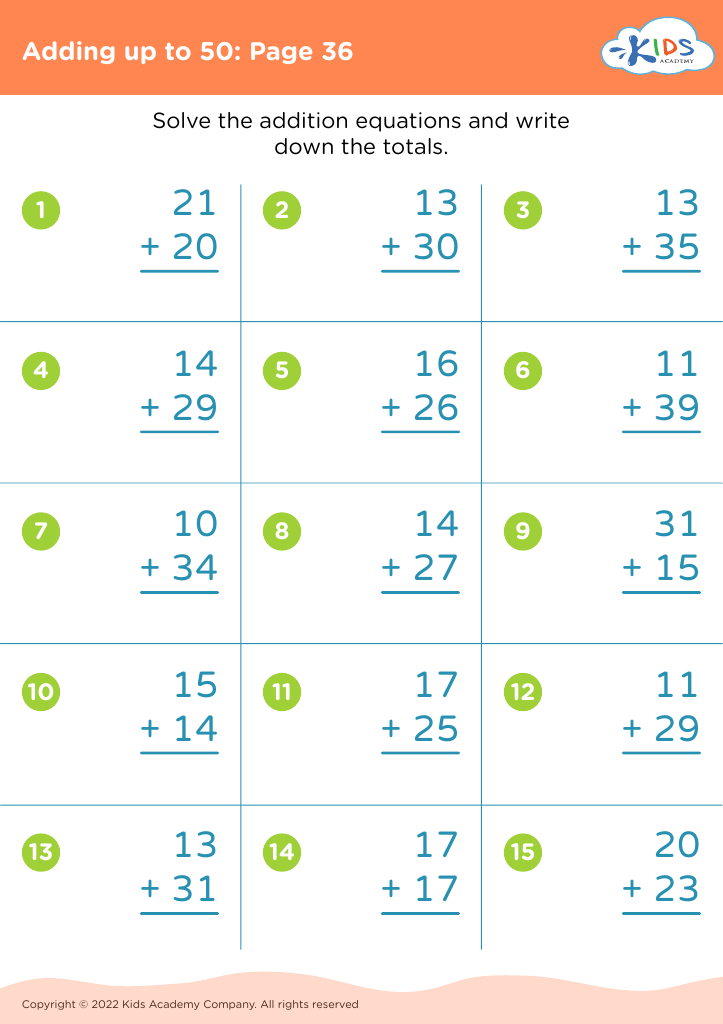
Welcome to our "Recognizing Numbers Addition Worksheets" designed specifically for children aged 6-8! Our engaging worksheets help young learners master number recognition and basic addition skills through fun activities and colorful illustrations. Designed to boost your child's confidence in mathematics, these exercises reinforce number identification while introducing fundamental addition concepts. Each worksheet is tailored to accommodate various learning styles, ensuring that every child can progress at their own pace. Perfect for use at home or in the classroom, these worksheets will make learning enjoyable and interactive. Start your child's journey to math success by exploring our comprehensive collection today!
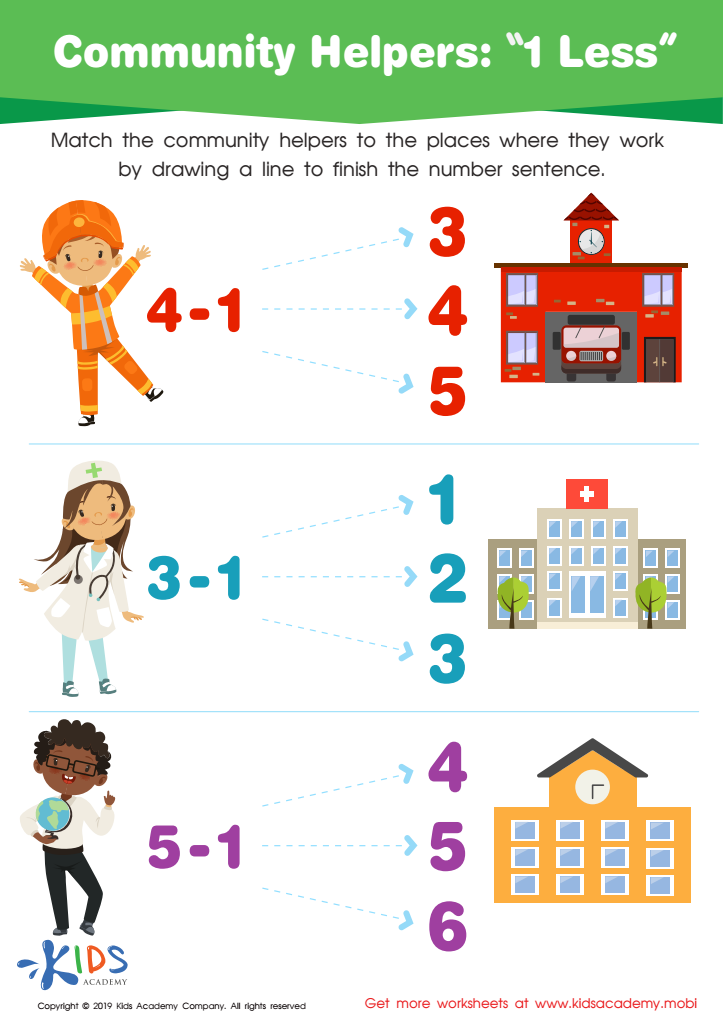
Community Helpers: 1 less Worksheet
 Assign to My Students








Recognizing numbers and understanding addition are foundational skills for children ages 6-8, and both parents and teachers play crucial roles in nurturing these competencies. This stage of development is critical, as children begin to form their understanding of mathematics—a subject that builds on itself. Mastery of number recognition enhances a child’s ability to engage with math problems, contribute to their classroom activities, and develop confidence in their abilities.
When parents and teachers prioritize these skills, they are essentially setting children up for academic success. Recognizing numbers helps children with tasks ranging from telling time to managing money, understanding quantities, and solving basic equations. Addition, as one of the primary operations in math, is used in daily life—be it counting objects, spending money, or understanding time.
Furthermore, early math skills correlate with long-term educational outcomes. Children who are proficient in math early on are more likely to excel in advanced subjects later, fostering critical thinking and problem-solving abilities. Parents and teachers can enhance children's experiences by integrating fun learning activities and real-life applications of these skills, ensuring a strong mathematical foundation that will support their ongoing education and personal development.








