Filters

21 filtered results

Clear all filters
Favorites
With answer key
Interactive

21 filtered results

Difficulty Level

Grade


Discover our engaging "Recognizing Patterns Addition Worksheets" designed specifically for children ages 6 to 8. These worksheets aim to enhance young learners' math skills by helping them identify patterns in addition. Featuring a variety of fun exercises, kids will learn to recognize numerical sequences and develop their problem-solving abilities while practicing addition. Our user-friendly format ensures an enjoyable learning experience, making math both accessible and exciting. Perfect for classroom activities or home learning, these worksheets provide an excellent foundation in mathematics that fosters confidence, critical thinking, and a love for learning. Start your child's math adventure today!
Check out this FREE Trial Lesson on Addition for age 6-8!

H

Favorites
With answer key
Interactive
  • 6-8
  • Recognizing Patterns
  • Addition
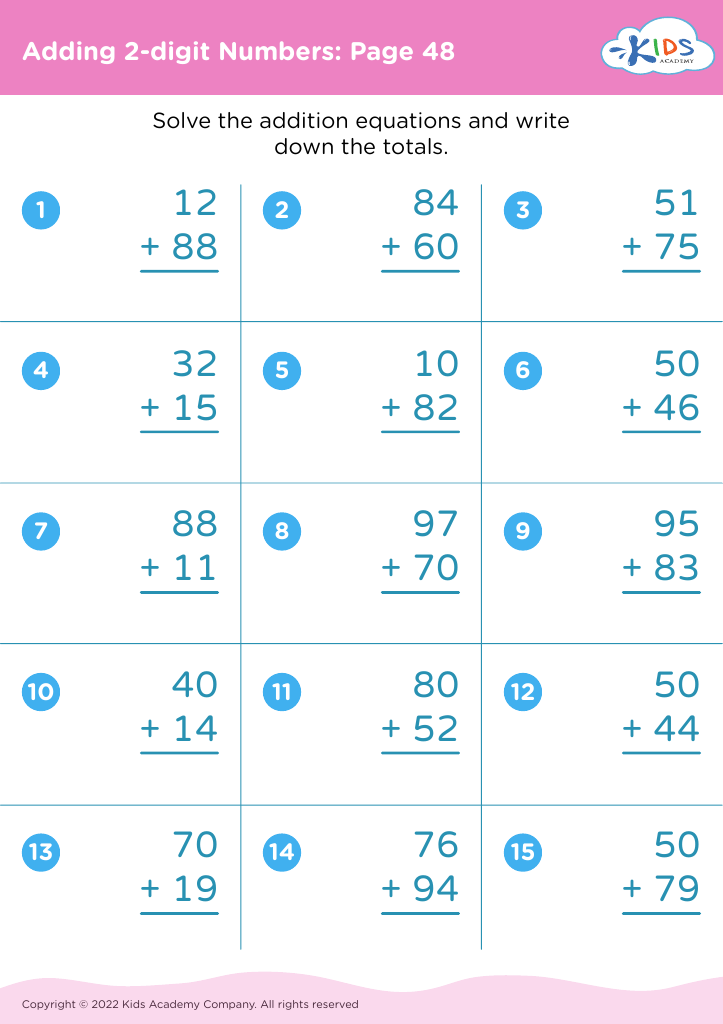
Adding 2-digit Numbers: Page 48

Adding 2-digit Numbers: Page 48

Adding 2-digit Numbers: Page 48
Worksheet
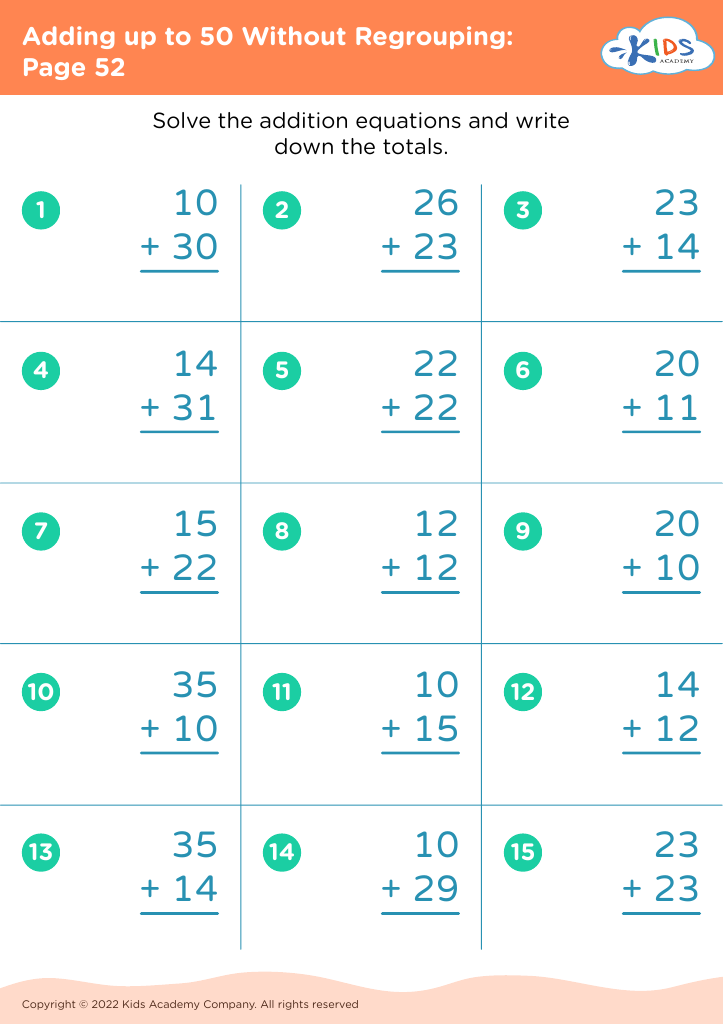
Adding up to 50 Without Regrouping: Page 52
Worksheet
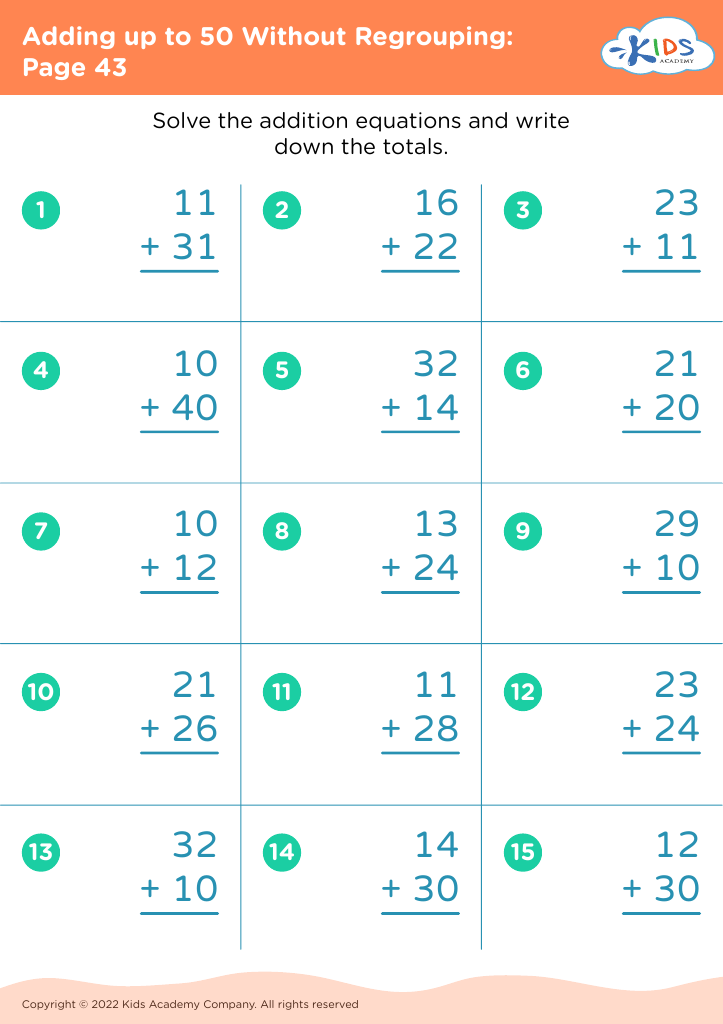
Adding up to 50 Without Regrouping: Page 43
Worksheet
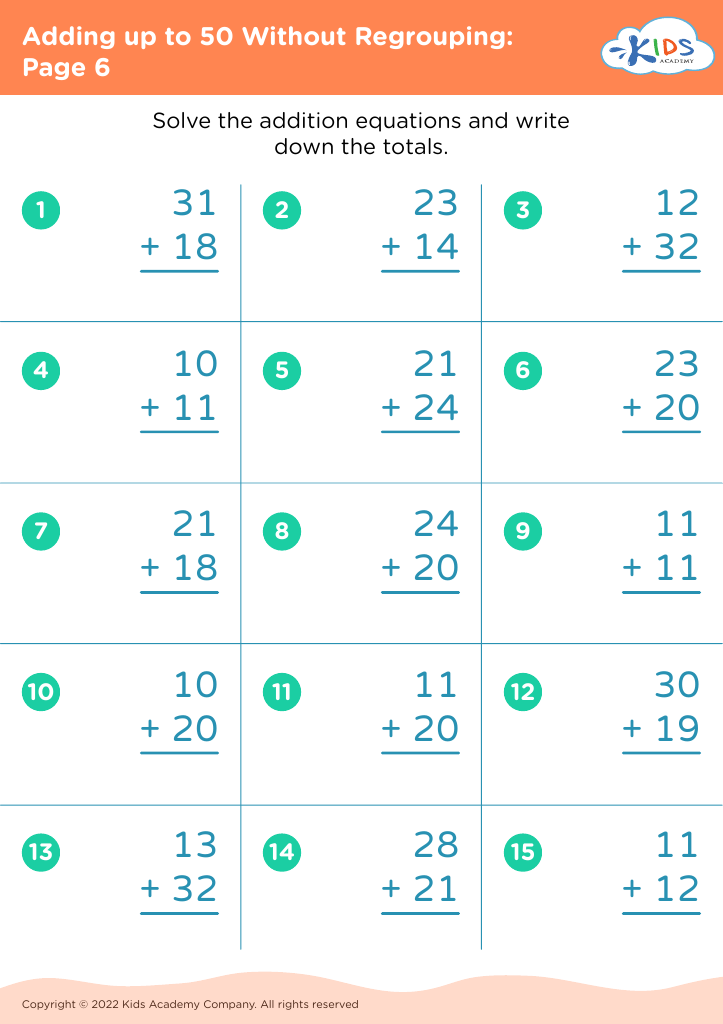
Adding up to 50 Without Regrouping: Page 6
Worksheet
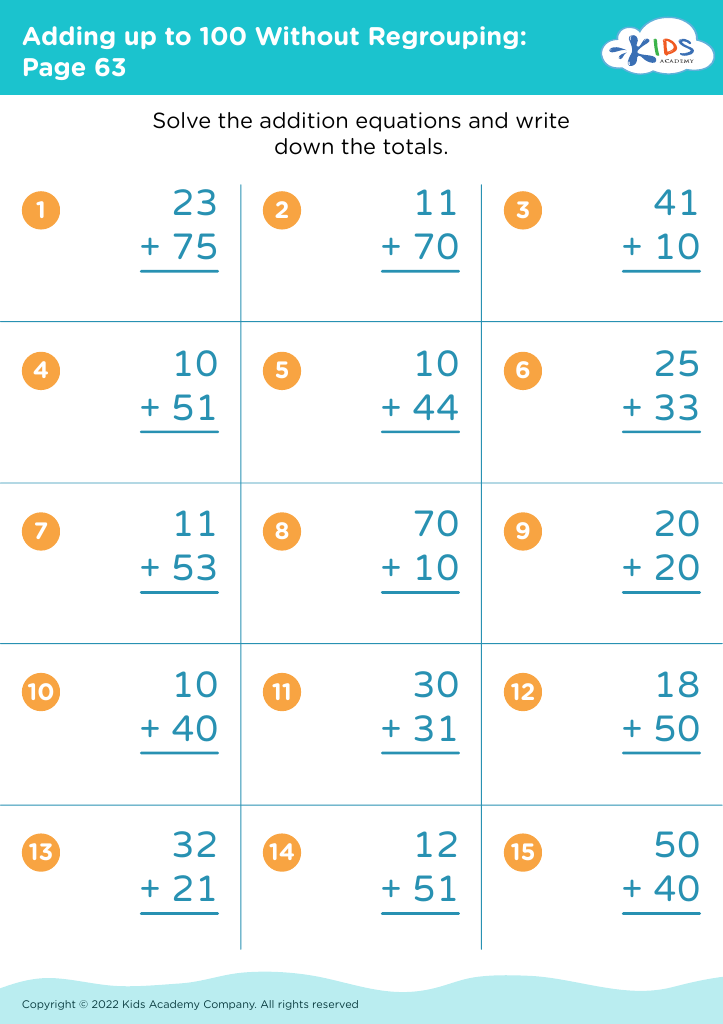
Adding up to 100 Without Regrouping: Page 63
Worksheet
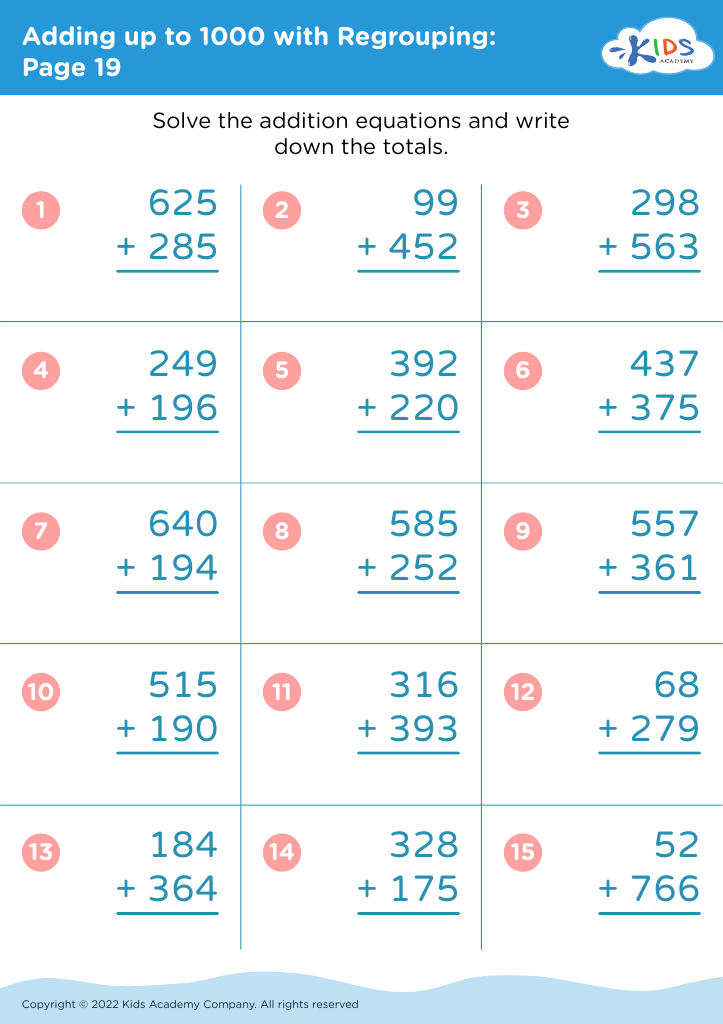
Adding up to 1000 with Regrouping: Page 19
Worksheet
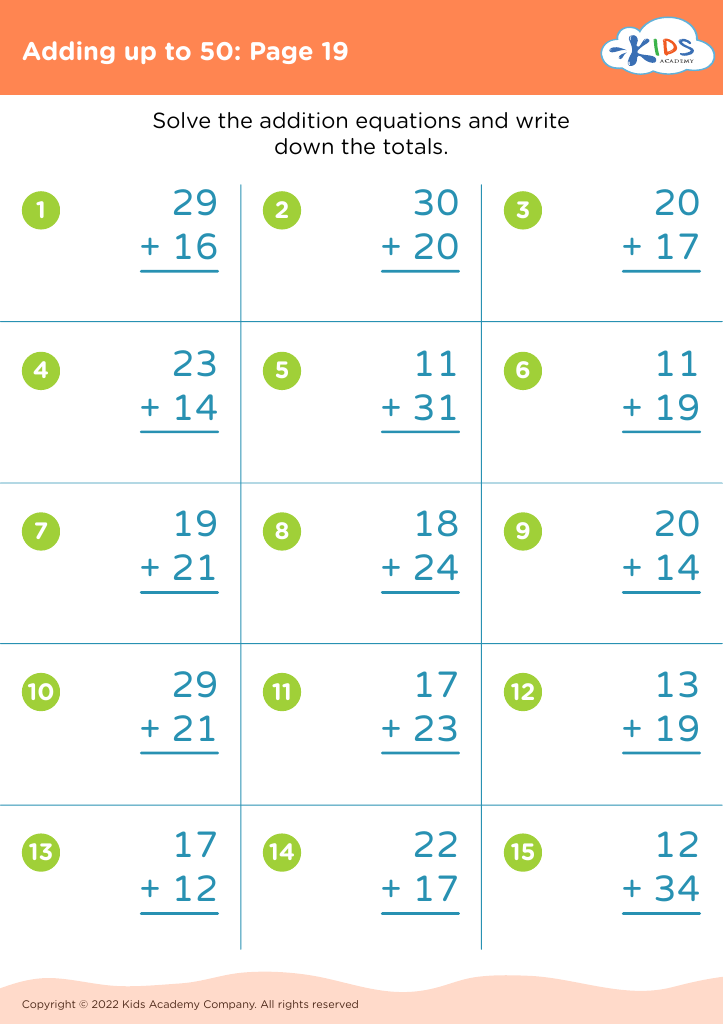
Adding up to 50: Page 19

Adding up to 50: Page 19

Adding up to 50: Page 19
Worksheet
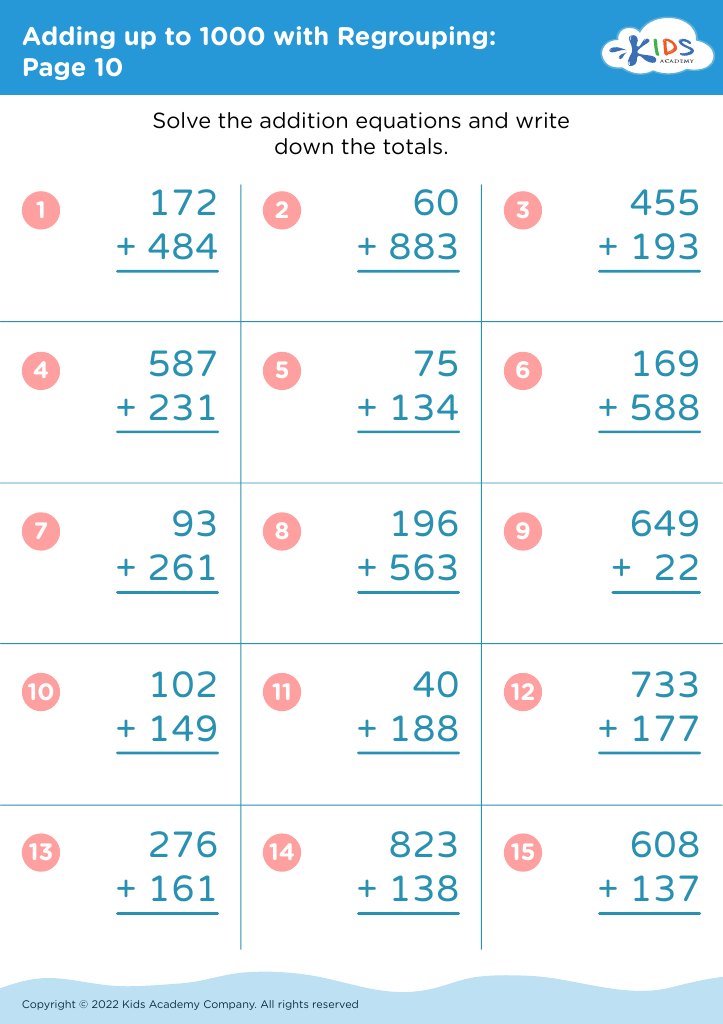
Adding up to 1000 with Regrouping: Page 10
Worksheet
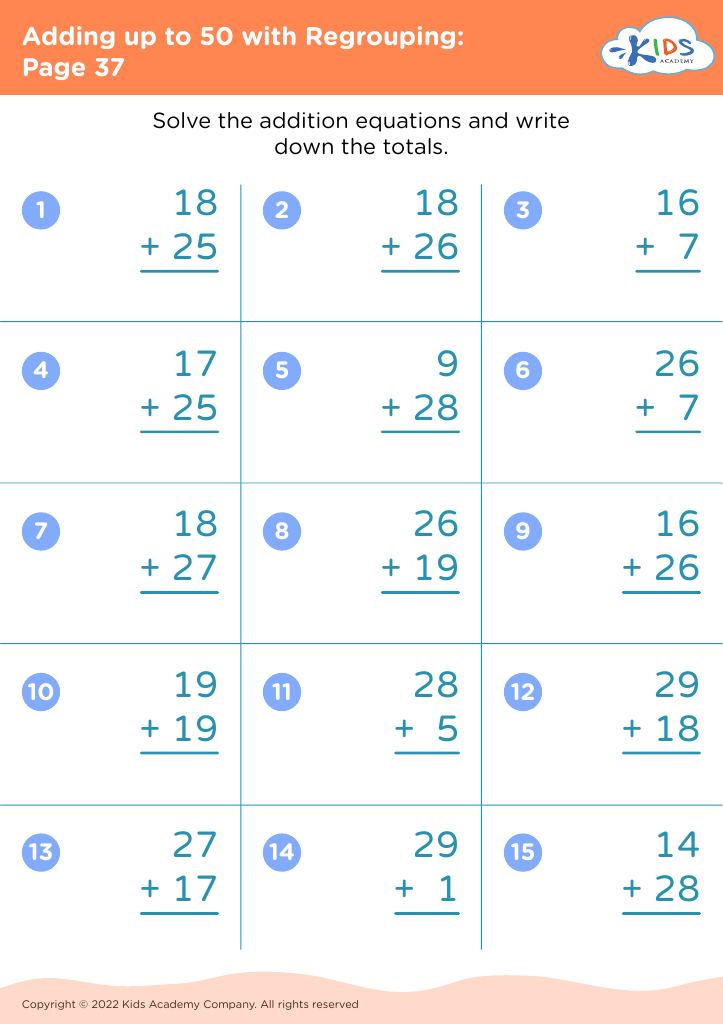
Adding up to 50 with Regrouping: Page 37
Worksheet
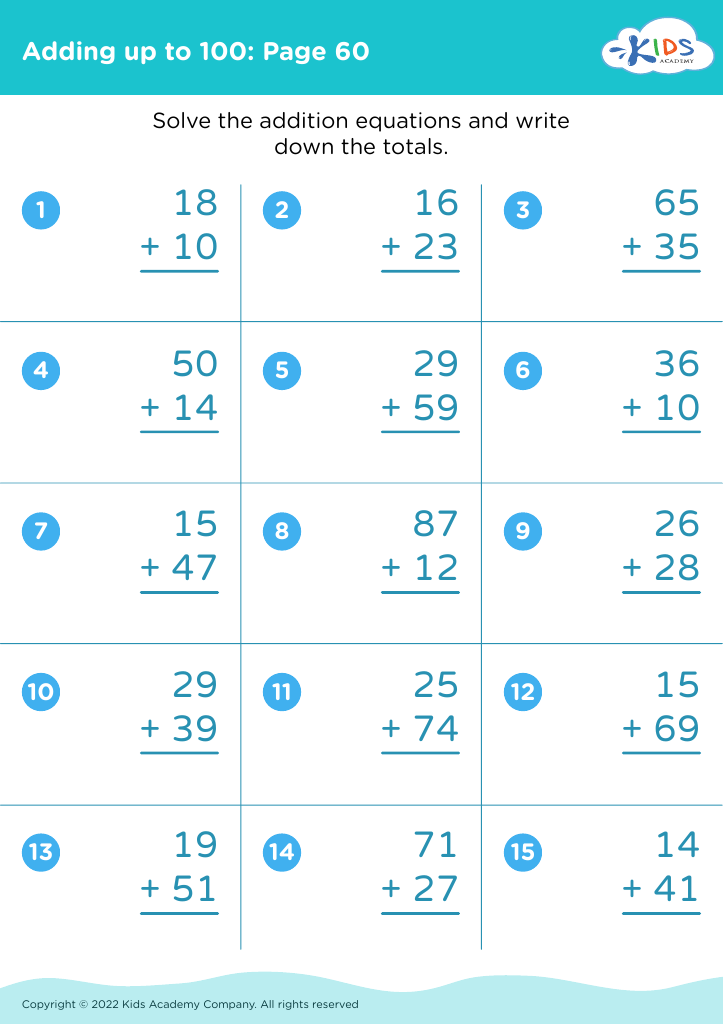
Adding up to 100: Page 60

Adding up to 100: Page 60

Adding up to 100: Page 60
Worksheet
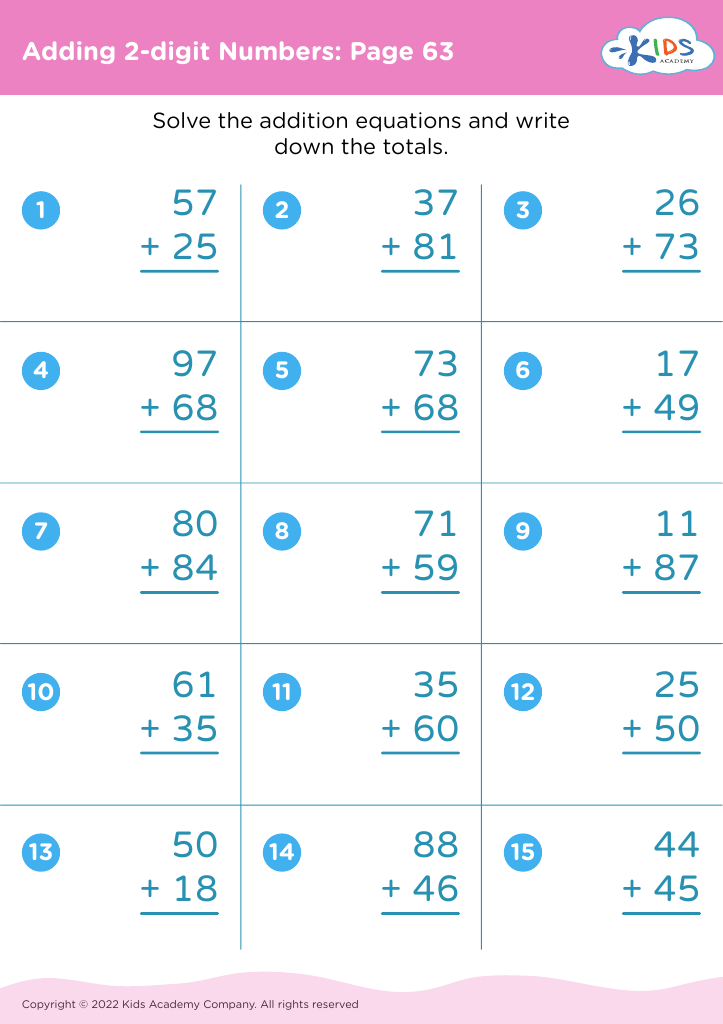
Adding 2-digit Numbers: Page 63

Adding 2-digit Numbers: Page 63

Adding 2-digit Numbers: Page 63
Worksheet
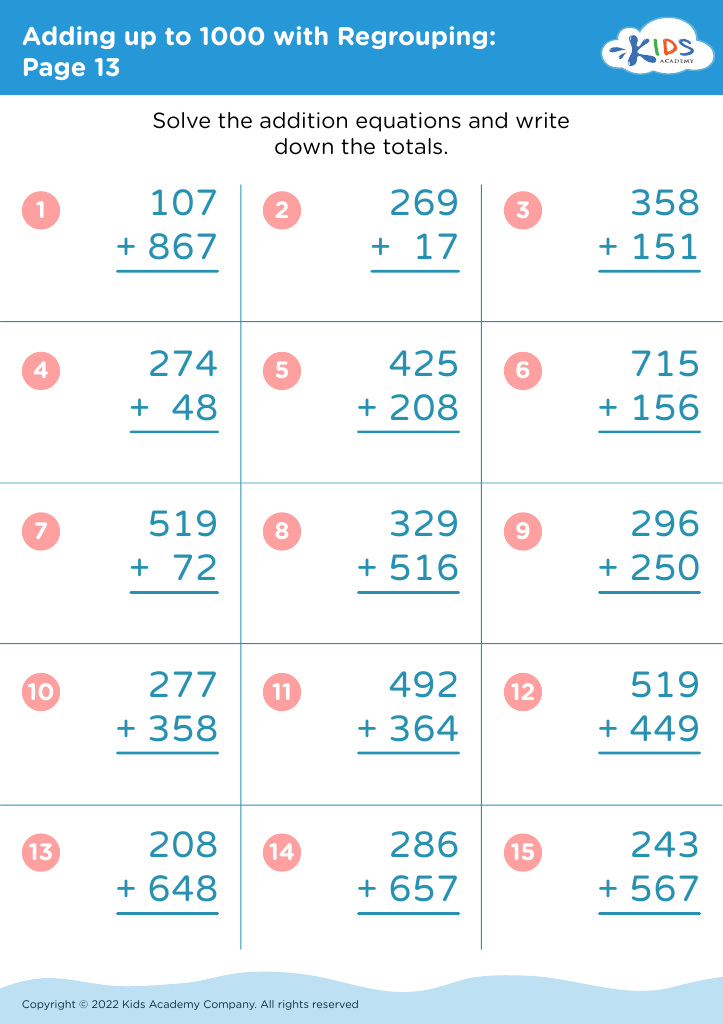
Adding up to 1000 with Regrouping: Page 13
Worksheet
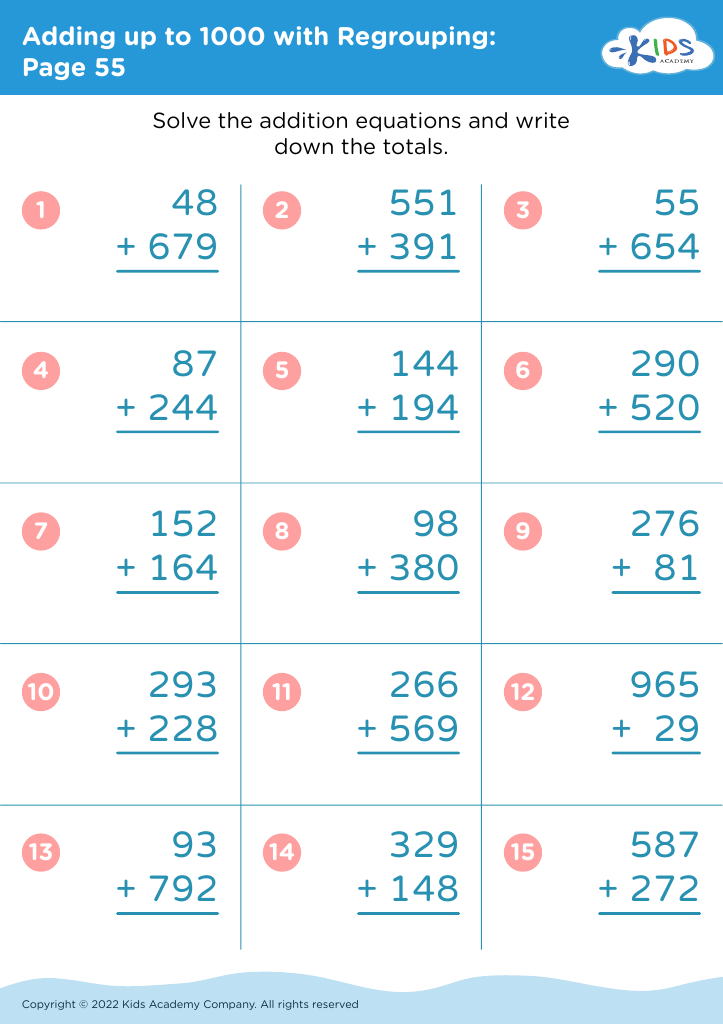
Adding up to 1000 with Regrouping: Page 55
Worksheet
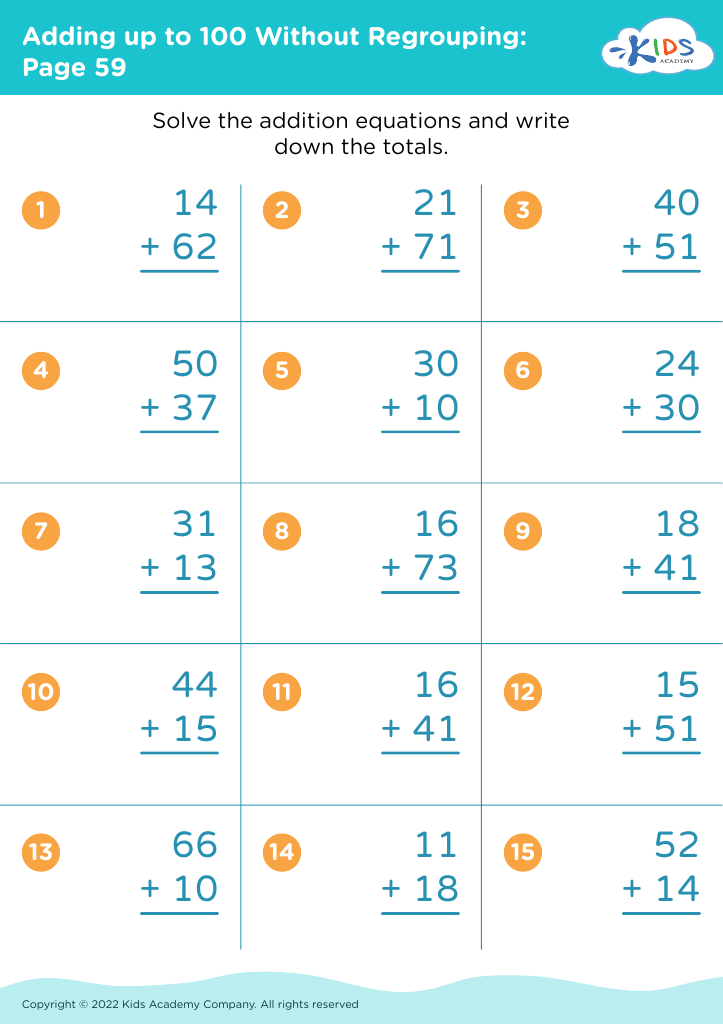
Adding up to 100 Without Regrouping: Page 59
Worksheet
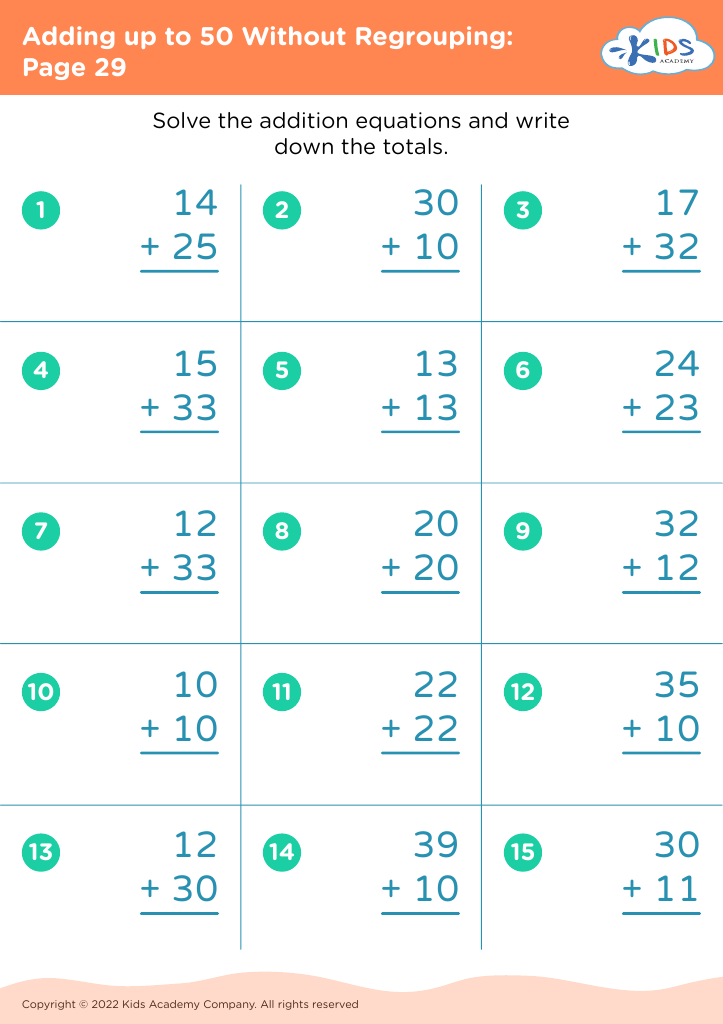
Adding up to 50 Without Regrouping: Page 29
Worksheet
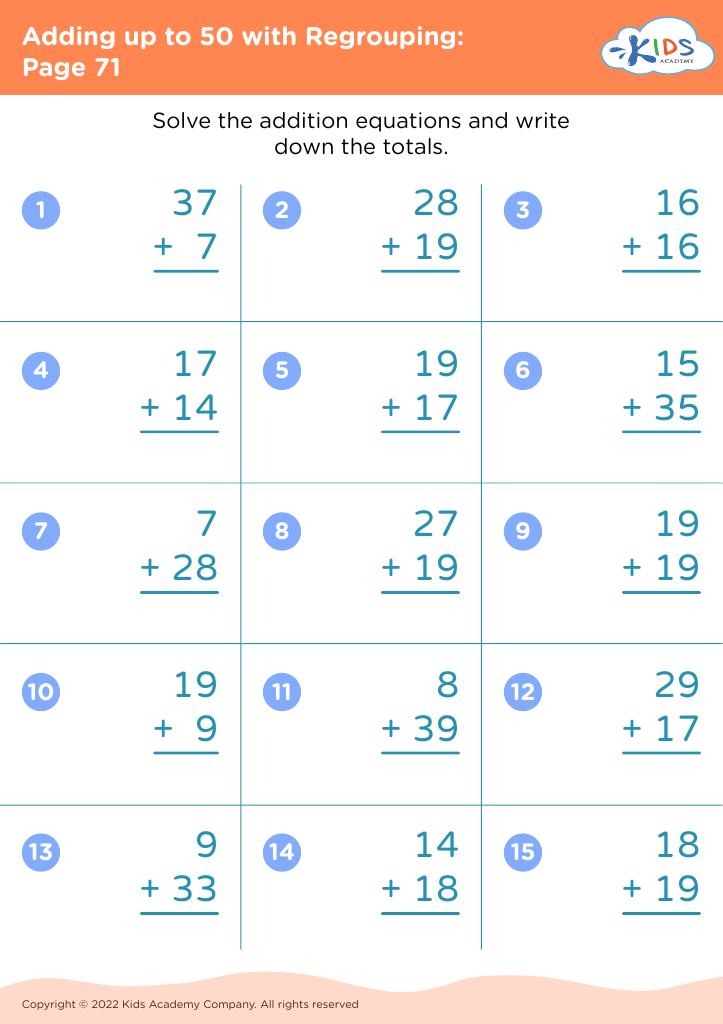
Adding up to 50 with Regrouping: Page 71
Worksheet
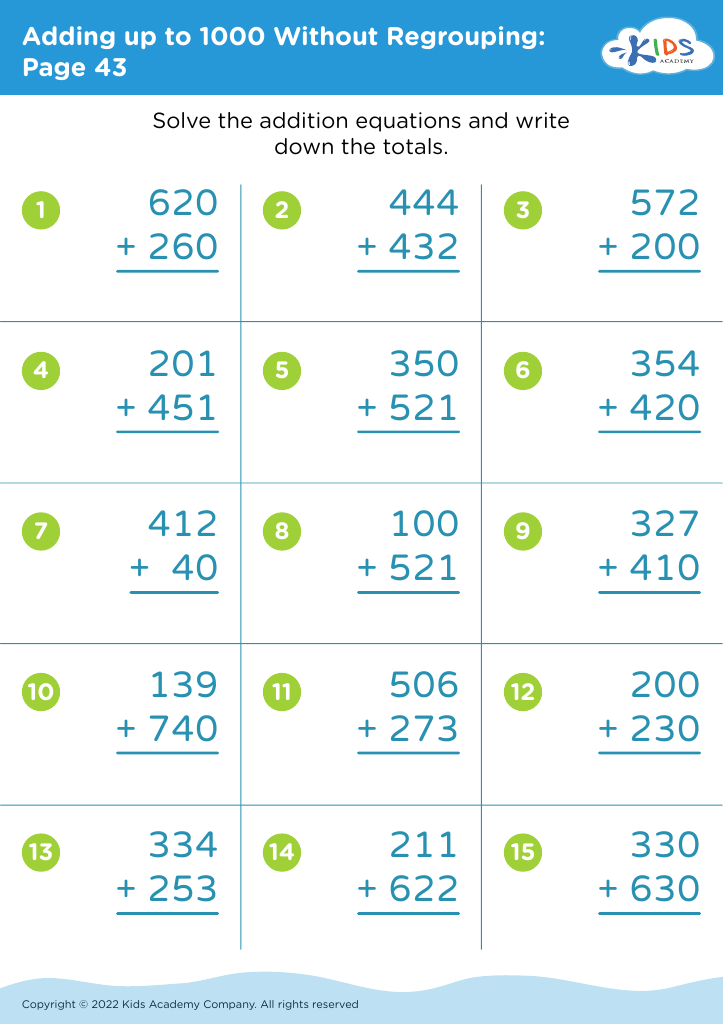
Adding up to 1000 Without Regrouping: Page 43
Worksheet
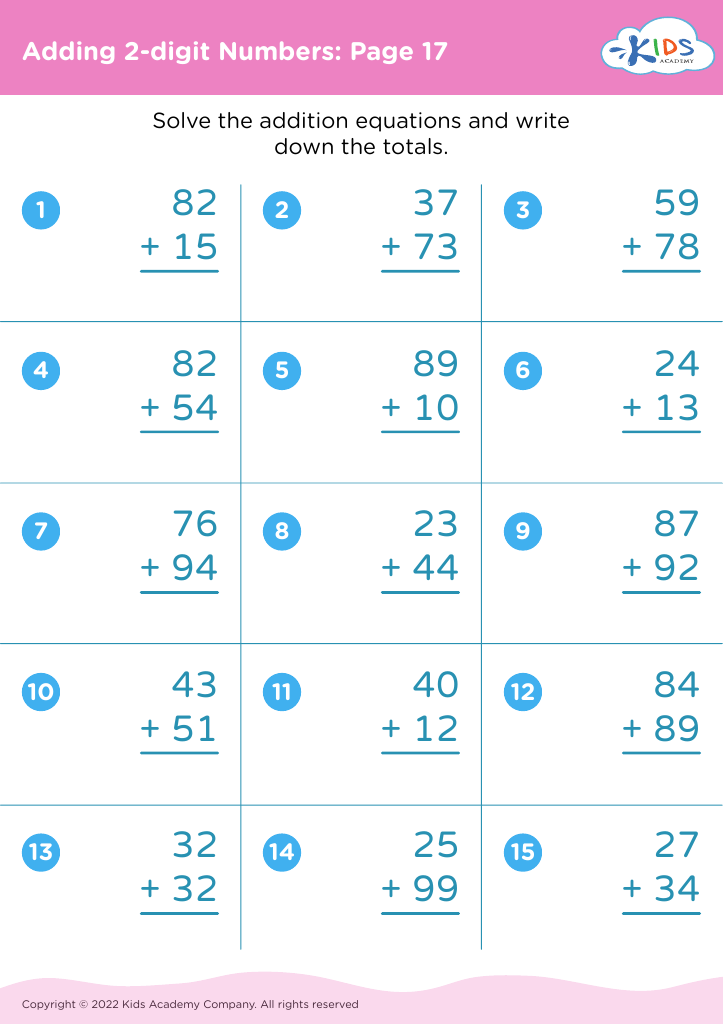
Adding 2-digit Numbers: Page 17

Adding 2-digit Numbers: Page 17

Adding 2-digit Numbers: Page 17
Worksheet
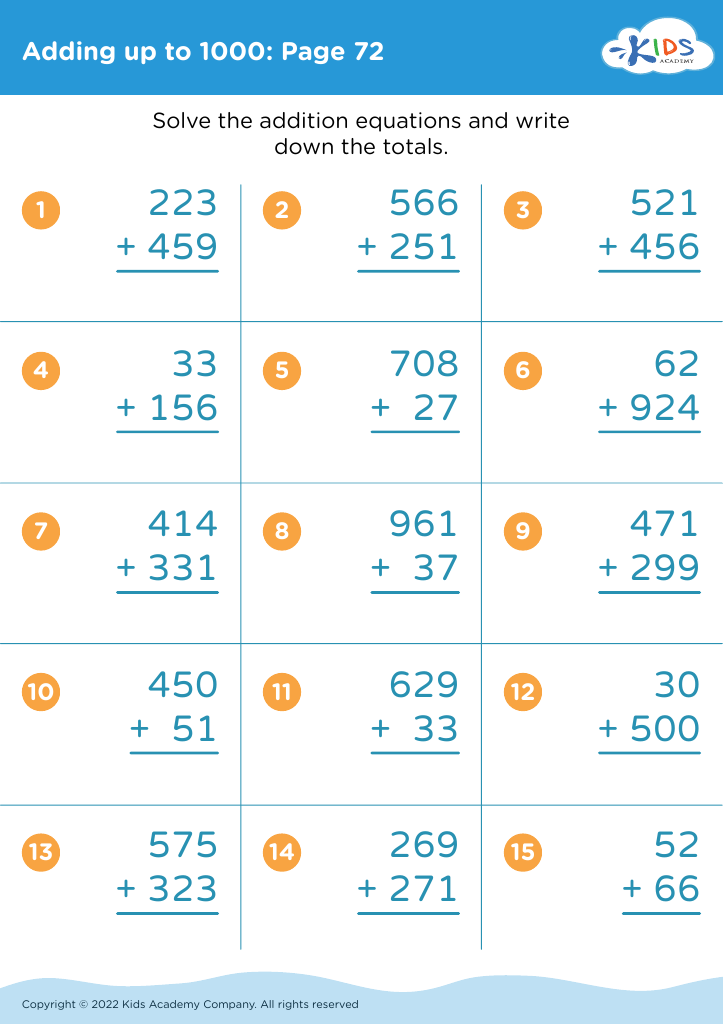
Adding up to 1000: Page 72

Adding up to 1000: Page 72

Adding up to 1000: Page 72
Worksheet
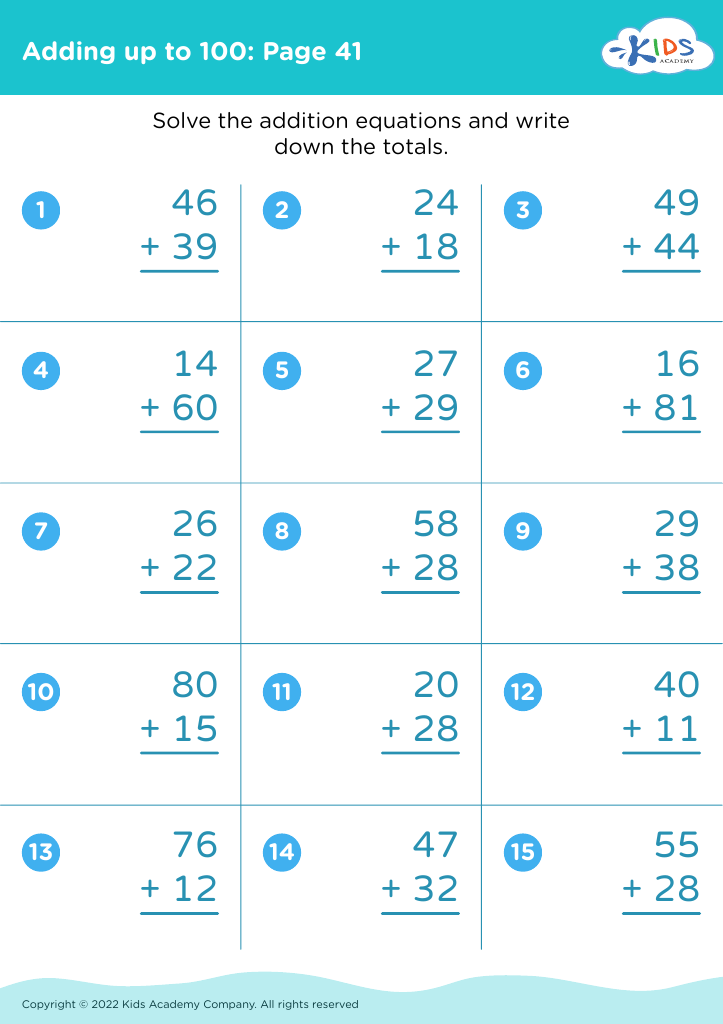
Adding up to 100: Page 41

Adding up to 100: Page 41

Adding up to 100: Page 41
Worksheet
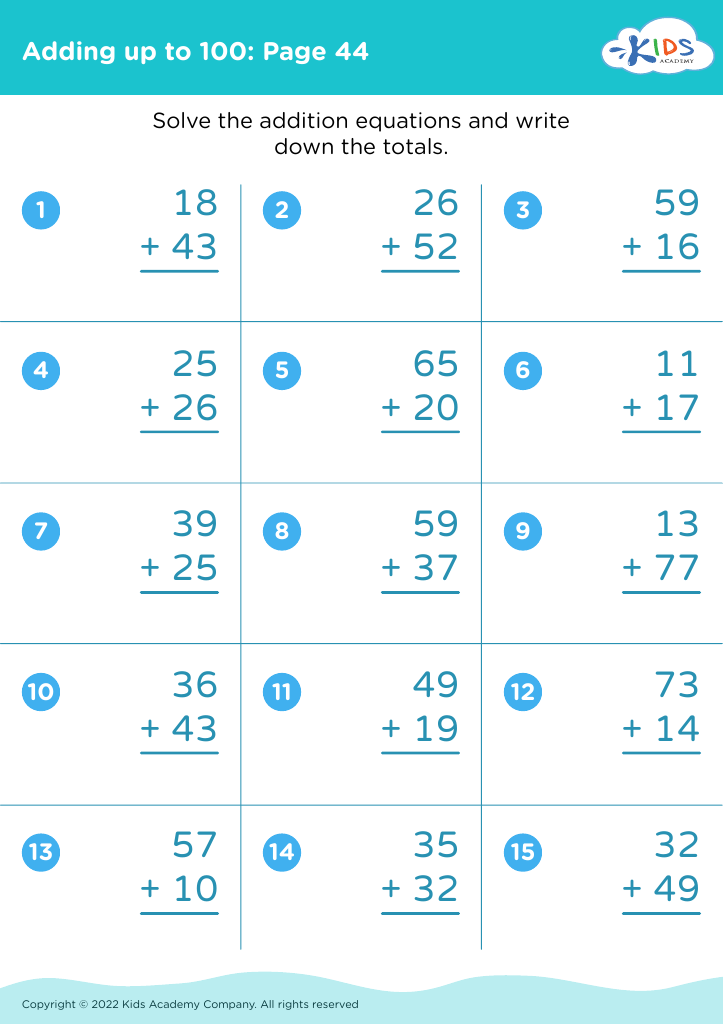
Adding up to 100: Page 44

Adding up to 100: Page 44

Adding up to 100: Page 44
Worksheet


Recognizing Patterns in addition is a crucial foundational skill for children aged 6-8, as it significantly enhances their mathematical abilities and overall cognitive development. Understanding patterns allows children to make connections between numbers and grasp the concept of addition more intuitively. When children identify and create patterns, they engage their critical thinking and problem-solving skills, helping them to understand the world around them.

Additionally, pattern recognition fosters a sense of predictability and order, making learning math more enjoyable and less intimidating. Children can apply these skills in various contexts, from simple everyday calculations to more complex problems in the future. Teaching children to recognize patterns in addition not only builds their confidence in math but also encourages them to look for relationships and structures in all areas of learning.

For parents and teachers, promoting pattern recognition in addition is essential because it lays the groundwork for more advanced topics such as multiplication, algebra, and even geometry later on. Investing time and resources into this skill now can lead to improved academic performance and a more positive attitude toward mathematics as children progress in their education.