Understanding Quantities Addition Worksheets for Ages 6-8
4 filtered results
-
From - To
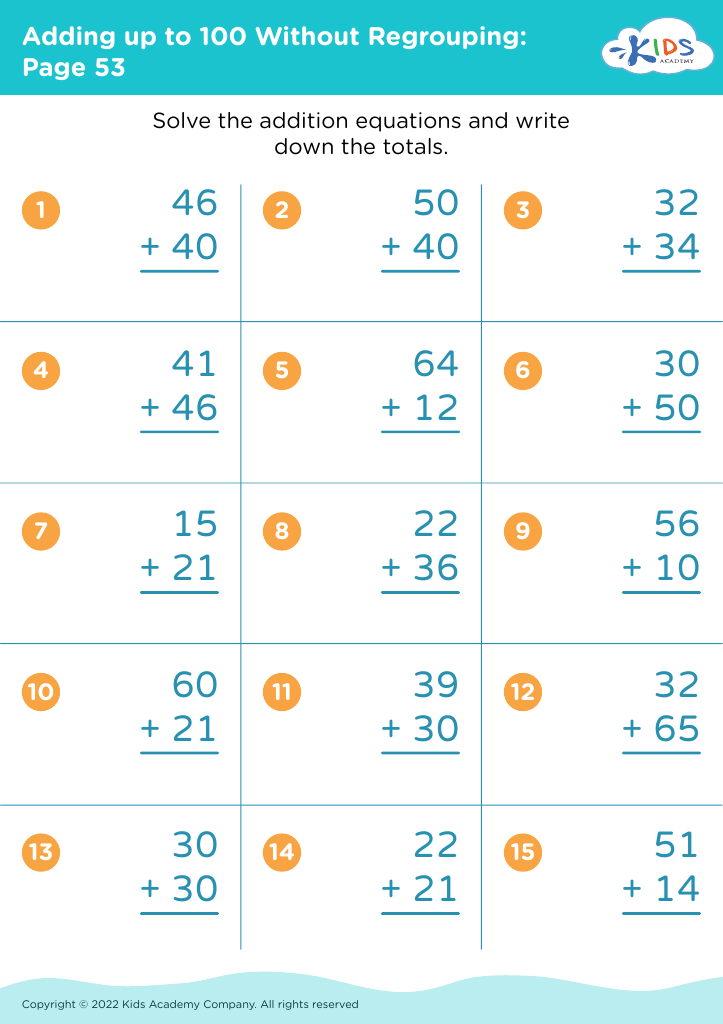
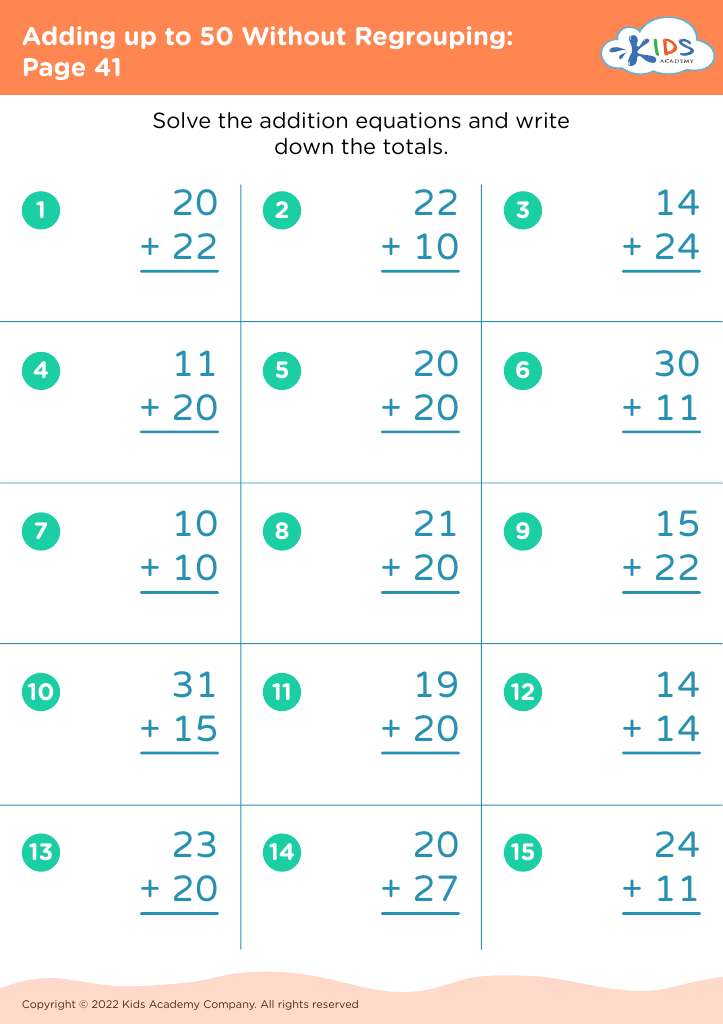
Explore our “Understanding Quantities Addition Worksheets” designed specifically for children ages 6-8. These engaging and interactive worksheets focus on helping young learners grasp the concept of addition through relatable visual aids and real-life scenarios. By illustrating quantities in various contexts, children develop a solid foundational understanding of addition, honing their math skills in a fun and effective way. Our worksheets cater to various learning styles, ensuring every child can thrive while building confidence in mathematics. Perfect for home or classroom use, these resources provide a smooth transition from basic counting to more complex addition concepts. Start your child’s math journey today!
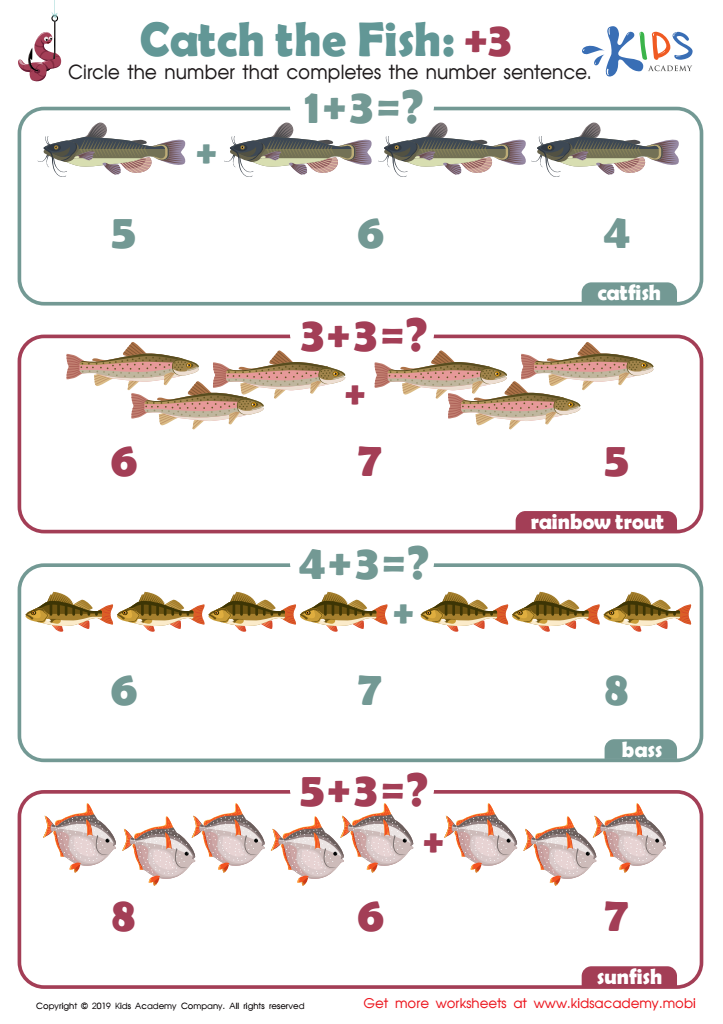
Catch the Fish: +3 Worksheet
 Assign to My Students
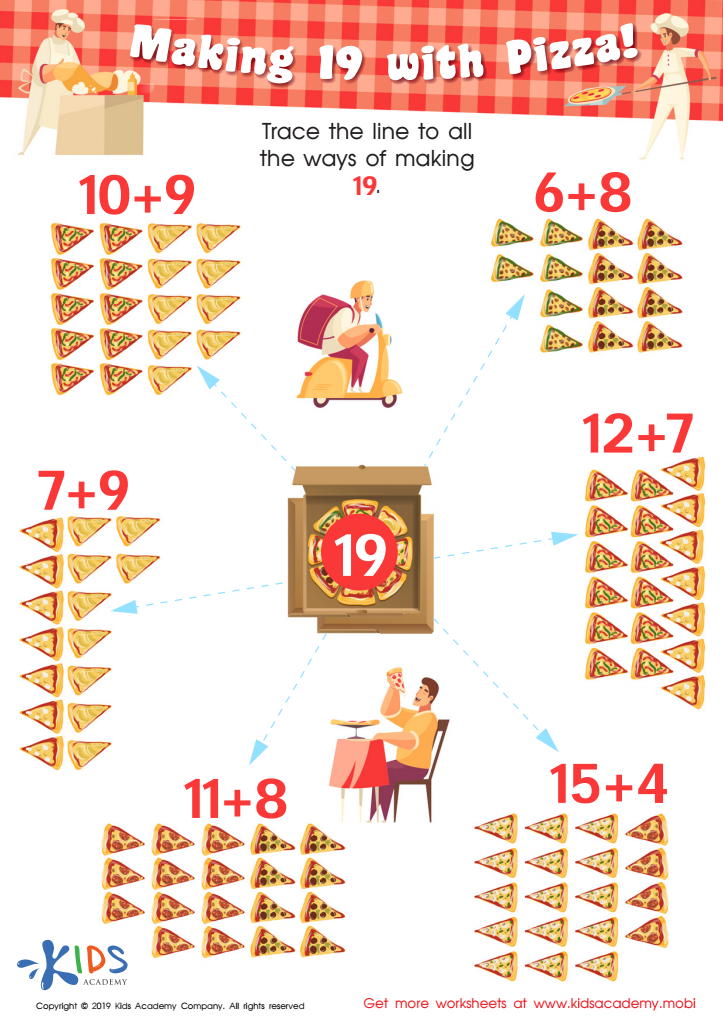
Making 19 with Pizza! Worksheet








Understanding Quantities Addition is a critical aspect of mathematical learning for children aged 6-8, as it serves as a foundation for all future arithmetic. At this developmental stage, children are transitioning from concrete to abstract thinking, making it crucial for parents and teachers to recognize the importance of this concept.
Firstly, mastering addition helps children develop strong numerical fluency, promoting confidence in handling numbers, which is essential for both academic success and everyday problem-solving. Familiarity with quantities enables children to visualize relationships between numbers, fostering a deeper understanding of mathematics.
Additionally, understanding quantities supports skills like estimation and allows children to grasp more complex ideas, such as grouping and equivalence, later in their education. As they engage in practical activities, children learn to relate numbers to real-world concepts, making math more relevant and interesting.
Moreover, nurturing a solid foundation in basic arithmetic during these formative years helps prevent difficulties in later grades, thereby reducing math anxiety. Ultimately, by supporting children's mastery of quantities addition, parents and teachers not only cultivate essential skills but also foster a positive attitude towards mathematics, setting the stage for lifelong learning and enjoyment of the subject.








