Understanding area Area and Perimeter Worksheets for Ages 6-8
3 filtered results
-
From - To
Discover our engaging "Understanding Area and Perimeter Worksheets" designed for children aged 6-8! These interactive worksheets help young learners grasp the concepts of area and perimeter through fun activities and colorful visuals. Kids will practice calculating the area of various shapes and learn how perimeter measures the distance around them. By utilizing these worksheets, students develop essential math skills while enjoying hands-on learning. Perfect for parents and teachers, these resources make complex ideas accessible and entertaining. Help your child build confidence in math with our carefully crafted worksheets that promote critical thinking and problem-solving in a playful manner!
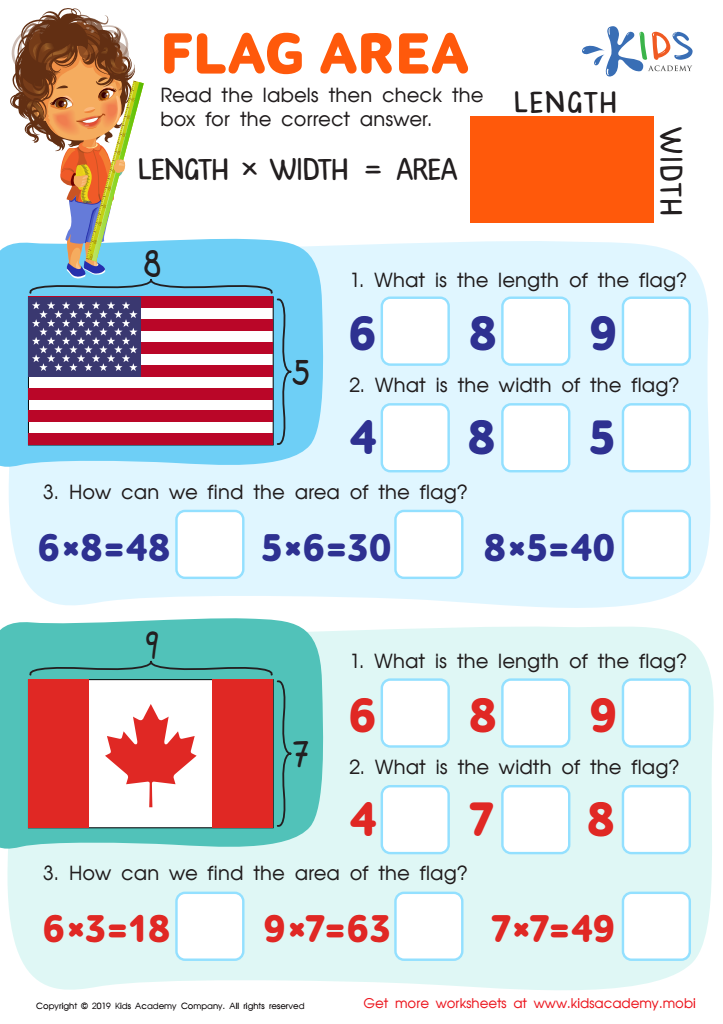
Flag Area Worksheet
 Assign to My Students
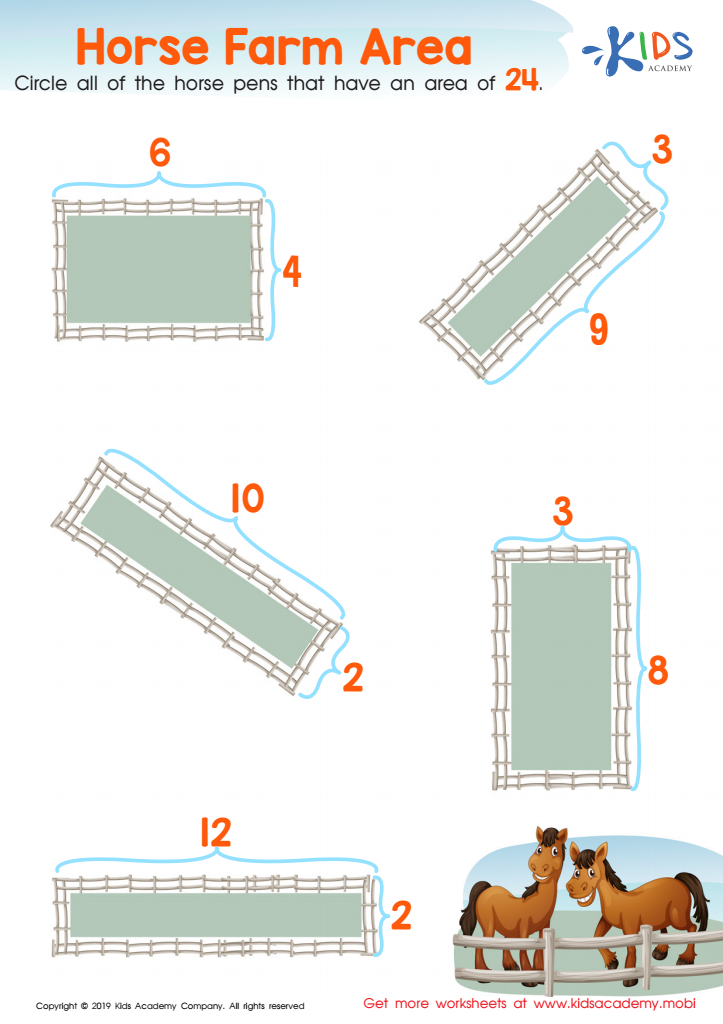
Horse Farm Area Worksheet
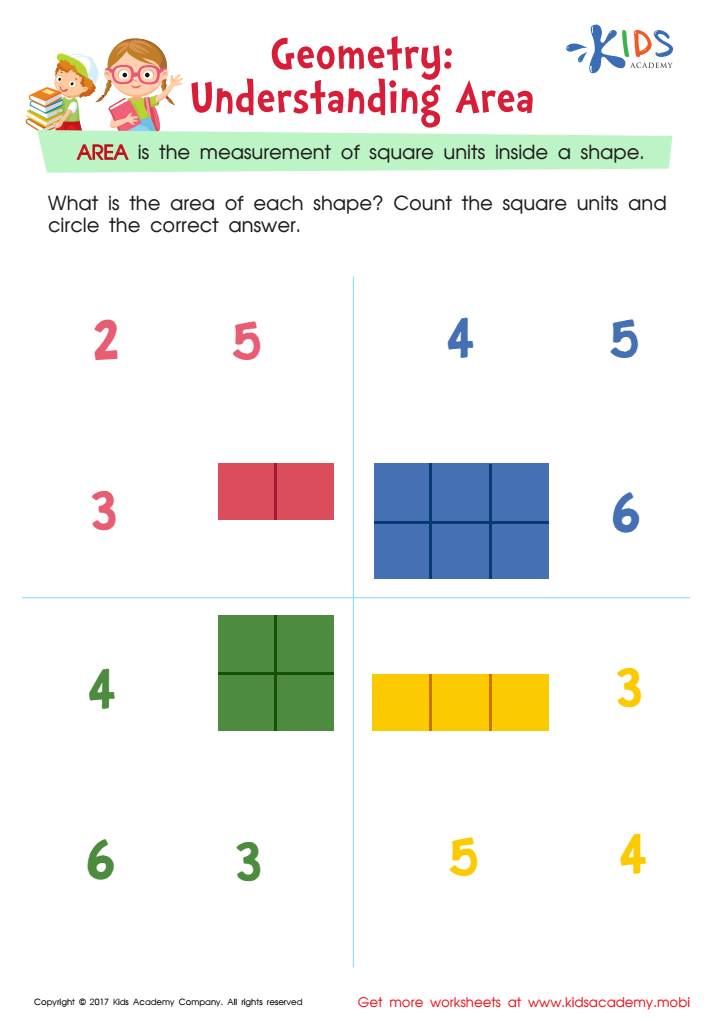
Understanding Area Worksheet








Understanding area and perimeter is essential for children aged 6-8 as it lays the foundation for critical mathematical skills and real-world applications. Knowing the difference between area, which measures the space inside a shape, and perimeter, which measures the distance around it, equips students with essential concepts necessary for more advanced mathematics later in their education.
Parents and teachers should care about this topic because it promotes spatial awareness and problem-solving skills. For example, when children learn about area, they are not only counting squares but also beginning to understand how to calculate space in everyday life, like determining how much paint is needed for a room. Similarly, understanding perimeter helps them grasp concepts related to boundaries, fencing, and layout planning, which are applicable in various contexts such as gardening or architecture.
Additionally, engaging kids in activities that involve area and perimeter can boost their enthusiasm for math, transforming an abstract subject into tangible experiences. Involving parents in these learning activities can also foster family engagement while reinforcing foundational skills. Overall, grasping area and perimeter enables children to develop confidence in their mathematical abilities, which is invaluable as they progress in their educational journeys.