Basic Times Tables up to 12 Worksheets for Ages 6-8
12 filtered results
-
From - To
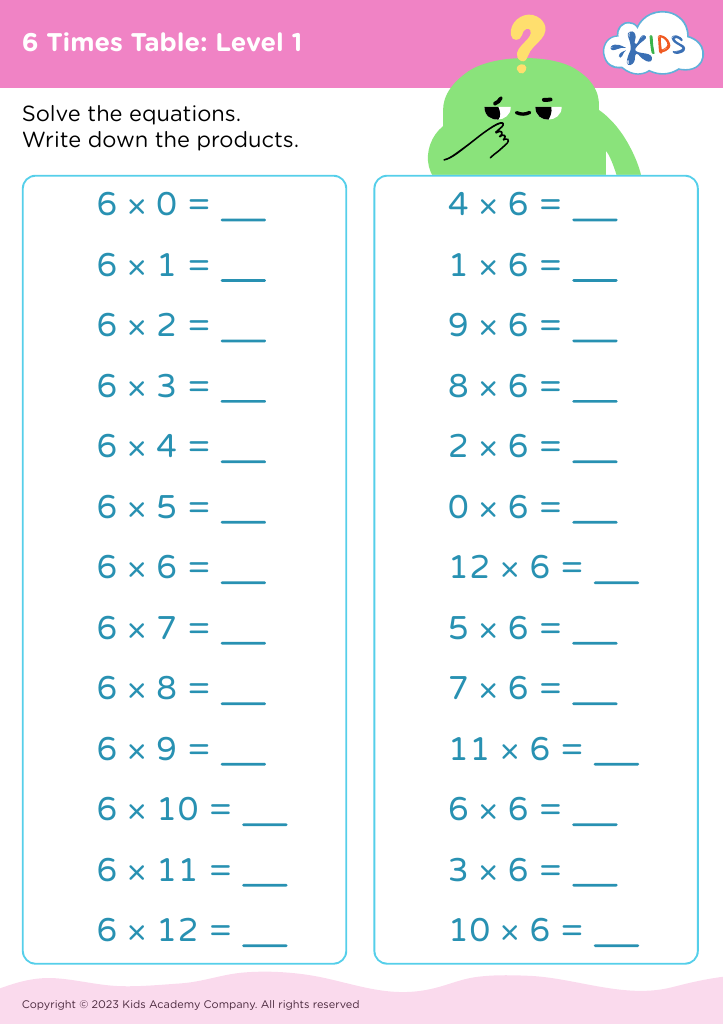
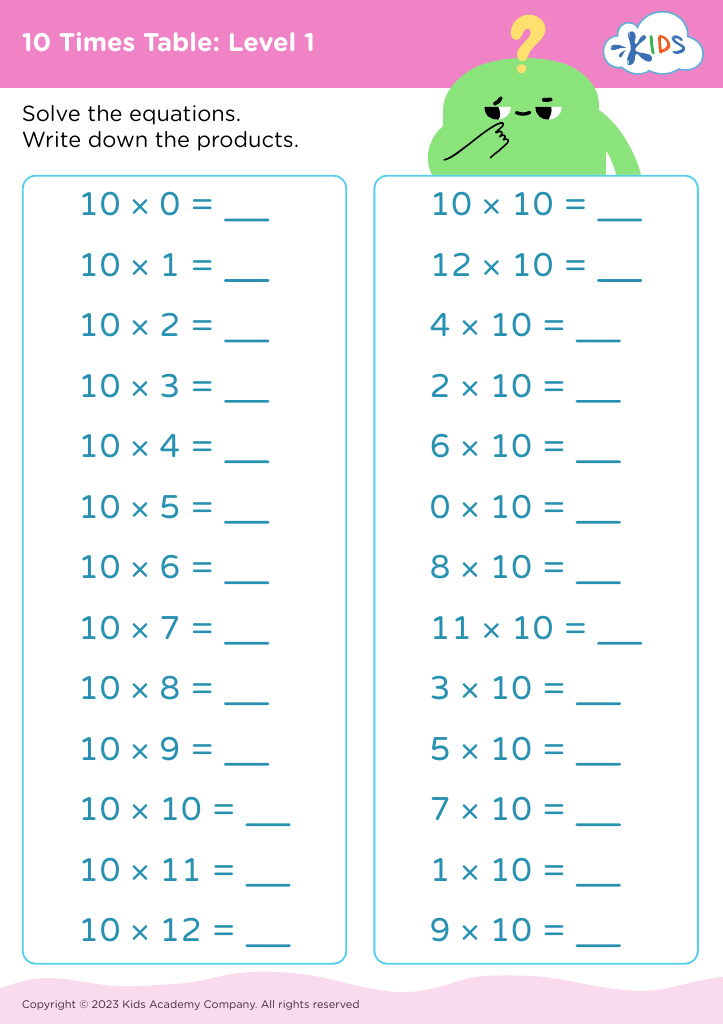
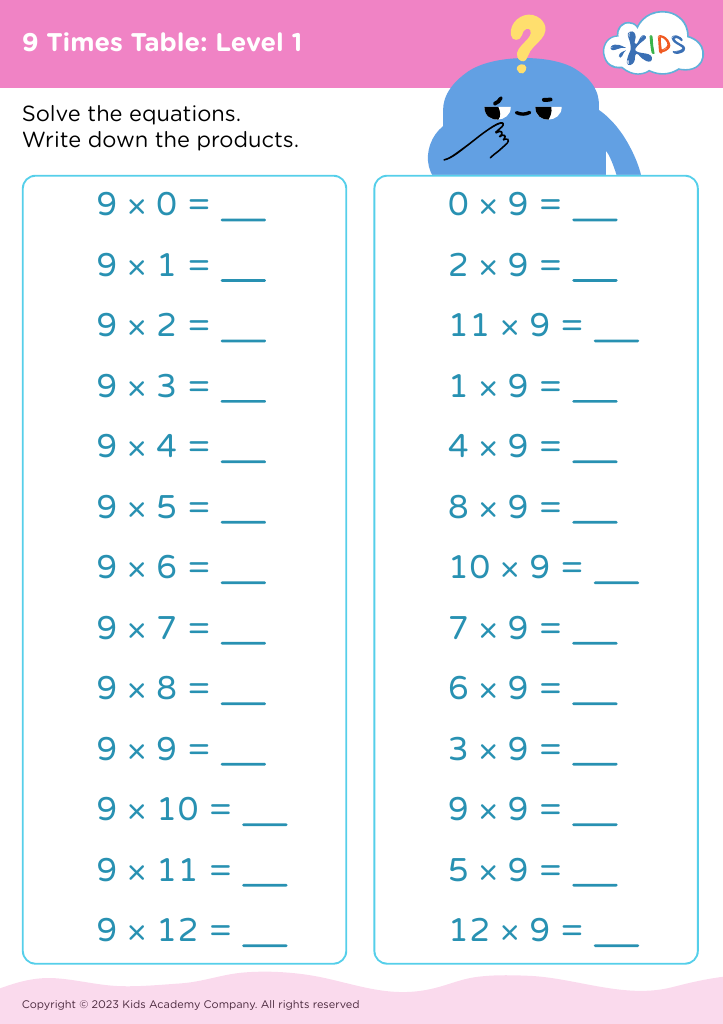
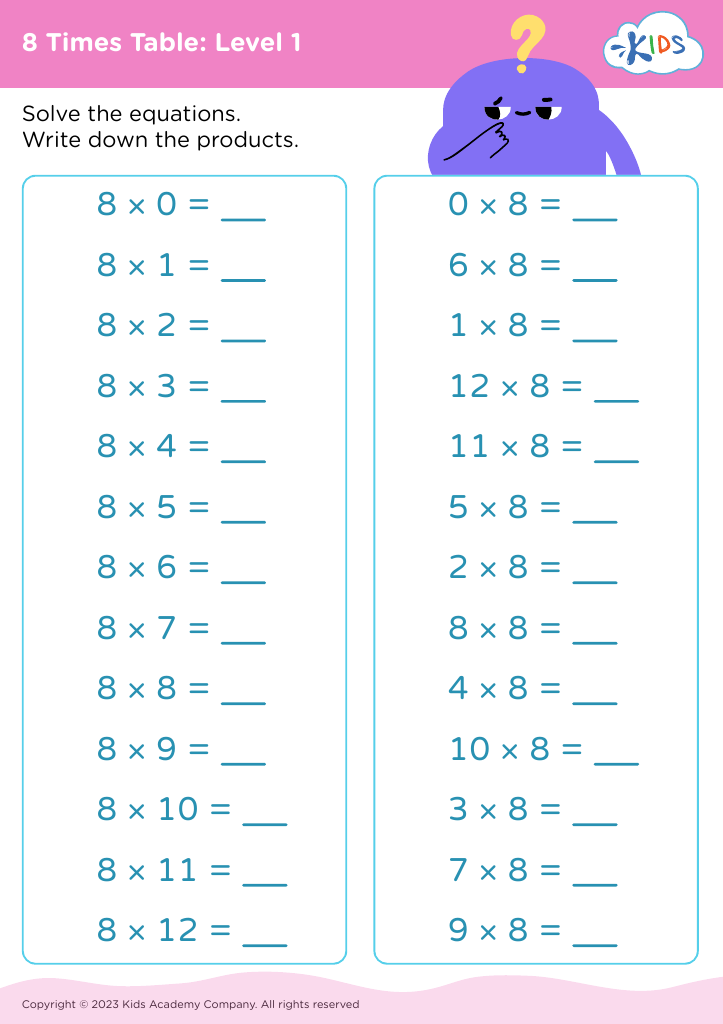
Explore our engaging "Basic Times Tables up to 12 Worksheets," designed specifically for children aged 6-8. These printable worksheets simplify multiplication concepts, helping young learners grasp essential math skills in a fun and interactive way. With colorful designs and varied exercises, students can practice their times tables through filling in the blank, matching, and completing equations. This resource fosters a solid foundation in multiplication, boosting confidence and encouraging mastery of basic math facts. Perfect for home or classroom use, our worksheets make learning multiplication enjoyable, reinforcing key concepts while developing early math abilities. Empower your child’s learning journey today!
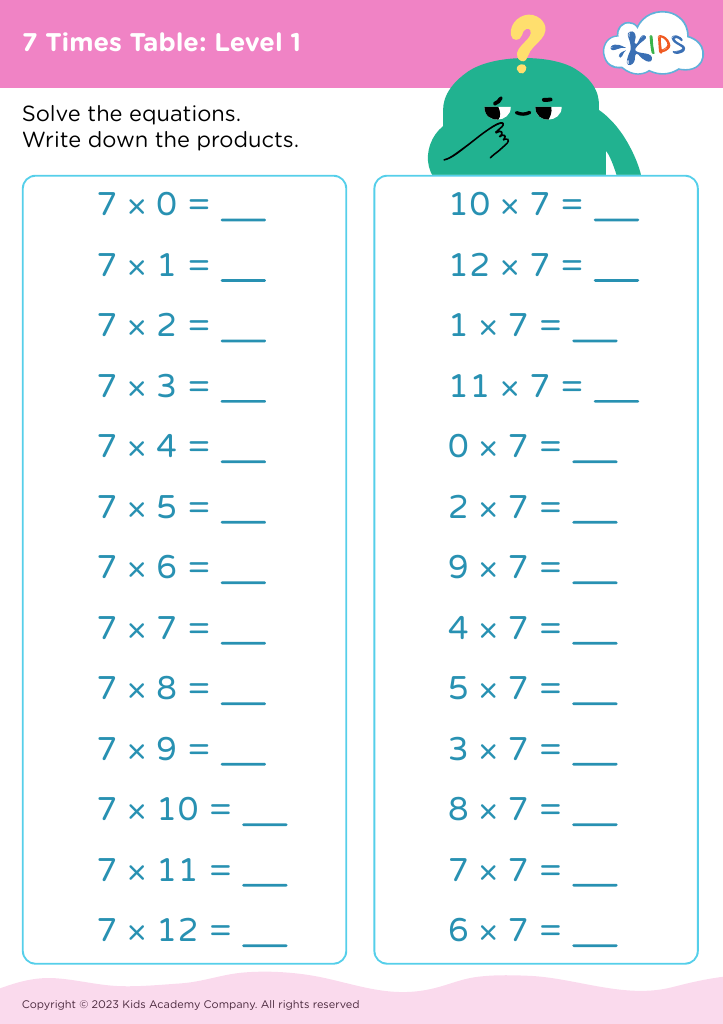
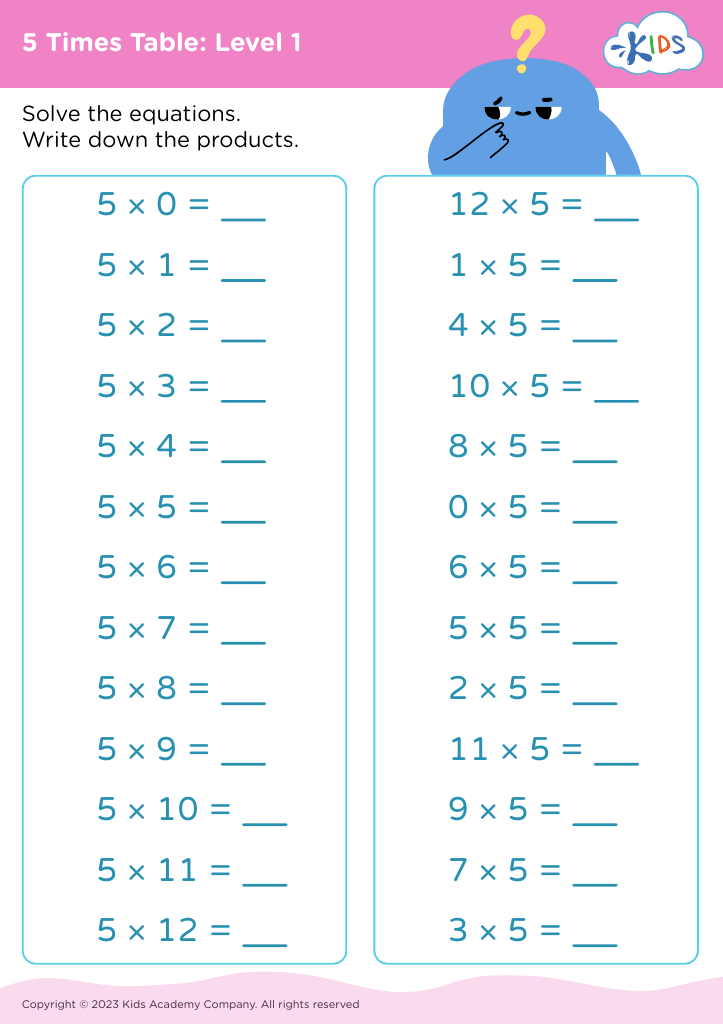
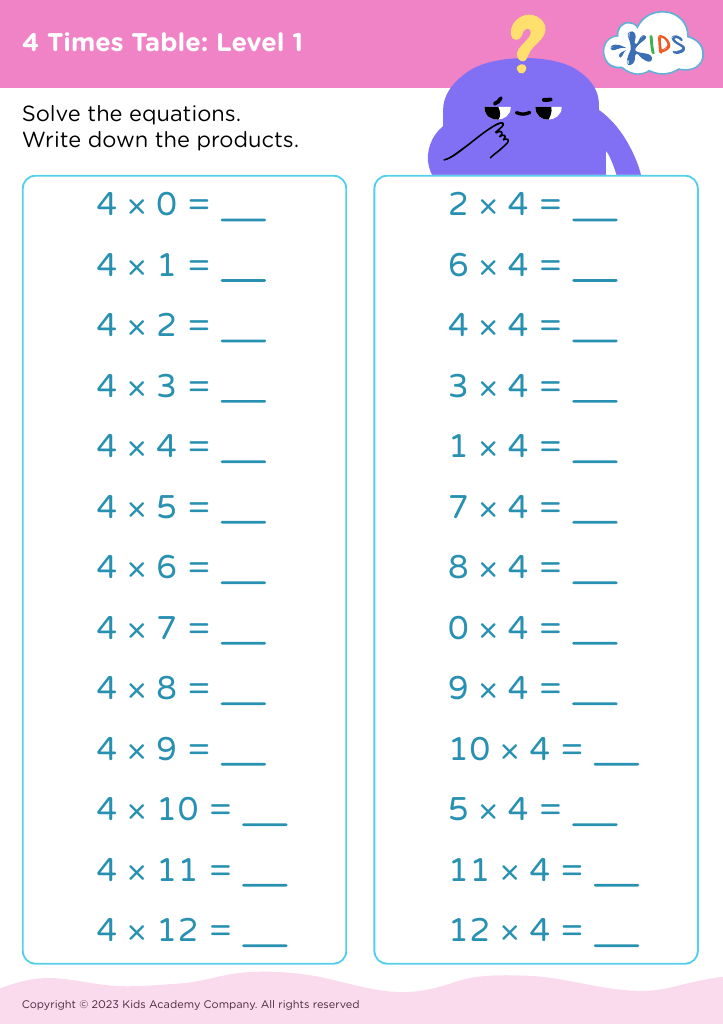
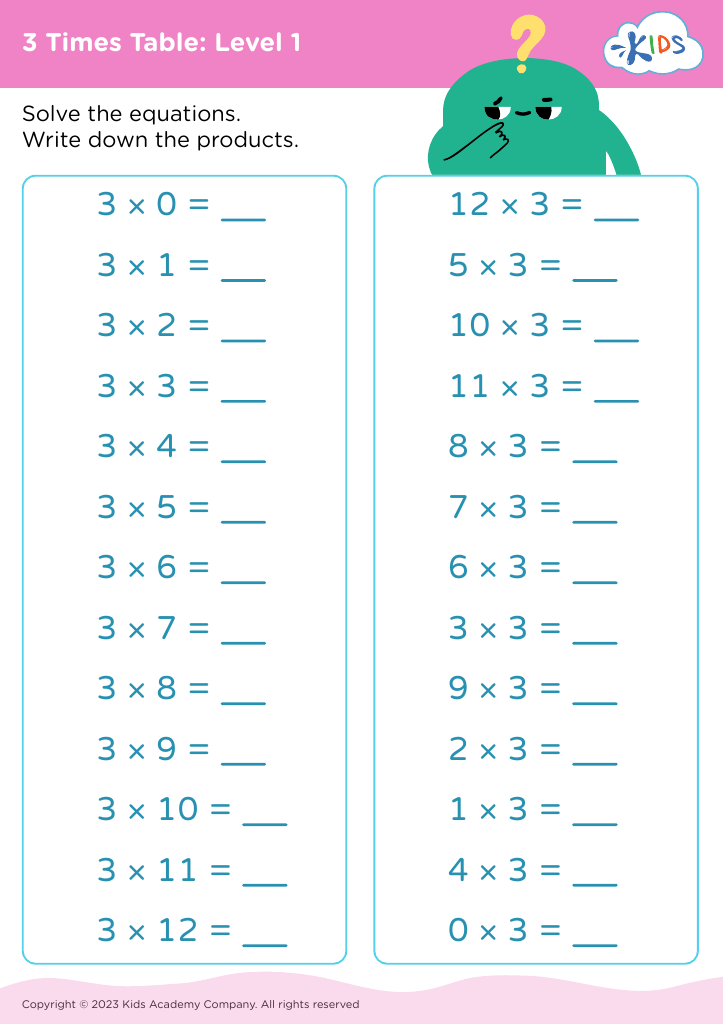
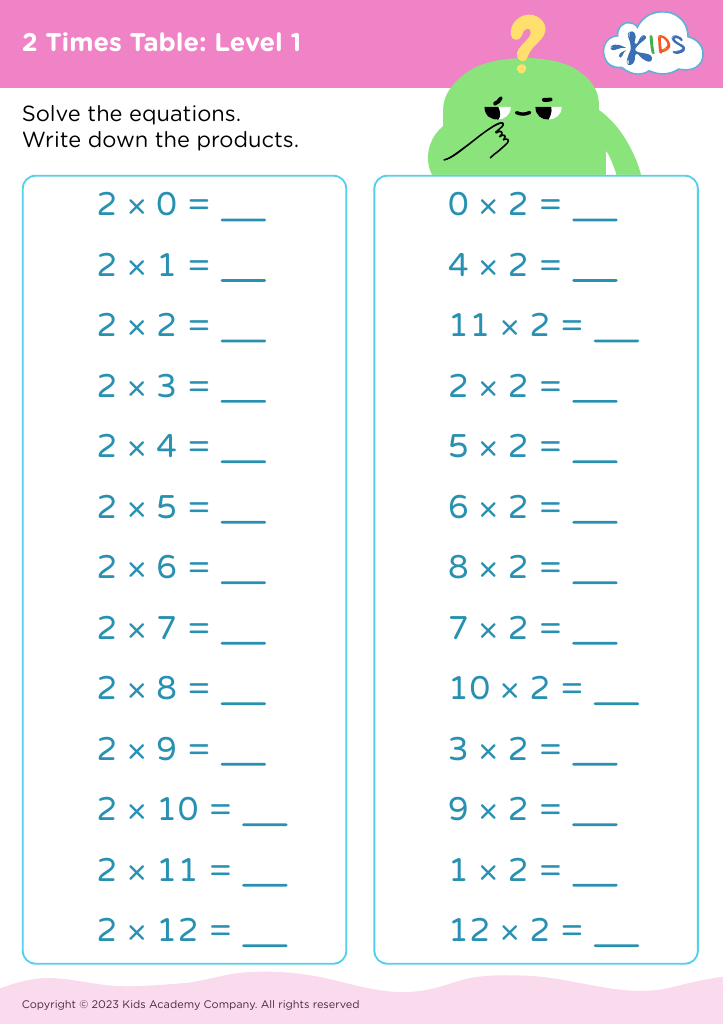
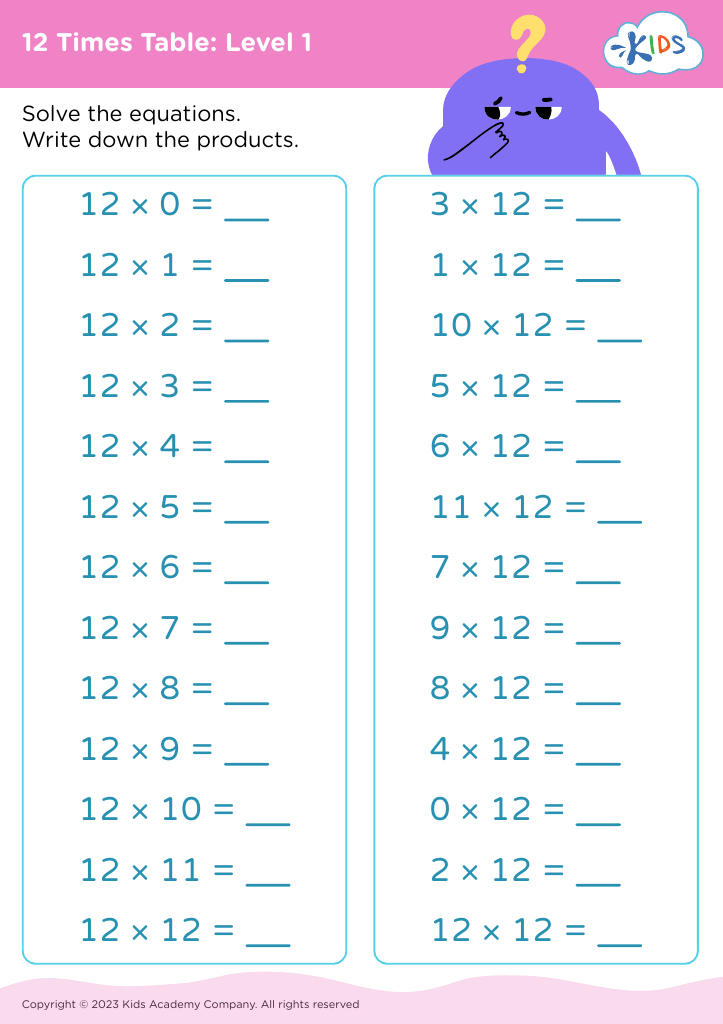
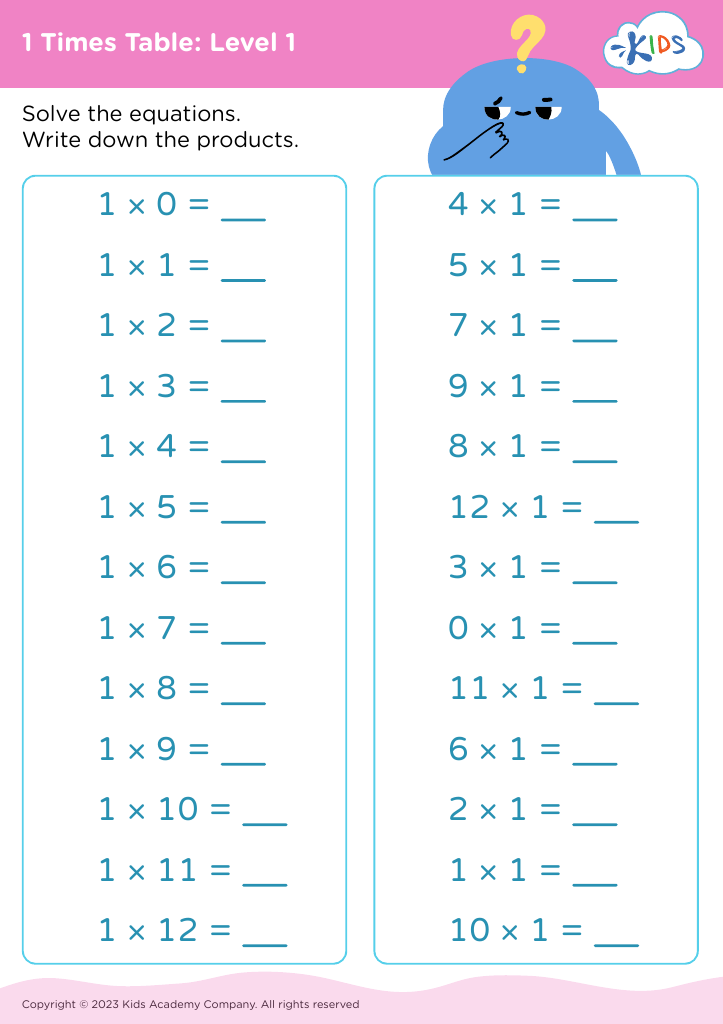
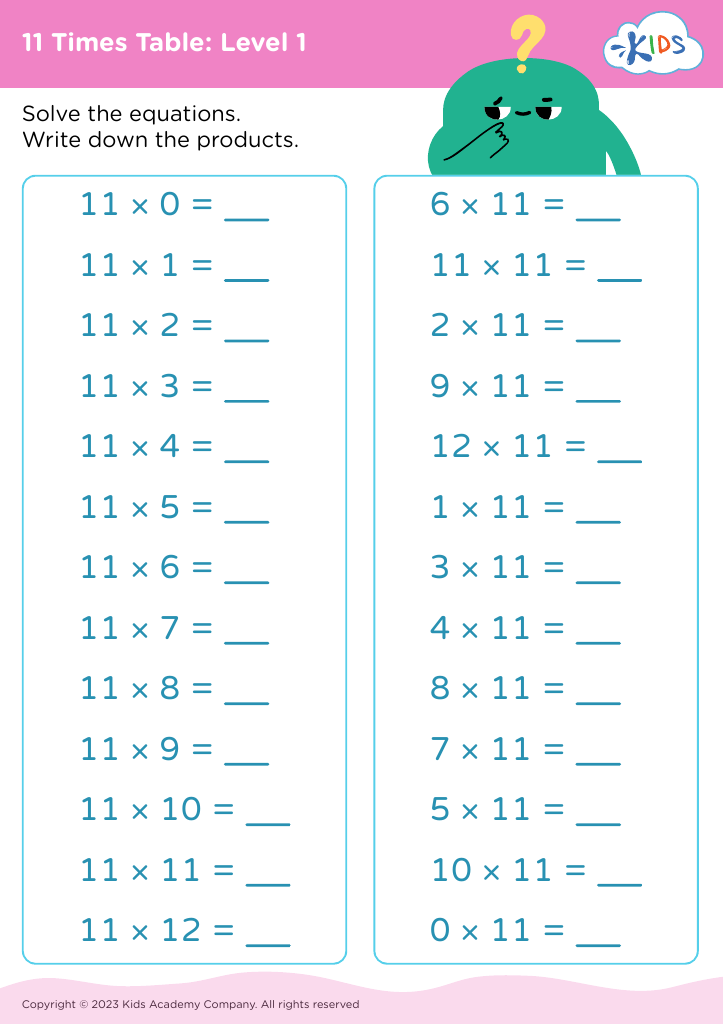


Understanding basic times tables up to 12 is crucial for children aged 6-8, as it lays the foundation for their mathematical competence and confidence. First, learnings at this stage involve not just memorization but also the development of critical thinking skills. Mastery of multiplication helps in understanding patterns, relationships, and problem-solving, which are essential for later math concepts, such as division, fractions, and even algebra.
Moreover, these early numeracy skills have real-world applications, ranging from calculating costs while shopping to understanding time and quantities in cooking. By grasping multiplication, children can tackle math problems more efficiently, reducing frustration and fostering a positive attitude toward the subject. Furthermore, as they prepare for standardized tests, a solid understanding of times tables boosts performance.
For teachers and parents, encouraging fluency in times tables offers an opportunity to engage in supportive learning environments, fostering a joy of math exploration. Making educational experiences fun through games and activities can enhance retention while also building relationships. In summary, proficiency in times tables is not an isolated skill; it's an integral part of broader learning that shapes children's future educational journeys. Prioritizing this can greatly influence their confidence and success in mathematics.








