Problem-Solving Skills Fractions Worksheets for Ages 6-8
3 filtered results
-
From - To
Enhance your child's understanding of fractions with our engaging Problem-Solving Skills Fractions Worksheets designed specifically for ages 6-8. This resource encourages young learners to tackle real-world challenges through fun and interactive exercises. With a variety of problem-solving tasks, children will develop critical thinking skills while gaining a solid foundation in fraction concepts. Each worksheet is crafted to promote logical reasoning and creativity, ensuring that learning is both enjoyable and effective. Whether at home or in the classroom, these worksheets make mastering fractions a rewarding adventure that sets the stage for future mathematical success. Download now and watch your child thrive!
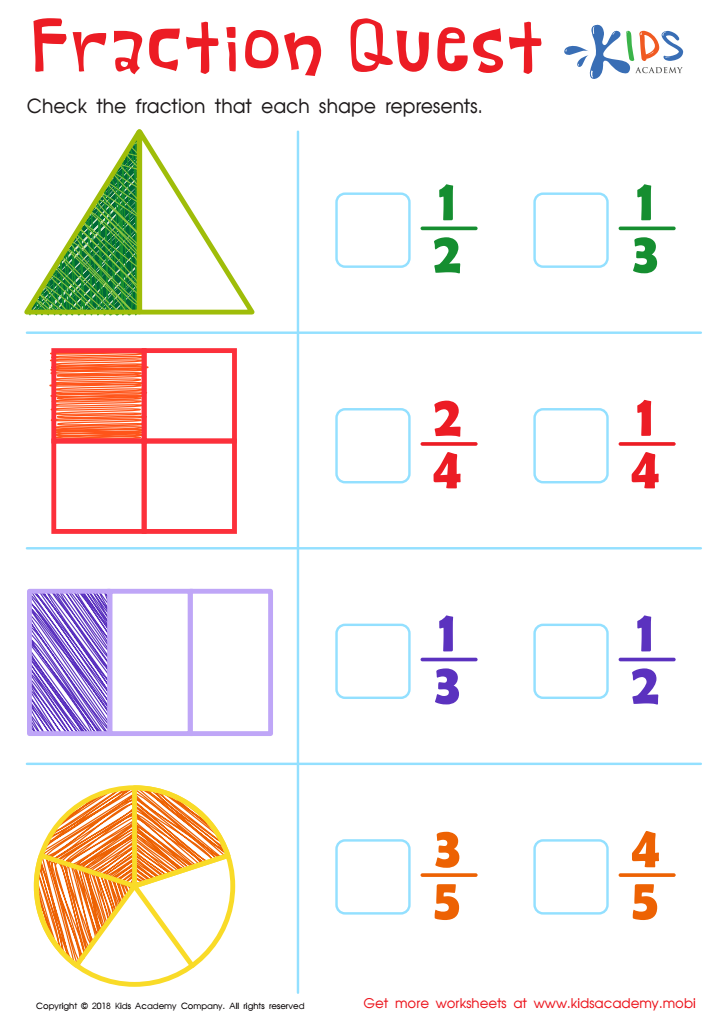
Fraction Quest Worksheet
 Assign to My Students
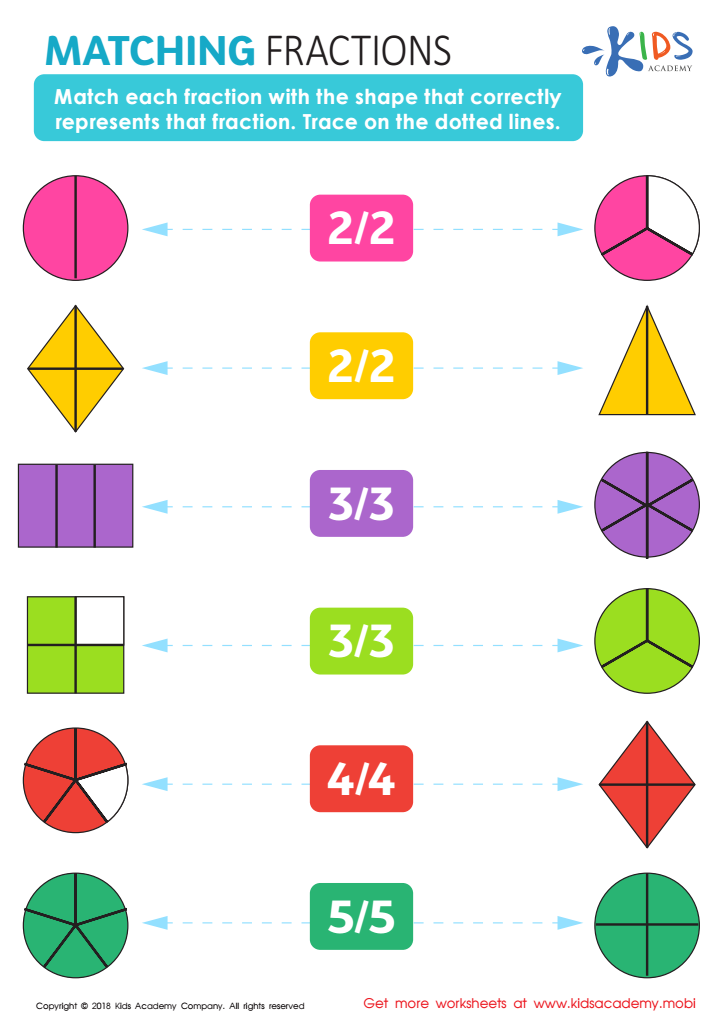
Matching Fractions Worksheet
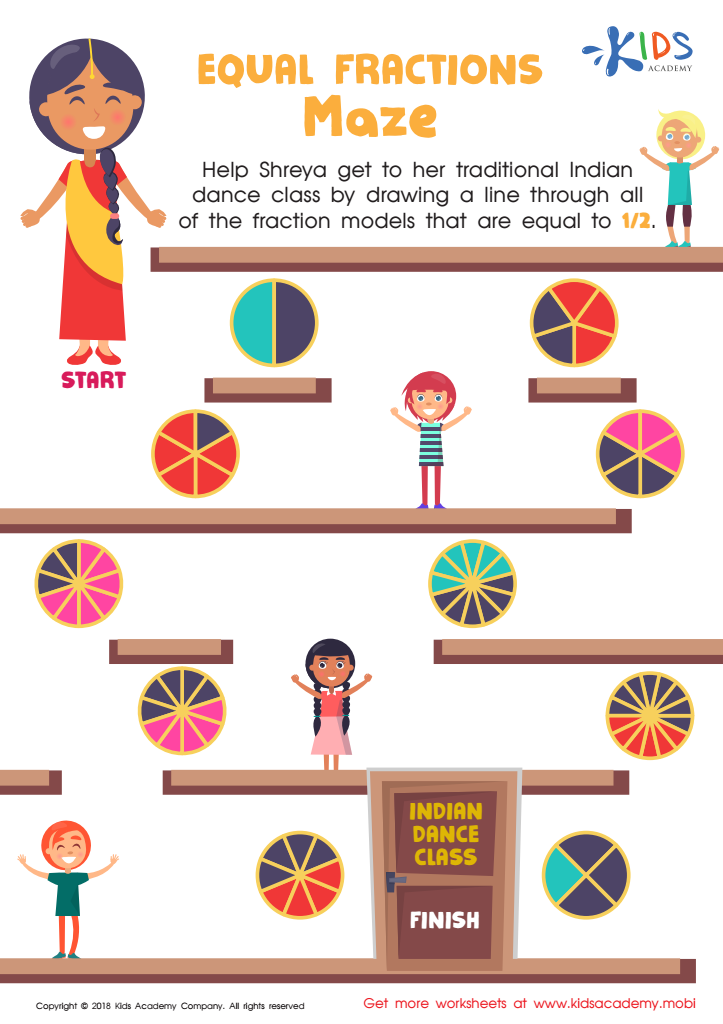
Equal Fractions Maze Worksheet


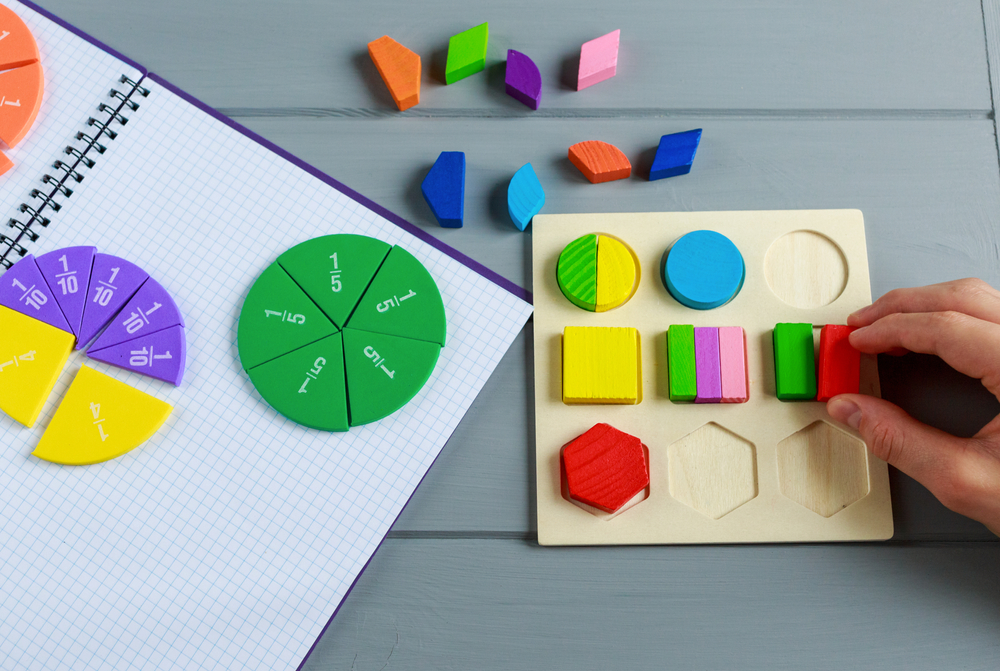





Problem-solving skills, particularly related to fractions, are vital for children ages 6-8, as they lay the foundation for critical thinking and mathematical understanding. At this developmental stage, children are not only grasping basic number concepts but beginning to explore more complex mathematical ideas. Fractions, in particular, help students appreciate the concept of parts of a whole and encourage a deeper understanding of relationships between numbers.
Parents and teachers should care about fostering these skills because learning fractions enhances children's ability to solve real-world problems. For instance, when children learn about splitting a pizza or measuring ingredients for a recipe, they practice applicable math that merges with everyday life. Furthermore, strong problem-solving skills in math build confidence, allowing children to approach challenges with curiosity rather than anxiety.
By nurturing these skills early on, educators and parents can help children develop persistence, critical thinking, and reasoning abilities, all of which are essential in academics and lifelong learning. Investing time in teaching fractions encourages students not only to understand mathematics better but also to appreciate its relevance, making them more engaged learners. Ultimately, these foundational skills play a key role in their future academic success and problem-solving capabilities.








