Fraction visualization Geometry Worksheets for Ages 6-8
6 filtered results
-
From - To
Our Fraction Visualization Geometry Worksheets for Ages 6-8 are designed to make learning fractions fun and engaging. These colorful, interactive worksheets help young students grasp the concept of parts and wholes by using visual aids and geometric shapes. Each worksheet encourages hands-on practice with activities like coloring, cutting, and matching to solidify their understanding of fractions in a playful way. Ideal for both classroom and home learning, our fraction visualization resources build a strong foundation in math, fostering both confidence and enthusiasm in young learners. Perfect for ages 6-8, these worksheets are your go-to tool for mastering early geometry skills.
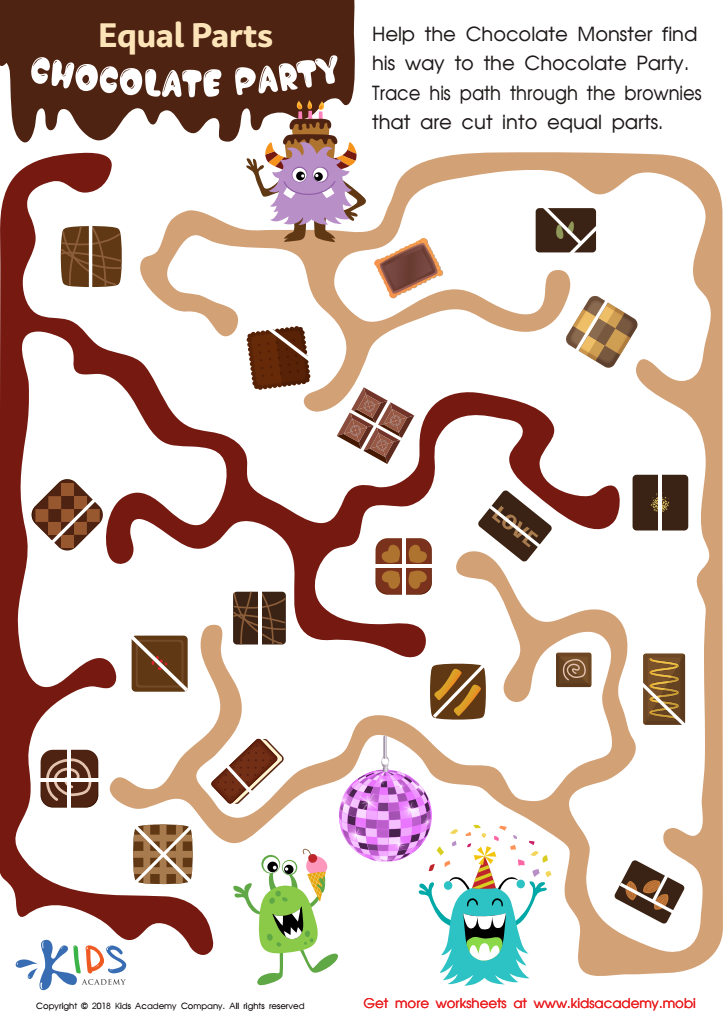
Equal Parts: Chocolate Party Worksheet
 Assign to My Students











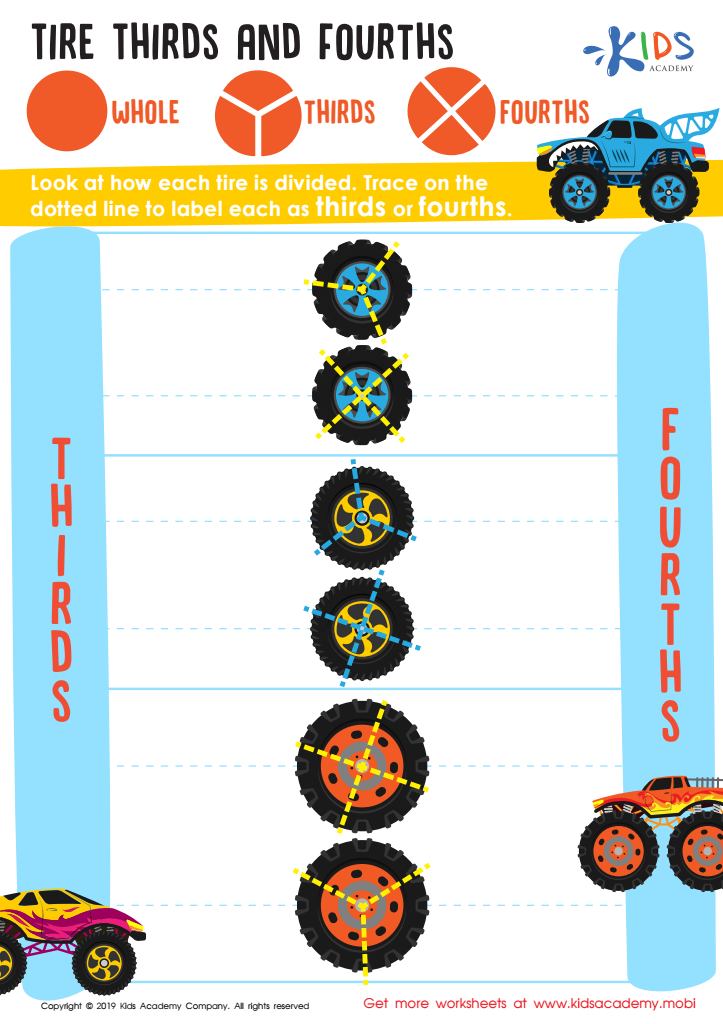
Tire Thirds and Fourths Worksheet
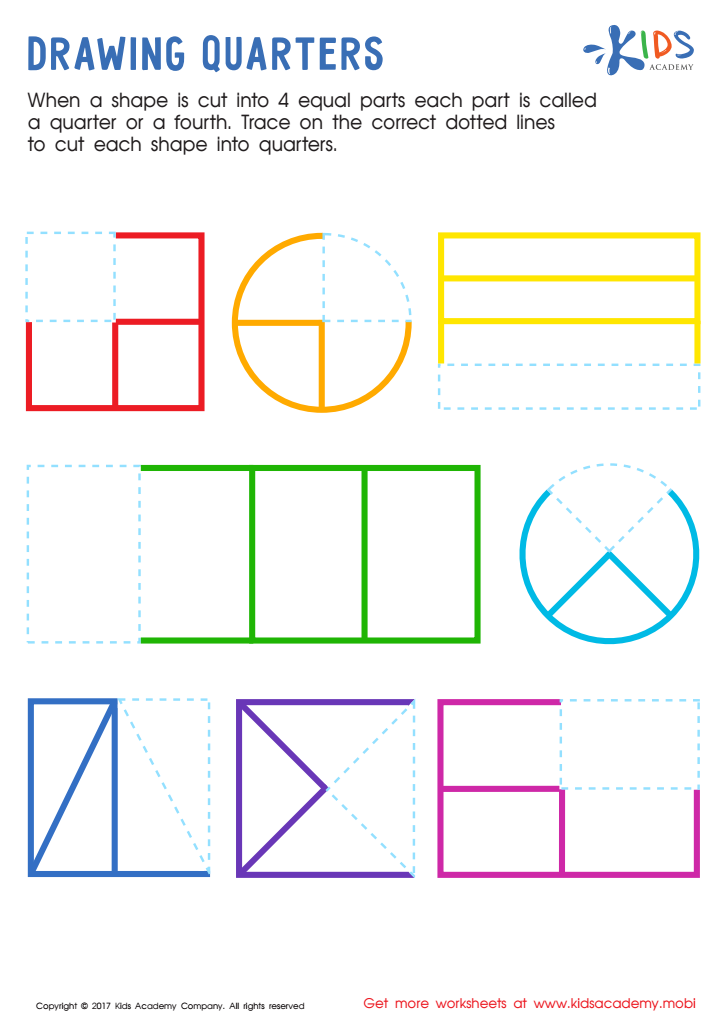
Drawing Quarters Worksheet
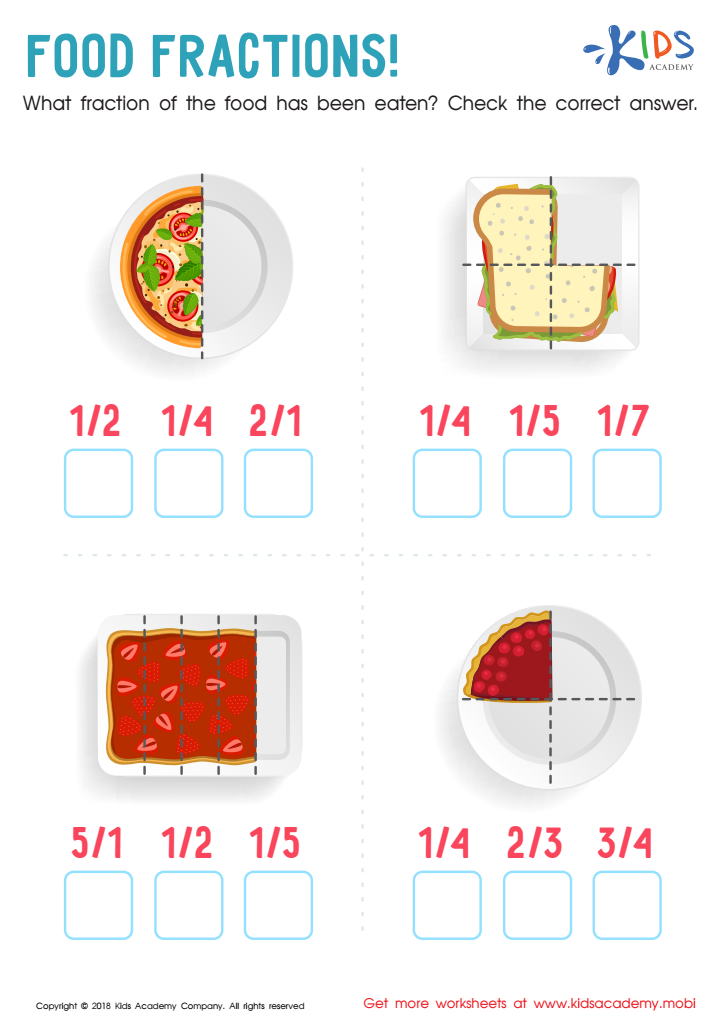
Food Fractions Worksheet
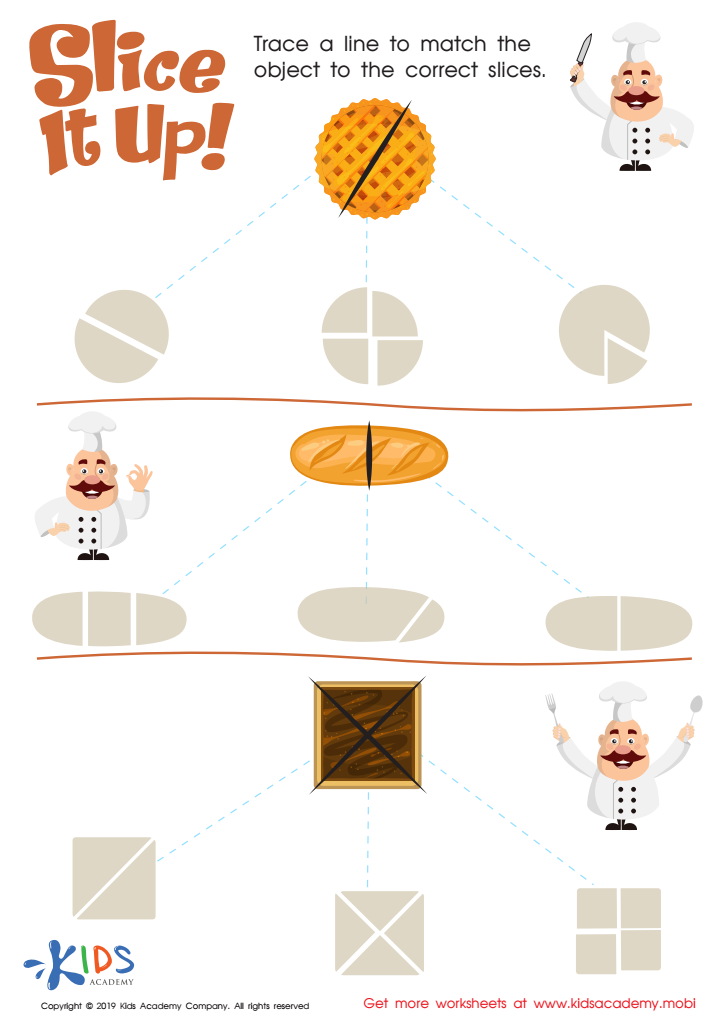
Slice It Up Worksheet
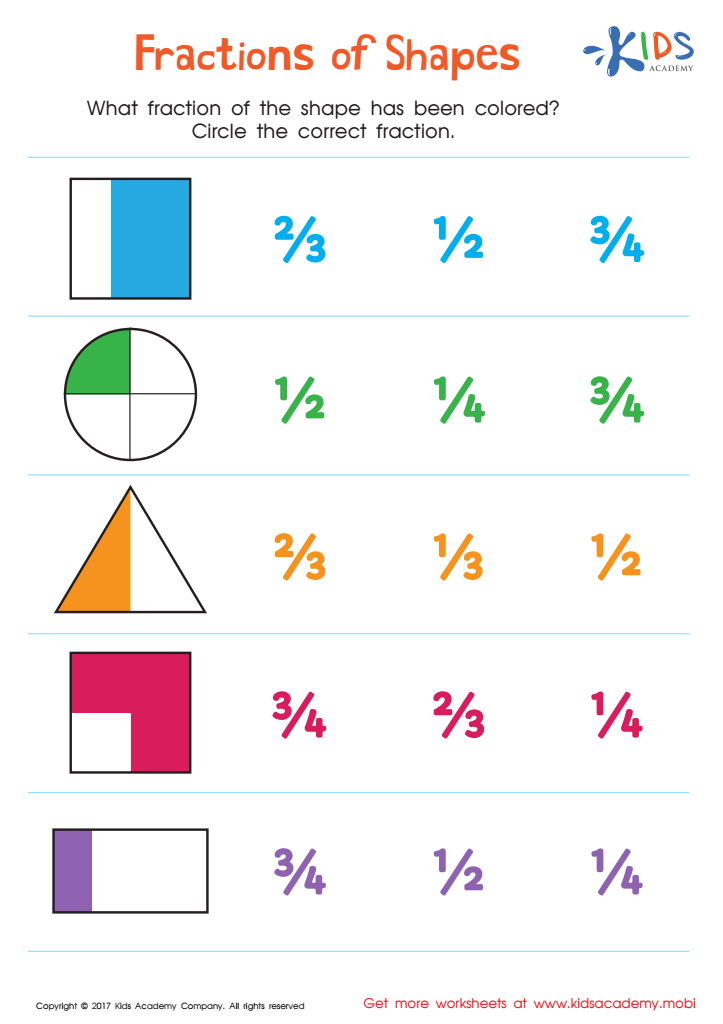
Fractions of Shapes: Math Concept Worksheet








Fraction visualization and basic geometry are fundamental concepts that set the stage for more complex mathematical understanding. For children aged 6-8, visualizing fractions and understanding shapes aid their cognitive development in several vital ways.
First, these concepts build a strong numerical foundation. Engaging with fractions visually — such as using pie charts, bars, or everyday objects — helps children grasp the idea of whole and part, encouraging a more intuitive understanding of division and ratios.
Second, geometry helps develop spatial awareness. Recognizing and manipulating shapes enhances problem-solving skills and motor coordination, which extends beyond math into reading, writing, and critical thinking.
Moreover, these skills are essential in everyday life. Being able to understand proportions and spatial relationships underpins basic tasks such as cooking, sports, and even organizing personal space.
For teachers and parents, using hands-on activities and visualization tools can make learning more interactive and enjoyable, fostering a positive attitude towards math from an early age. Supporting these areas lays the groundwork for future academic success and cultivates a lifelong ability to approach problems logically and creatively.
Thus, focusing on fractions and geometry for children aged 6-8 not only supports their immediate educational needs but also prepares them for long-term success, both academically and practically.








