Logical Reasoning Geometry Worksheets for Ages 6-8
5 filtered results
-
From - To
Discover engaging and educational Logical Reasoning Geometry Worksheets designed for children ages 6-8. Perfect for enhancing critical thinking, these worksheets help young learners develop foundational math skills through fun geometric challenges. From identifying shapes and patterns to understanding spatial relationships, our worksheets cater to all learning styles. These vibrant, easy-to-follow activities are tailored to stimulate logical thinking and problem-solving abilities, making math enjoyable. Ideal for classroom use or homeschooling, they provide comprehensive support in building essential skills for early education success. Explore our collection today and watch your child’s math confidence soar!
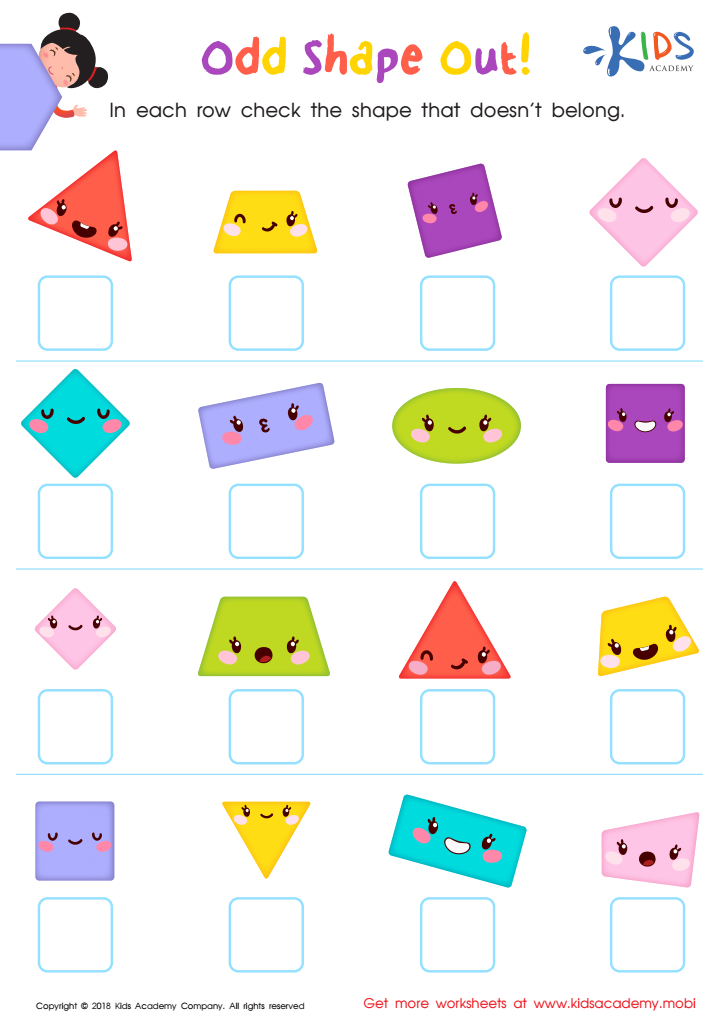
Odd Shape Out Worksheet for Grade 3
 Assign to My Students











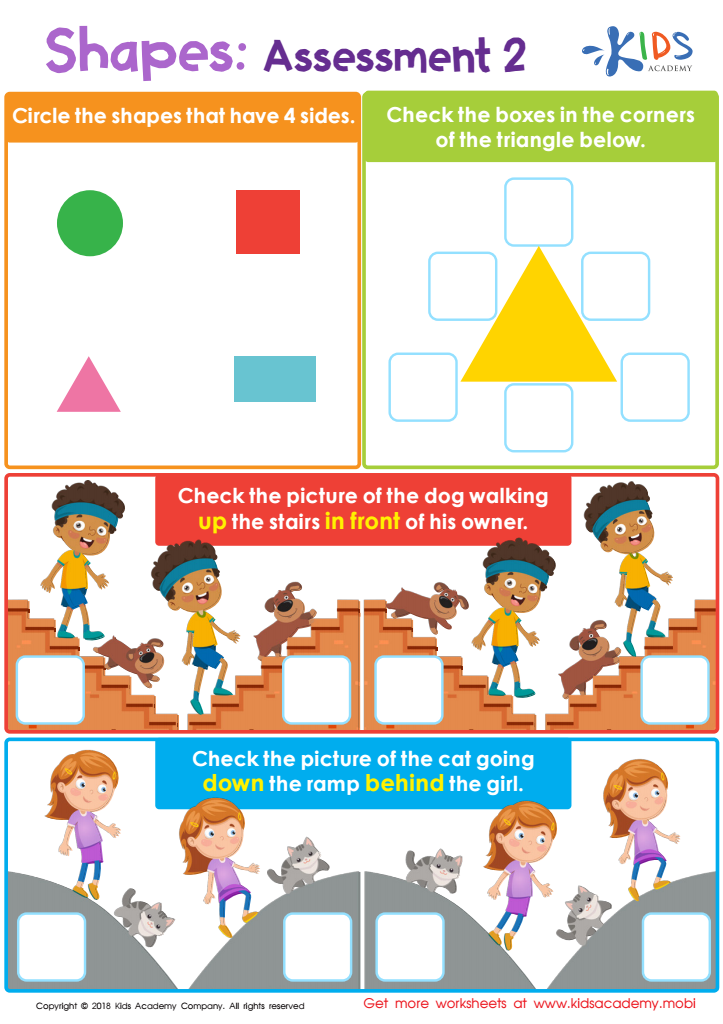
Shapes: Assessment 2 Worksheet
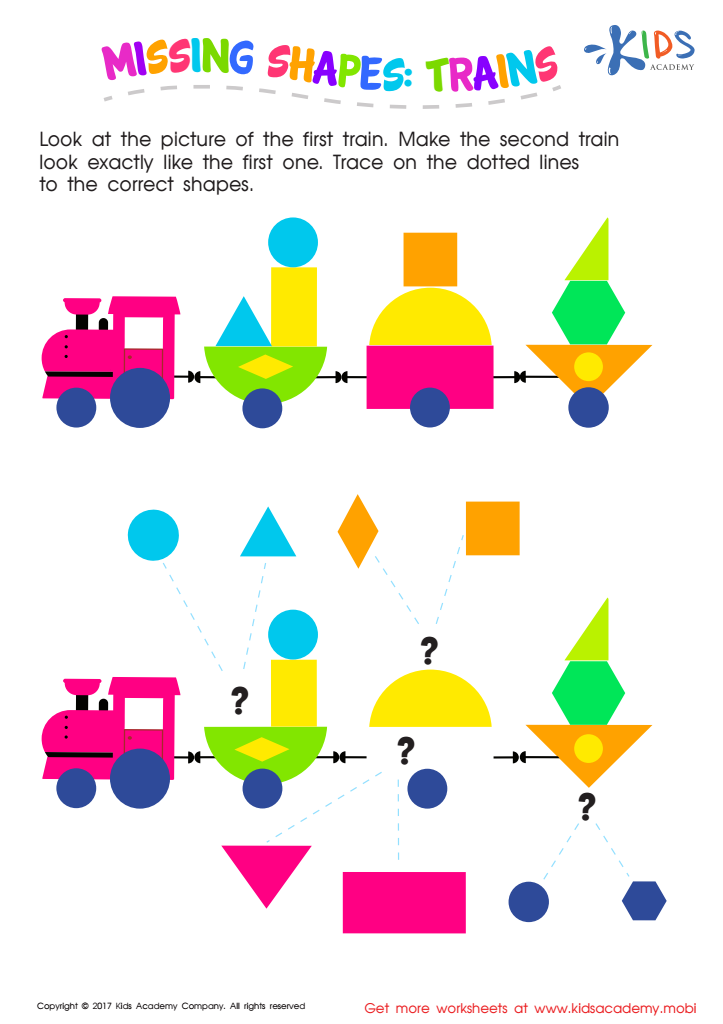
Missing Shapes: Trains Worksheet
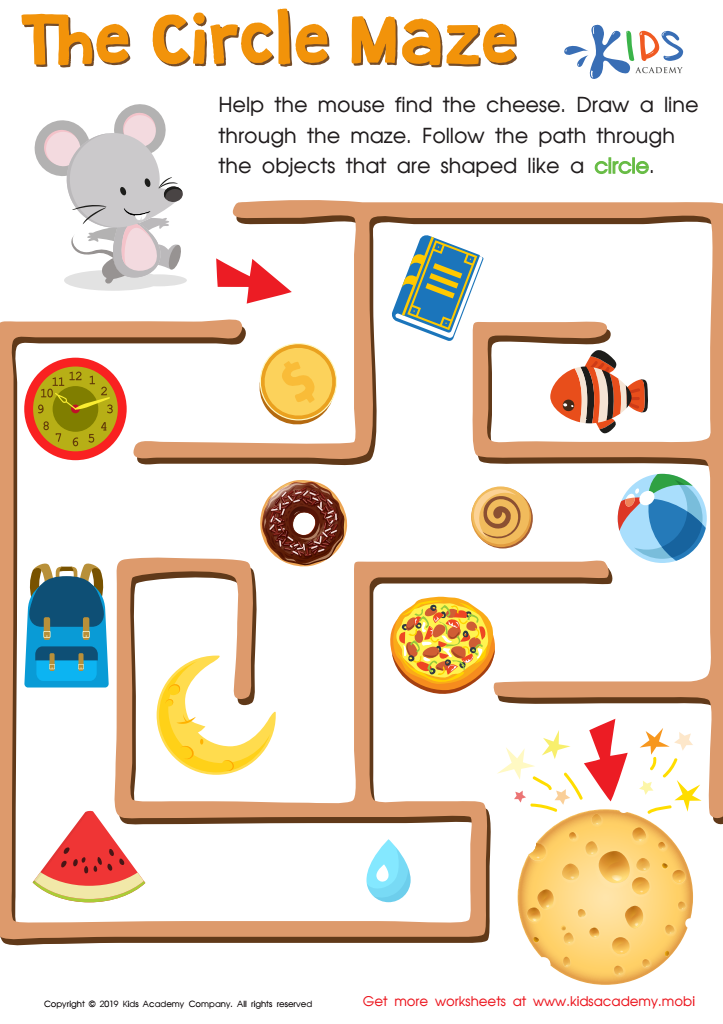
The Circle Maze Worksheet
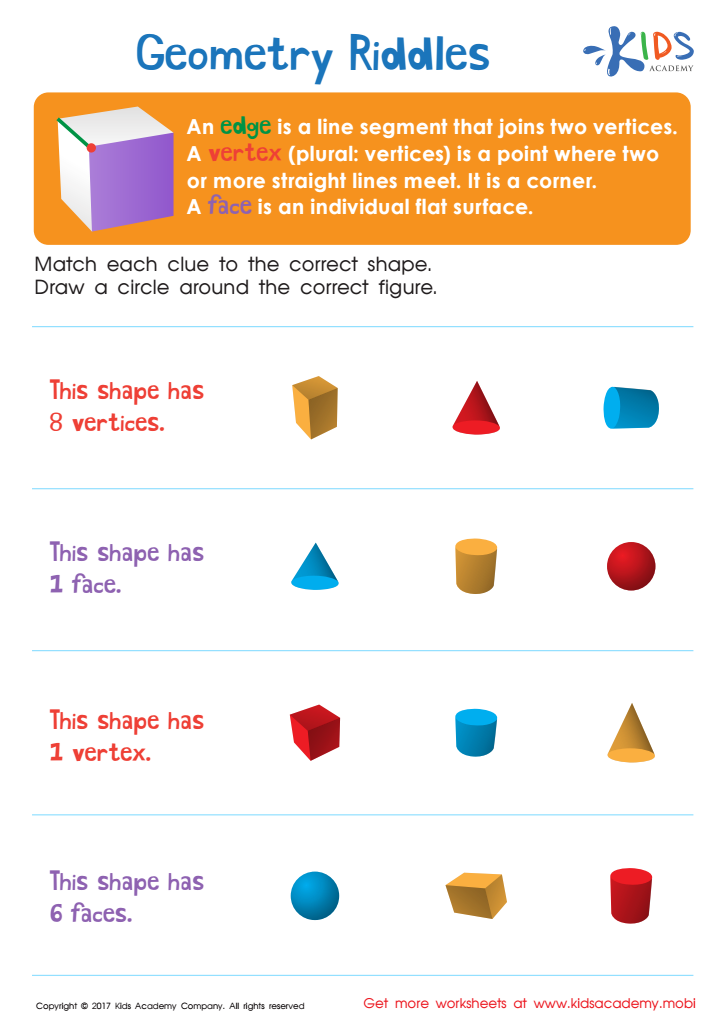
Geometry Riddles Printable








Logical reasoning and geometry form foundational elements of early cognitive development. Fostering these skills in children aged 6-8 holds immense value for both parents and teachers. At this developmental stage, children's brains are particularly receptive to acquiring new ways of thinking and problem-solving strategies.
Logical reasoning enables children to make sense of information, distinguish between different viewpoints, and approach problems methodically. Activities that stimulate logical thinking, such as recognizing patterns, solving puzzles, or sequencing tasks, build critical thinking skills that play a crucial role across all learning areas, from mathematics to literacy.
Incorporating geometry into early education enhances spatial understanding, a cognitive skill crucial for understanding and interacting with the world. Exploring basic shapes, recognizing symmetry, and understanding position and direction help children develop their spatial awareness. These skills are not only essential for later success in more complex math and science topics but also for everyday functioning, such as problem-solving, navigating environments, and even sports.
Moreover, engaging in logical reasoning and geometry fosters a growth mindset. It encourages perseverance, curiosity, and a love for learning as children discover that they can solve problems through structured thinking and creativity. Consequently, parents and teachers who emphasize logical reasoning and geometry equip children with tools that bolster academic achievement and lifetime cognitive abilities.








