Spatial Orientation Geometry Worksheets for Ages 6-8
3 filtered results
-
From - To
Enhance your child's spatial orientation skills with our engaging Geometry Worksheets designed specifically for ages 6-8. These printable resources combine fun and education, making it easy for young learners to grasp essential concepts of space, shape, and position. Our carefully curated worksheets encourage children to explore and understand their surroundings through activities like identifying shapes, sorting objects, and solving spatial puzzles. Perfect for home or classroom use, these worksheets not only promote critical thinking but also boost confidence in math. Download now to provide your child with the tools they need to excel in geometry and beyond!
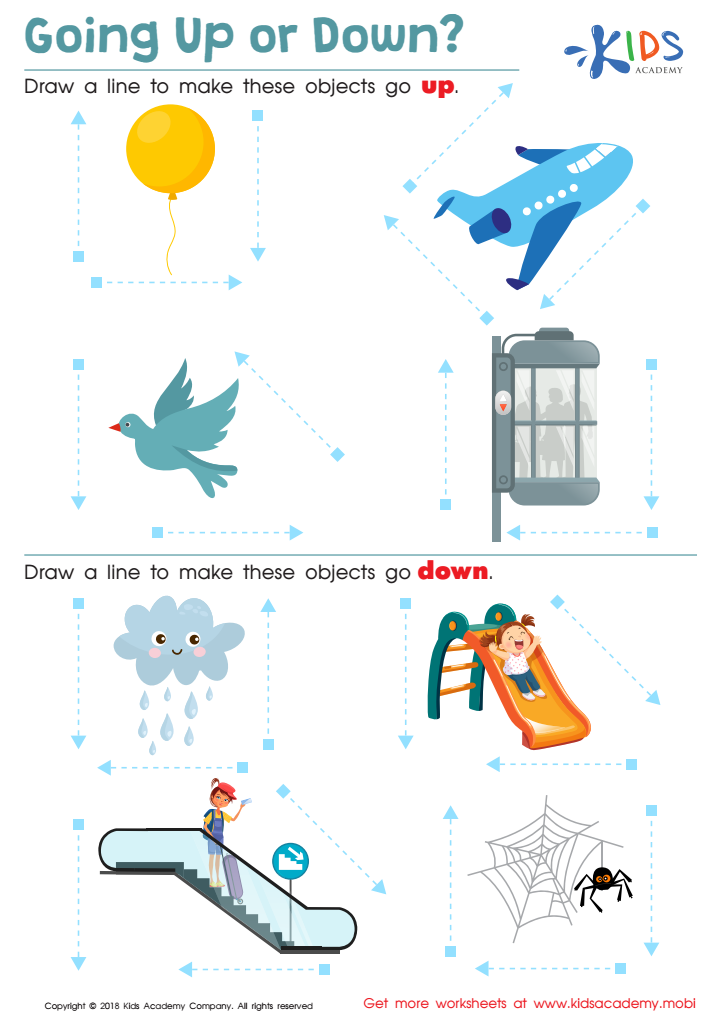
Going up or Down? Worksheet
 Assign to My Students











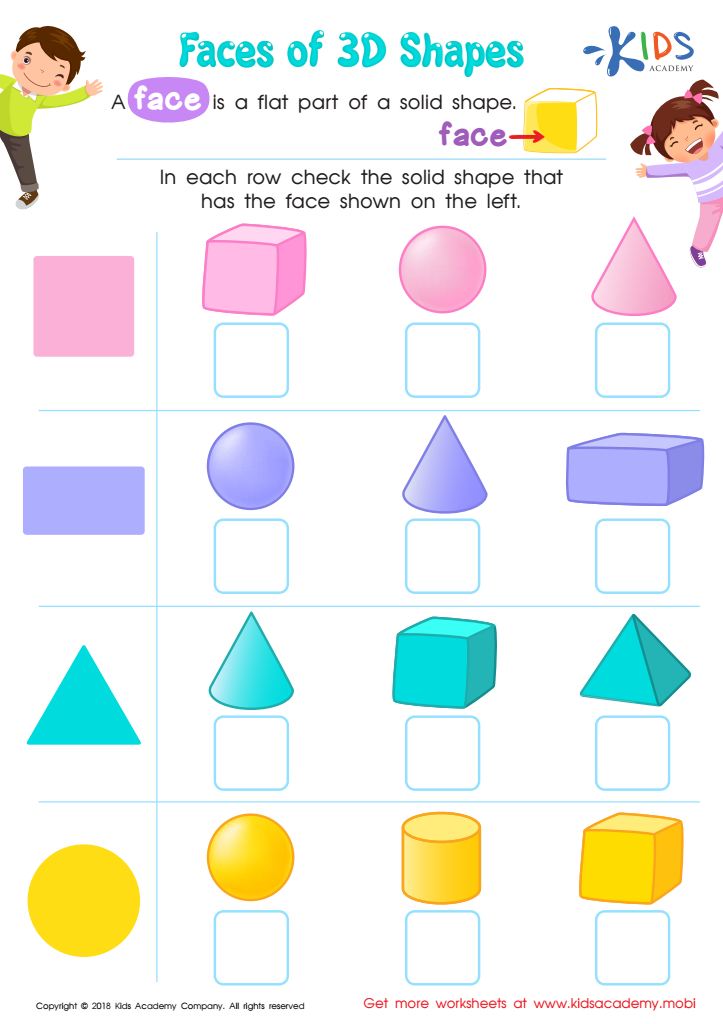
Faces of 3D Shapes Worksheet
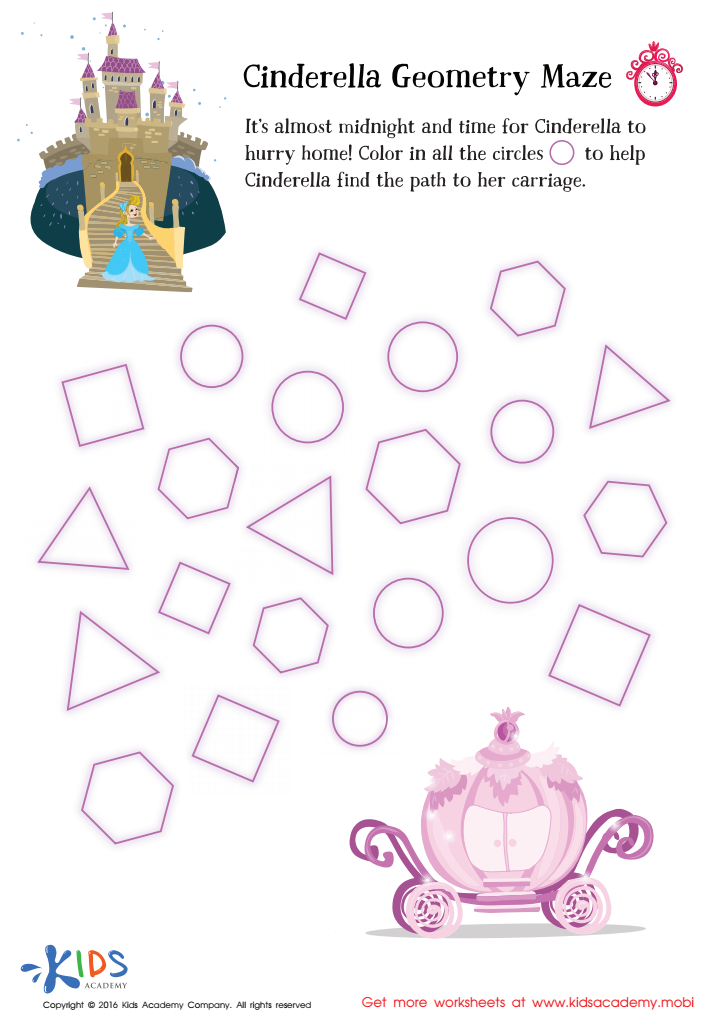
Cinderella Geometry Maze Worksheet








Parents and teachers should care about spatial orientation geometry for ages 6-8 because it is foundational for a child’s overall cognitive development. At this age, children are inherently curious and better able to understand spatial relationships. Engaging with geometry encourages critical thinking and problem-solving skills as they learn to visualize and manipulate shapes and spaces.
Developing spatial orientation also enhances children’s abilities in various subjects, particularly mathematics, science, and art. Spatial awareness fosters skills that aid in tasks such as measuring areas, understanding graphs, and interpreting maps, which are essential for future learning. The skills gained early on will support children as they approach more complex concepts in higher education.
Furthermore, understanding spatial dynamics boosts children's confidence as they engage in activities like drawing, building, or playing spatial games. This engagement nurtures creativity and promotes fine motor skills. Lastly, fostering spatial reasoning at a young age can lead to improved academic performance and open pathways to STEAM-related careers (Science, Technology, Engineering, Arts, Mathematics) in the future. Encouraging curiosity and exploration in spatial geometry ultimately equips children with the tools needed to succeed in an increasingly complex world.








