Basic addition practice Numbers Worksheets for Ages 6-8
6 filtered results
-
From - To
Enhance your child's math skills with our Basic Addition Practice Numbers Worksheets for Ages 6-8. Designed specifically for young learners, these engaging and colorful worksheets focus on foundational addition concepts. Each activity encourages simple problem-solving and boosts arithmetic confidence. Watch your child's abilities grow as they practice adding single and double-digit numbers, using visual aids and fun themes. Perfect for both classroom use and at-home learning, these worksheets make math practice enjoyable and effective. Set your child on the path to math success with our expertly crafted addition exercises!
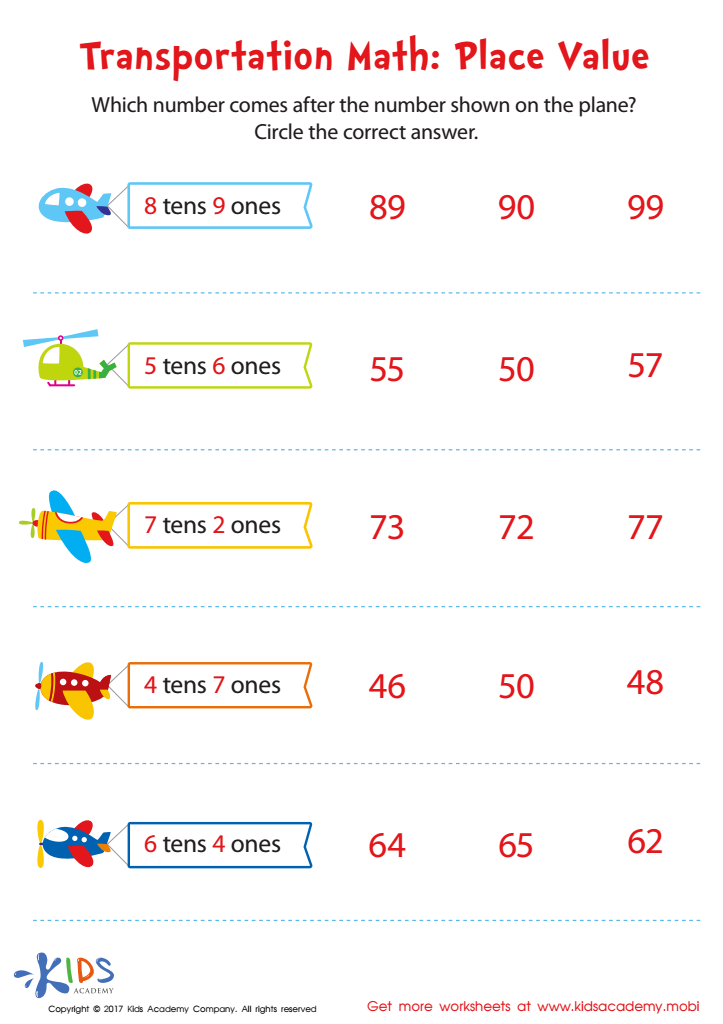
Transportation Math Printable
 Assign to My Students
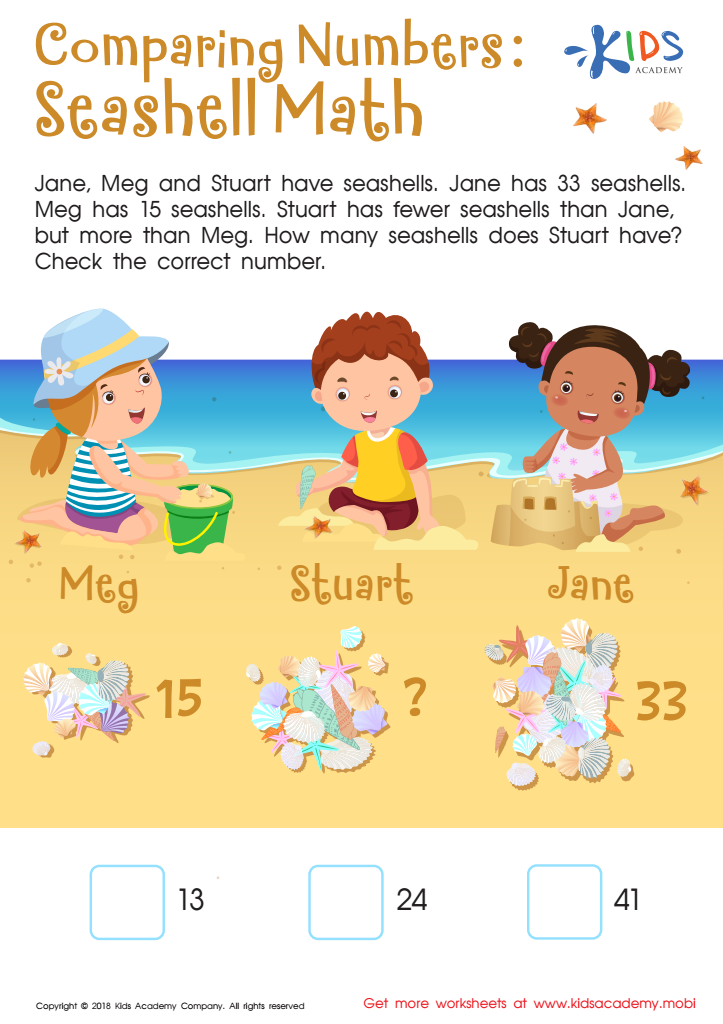
Seashell Collectors Worksheet
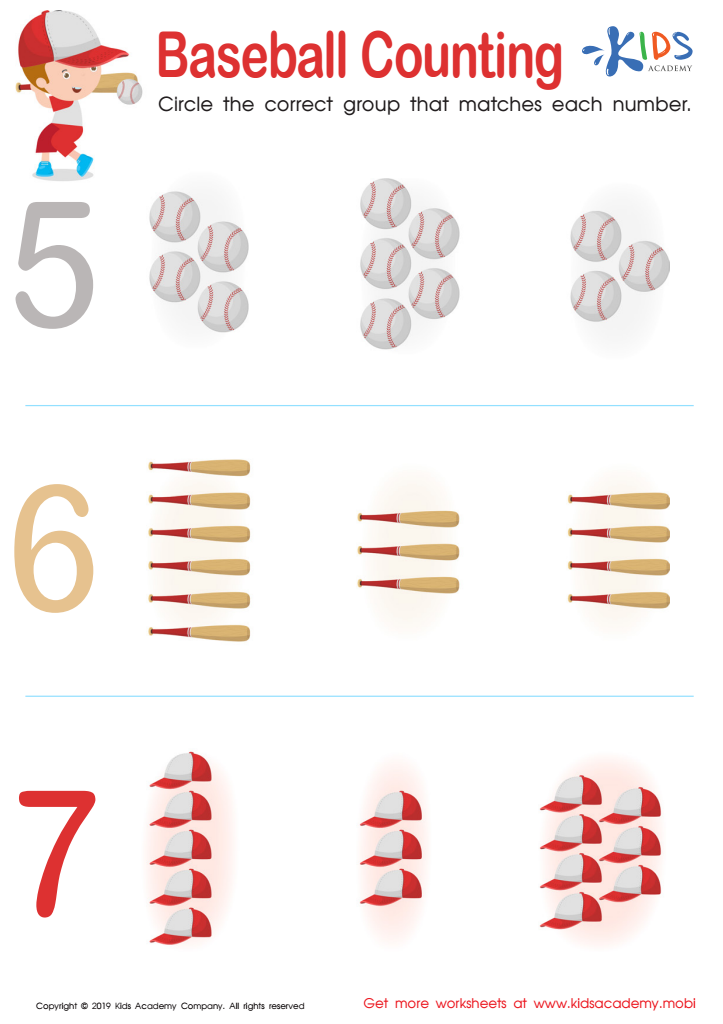
Baseball Counting Worksheet
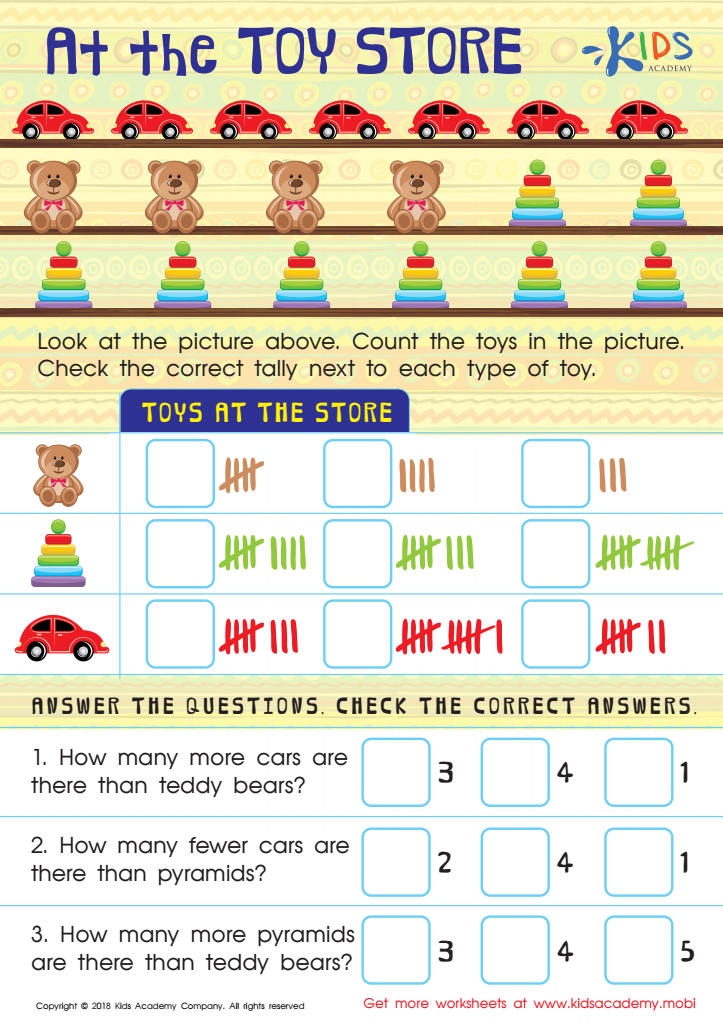
Tally Chart: At the Toy Store Worksheet
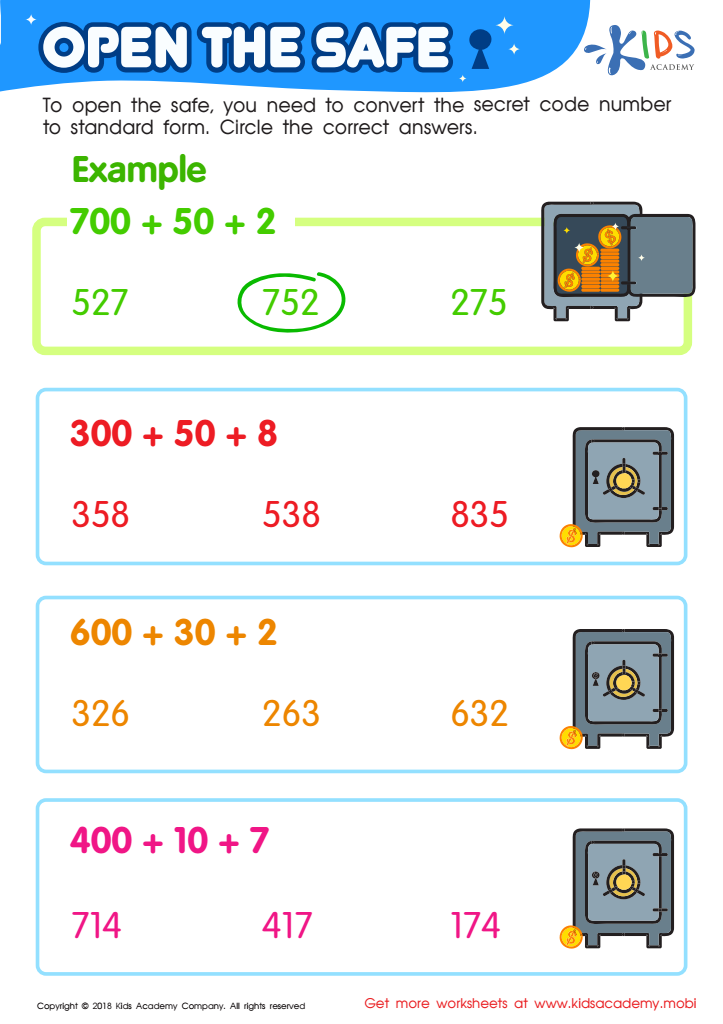
Open the Safe Worksheet
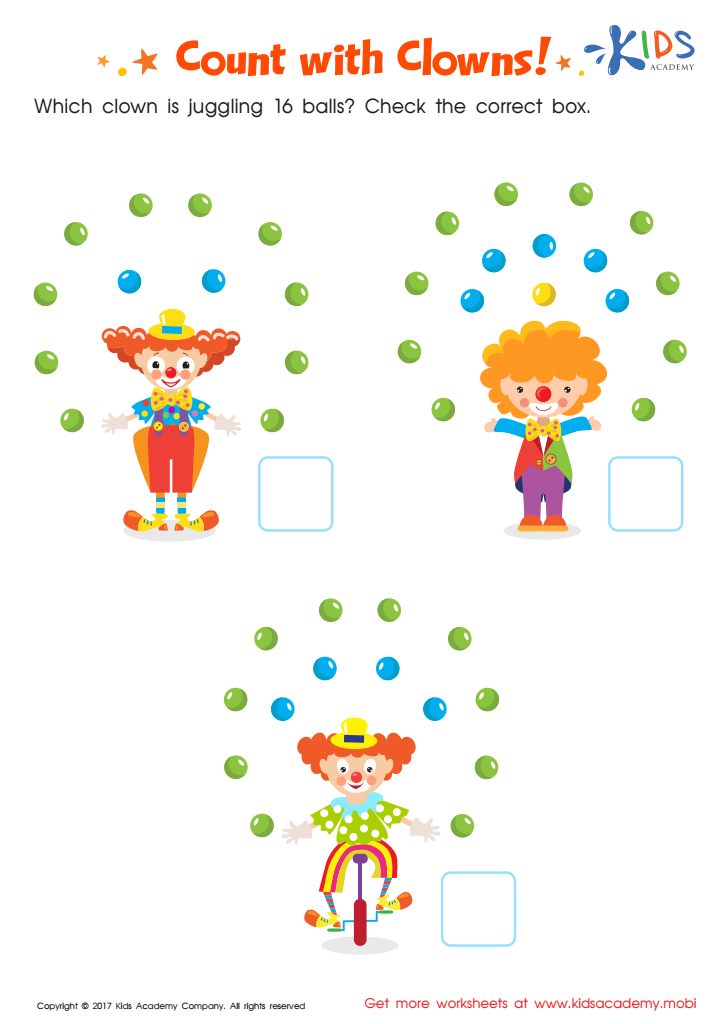
Count with Clowns Worksheet







.jpg)
Parents and teachers should prioritize basic addition practice for children aged 6-8 because it is a foundational mathematical skill essential for future learning. Mastering basic addition helps build confidence in numeracy, enabling young learners to tackle more complex arithmetic and problem-solving tasks with ease. As children become proficient in addition, they improve their overall cognitive development, including memory, attention, and logical thinking.
A strong grasp of basic addition supports success in various academic areas, such as science and technology, where numerical fluency is crucial for experiments, data analysis, and coding. It also lays the groundwork for financial literacy, helping children understand money, budgeting, and saving concepts from an early age. Practical life skills, like following recipes, measuring ingredients, and even time management, often require basic addition.
Engaging in regular addition practice through fun, interactive activities fosters a positive attitude toward mathematics, reducing anxiety and promoting a growth mindset. By supporting children in mastering basic addition, parents and teachers set them up for future academic achievements and help develop lifelong skills that will serve them in everyday decision-making and critical thinking. This early investment in math education ensures a smoother transition into higher-level math concepts and a stronger overall academic foundation.








