
Basic Arithmetic Numbers Worksheets for Ages 6-8
8 filtered results
Difficulty Level
Grade
Age
-
From - To
Subject
Activity
Standards
Unlock your child's math potential with our Basic Arithmetic Numbers Worksheets designed specifically for ages 6-8! These engaging and interactive worksheets cover essential arithmetic skills, including addition, subtraction, and number recognition. Perfect for both classroom use and homeschooling, our resources help young learners build a strong foundational knowledge of math concepts. Each worksheet is crafted to be fun and age-appropriate, encouraging a love for learning while enhancing critical thinking skills. Empower your child to confidently tackle math challenges and develop essential problem-solving abilities. Explore our collection of worksheets today and watch them excel in arithmetic!
Favorites
With answer key
Interactive
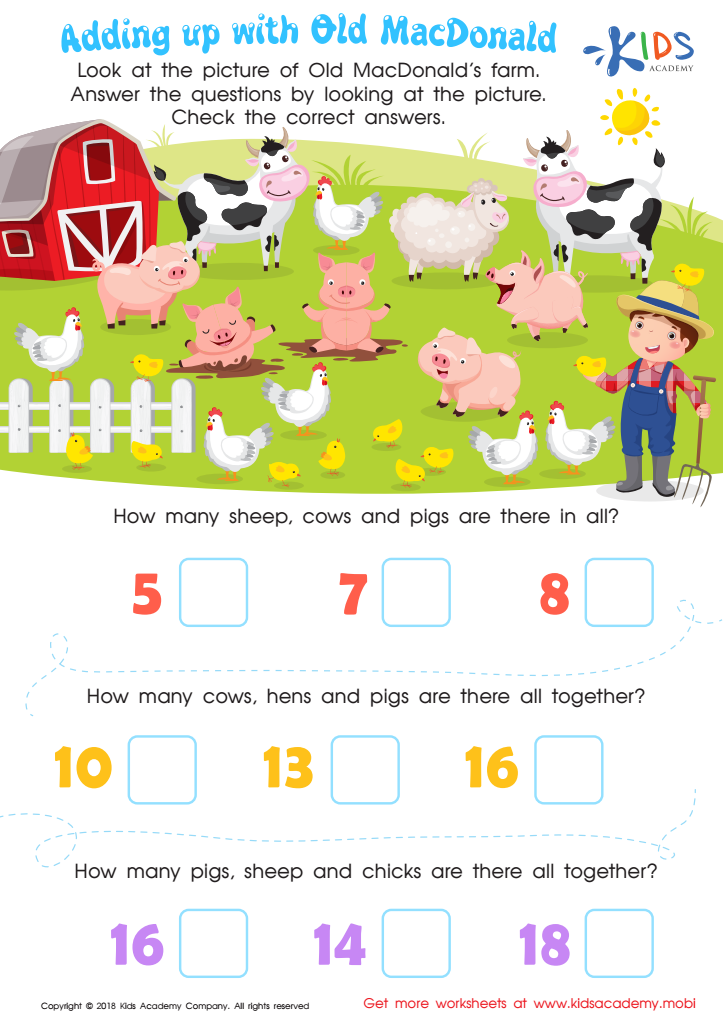
Adding Up with Old MacDonald Worksheet
Old MacDonald needs help counting his animals! Give your little math whiz a fun challenge with a free PDF worksheet. They'll love counting the animals and doing basic addition with two or three addends. Who knew math could be so much fun on the farm?
 Assign to My Students
Adding Up with Old MacDonald Worksheet
Worksheet
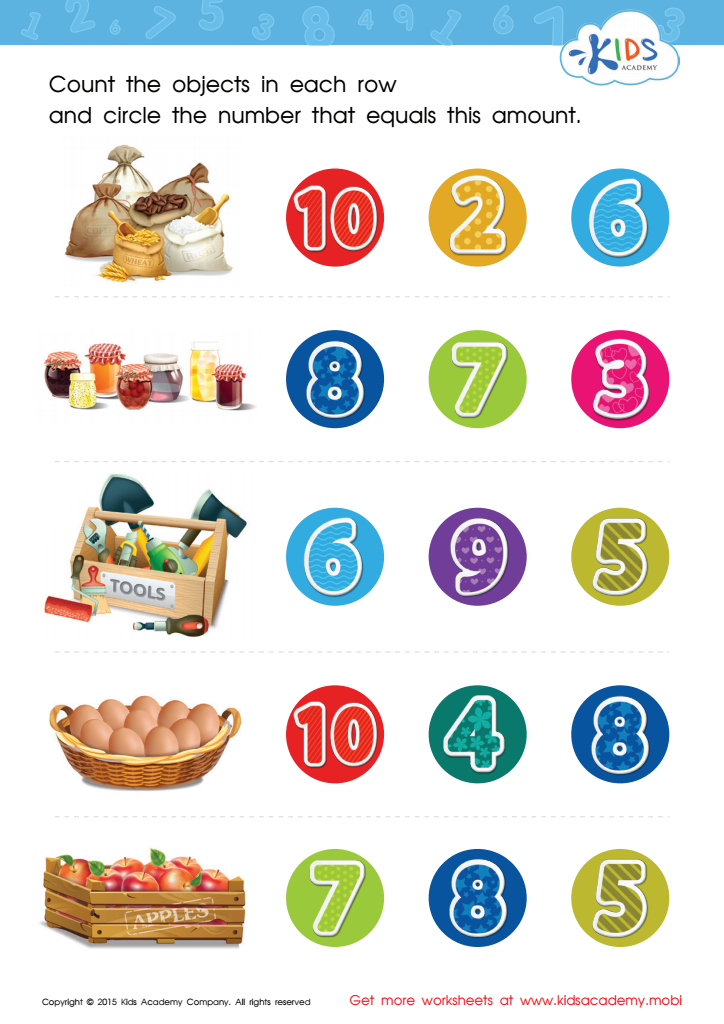
Count and Match 6 – 10 Math Worksheet
Print this fun math worksheet for your kindergartener and help them practice counting up to ten! They'll draw a line from the objects to the correct numbers, visualizing the problem and having fun at the same time. Kids Academy offers more free printable worksheets. Get them now!
Count and Match 6 – 10 Math Worksheet
Worksheet
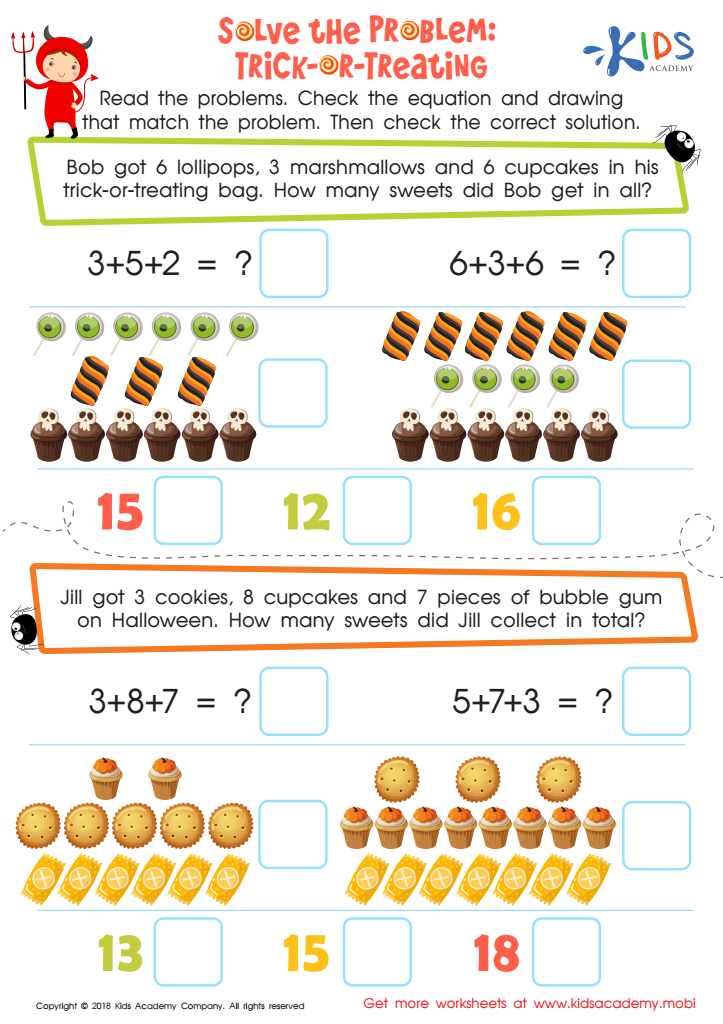
Solve the Problem: Trick–or–treating Worksheet
Kids will love this fun PDF worksheet for trick-or-treating! It's packed with yummy images and math practice. They can read the word problems, count and add numbers, check their answers, and match the addition equations with the pictures. Math made delicious!
Solve the Problem: Trick–or–treating Worksheet
Worksheet
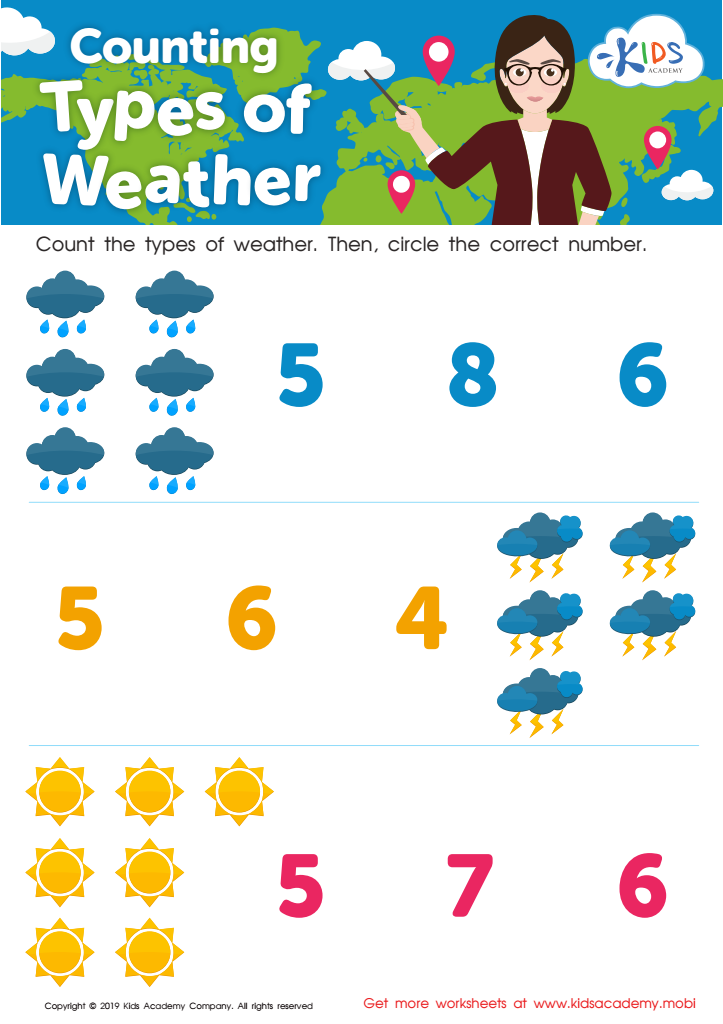
Counting Types of Weather Worksheet
Have your students look outside and tell you the weather today. Get kindergartners thinking by asking them to name different types of weather. Point to each one in the picture and get them to tell you what it is. Then, have them count the types and circle the number.
Counting Types of Weather Worksheet
Worksheet
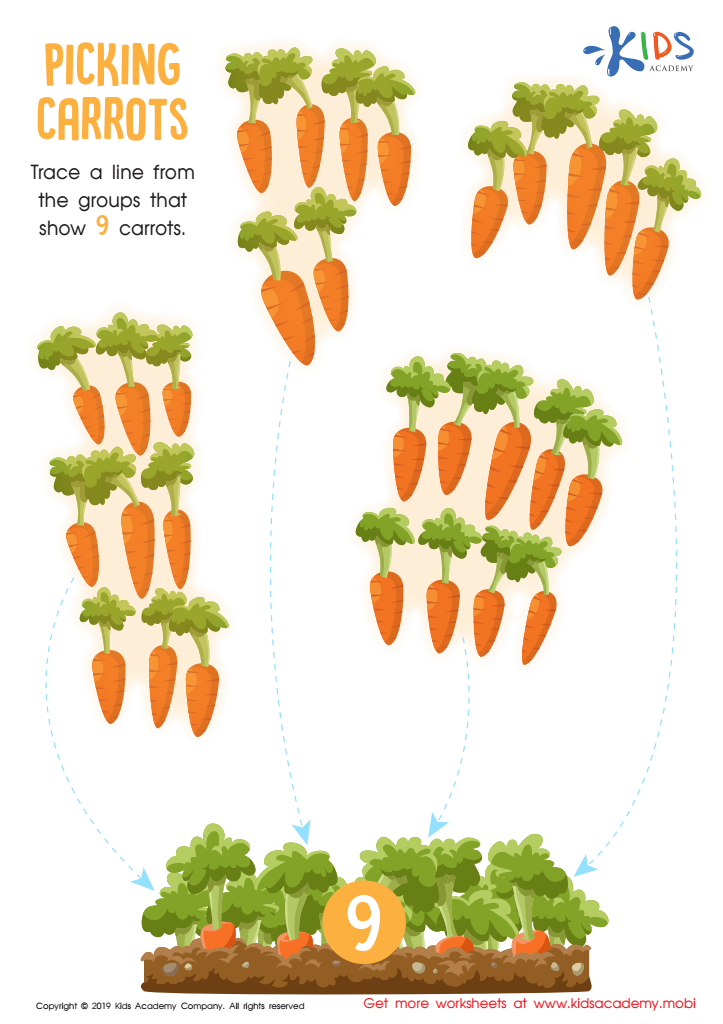
Picking Carrots Worksheet
Do your kids know what carrots are? They're nutritious veggies we should eat. Look at the worksheet with them; can they spot the carrots? It's an exercise to practice counting. Show them how to count all the carrots in the groups and trace the line to the groups with 9 carrots.
Picking Carrots Worksheet
Worksheet
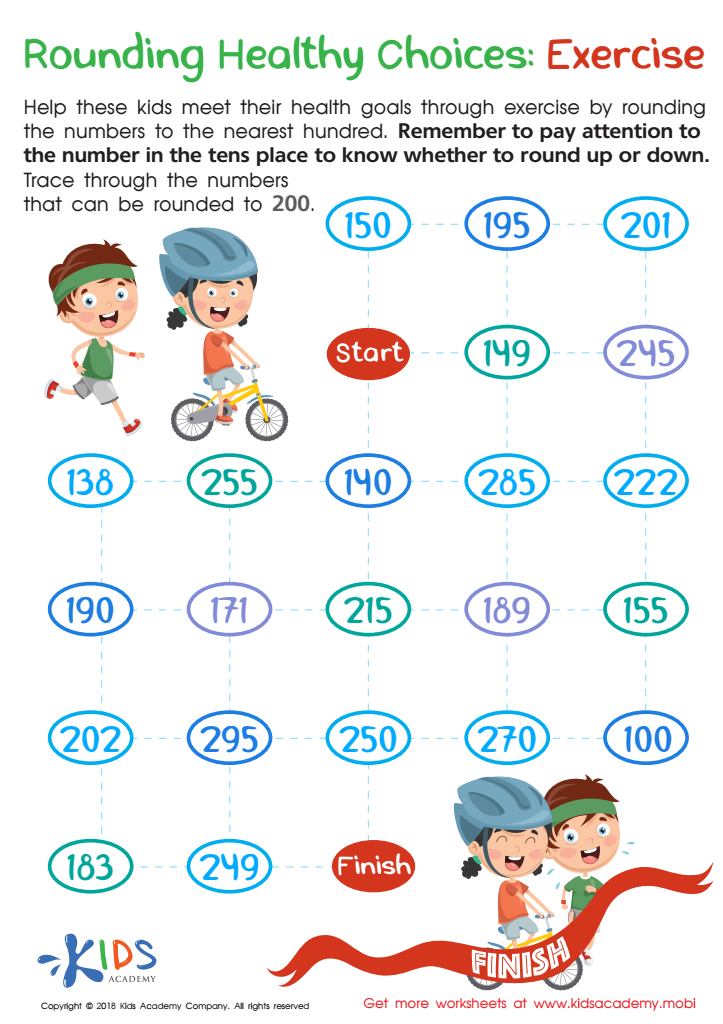
Rounding Healthy Choices Exercise Worksheet
Tired of boring math worksheets? Check out this fun rounding maze printout! Help the kids reach their goals by going from start to finish. To move through the maze, they must find numbers to round to 200. Teach them to pay close attention to the tens place to know whether to round up or down. Have fun and reach the finish line to complete the maze!
Rounding Healthy Choices Exercise Worksheet
Worksheet
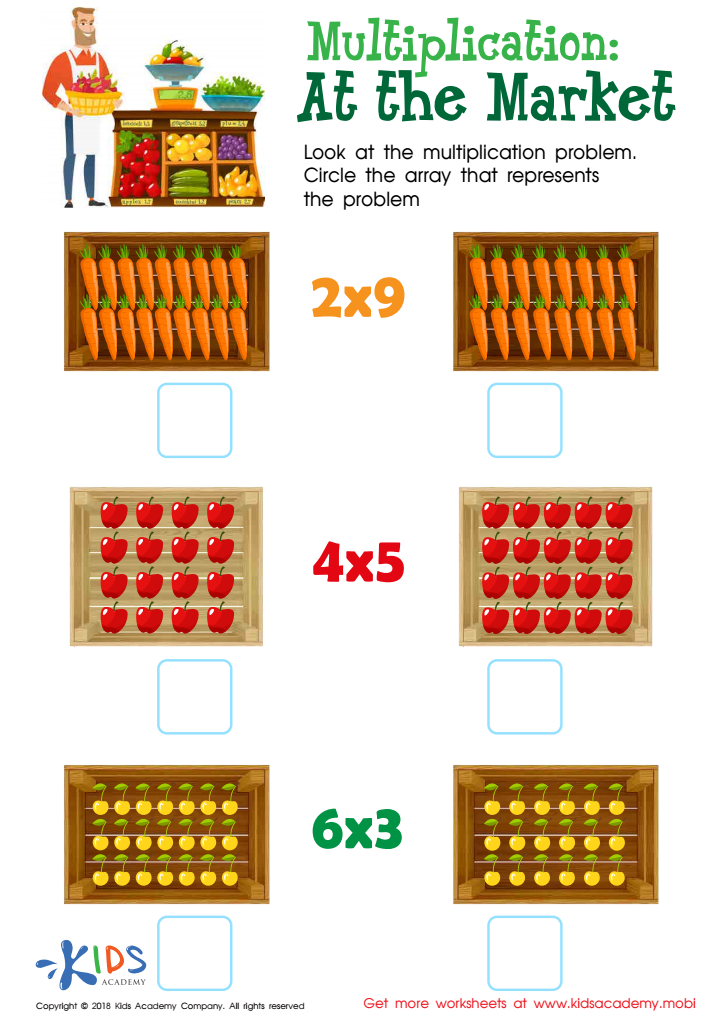
At the Market Worksheet
Head to At the Market! This attractive worksheet features arrays of delicious fruits and veggies that'll have 3rd graders working on their multiplication. Solve the problems, choose the correct answer, and learn while having fun!
At the Market Worksheet
Worksheet
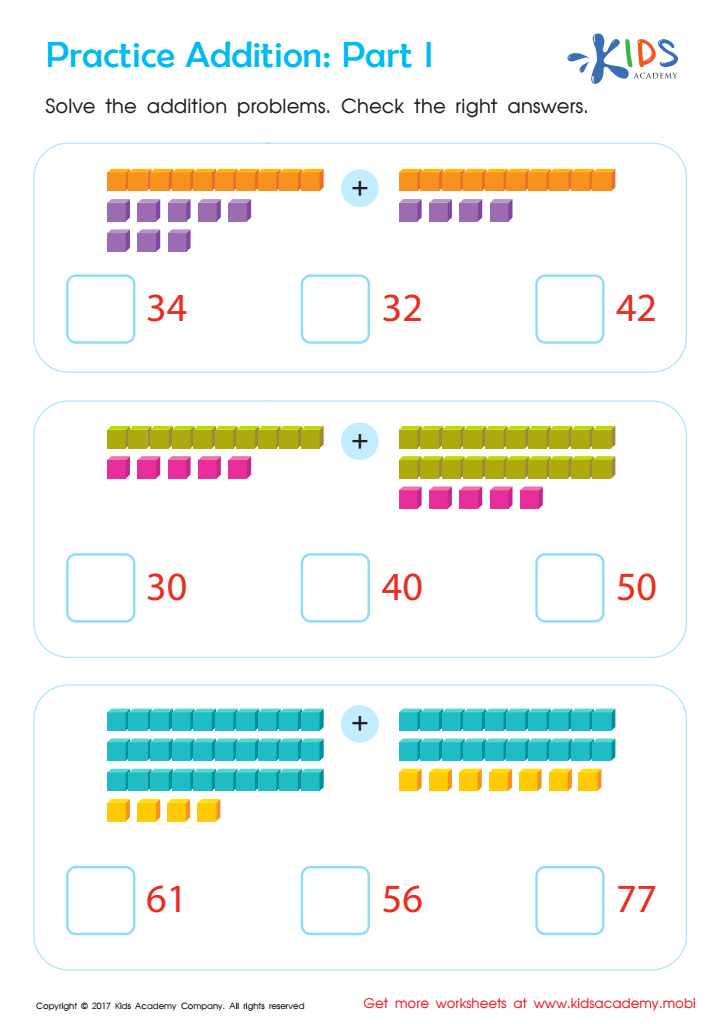
Practice Addition: Part 1 Worksheet
Having trouble teaching your 1st grader numbers and addition? Download this free worksheet! With colorful building blocks, it helps kids visualise and understand simple equations. For extra guidance, multiple choice answers are included to boost their confidence when practising.
Practice Addition: Part 1 Worksheet
Worksheet
Join Kids Academy for Free
Who is primarily going to use this learning content?


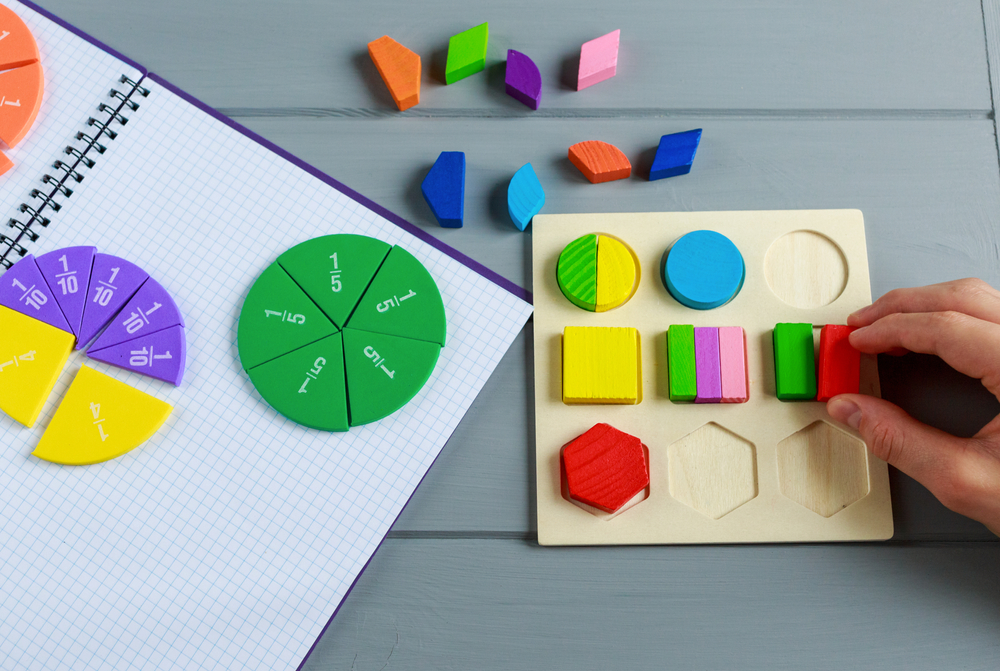





Basic arithmetic forms the foundational building block for a child’s mathematical education and overall critical thinking skills. For children ages 6-8, grasping concepts like addition, subtraction, multiplication, and division is vital not just for math class, but for daily life experiences. Parents and teachers should care because this knowledge nurtures problem-solving abilities, logical thinking, and collaborative skills when working with peers.
Early mastery of arithmetic enhances confidence, empowering students to tackle more complex mathematics as they progress. Scaffolding this knowledge encourages a love for learning and promotes perseverance, as children begin to see the results of their efforts. Moreover, basic arithmetic competencies foster communication skills; children learn to articulate numerical ideas, enhancing their overall verbal abilities.
Additionally, a solid foundation in arithmetic can help bridge the gap for varying learning capabilities. By focusing on these skills, both parents and teachers can tailor their support to meet individual needs, ensuring that each child can participate fully in classroom and home learning activities. Ultimately, early arithmetic education leads to improved academic performance, better logical reasoning, and a strong competency in essential everyday tasks, laying the groundwork for future success. Thus, nurturing this knowledge base should be a priority for all caregivers and educators.








