Spatial reasoning Numbers Worksheets for Ages 6-8
3 filtered results
-
From - To
Unlock your child's potential with our engaging Spatial Reasoning Numbers Worksheets designed specifically for ages 6-8! These worksheets focus on enhancing essential spatial awareness and numerical skills through fun, interactive exercises. Kids will explore concepts such as shape recognition, patterning, and visual reasoning while building a solid foundation in math. With colorful illustrations and age-appropriate challenges, learning becomes an exciting adventure. Foster critical thinking and problem-solving abilities with our thoughtfully crafted activities that make mastering spatial reasoning not only educational but enjoyable. Ideal for home or classroom use, these worksheets provide valuable resources to support your child's growth in mathematics!
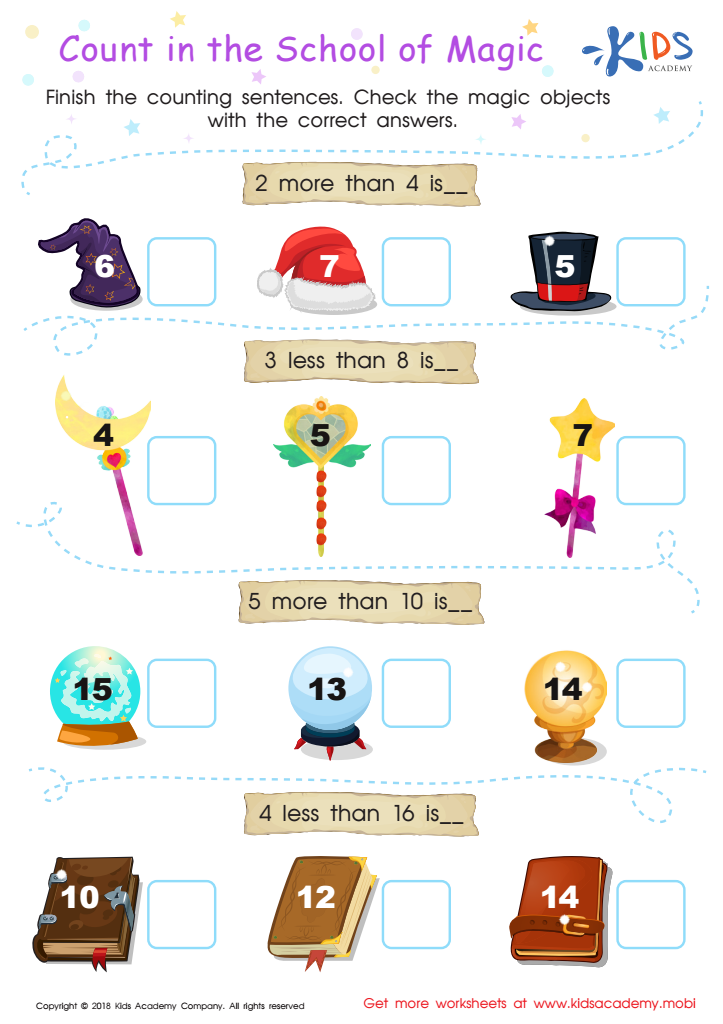
Count in the School of Magic Worksheet
 Assign to My Students
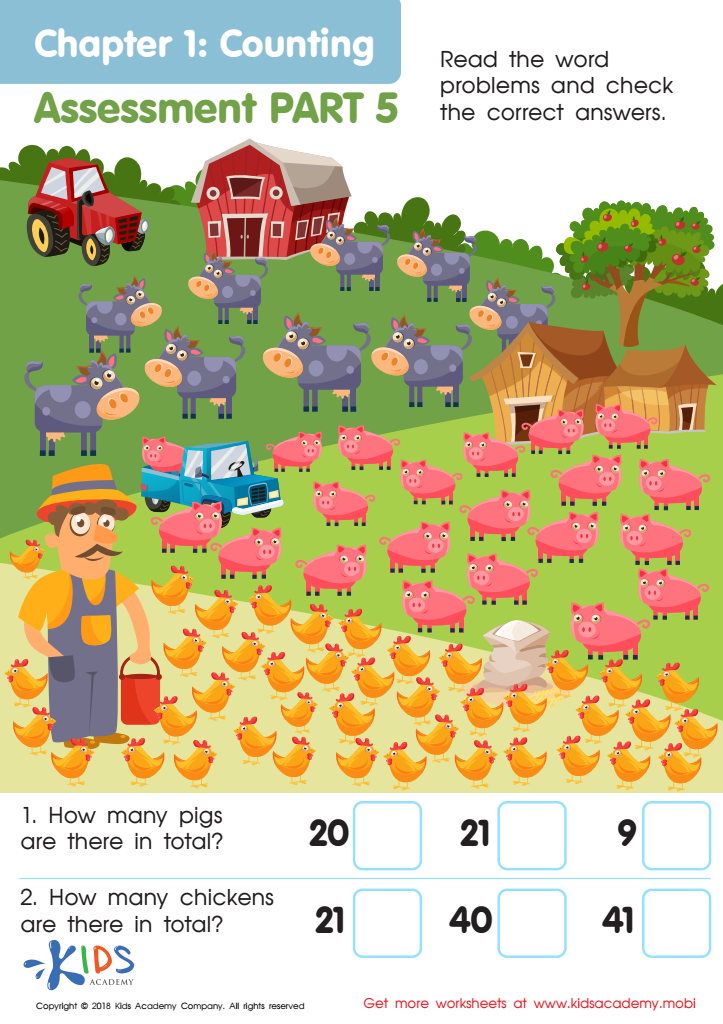
Counting: Assessment 5 Worksheet
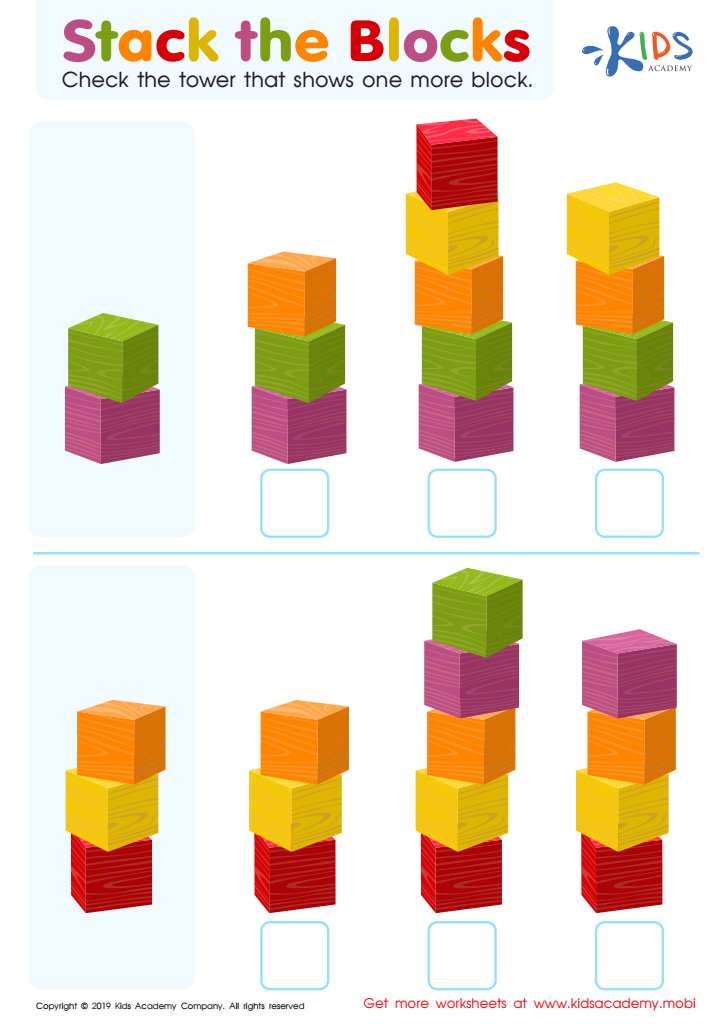
Stack the Blocks Worksheet






%20(1).jpg)

Spatial reasoning is a crucial cognitive skill that enables children to visualize, manipulate, and understand spatial relationships between objects. For children aged 6-8, developing spatial reasoning is vital for their overall mathematical understanding and academic success. Parents and teachers should care about this skill for several reasons.
Firstly, a strong grasp of spatial reasoning lays the foundation for future math concepts, including geometry and measurement. Engaging activities like puzzles, building blocks, and map reading encourage spatial awareness, enhance problem-solving skills, and stimulate critical thinking.
Moreover, spatial reasoning is linked to everyday tasks and real-world applications. Children who develop robust spatial skills can navigate their environment more effectively, understand how to organize their space, and even grasp concepts such as time and sequence better.
Additionally, nurturance of these skills can contribute to greater academic performance, especially in STEM (Science, Technology, Engineering, and Mathematics) fields, which rely heavily on spatial reasoning.
Incorporating spatial reasoning activities into learning can foster a child’s confidence and engagement in math as they discover the tangible connections between geometric concepts and the world around them. Thus, supporting spatial reasoning enhances not just academic skills but also children's overall cognitive development.








